

Formally, China presents itself as an impartial peacemaker, calling for the earliest possible end to the war. In reality, the country’s interests are closely aligned with Russia.
During a conversation with Mark Rutte in the context of the Russian-Ukrainian war, Donald Trump used a metaphor about “two needed for tango,” referring to Putin and Zelenskyy. In fact, this metaphor applies more accurately to Russia and China, as many of Moscow’s actions depend on decisions made in Beijing.
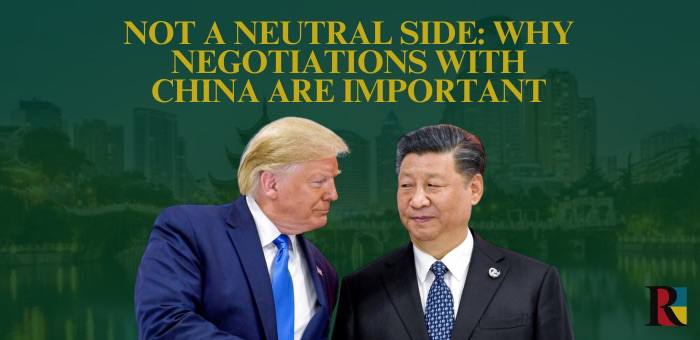
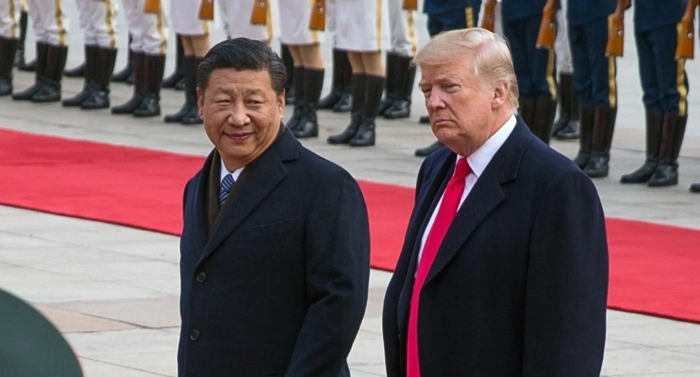
U.S. President Donald Trump is expected to meet with Chinese President Xi Jinping on October 30. The question remains: will he be able to disrupt the Russian-Chinese tandem?
China’s Position
China’s reaction to the new round of sanctions against Russia was indignant. Chinese Foreign Ministry spokesperson Guo Jiakun stated at a briefing that “coercion and pressure will not solve the problem.”
Trump himself emphasized Xi Jinping’s significant influence over Putin and said that during their meeting he plans to discuss ways to regulate the war.
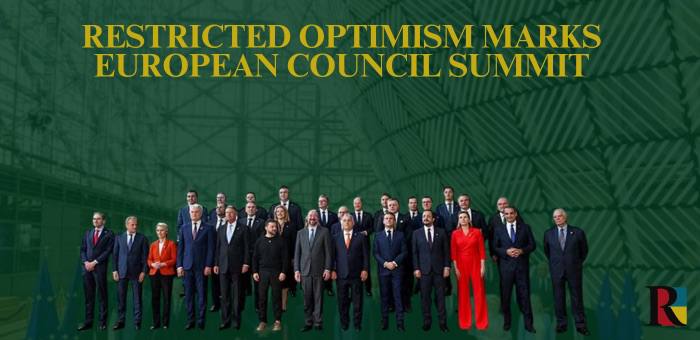
At the European Council summit, President of Ukraine Volodymyr Zelenskyy said that China is not interested in Ukraine’s victory or Russia’s defeat, and that Beijing helps Moscow — which casts doubt on the effectiveness of U.S.-China discussions.
The European Union remains a major economic partner for China. Therefore, during the Munich Security Conference in February 2025, Chinese Foreign Minister Wang Yi said that all stakeholders in the Russia-Ukraine “crisis” (as they call war) should participate in peace talks. In this way, Beijing sought to demonstrate the importance of other geopolitical players while emphasizing its interest in the participation of key economic partners.
For China, however, the Russian-Ukrainian war is both a business opportunity and a case study for assessing modern combat effectiveness.
Assistance to Russia
According to an investigation by Schemes journalists published at the beginning of 2025, supply chains from China indirectly deliver materials to Russian defence enterprises — often through intermediaries and duplicate transactions to circumvent sanctions. This effectively makes Beijing the “lifeblood” of parts of Russia’s defence industry.
The Telegraph reported that in 2023–2024, Chinese firms supplied at least $61 million worth of components to Russian companies under Western sanctions.
In early October 2025, Ukraine’s Foreign Intelligence Service representative Oleg Oleksandrov revealed that China had allegedly provided Russia with satellite intelligence used to plan and execute missile strikes on Ukraine, including attacks on targets belonging to foreign investors.
Conclusion
Negotiations with China are essential for any real regulation of the Russian-Ukrainian war. However, persuading Beijing to stop supporting Moscow will be difficult, as this partnership remains mutually beneficial — although Russia is increasingly in a dependent position.
The only realistic way to reduce China’s support for Russia is to make Beijing more economically interested in distancing itself from Moscow. Yet, rising tensions around Taiwan further complicate the situation and could significantly influence China’s strategic decisions.