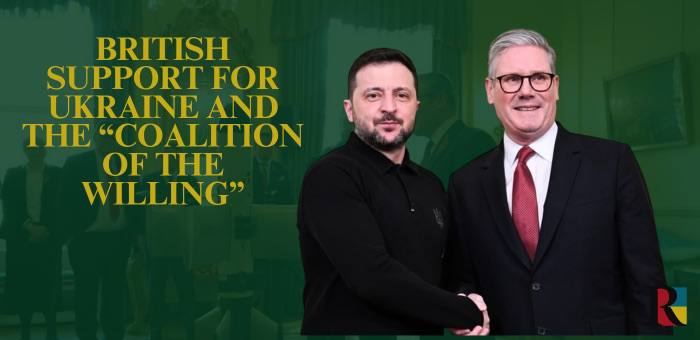


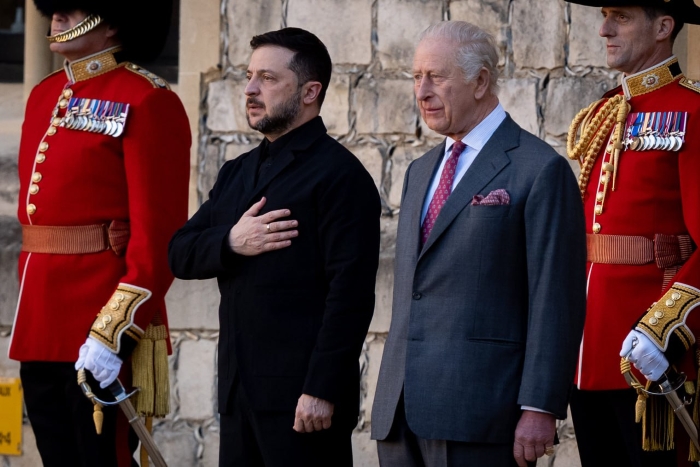
London is hosting the following meeting of the Coalition of the Willing. Therefore, Volodymyr Zelenskyy arrived in Great Britain. For the third time this year, he met with King Charles III and then with his colleague Keir Starmer.
During the press conference, the leaders of Great Britain, the Netherlands, Denmark and Ukraine briefly answered on most urgent questions about future steps.
How Britain Stood with Ukraine
According to official British data, the United Kingdom has pledged up to £21.8 billion in support for Ukraine. London officially declares that aggression against Ukraine threatens not only Ukrainian sovereignty but also British security and prosperity.
A milestone in bilateral cooperation was the signing of the UK–Ukraine 100 Year Partnership in January 2025, which covers nine key areas, including security, technology, and trade.
It also became known that the OCTOPUS interceptor drone, developed jointly with British scientists, will be mass-produced in the UK, symbolizing a shift from short-term aid to long-term technological partnership.
Britain became the first country to impose new sanctions against the Russian energy sector.
Prime Minister Keir Starmer announced that the UK will provide 5,000 new multipurpose missiles to Ukraine. This cooperation also creates new jobs within Britain’s defence industry.
Coalition of the Willing
The main task of the Coalition is that once active hostilities cease or a peace agreement is concluded, this group will be ready to help ensure Ukraine’s security through military contingents, logistics, technical support, funding, and political guarantees. However, as the ceasefire has not yet happened, the focus remains on strengthening Ukraine’s defence.
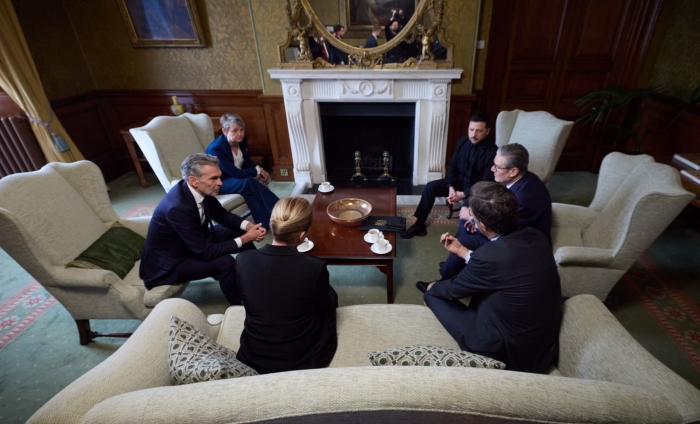
Before the Coalition’s main meeting, Volodymyr Zelenskyy, Keir Starmer, Mette Frederiksen, Dick Schoof, and Mark Rutte — with the online participation of Emmanuel Macron — coordinated their next steps. The agenda of the meeting includes the withdrawal of Russian oil and gas from the global market, the use of frozen Russian assets for Ukraine’s defence, and the supply of long-range weapons as well as air-defence systems.
During the conference, partners confirmed that a political decision regarding the use of frozen Russian assets has already been made.
Conclusion
As Danish Prime Minister Mette Frederiksen noted, Russia had expected the EU countries to stop supporting Ukraine. Therefore, such meetings serve as an important signal that Europe continues to move forward with new decisions in support of Kyiv.
All major steps — such as the use of seized Russian assets is still being finalized as well as and the supply of long-range missiles is under discussion. Yet European leaders are united in convincing their U.S. colleagues that Putin will not stop unless he is forced to do so.
What is particularly important is that Europe is learning to handle its own security without full dependence on the United States — understanding the nature of emerging threats and responding to them with shared responsibility.