

France has announced its intention to transfer the latest version of the SAMP/T NG air defense system to Ukraine for the first time. The SAMP/T NG is entering service in France and Italy. The first deliveries of the systems are scheduled for 2026. This step signals a qualitative upgrade in French military assistance.
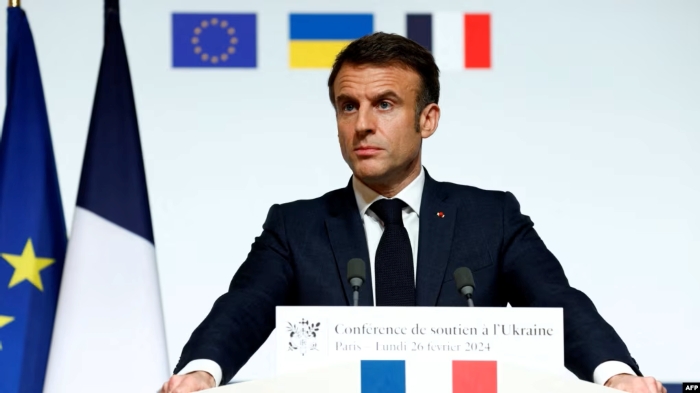
At the same time, the EU has not finalized a deal on the direct use of frozen Russian sovereign assets because of Italian and French positions. French President Emmanuel Macron and Italian Prime Minister Giorgia Meloni played a key role in reshaping the EU’s decision. Their stance effectively shifted the discussion toward alternative mechanisms.
Why Macron Was Against the Use of Frozen Assets
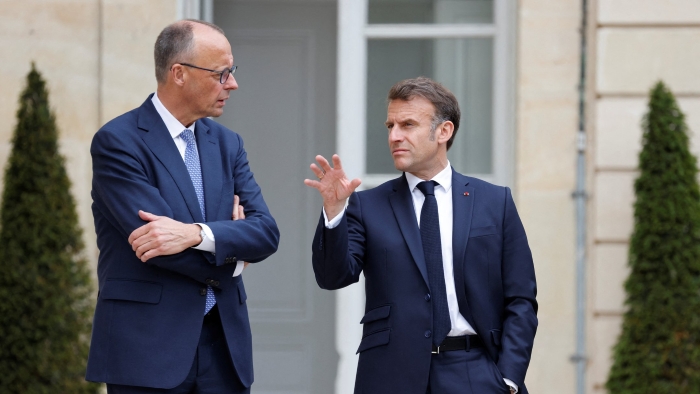
As the leader of one of Europe’s most influential states, Macron holds a central role in discussions toward Ukraine from the European side. When he joined Meloni in expressing skepticism about the direct use of frozen Russian assets, the EU debate changed direction. It moved away from confiscation, focusing on the loan option.
The main arguments behind this position are tied to legal and financial concerns. They also warn about the impact on the EU’s financial credibility. Another treat is the precedent that could be set by using sovereign assets directly. Such a move could undermine trust in European financial institutions.
This approach contrasts with the position of German Chancellor Friedrich Merz. He has publicly advocated for a use of frozen Russian assets.
It is noteworthy that, according to a Politico survey, support for increasing financial assistance to Ukraine has declined in both Germany and France. In Germany, 45 percent of respondents favored cutting financial aid to Kyiv. Only 20 percent supported increasing it. In France, 37 percent wanted to give less. Meanwhile, 24 percent preferred giving more. This trend reflects the growing influence of far-right parties and shows the spread of narratives linked to Russian disinformation campaigns.
At the same time, the data point to a broader shift in expectations. Many EU citizens appear less willing to pay for Ukraine themselves. Instead, they could expect Russia to cover the costs of Ukraine’s defense and reconstruction.
French Military Assistance
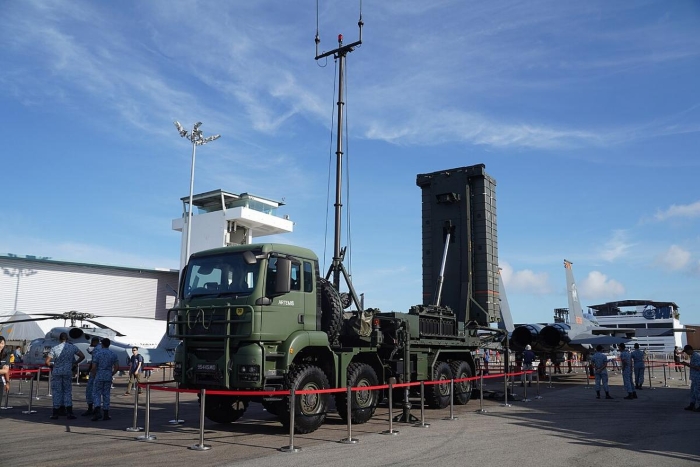
The latest SAMP/T NG air defense system was developed by the Eurosam consortium. The SAMP/T NG is a significantly modernized version of the Franco-Italian air and missile defense system. It is designed to become one of the most powerful ground-based air defense systems in Europe.
Compared to earlier versions, the NG configuration offers expanded operational capabilities. It improves detection, tracking, and interception of modern threats such as combat aircraft, drones, and cruise missiles. The system can also counter medium-range ballistic missiles. It may be relevant for intercepting hypersonic targets as well. A key upgrade is the Ground Fire 300 multifunctional radar, which provides full 360-degree coverage. It can also track numerous targets simultaneously.
This delivery should be seen as part of a broader French commitment. A central element of this cooperation is a ten-year defense declaration. Ukraine’s presidents signed the document on November 17, 2025.
Conclusion
France remains one of Ukraine’s major supporters. It supplies not only older equipment but also advanced systems. The planned transfer of the SAMP/T NG confirms this approach. It demonstrates France’s willingness to invest in Ukraine’s long-term security.
However, the issue of frozen Russian assets remains unresolved. Under favorable conditions, Russia is unlikely to agree to pay reparations voluntarily. This leaves the financial burden on European economies. The lack of decisive action may increase Moscow’s confidence. Using sovereign assets would indeed set a precedent. Yet, Russia has already set another precedent. It launched the largest war in Europe since World War II.