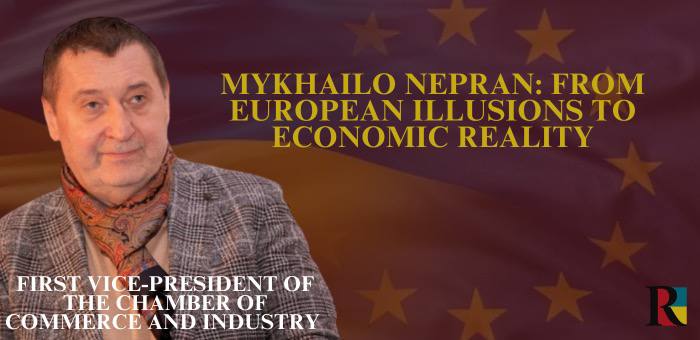


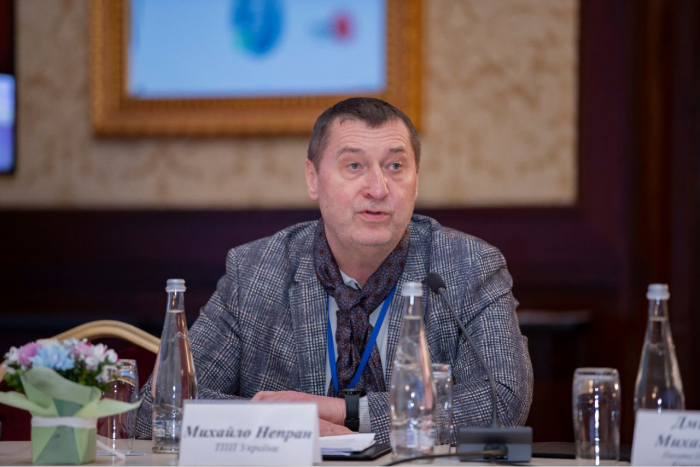
The European future of Ukraine is hardly in doubt anymore. At the same time, even domestic Euro-optimists still have a number of questions about some key aspects of European integration. Of course, the most important thing to understand is how the Ukrainian economy will be integrated into the EU and adapted to the requirements of the European Union and what consequences this will have for both sides. We discussed this and other issues with Mykhailo Nepran, First Vice-President of the Chamber of Commerce and Industry and a member of the Ukrainian Business Council.
Conditions for European integration
Kostyantyn Grechany: Let’s start with the most general question: is Ukraine ready to join the EU if the question, theoretically, arises right now?
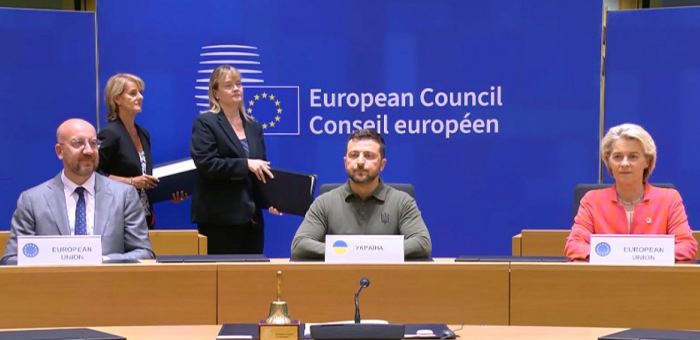
M.N.: Well, it won’t arise right now because Ukraine has enough problems from an economic point of view. Politically, Ursula von der Leyen and President Zelenskyy can sign the agreement tomorrow. Politically, we are at the level of Central European countries – Hungary, Bulgaria, Romania. But economically, this process may take more than a year or two.
What is the EU? It is the free movement of goods, people and capital. From the economic point of view, we have fulfilled only one condition – the free movement of people. As for capital, there are restrictions on both sides. But the movement of goods as a test situation has revealed a number of problems this year.
K.G.: You are, of course, referring to “grain” conflicts?
M.N.: Among other things. First, it was the end of the European illusions that followed the signing of the free trade agreement. We thought that the European markets had opened up, as in “welcome”… They did open up, but they opened up very limitedly. Against the background of our export opportunities, we were given very small volumes – hundreds of thousands of tons compared to the millions of tons we used to export.
Secondly, the EU economy, in some respects, resembles the USSR’s state plan. This means that Europeans calculate balances. For some sensitive items, an imbalance in the balance sheet can lead to social and political unrest, as was the case with grain in Poland, where pure politics intervened. That is why when we were allowed to export a certain amount of products to European markets, it was calculated not to disrupt the market.
Agribusiness in Ukraine and Europe – the difference
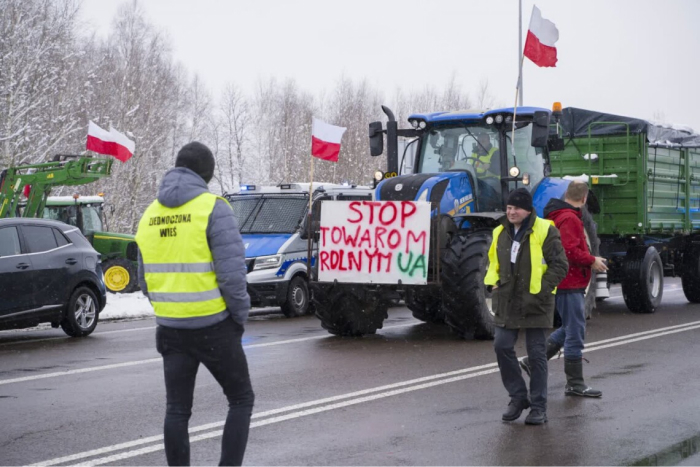
M.N.: When we entered so abruptly, it turned out that we have different models of agriculture. The Prussian way is small and medium-sized farms, and the American way is large agro-industrial enterprises. We are obviously following the American agro-industrial path – 3, 5, 10, 30, 40, 50 thousand hectares. Poland, Germany, and France are following the Prussian path, small family farms, where 100-200 hectares are considered large. For us, 100-200 hectares is nothing at all. Therefore, it turned out that they are not ready to compete with the agro-industrial agriculture that we have. And this is despite the fact that we don’t have anywhere near the subsidies for farmers that Europe has.
Our first conclusion is that we will no longer be able to go with a “bang”, and the state’s role will grow. The story that we don’t interfere with “who sold to whom, who bought from whom” is no longer valid, we will have to intervene. As a result of the unfair actions of Ukrainian exporters and Polish importers, the presidents of both countries, governments, diplomats, and everyone else had problems later. So, there will be a transition period and certain restrictions. However, if we voluntarily accept a number of restrictions that we will grow less, we will receive compensation from the EU. This is one of the options, but I think we would rather use third markets for exports.
K.G.: The limits that were in place before our farmers chose the war in Ukraine a few months for certain items. And this is against the backdrop of global warming when growing traditional crops becomes unprofitable. Given the restrictions on sales and additional problems with growing crops, what are the prospects for our farmers in the near future?
M.N.: There are several aspects. Meteorologists note that our climate is changing from a mid-continental to a Balkan climate. This means wet, warm winters and hot summers. So, in Odesa region, 2 harvests have already been harvested since 2022. Like Greece and North Macedonia. Therefore, they will grow more. But there are similar trends in Europe and the world. It is important what kind of product we will offer. I am not happy at all that we are exporting grain and corn. This is not in the interests of Ukraine’s economy.
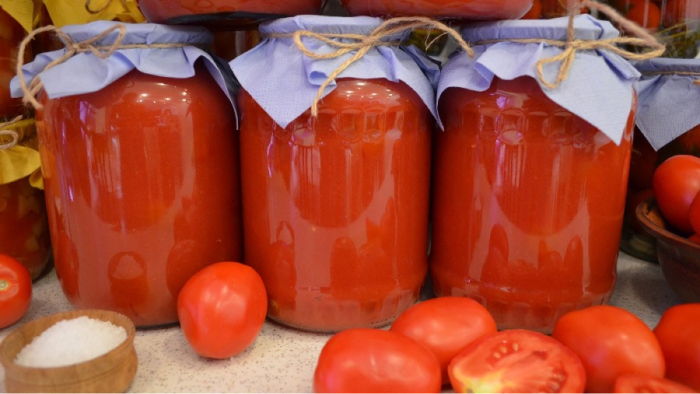
We should be exporting pasta, not wheat, value-added products. Before the war, I often asked grain traders why they didn’t want to process it. They answered honestly: “It’s much easier for us to give money for sowing in the spring, take the grain in the fall, sell it by the new year, and smoke cigars and drink whiskey until the next spring”. Production is real estate, it means people, process, and warehouses. It is more complicated, it is longer, it is riskier. But the blockade of the ports has shown that guys, this is a wake-up call. Grain and oil are good, but when you can’t export it when it rots… So they are starting to process a little bit, but not enough. And the state should play a role here so that we export not grain or corn but products. For example, my friends from Odesa cannery have made a product that is not available in European markets: canned tomatoes in their own juice. And it is very good. Even in those countries that didn’t buy much from us – Italy, Spain, the Balkans, Poland, Germany.
M.N.: The future belongs to creative and new products. Why is this so? In 2018, we held a national forum of exporters and invited 3 directors of departments dealing with the economy within the European Commission. We organised a meeting with exporters in Kyiv. It was a cold rain about European reality. We still had European illusions, “forward, forward”. The first thing we heard was that you do not produce any product that would not be available in Europe; if you want to sell goods to Europe, they must be of better quality and lower price. The next thing is that to sell your product, you have to invest in marketing and advertising. The European buyer is solvent but spoiled by the offers. He must clearly understand why he needs to buy this particular product. One more thing that the European guests said: don’t forget that the free trade agreement, as well as the next agreement – the economic part of joining the EU – is a two-way road.
Not only will you sell to Europe, but European goods will come to you. Now, our producers have a so-called “grace period” due to the low purchasing power of the population, i.e. there are security factors, but there is no serious competition from European producers. But when the average salary in Ukraine reaches $1.5-2 thousand, AVK and Roshen (large Ukrainian confectionery corporations – ed.) will have to compete with the Swiss and Belgians. Yes, we still have European chocolate, but it is only available as a premium product. These postulates were voiced by representatives of the European Commission at the time. It is now proving to be the case. We need to produce goods that are creative and competitive.
K.G.: You have covered the topic of producers in some detail, but there is another important and extremely complex aspect of our European aspirations – the energy sector integration. Outdated technologies and the destruction of the Ukrainian energy system by the war – how can these problems be solved, and how can changes in the energy sector affect the cost of final products?
M.N.: Do you remember how much talk and politics there was when, after 2014, a course was set to integrate into the European energy network? Yes, it was difficult technologically because, for 70 years, we were the only energy system of the USSR. After the collapse of the Soviet Union, more than one generation of small oligarchs made fortunes on inflows on supplies, where how much came in and how much went out is an open question. But, nevertheless… You said correctly that this is a complicated, ambiguous question. Is it good that we are there? Yes, because we are now holding on only thanks to electricity imports, although before the war we earned very well on its exports. How will it be in the future?
There are different mechanisms. Some mechanisms make pricing more transparent. There is, for example, the mechanism of the night tariff, which used to be and which I do not see now. Someone must have lobbied for it. We have absolute monopolies in our regional power distribution companies that corrupt the executive branch. Even before the war, connecting and having electricity was a big problem. Oblenergos dictated such conditions that sometimes the connection cost was higher than the cost of the investment project. All these rules will have to be changed. This is a large corporate corruption component, which we are changing with the help of external influence. So, I would not reduce this process to just “more expensive or cheaper”. The whole way of life is changing. And Europe will have a very differentiated scheme. Speaking globally: this will be good for us.
Interview conducted by Kostyantyn Grechany