

Embargoes, dumped grain at the border, appeals to global and European regulators, and mutual accusations – let’s try to figure out how food exports provoked a crisis in the recently cloudless relations between Ukraine and one of its main allies, Poland. What is the situation now, and what do the elections in our neighbouring countries have to do with it?
How it all started
A number of events preceded the deterioration of bilateral relations. With the start of full-scale war in Ukraine, the issue of agricultural exports, in particular grain, became acute. It is no exaggeration to say that the world faced a serious food crisis. And even the Black Sea Initiative (an agreement between the UN and Ukraine and Russia to ensure the safe export of grain from certain ports), commonly referred to as the “grain deal,” did not solve the issue globally. The maritime corridor functioned intermittently, and there was no question of pre-war volumes (although it sometimes worked effectively, but for short periods).
It was necessary to look for ways to transport goods by land, so “solidarity corridors” were opened through the territory of the European Union, and the European Commission abolished all duties and quotas on Ukrainian exports. According to the EU, Ukraine shipped a total of 33 million tons of grain and food to 45 countries by land and sea during the year of the agreement’s existence.
However, Poland had its own interpretation of the “solidarity corridor.” The country’s grain and feed chambers were ready to grant only transit permits for exports to Africa, Asia, and the EU. Some of the Ukrainian grain began to settle in Poland, which lowered prices for similar local agricultural products and caused farmers to resend it. During the conflict, negative myths about Ukrainian grain, including the alleged pesticide contamination, began to spread, affecting trade with other neighbouring countries.
The bifurcation point of Ukrainian-Polish relations
On April 15, 2023, the leader of Poland’s ruling Law and Justice party, Jarosław Kaczyński, announced an embargo on imports from Ukraine to Poland and transit to third countries of almost all types of food. Soon, Hungary, Slovakia, Romania, and Bulgaria joined the embargo, and Ukraine, in turn, promised to sue the World Trade Organization for failure to comply with the European Commission’s decision. However, the latter, under pressure from the rebel countries, imposed a ban on imports of four Ukrainian grains (wheat, rapeseed, corn, and sunflower) to Bulgaria, Hungary, Poland, Romania, and Slovakia on May 2, 2023, to calm farmers.
As a result, this decision had the opposite effect: not only grain transportation but also all food from Ukraine, including goods exported to Poland under long-term contracts, stopped at the Ukrainian-Polish border. A few days later, transit was partially restored.
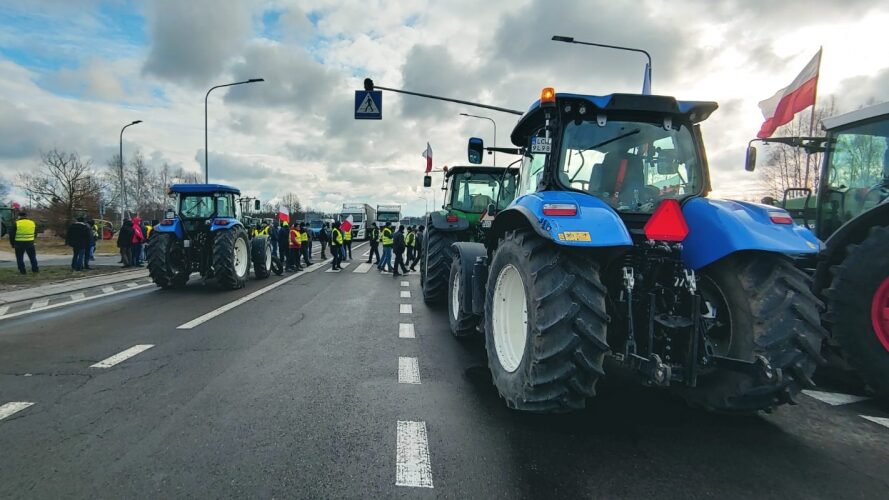
But in September 2023, Poland imposed a unilateral grain embargo on Ukraine.
“Poland will not allow Ukrainian grain to flood us. Regardless of what Brussels officials decide, we will not open our borders,” – said Mateusz Morawiecki, the Prime Minister of our neighbours at the time.
Against the backdrop of mutual accusations, Poland began to make more and more radical statements, including the termination of military support and the deprivation of social support for Ukrainian IDPs.
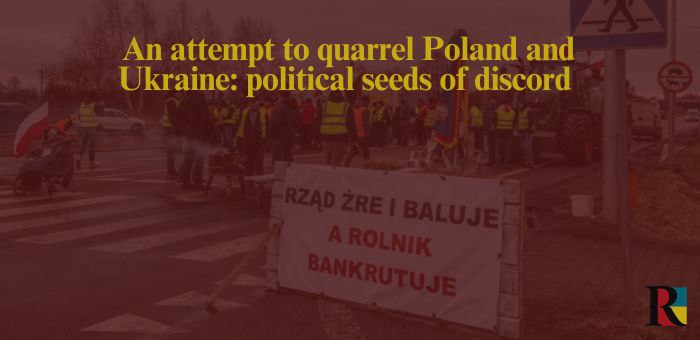
This long-running swing reached its climax on February 11, 2024, when Polish farmers poured grain out of three Ukrainian trucks during a protest near the Yagodyn-Dorogusk border crossing. Despite the Ukrainian side’s indignation and criticism from some European officials, the episode repeated itself 12 days later. Polish farmers dumped rapeseed from two Ukrainian grain trucks. Transit was blocked, and the situation seemed to be at a standstill. Nevertheless, the parties agreed to negotiate.
Confrontation. Conflict. Compromise!
It is worth noting that all of the above events took place against the backdrop of the Polish local government elections (April 7 and 21 – the first and second rounds, respectively). Farmers are an important constituency for the government and the opposition, so playing this card benefits both. But politicians must realise that in the long run, both Ukrainian-Polish relations and the businesses of both countries suffer.
This realisation came with the end of the election campaign (although there are still elections to the European Parliament ahead). On March 28, the two countries’ governments and representatives of agricultural associations in Warsaw began a constructive dialogue. When there was less politics, the issue immediately moved forward. Following this meeting, The Ukrainian Review asked the Ministry of Foreign Affairs of Ukraine for an official comment.
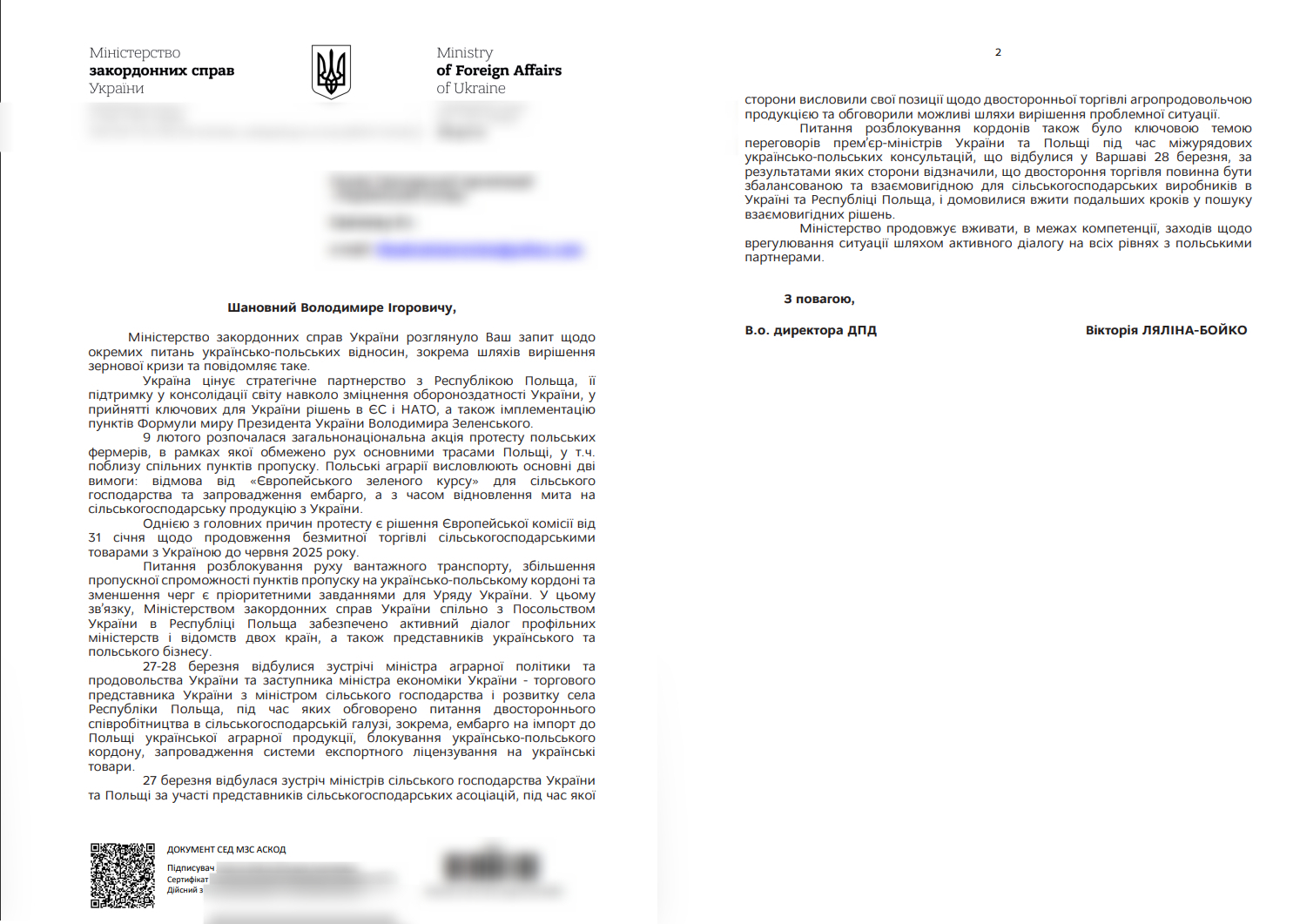
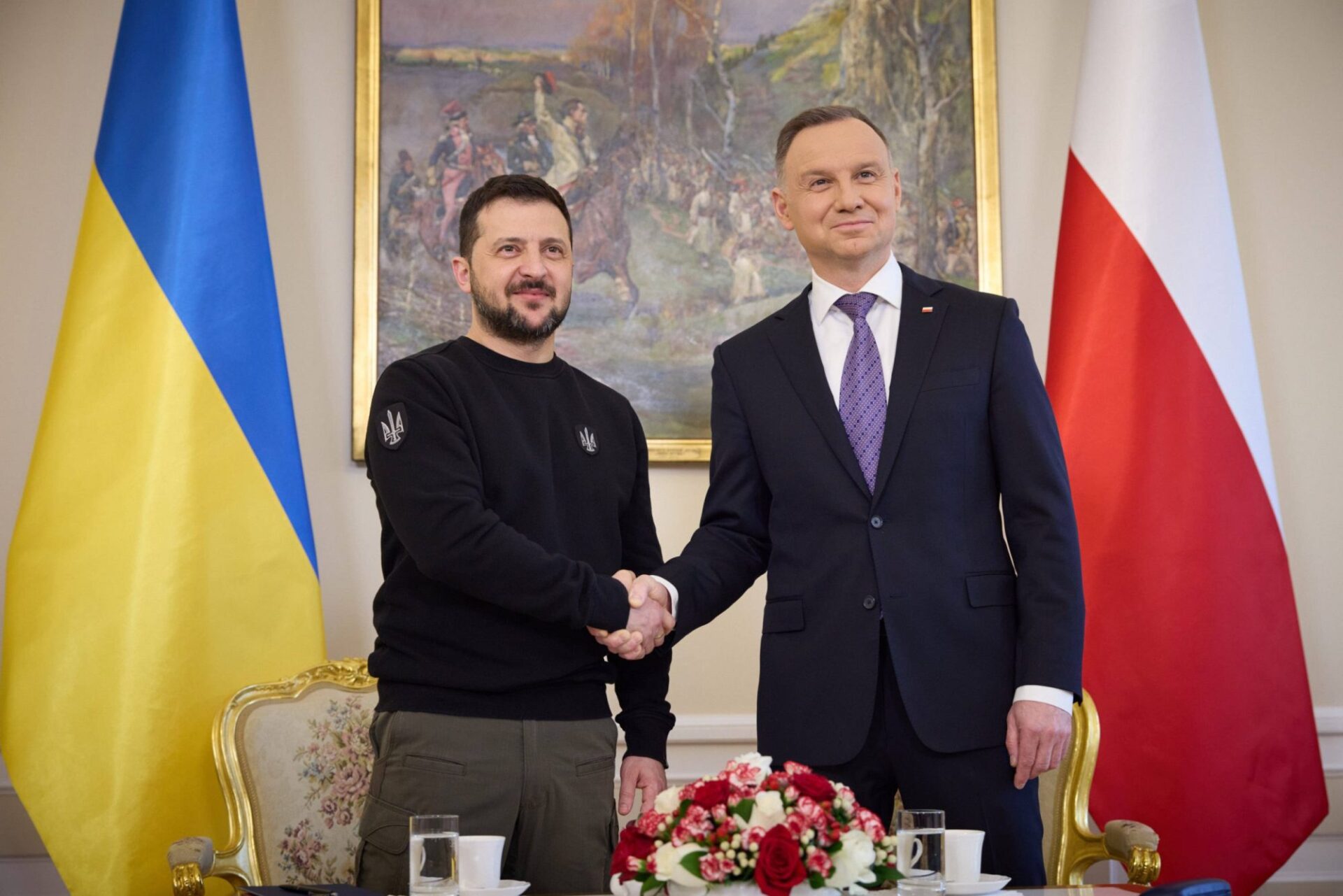
“The issue of unblocking the borders was a key topic of negotiations between the Prime Ministers of Ukraine and Poland during the intergovernmental Ukrainian-Polish consultations held in Warsaw on March 28, as a result of which the parties noted that bilateral trade should be balanced and mutually beneficial for agricultural producers in Ukraine and the Republic of Poland, and agreed to take further steps to find mutually beneficial solutions. The Ministry continues to take measures, within its competence, to resolve the situation through active dialogue at all levels with Polish partners,” – the letter says.
These bureaucratic formulations did have significance because, on April 16, 2024, the Poles finally stopped blocking the Dolhobyczów-Uhryniv checkpoint. There were 100 heavy trucks and another 30 trucks waiting to cross from Ukraine. Other transit routes, such as Medyka-Shehyni and Korchova-Krakivets, were immediately opened. On April 29, 2024, it became known that the last checkpoint, “Rava-Ruska-Hrebenne,” was unblocked. Therefore, we can hope with cautious optimism that the problem is moving towards a complete solution.
Expert opinion
Most experts note that the problems in Ukrainian-Polish grain relations are largely political in nature and should be perceived through the prism of the 2024 local elections and the European Parliament elections. However, some experts point out that both subjective and objective factors have contributed to the aggravation of contradictions.
Denys Marchuk, Deputy Head of the All-Ukrainian Agrarian Council tell us what he thinks:
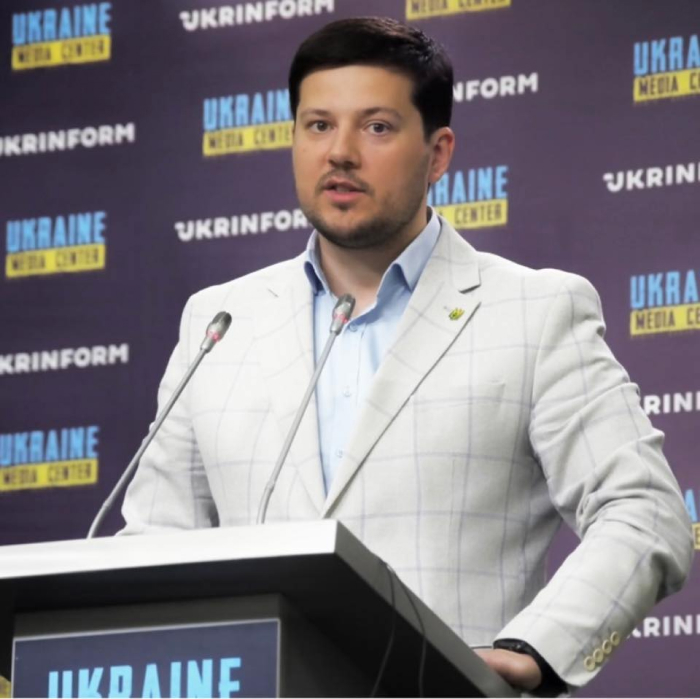
“The Poles demanded that we refuse to transport through Poland on our own, even though we have not been selling certain grain crops (wheat, sunflower seeds, rapeseed, corn) on the Polish market for almost a year. This is a key issue that has been raised since April 2023. The current situation is more like an internal issue, a confrontation between farmers and the Polish authorities. If we look at the volumes that Ukraine sold before 2023 and those that it sells today, these are completely different volumes. We do not interfere with the Poles in any way.
As for the talk that something is being illegally deposited there… We have not seen any facts. It’s not like a needle in a haystack to get lost. In addition, we advocated that you can accompany transit vehicles crossing the border. There were protests on the border with Lithuania, then with Germany, and nothing was found.
The main thing is to find an understanding between the Polish authorities and the opposition forces. On March 28, during the talks in Warsaw, there were government officials from both sides and business associations, and the dialogue started well. Those who are now protesting seem to be asking the Polish authorities why they were not invited. This is a very politicised issue within Poland itself. First, there were local elections, followed by the European Parliament elections. In addition, this is all fueled by Russian agents”.
Gennadiy Radchenko, Advisor to the Head of the Polish-Ukrainian Chamber of Commerce add:
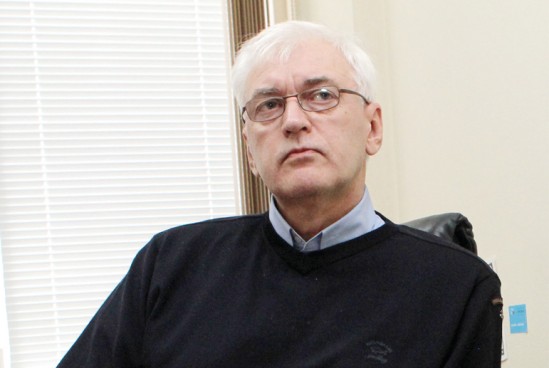
“This game is primarily about the electoral argument. Farmers control over 8% of the electorate, and rural voters are predominantly right-wing. The rules of democracy do not allow for harsh actions against them, even when they block the border with Ukraine. On the other hand, the government recognises the validity of the protesters’ demands, even though experts say that the Ukrainian factor does not significantly impact prices in Poland.
Russian grain and other agricultural products that go to Europe are very important. Ukrainian agricultural products have become victims of black PR. Here in Warsaw, they say that Ukrainian agricultural products are not grown according to European standards and that exports are uncontrolled, but none of this is true. However, the local media is taking up this position despite the fact that the grain conflict negatively impacts Poland’s economy. We need to talk; we need to destroy these myths.
It is also worth noting that the Ukrainian agricultural sector is much more efficient than the European one, particularly the Polish one. In these circumstances, Europe must decide whether the agricultural sector is a tradition or a business. In Ukraine, it is a business. In Europe, it now looks like a tradition. The question arises of reforming European agriculture but with food security in mind. This is a large set of issues that have now become relevant and should be worked out very professionally”.
Stepan Cherniavskyi, MP, Deputy Chairman of the Committee on Agrarian Policy and Land Relations commented:

“In my opinion, the main reason for the conflict is the fear of competition from Ukrainian agricultural products. At the same time, this issue was clarified during the negotiation, and the figures proved that Ukraine is not a competitor but a partner. When the government and representatives of Polish farmers’ associations saw the figures we provided, they saw that it would benefit farmers, especially processors, because Ukraine would provide its raw materials. This conflict began to be resolved step by step. We solved this problem, including a ban on Russian exports to Poland and other European countries. We see that the checkpoints are opening, and the products are going to the European market”.
Mykhailo Nepran, First Vice President of the Ukrainian Chamber of Commerce and Industry concluded:

“The reasons for the conflict are that the stars were not aligned in Ukraine’s favour (ironically – ed.). The first star, of course, was the outbreak of war and the blockade of ports through which 70% of Ukraine’s grain exports went. As a result, in 2022, we realised that our farmers had 13 million tons of grain on hand that needed to be exported urgently. If they stay for another year, they will simply rot and disappear. It was a great pressure that forced us to look for ways.
Secondly, Poland is the gateway to Europe for us. There were certain difficulties during the transit. There were mistakes on the part of both the Polish and Ukrainian authorities. In the context of 2024, it is probably wrong to condemn someone for 2022. Perhaps it was necessary to introduce stricter controls, but we are all smart “later”. We had no time for that then. A large flow of grain needed to be sold urgently, and the Europeans lifted our quotas, for which we are very grateful. However, we shook up not only the Polish but also the European grain market. But it was an urgent need for us. We just needed stricter control.
Third, Polish agribusiness was uncompetitive compared to Ukrainian agribusiness. Poland is a country of small villagers’ farms with an average size of 100-200 hectares. And we have 3, 5, 10, 50, 100 thousand hectares. We have an agro-industrial business.
The fourth and most crucial thing is politics. Unfortunately, as elsewhere, there are many politicians and not so many statesmen. On the one hand, there is a political struggle within Poland, elections, and, on the other hand, the Russian”.
Conclusions
The full-scale invasion of Ukraine by the Russian Federation has put entire regions of the world at risk of a humanitarian catastrophe. To prevent serious shortages of agricultural products and even famine, the EU temporarily lifted all customs restrictions on Ukrainian agricultural goods. However, some Eastern European countries have agreed to transit only. Cheaper Ukrainian grain, which ended up in these countries quite legally, lowered the average market price of grain. Local farmers did not like this.
Poland was at the forefront of the protests. Against the backdrop of the election campaign and the struggle for electoral sympathies, politicians fueled these sentiments, which led to a crisis in Ukrainian-Polish relations. With the end of the election campaign, the parties switched to a constructive dialogue and reached a compromise on many problematic issues. Some problems remain, but they do not seem to be critical.
Kostyantyn Grechany