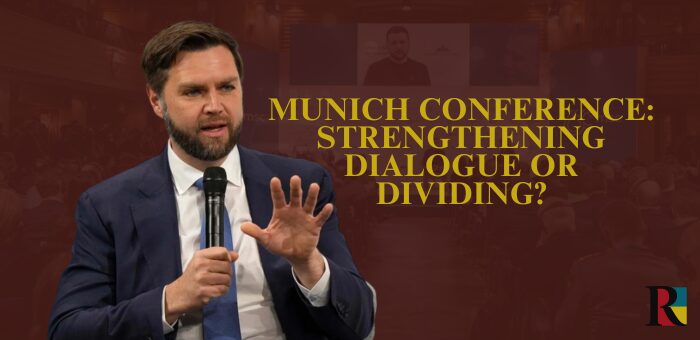


On February 14-16, world leaders gathered at the 61st Munich Security Conference to discuss key challenges in international relations. Volodymyr Zelenskyy was the head of the Ukrainian delegation, and the US delegation was led by Vice President J.D. Vance. The issue of the war in Ukraine became a key topic of discussion, and the fact that it would be in focus was emphasized by US Secretary of State Marco Rubio in his interview with SiriusXM Patriot before the event.
The newly elected representatives of the United States promoted their new vision of regulating the Russian-Ukrainian war and the European vector of development, while European representatives argued for their right to participate in potential negotiations with Russia, partly agreeing with the comments made by their American partners and partly denying them.
The Ukrainian side, on the other hand, reminded allies of the importance of a just peace not only for Ukraine’s security but also for global safety and of the Russians` real intentions.
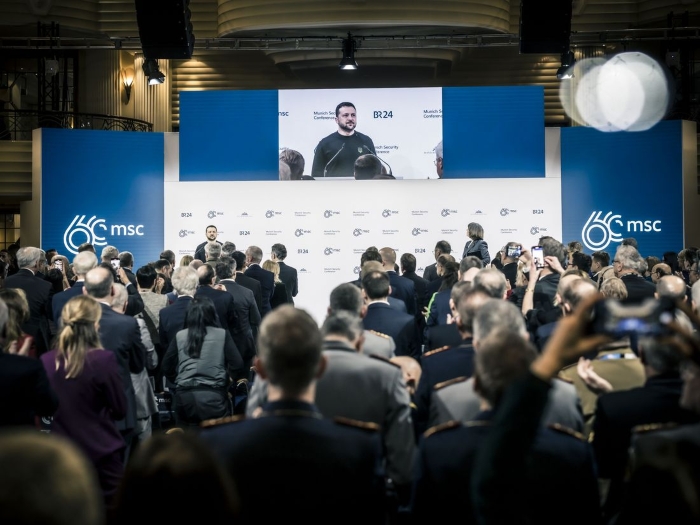
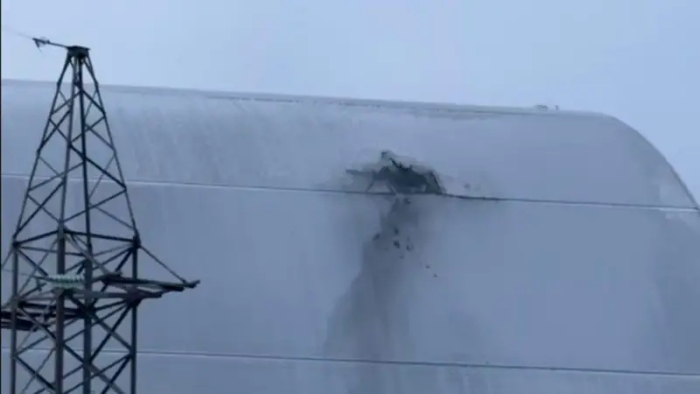
During the conference’s first day, Volodymyr Zelenskyy began communicating with journalists by outlining the Russian attack on the Chornobyl nuclear power plant that took place the night before the conference. He emphasized that the current conditions in Russia allow them to commit such crimes, as they feel quite confident, returning to this point in his speech on February 15 as well. Zelenskyy called his recent phone conversation with Trump on February 12, which lasted about an hour, good.
I think it is important that President Trump needs to hear, that they [the Russians] continue to have contacts with North Korea in terms of supplying military contingent, weapons, and missiles, — he added about the arguments in the dialogue with the US President.
Volodymyr Zelenskyy emphasized the possible threats from Belarus, where Russia plans to train 15 divisions, and According to the Ukrainian president, this group could move on Ukraine, Poland, or the Baltic states. Throughout the conference, he repeated the thesis that Russia does not really want peace and will try to test NATO’s resilience with its next move.
Europe will increase its unity around Ukraine, — Volodymyr Zelenskyy said in the context of partners’ reaction to the current rhetoric surrounding the negotiations. The idea of strengthening defense capabilities was echoed by the leaders of European allies themselves.
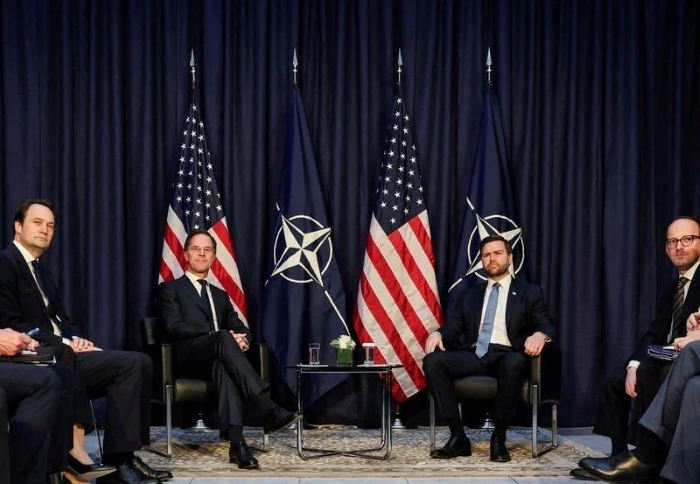
Mark Rutte, speaking to J.D. Vance about strengthening NATO, admitted: “ We have to grow up in that sence”. The Secretary General of the Alliance emphasized that not a repeat of “Minsk” [the Minsk agreements] but a lasting peace must be achieved in Ukraine.
Ukraine-USA: activation of conversations
The main expectation was the results of the dialog between Ukraine and the United States since this was the first meeting with the new US power representative after the election.
As Suspilne reports, the Ukrainian side came to the meeting with its “homework” done. A few days earlier, on February 12, U.S. Treasury Secretary Scott Bessent handed over a draft agreement on access to Ukraine’s mineral resources during his visit to Kyiv, and the Ukrainian side had to read it and make amendments before the Munich conference. The topic of Ukraine’s resources was constantly mentioned in conversations with the United States.
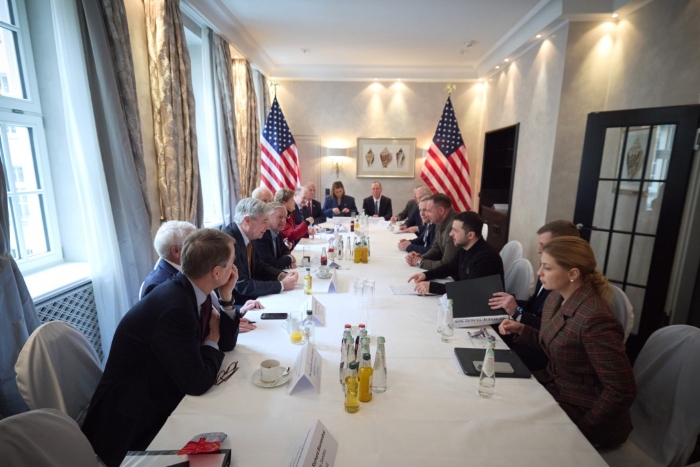
This was also emphasized in a report on the official website of the President of Ukraine after he met with a bipartisan delegation of the US Senate, where he thanked the Republican and Democratic representatives for their long-term support.
In his conversation with the press on February 15, Volodymyr Zelenskyy explained that the minerals agreement would be signed at the level of the relevant ministries, but before that, he would have to make sure that it contained effective security guarantees, which are currently lacking. Thus, it can be assumed that the Munich conference did not become the place to finalize the document.
In turn, the Head of the Office of the President of Ukraine met with Trump’s Special Representative for Ukraine and Russia Keith Kellogg.
We discussed continuing support for Ukraine. This is a matter of security not only for our country but also for the whole of Europe and the world. Helping Ukraine now is much cheaper than confronting a stronger Russia later, — Andriy Yermak shared the results of the conversation on his social media.
Later, Volodymyr Zelenskyy said in a conversation with journalists that Ukraine was waiting for Kellogg, and he would like to go with the special representative to the frontline so that Kellogg could hear the information firsthand from the soldiers.
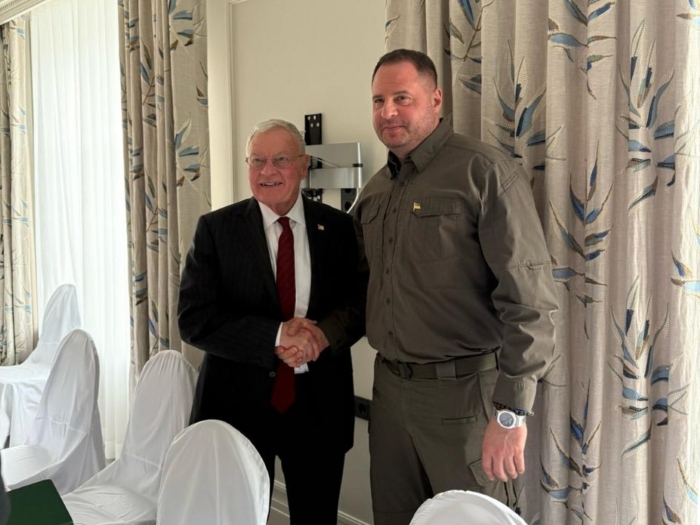
As noted by Suspilne, Keith Kellogg attended the Eighth Ukrainian Lunch, where he announced a 180-day deadline for settling the Russian-Ukrainian war. He assured that the unsuccessful experience of concluding peace agreements would not be repeated, and that Europe would not sit at the negotiating table, but that their interests should be taken into account.
American political scientist Jason Jay Smart shared with The Ukrainian Review his thoughts on such rhetoric addressed to European countries:
I think that the difference is that the United States believes that at this point it can begin to understand what the Ukrainian and Russian sides want before talking about specifics of how that would be achieved. So right now I don’t think that they are trying to find the solution. They are trying to find what the problem is. They simply want to understand what the Russian side requires to begin negotiations and as they’re still working on understanding this they are not ready to discuss what support they will need from the Europeans in order to realize a peace agreement.
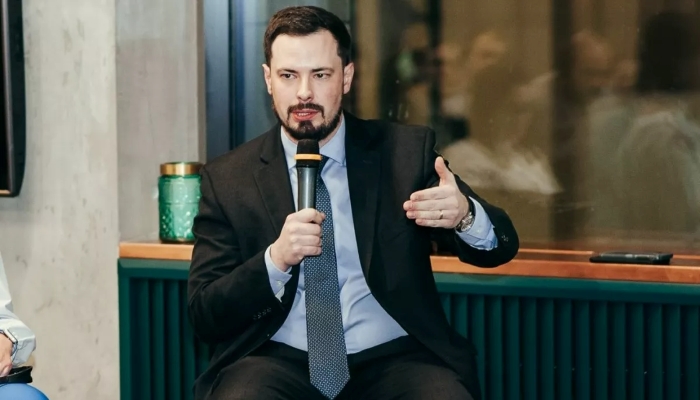
Speaking to journalists on the first day of the conference, Volodymyr Zelenskyy acknowledged that his US partners had moved away from the idea of Ukraine joining NATO as a security guarantee:
We must realize where we are. Today’s America and President Trump are not ready to talk about NATO… I am pragmatic and honest and believe that this is the cheapest option for everyone.
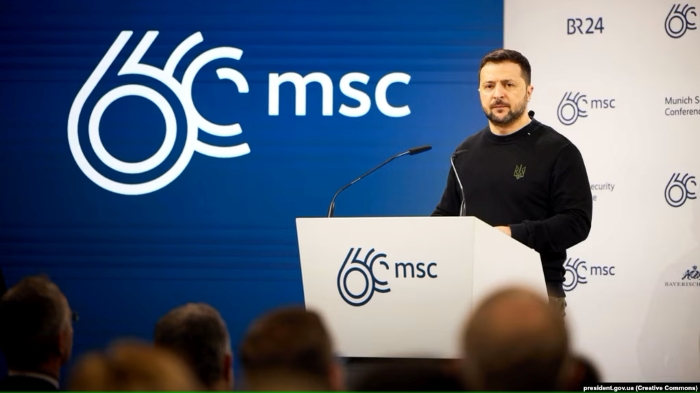
If Ukraine does not become a member of the Alliance, then, according to the President of Ukraine, it will need 1.5 million military personnel. Nevertheless, in his speech on February 15, Volodymyr Zelenskyy emphasized that he would not remove the issue of Ukraine’s accession to NATO from the agenda. In a subsequent communication within the panel The Future of US-Ukraine Security Cooperation with journalists, he clarified that not seeing Ukraine in the alliance is a permanent US policy, not just a position under Trump’s leadership.
In his speech, the President of Ukraine ironically stated:
But right now, the most influential member of NATO seems to be Putin — because his whims have the power to block NATO decisions.
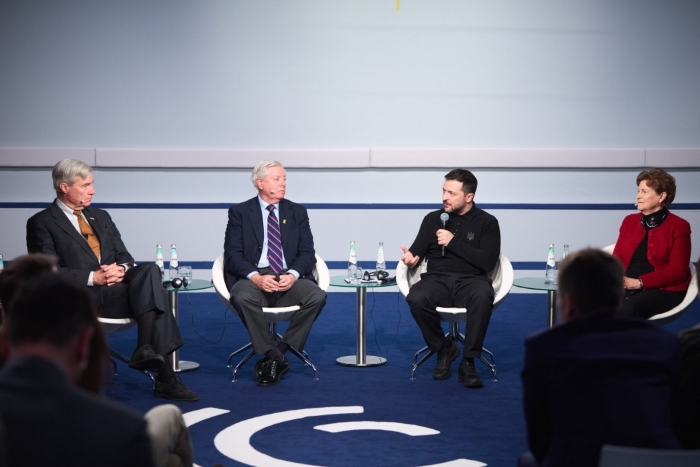
In the statements of US representatives, the position is not to deny certain processes, but to characterize them as unrealistic is traced. For example, Republican Lindsey Graham spoke about Ukraine’s accession to NATO during the Strategic Investment: The Future of the U.S. panel, he spoke rather negatively and instead suggested scaring Putin by saying that Ukraine would join NATO immediately if he attacked again. As part of this discussion, he explained why Ukrainian resources, in his opinion, could become a guarantee of peace:
Let’s arm this guy [he pointed at Zelenskyy, sitting next to him]. Let’s do the minerals agreement, so we’ll have American business interest. Putin doesn’t understand what’s going on. If we sign this minerals agreement Putin is screwed because Trump will defend the deal, so the best thing is going to happen here is he’s going to do a deal with you. I hope that he will defend America’s interest so this war is going to come to end.
Zelenskyy, in turn, reiterated the theses already voiced during the conference about the importance and indicative conditions of a just peace, and with regard to Ukrainian minerals, he emphasized that if the territories of Ukraine remain occupied, Russia will use these resources or offer them to its allies, as most of the deposits are concentrated in the East of Ukraine.
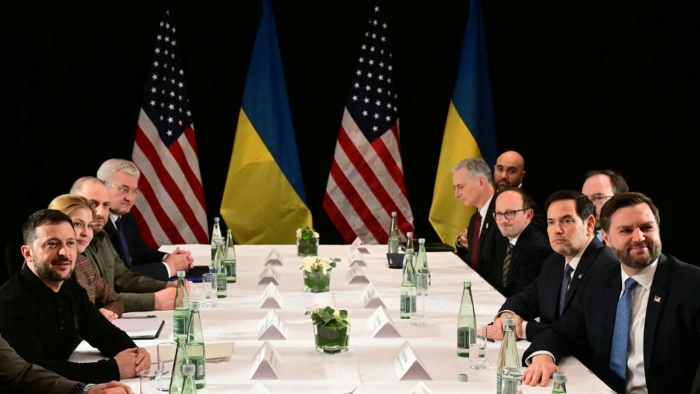
On the evening of February 14, Zelensky met with Vance. Both described the conversation as productive, but the details remain private.
The President of Ukraine also spoke live with a delegation from the U.S. House of Representatives led by Congressman Mike Turner, where, according to Zelenskyy’s post, they discussed the continuation of joint defense activities.
Ukraine-European Allies
In their speeches, European leaders advocated for continued assistance to Ukraine and conveyed the message that quick decisions would lead to even worse consequences.
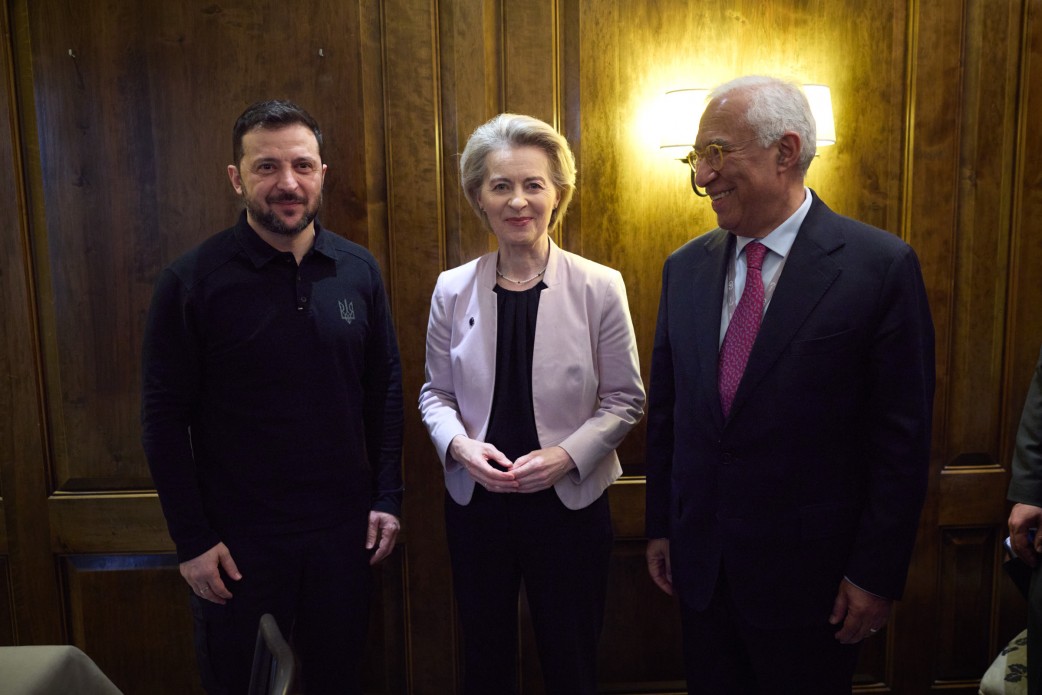
On the first day of the conference, Volodymyr Zelenskyy met with the President of the European Commission Ursula von der Leyen, and the President of the European Council António Costa. According to a report on the European Commission’s website, they expressed the willingness to put Ukraine in a position of strength ahead of any future negotiations and that Ukraine is provided with strong security guarantees, also noting the need to strengthen Europe’s defense capabilities.
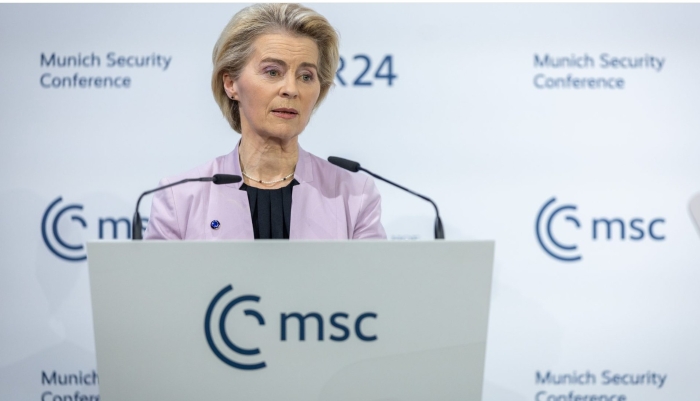
During her The EU in the World speech, Ursula von der Leyen said:
The authoritarians of this world are carefully watching whether there’s any impunity if you invade your neighbor and violate International Borders or whether there are real deterrence. Ukraine needs peace through strength. Europe wants peace through strength and President Trump has made clear the United States is firmly committed to peace through Strength.
The President of the European Commission emphasized the EU’s contribution to helping Ukraine:
The overall support amounts to 134 billion EUR that is an equivalent of $140 billion that is more than anybody else has contributed.
She emphasized that EU countries currently spend about 2 percent of their GDP on defense, and this value should be raised to 3+ percent. Ursula von der Leyen answered in the affirmative when asked whether the EU should participate in the hypothetical negotiations.
The German side was generally resolute.
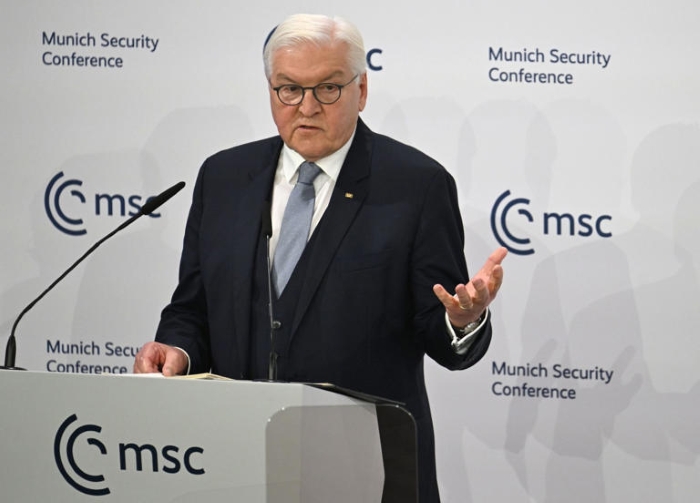
In his welcoming speech, German Federal President Frank-Walter Steinmeier called on European countries and the United States to continue supporting Ukraine, as Germany, the second largest donor after the USA, will do and emphasized that it is important to remain subjects, not objects, of the international system.
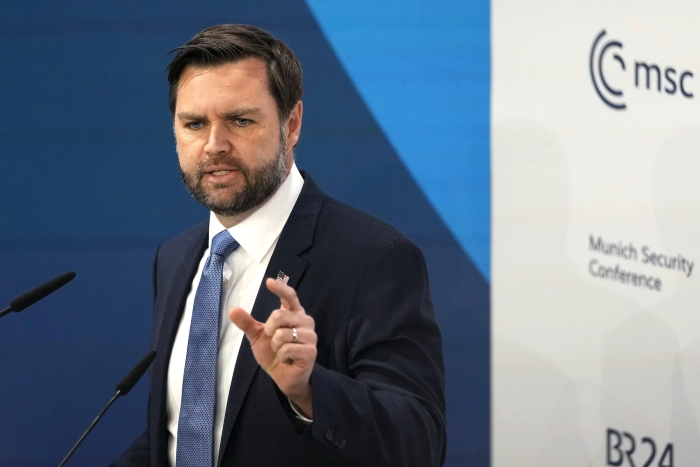
German Defense Minister Boris Pistorius changed the beginning of his planned speech to respond to J.D. Vance’s statements about democratic principles in Europe. The day before, the US Vice President said:
I worry the most about vis-a-vis Europe is not Russia, it’s not China, it’s not any other external actor. And what I worry about is the threat from within, the retreat of Europe from some of its most fundamental values, values shared with the United States of America.
In addition, the US Vice President criticized the non-recognition of the election results in Romania, which were achieved with Russian interference.
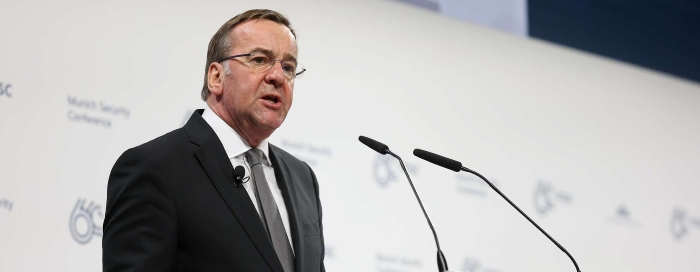
Pistorius appealed:
The United States are pushing for a quick peace settlement between Russia and Ukraine and they expect Europe to take the lead in securing any agreement that follows. These negotiations can be a turning point for our continent and transatlantic relations…The choices we make now will determine whether we live in peace or crisis.
We must ensure that Ukraine is not left alone…There will be no lasting peace in Europe without a strong and free Ukraine.
He added that Ukraine should enter the negotiations from a position of strength, and the rest of Europe should participate in this and ensure that Germany will continue to help Ukraine, but European defense should be increased.
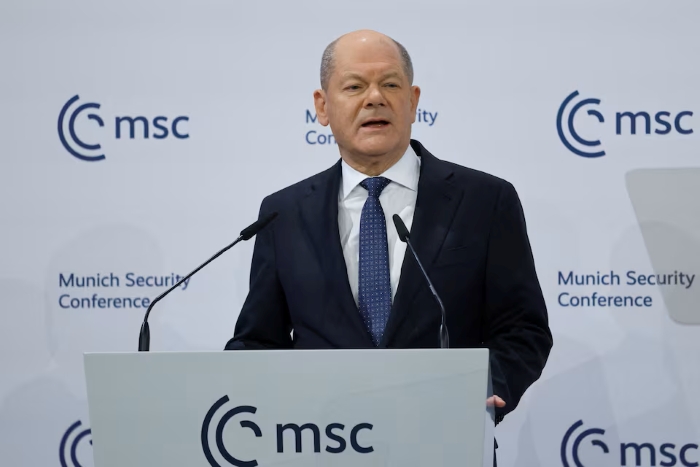
German Chancellor Olaf Scholz started the second day of the conference with an emotional speech criticizing any concessions, and calling to help Ukraine after the war:
It’s absolutely clear that a postwar Ukraine would have a very strong army but this leads me to the question how should what is what we we could get for guaranteeing that Ukraine will not face the next war with Russia some years later and my view is the first of all is a strong Army of Ukraine which will be over their size of their economy which they could not afford from the strength of their own economy so there will be a responsibility in the postwar times for Europe and for United States and for the international partners and Friends of Ukraine to make this happen and all the sort of security guarantees we should be designed from this basis so the key is a strong Ukrainian Army which you help fund and support.
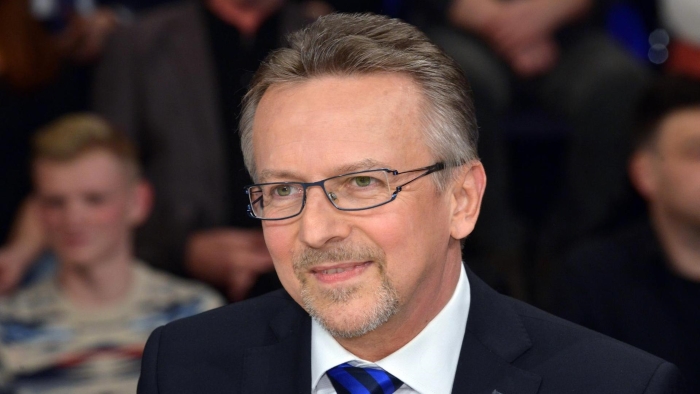
In the social network X, Olaf Scholz called on the Bundestag to recognize the war in Ukraine as an emergency. Karl-Heinz Kamp, former scientific director of the NATO Defense College in Rome, explained what this will mean for Germany and Ukraine:
Olaf Scholz’s hint at the emergency status has to do with the domestic situation in Germany. We have in our constitution a limit to further public debt. This “debt break” (Schuldenbremse, in German) can only be circumvented in case of an emergency. Our constitutional court is very strict with this and is not willing to accept the Ukraine case as an emergency since it is going on for three years now, which means that additional funds can and should be provided by the regular budget. Scholz, though, always shyed away from cuts in our (over-generous) social spending to free funds for security and defense. At the end, his view is irrelevant as he will not be Chancellor in a week from now.
J.D. Vance refused to meet with Scholz and instead had a conversation with the leader of the Alternative for Germany (AfD), Alice Weidel. The party is in favor of establishing relations with Russia and did not include in its program the fact of condemning Russian aggression in Ukraine. Another candidate for chancellor, Friedrich Merz, said that in coordination with other European partners, he would provide Ukraine with long-range Taurus missiles.
Karl-Heinz Kamp suggests how Germany’s policy on armed assistance to Ukraine might change:
The upcoming elections will — provided that Friedrich Merz wins — lead to a fundamental policy change in Germany, including more spending on security and defence (which includes military support for Ukraine) independent from the debates in Munich. Merz is aware of the fact that the German defense budget has to raise up to 3% of GDP at least — regardless what Washington is saying. The German support for Ukraine, which is already the second highest after the US, will remain.
German Foreign Minister Annalena Baerbock called “Putin’s” Russia the biggest enemy of Europe within the panel Europe’s Geopolitical Future.
During the security conference, Volodymyr Zelenskyy also spoke with a number of European leaders:
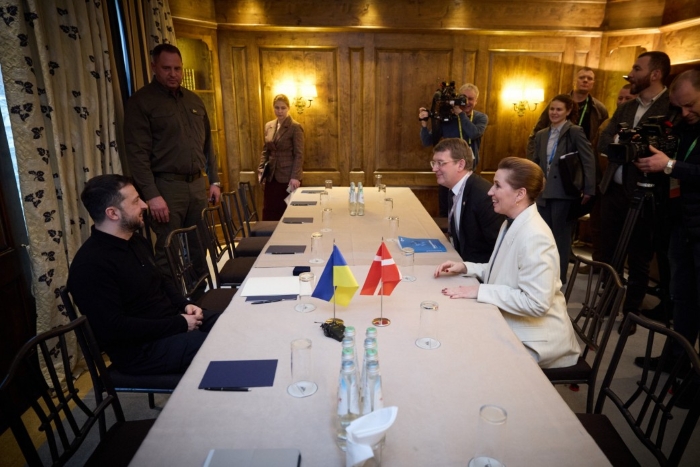
— With Danish Prime Minister Mette Frederiksen, thanking her for direct investment in Ukraine’s defense industry. The conversation focused on countering the Russian shadow fleet.
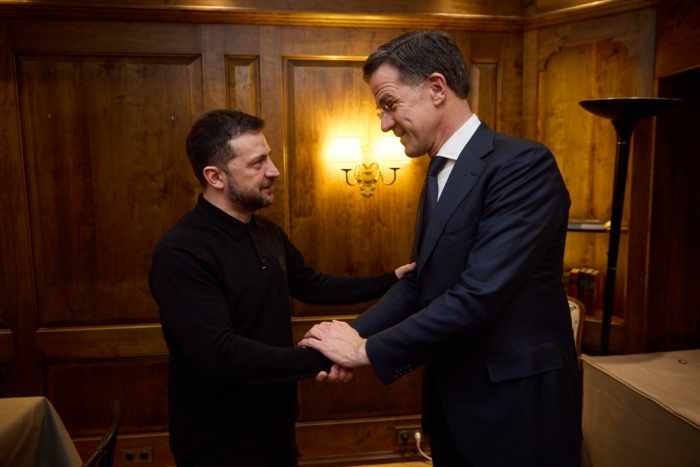
— With NATO Secretary General Mark Rutte he discussed options for reliable guarantees for Ukraine and the Ramstein formats and the NATO-Ukraine Council.
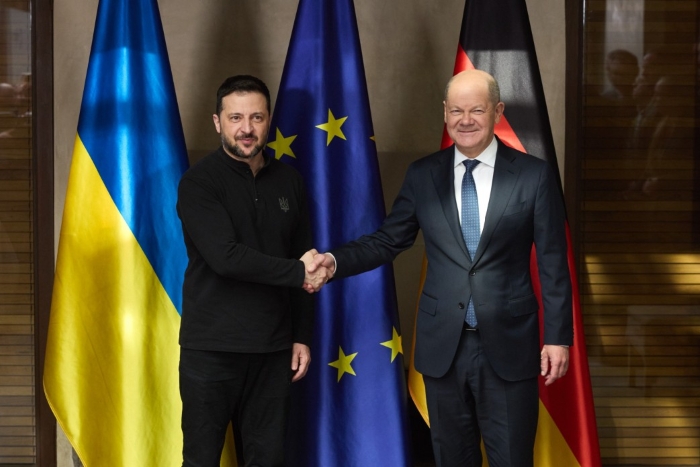
— With German Chancellor Olaf Scholz, the basis of the conversation was the idea of a peaceful settlement.
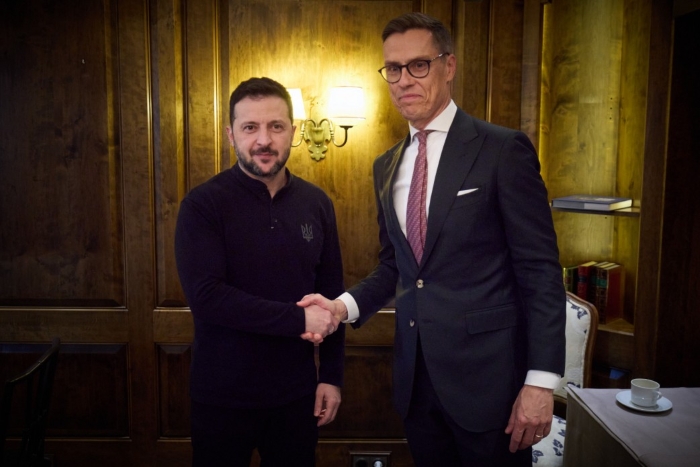
— With the President of Finland Alexander Stubb, Volodymyr Zelenskyy discussed the prospects of Finnish investments and Ukrainian long-range weapons
— Together with Rustem Umerov, Minister of Defense of Ukraine, the President of Ukraine met with the Prime Minister of the Netherlands Dick Schoof. The Ukrainian side thanked for the help, and Dick Schoof promised to provide it in the future.
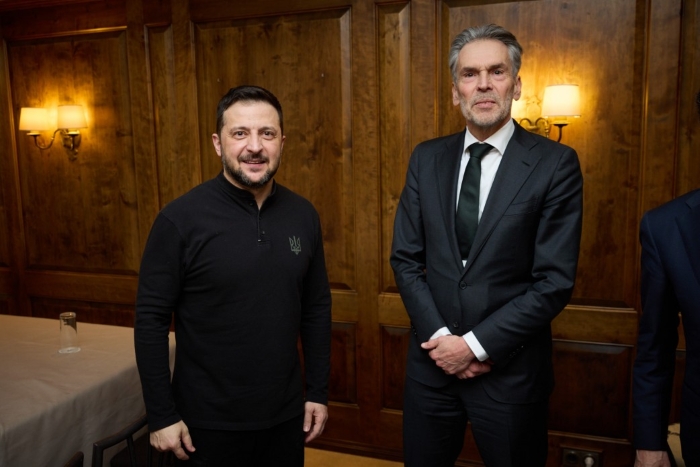
— With Lithuanian President Gitanas Nausėda, the focus is on strengthening air defense.
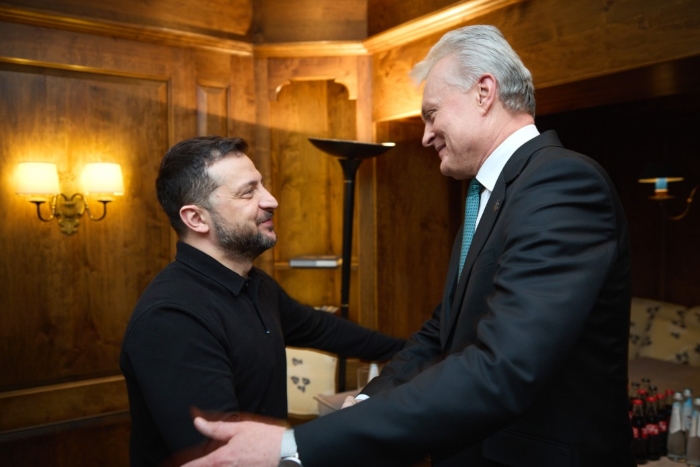
— With the Prime Minister of Norway, Jonas Gahr Støre, in particular on arms financing.
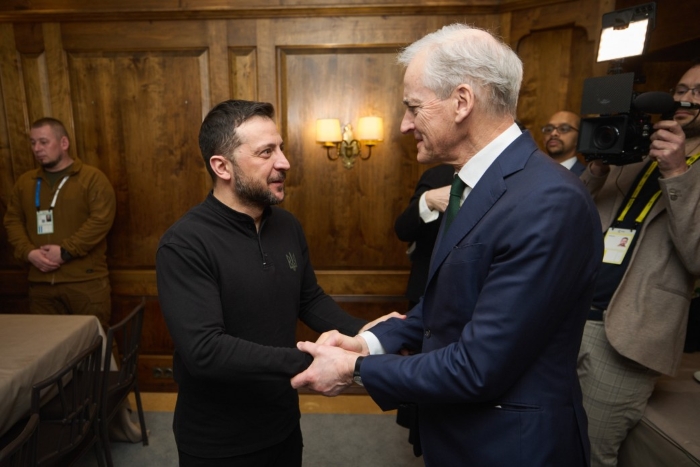
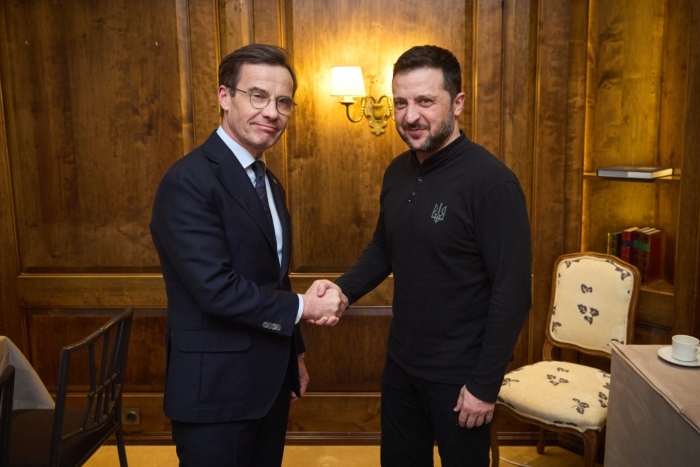
— With Prime Minister of Sweden Ulf Kristersson, where the leaders touched on the topic of sanctions against Russia.
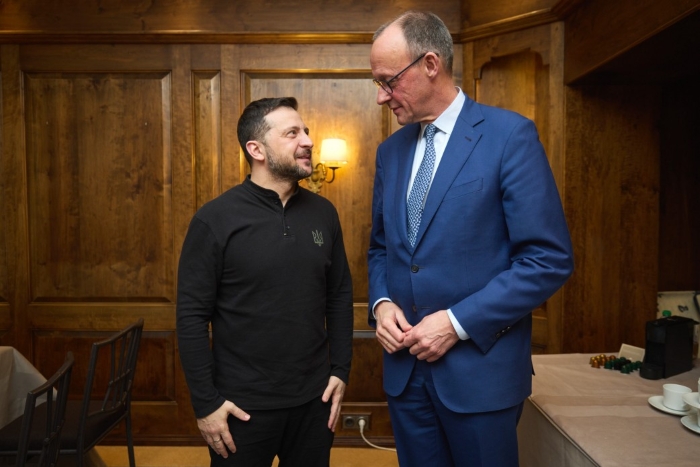
— With the chairman of the Christian Democratic Union party, the head of the opposition CDU/CSU faction in the German Bundestag, Friedrich Merz.
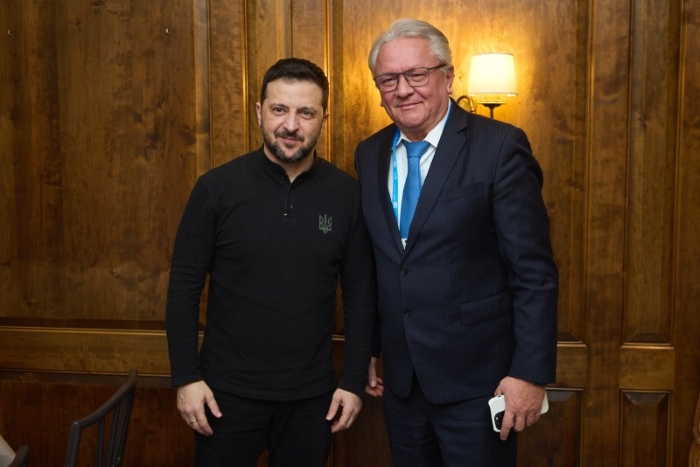
— With Rheinmetall CEO Armin Papperger on the development of joint defense projects.
Also, according to the Ukroboronprom [Ukrainian defense industry] press service, Ukroboronprom and the French company Thales International SAS signed an agreement to develop a joint venture on the sidelines of the Munich Security Conference.
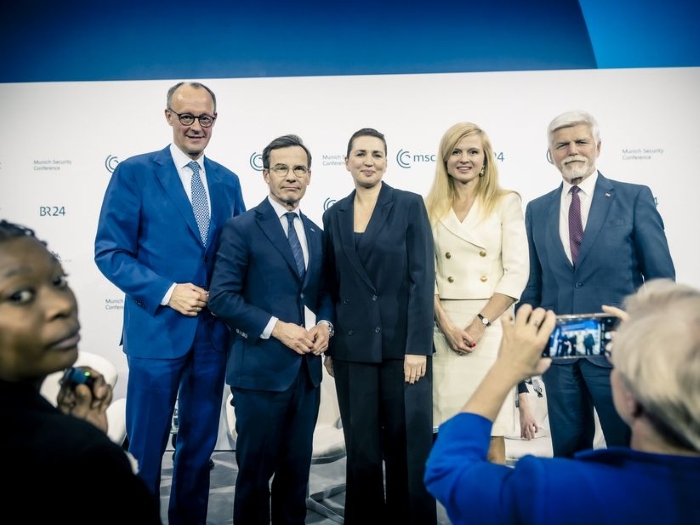
President of the European Council António Costa, President of the Czech Republic Petr Pavel, Prime Minister of Denmark Mette Frederiksen, Prime Minister of Sweden Ulf Kristersson, and Chairman of the Christian Democratic Union Friedrich Merz discussed the topic Security Dividends: European Support for Ukraine. They also explained that their opinions should be present at the hypothetical negotiating table.
Petr Pavel began the discussion:
I think that first on our side would be to Define our own European position what are our red lines what are our withdrawal lines and all these will have to be discussed with Ukraine.
Prior to that, Czech Foreign Minister Jan Lipavsky told the Czech media outlet Novinky that he and President Petro Pavel had been convincing Keith Kellogg to continue supporting Ukraine.
Mette Frederiksen received applause from the first sentence of her remark:
Let me start by answering your first question [moderator Katarzyna Pisarska set this topic at the start]. You were asking all of us in the panel what is the what is the plan with Ukraine and let me jump to conclusion it is to win the war.
She stated that Europe is not doing enough to support Ukraine and that she sees the war in Ukraine as a manifestation of Russian imperial ambitions in a broader sense.
Ulf Kristersson echoed his colleagues’ remarks:
Every result that simply ends a in a possibility for the Russians to to rearm to regroup and to come back and to go further than they did before that is a obviously extremely bad solution.
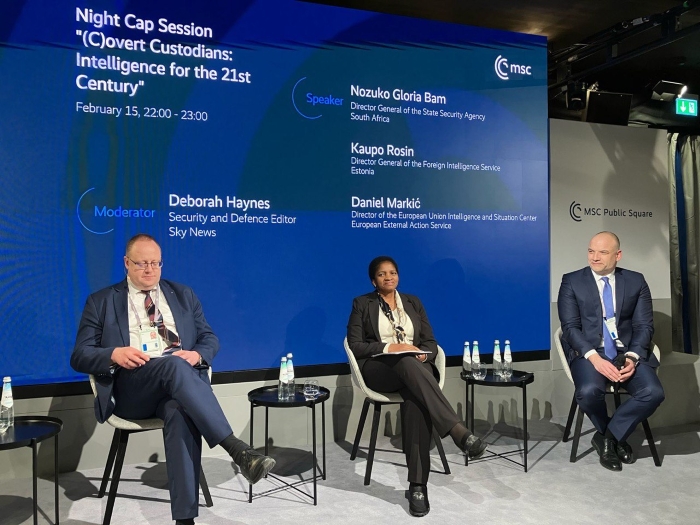
Kaupo Rosin, Director General of the Estonian Foreign Intelligence Service, who took part in the discussion of modern intelligence, shared with The Ukrainian Review his assumptions about the state of Russia today:
I see that the Russians are now trying to get through the negotiations, everything they did not get militarily.
The plan is to get rid of the sanctions very early on because that is really hurting them. They still have the maximalist goal. Regarding Ukraine, we will see during the negotiations maximum military pressure from the Russian side and we will also see demands about the rest of Europe, about trying to push the NATO umbrella back from the NATO eastern flank and by at the same time conducting a military reform, creating new military options in the Russian, let’s say, Western strategic direction for the future.
Russians lie, and this is how it goes. In my view, by China tolerating the flow of Western technology into Russia and the activities of Russian Chinese companies and individuals inside Russia, it’s a huge help for the Russians. The Russian military industry and the economy would suffer much, much more if this were not the case.
Ukraine-World
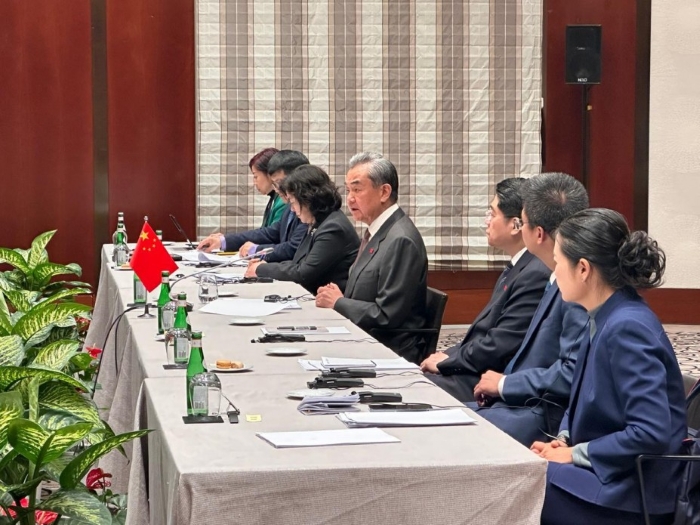
Head of the Office of the President of Ukraine Andriy Yermak and Ukrainian Foreign Minister Andrii Sybiha met with Chinese Foreign Minister Wang Yi. Subsequently, Wang Yi, together with the Chief Foreign Policy Advisor to the President of Brazil, Celso Amorim, made a statement that they were ready to continue to constructively contribute to the settlement of the Russian-Ukrainian war, which they called a “crisis.” Andriy Yermak also had the opportunity to meet with the Minister of Foreign Affairs of Turkey Hakan Fidan.
The Munich conference became a platform for expressing different positions on the end of the Russian-Ukrainian war, which sometimes clashed. It was an introduction for political leaders to the new U.S. team and their vision for the newly elected administration. Ukraine’s position remains unchanged: guarantees of a just peace. European allies have recognized that they need to increase their defense, but at the same time have demonstrated greater resolve to help Ukraine.
Representatives of Trump’s team interpret his statements and intentions differently and express their opinions with differences from each other, so further actions and consequences remain unpredictable despite a large number of discussions. Ahead are the German elections and potential visits of US politicians to Ukraine.
By Daria Maslienkova