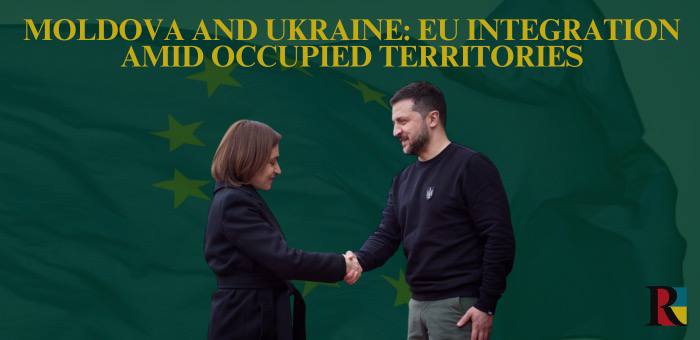


Debates continue over whether Ukraine’s occupied territories pose an obstacle to its European integration. Yet Moldova also has a part of its territory under Russian control in a shape of the self-proclaimed Pridnestrovian Moldavian Republic (Transnistria). As Ina Coseru, a Moldovan MP from the ruling PAS party, told European Pravda, the EU has not demanded the return of this territory as a precondition for accession. However, she expects the issue will have to be addressed after Moldova’s upcoming parliamentary elections.
For Ukraine, the situation is similar: the occupied territories are not formally an obstacle to accession, but the desire for future reintegration stands in stark contrast to the ongoing war.
Roots of the Problem
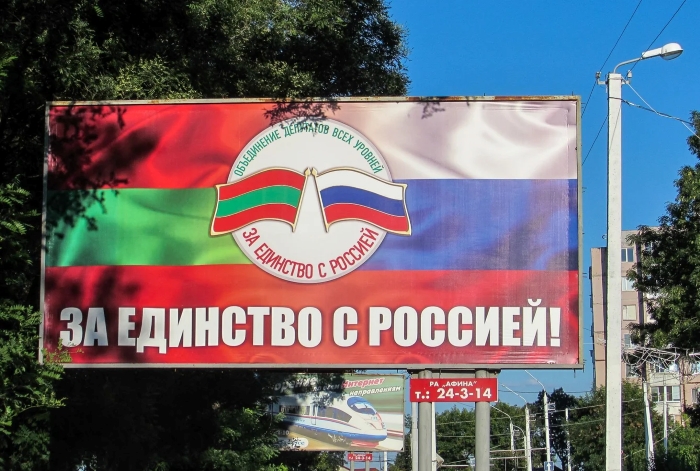
The Republic of Transnistria was declared in 1990 amid the Soviet collapse, with the region seeking to preserve ties to Moscow. Today its population is estimated at around half a million (likely even less in reality due to emigration and high mortality), compared to five times higher Moldova’s 2.5 million.
At the beginning of Russia’s full-scale invasion of Ukraine, Kyrylo Budanov, head of Ukraine’s Defence Intelligence, said during a national telethon that Ukraine was ready to help Moldova expel occupying forces. This was a response to the statements by Transnistria’s “foreign minister” Vitaly Ignatiev that Tiraspol aimed to achieve independence and later join Russia. Yet the political will to act on this was not followed.
As President Volodymyr Zelenskyy estimated at the start of 2025, the Russian contingent in Transnistria numbers about 2,500 troops. To compare with, Moldova’s army has roughly 6,500 soldiers.
A Moment of Hope
Russia’s full-scale war on Ukraine has distracted Moscow and opened a window for Moldova to address the enclave. On January 1, 2025, Ukraine halted a gas pipeline to Europe, prompting Russia to cut gas supplies to Moldova, including Transnistria. Ukraine offered humanitarian aid to the region, but the self-proclaimed administration refused it, despite serious collapse.
Chisinau’s European-minded government has announced a reintegration plan based on economic incentives. However, after 35 years in a pro-Russian information vacuum, many Transnistrians fear “Europeanization” and a change in mindset.
Moldova also looks to Ukraine’s trajectory as a determinant case for Moldova’s fate. In February 2025, Moldovan Prime Minister Dorin Recean said the international context might finally allow Russia to withdraw its troops from Transnistria as part of broader negotiations over Ukraine.
Cyprus is often cited as a precedent in the context of support for Ukraine and Moldova: despite 37% of its territory being under occupation, it joined the EU.
Conclusion
Moldova and Ukraine are expected to join the EU simultaneously. The pair has held steady despite turbulence such as Hungary blocking the opening of Ukraine’s first negotiation cluster. The next decisive moment will be Moldova’s parliamentary elections at the end of September. For now, Moldova relies on Ukraine and on growing economic instability in the Pridnestrovian Moldavian Republic, while Russia continues to rely on force and immerses occupied populations in propaganda that asks them to trade comfort for the preservation of so-called “Russian values”.