

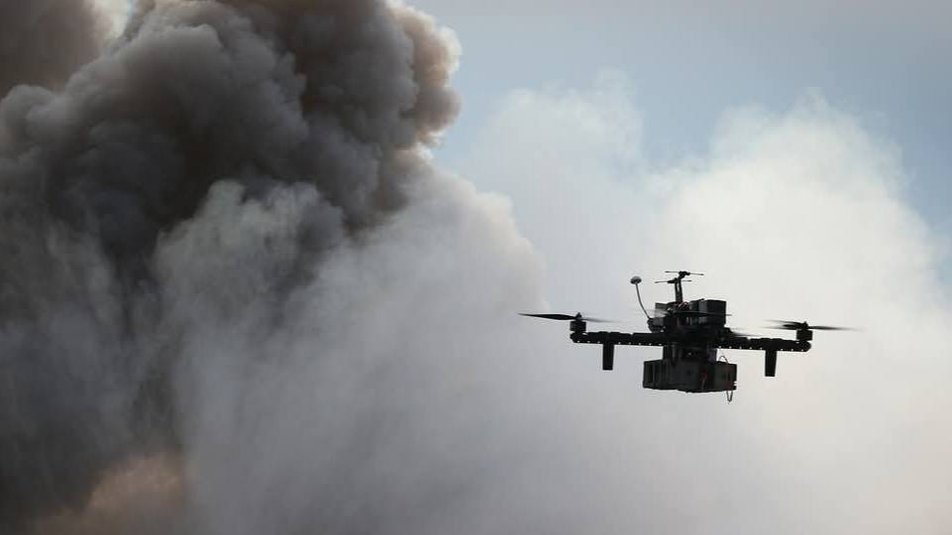
As Reuters reported, European Commissioner for Defence Andrius Kubilius plans to convene talks next week with the bloc’s defence ministers and Ukraine on creating a “drone wall” along the EU’s eastern border. This initiative has emerged after Russian drone attacks and provocations in NATO countries. When Donald Trump came to power, he complained that the European part of NATO was not spending enough on security. The growing vulnerability to Russian Shaheds has highlighted this problem. A positive development is the recognition of Ukraine’s expertise and the involvement of Ukrainian specialists as trainers in certain areas.
Drone protection ambitions
Ukraine will share its experience in neutralizing drones at a conference with Eastern European defense ministers. The idea is still at the discussion stage; neither approximate timelines nor cost estimates have been announced. The concept itself is not new: it was first debated in the Baltic and Northern states, as well as Poland. In 2024, Lithuania, Latvia, Estonia, Poland, Finland, and Norway agreed to create a “drone wall” stretching from Norway to Poland. The plan envisages the use of UAVs for border surveillance, as well as counter-drone systems to stop provocations, smuggling, and other threats. Estonia, for instance, aims to cover its border with Russia by 2027 with a network of sensors for surveillance and detection, countermeasures, and interceptor drones. Back then, The European Union has not allocated funds to Lithuania and Estonia to finance the drone wall project on the border with Russia and Belarus.
Defence spending
In spring 2025, the EU announced a new rearmament plan, “ReArmEurope”, worth €800 billion with a deadline set for 2030. The concept focuses on replenishing European stocks of ammunition, weapons, and military equipment while continuing their supply to Ukraine. The share of defence spending in EU GDP in 2025 reached 1.9%, compared to Russia’s nearly 13%. Although the 2% goal was set back in 2014, it has only now been approached amid escalations. Poland, which has become the primary target of mass provocations, allocates the highest share of GDP to defence (over 4%), followed by Estonia (3.43%). On September 19, 2025 three Russian MiG-31s violated Estonian airspace for 12 minutes, creating a new precedent.
Poland, for example, has signed a deal with South Korea under which it will receive 180 K2 tanks, 117 produced by South Korean defence company Hyundai Rotem and the remainder by the state-owned Warsaw-based enterprise PGZ.
However, leading European economies still fall short of similar results.
Conclusion
For the EU and NATO’s eastern border, where the drone threat is already a reality, this initiative can become part of a broader defence strategy. It is not meant to replace other elements (artillery, air defence systems, traditional intelligence) but to complement them. If financial, technical, and coordination barriers can be overcome, a functional “drone wall” could be in place in certain areas within a few years. However, the danger lies in the vagueness of these concepts, while Russian drones have already violated NATO airspace. As for broader rearmament, Europe, especially countries most likely to be Russia’s next target, is increasing defence spending. Yet, the strategic goals of past years show that this alone has not been enough to prevent violations of NATO’s territories.
Daria Maslienkova