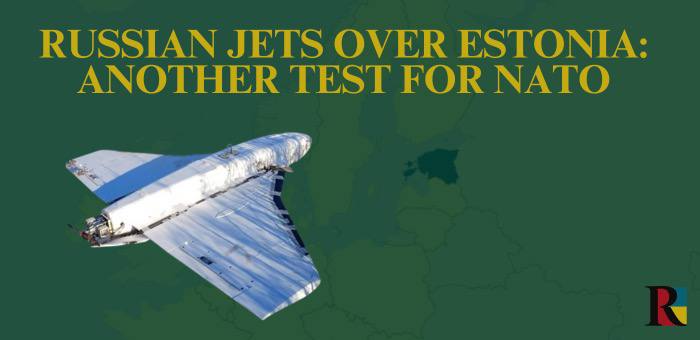


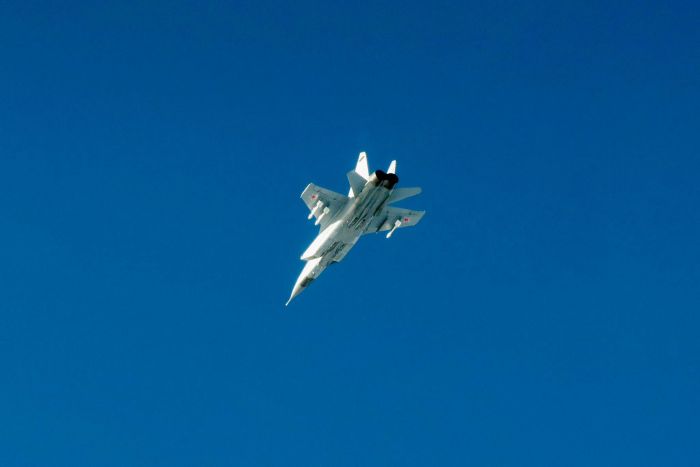
On September 19, three Russian MiG-31 fighters violated Estonian airspace for 12 minutes.
Although such an incursion challenges NATO’s Article 5, Estonia has requested the activation of Article 4 instead. (Article 4 was also invoked after the attack on Poland.). This involves allies consultation under a treat of member country integrity. This has been the fourth violation of Estonia’s airspace this year. Italian F-35 fighter jets were scrambled from the Estonian base, and Sweden and Finland also deployed their aircraft.
NATO’s and Russian Reactions
NATO spokesperson Allison Hart wrote on X:
Earlier today, Russian jets violated Estonian airspace. NATO responded immediately and intercepted the Russian aircraft. This is yet another example of reckless Russian behaviour and NATO’s ability to respond.
The Institute for the Study of War stressed in its report that the violation appeared deliberate.
The Russian side, as usual, denied the accusations, claiming the aircraft were returning to the Kaliningrad (occupied Königsberg) region.
Donald Trump reacted promptly but cautiously:
I don’t love it. I don’t like when that happens. Could be big trouble.
The Turkey Precedent
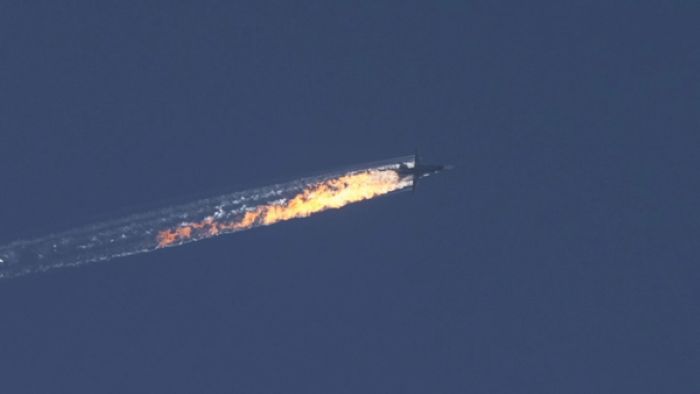
Lithuania reminded that NATO had already faced a similar precedent. In 2015, Russia violated Turkish airspace amid its military operation in Syria. Even after repeated signals from Turkish President Recep Tayyip Erdoğan, Russian objects continued to intrude. Moscow eventually admitted one incursion, blaming bad weather and promising to prevent future incidents. This promise was soon broken.
After ten warnings to a Russian Su-24 pilot were ignored, a Turkish F-16 shot the plane down. In the Estonian case, for example, Russia reportedly switched off transponders, complicating communication.
Two pilots catapulted and were shot in the air by Syrian rebels. The aircraft commander did not survive, the second pilot was later evacuated. This episode underlines a key point in dealing with Russia: strong responses to provocations are the best way to protect a country. The U.S. approved Turkey’s action. From Russia, there was no serious retaliation.
Noteworthy that since 2014, Russia has violated Estonian airspace more than 40 times.
Conclusion
Russia is now testing NATO’s reaction. It puts the Alliance in a difficult position: the violations seem not severe enough to justify forceful measures, yet a growing pattern is evident. After drone attacks in Poland and drone incursions into Polish and Romanian airspace, Moscow has shifted to testing NATO with jets as a new tool. Cyberattacks and other provocations accompany these actions. So far, NATO’s response has not been decisive enough to deter Russia. The good sing is that alliance has at least acknowledged the intentional nature of these aggressive moves.
Daria Maslienkova