

In the darkest moments, when every decision matters, it is not plans and strategies that are important, but courage, determination, and dedication. Some people choose to stand aside, while others become those who hold the line, who protect those who cannot protect themselves. It is precisely such people who form examples of true bravery and responsibility.
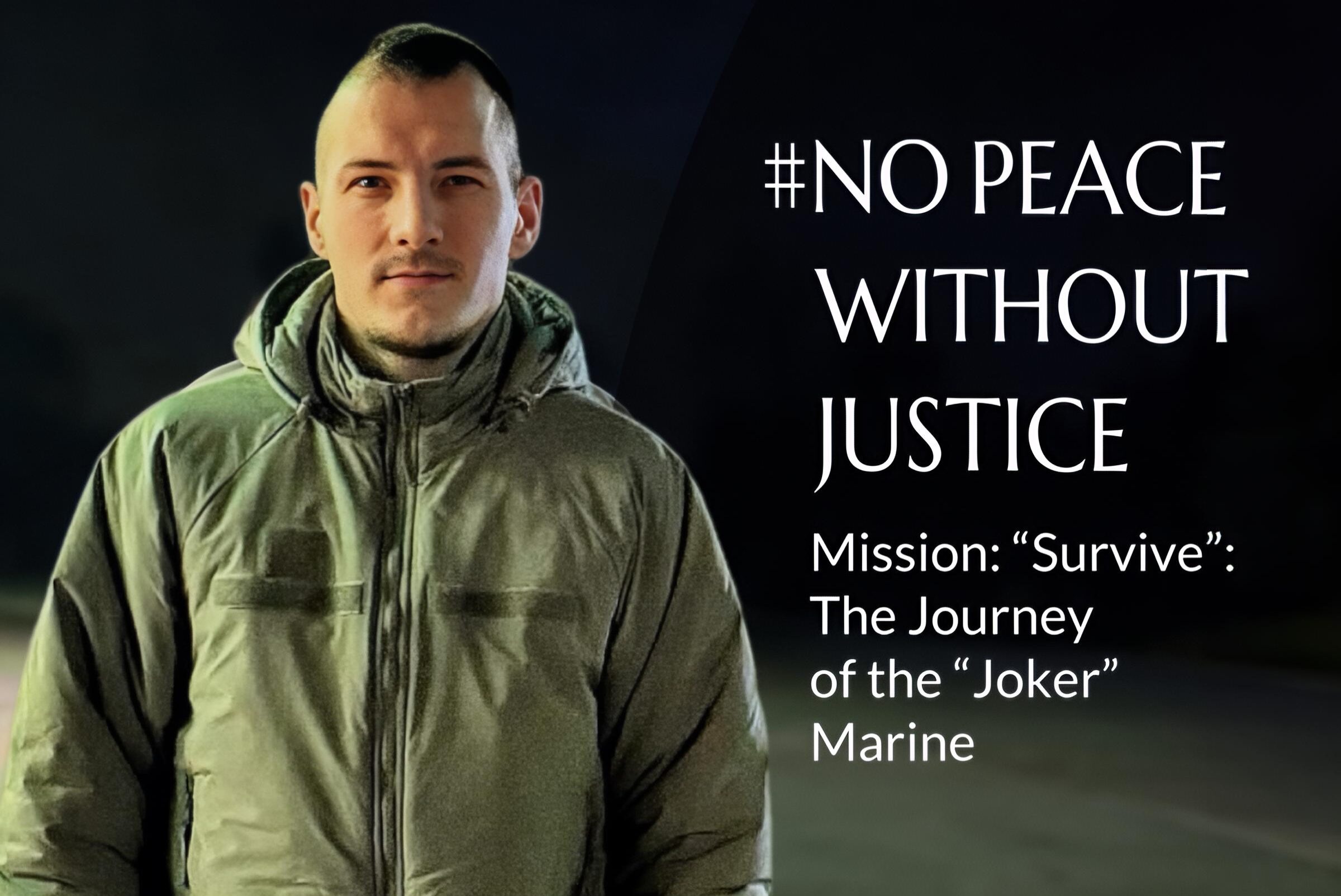
The story of Oleksii Boshyn “Joker” is one such case. It seems that fate itself chose him for this extremely difficult mission, knowing with certainty that he would endure.
The path of the future Defender began in 1999 in the Kherson region. His native region Oleshky, is now under temporary occupation. In 2019, Oleksii joined the ranks of the Armed Forces of Ukraine, later signed a contract, and chose to be a marine in the 36th Brigade. At that time, he did not yet know that this choice would lead him through the epicenter of a great war – the heroic defense of Mariupol.
April 12, 2022. The Ilyich Iron & Steel Works in Mariupol. By order of the Commander-in-Chief, Oleksii, together with his brother-in-arms from the 36th Brigade, went into captivity. What followed were long months of uncertainty. For his relatives, he was for a long time considered “missing in action” and for him, his own countdown of hell began, which stretched over 3 years, 2 months, and 22 days. During this time, the Defender was held in three places of detention: Sartana (3 days), Olenivka (5 days), and the main place – SIZO No. 2 in the city of Galich, Kostroma region of the Russian Federation, where he spent 3 years, 2 months, and 14 days.
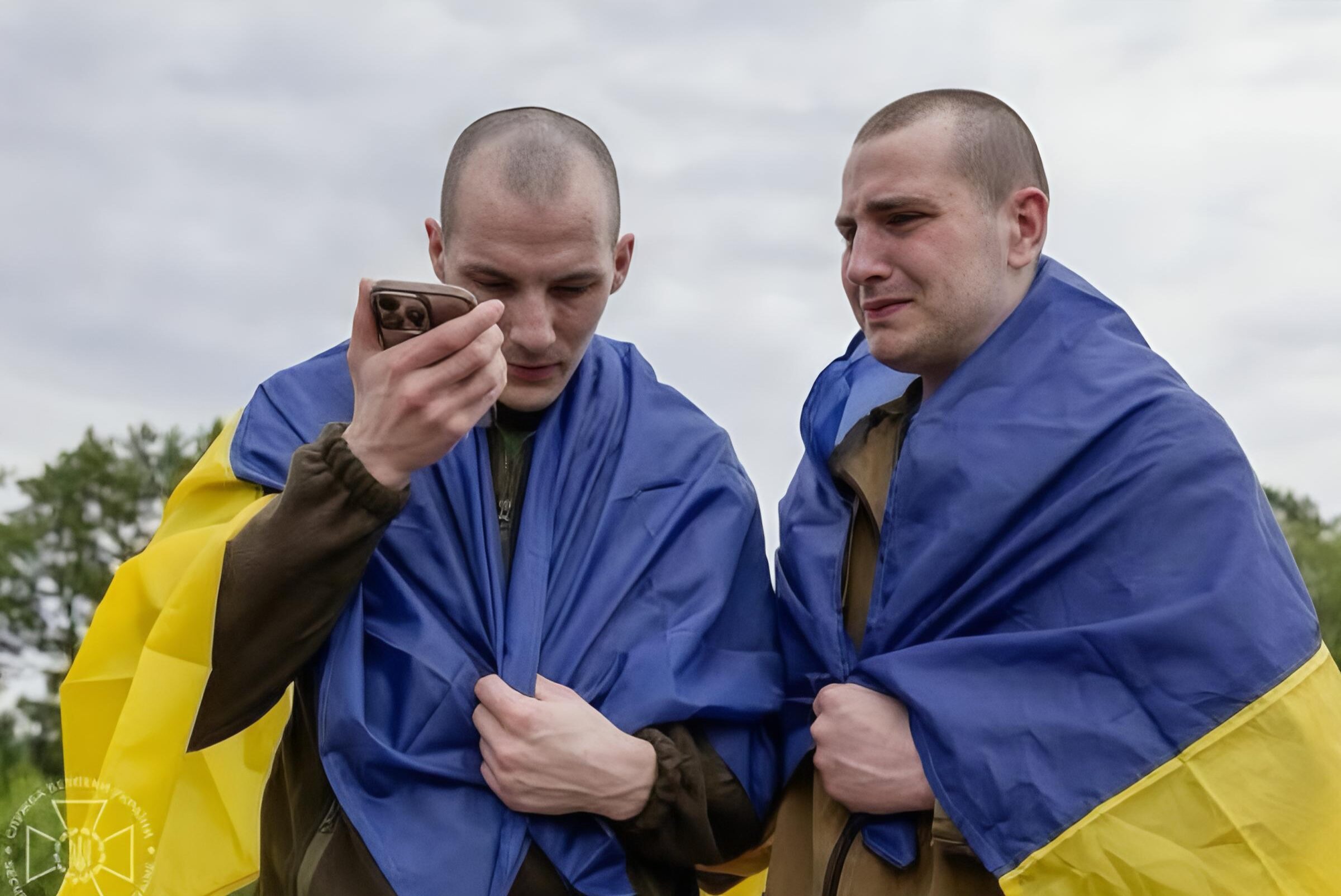
And only in early July 2025 did that very day come for the young man – the day of his exchange and return to Ukraine. The Defender did not believe it until the very last second, as his name had previously been included in the lists three times, but at the last moment, the hope would be cut off.
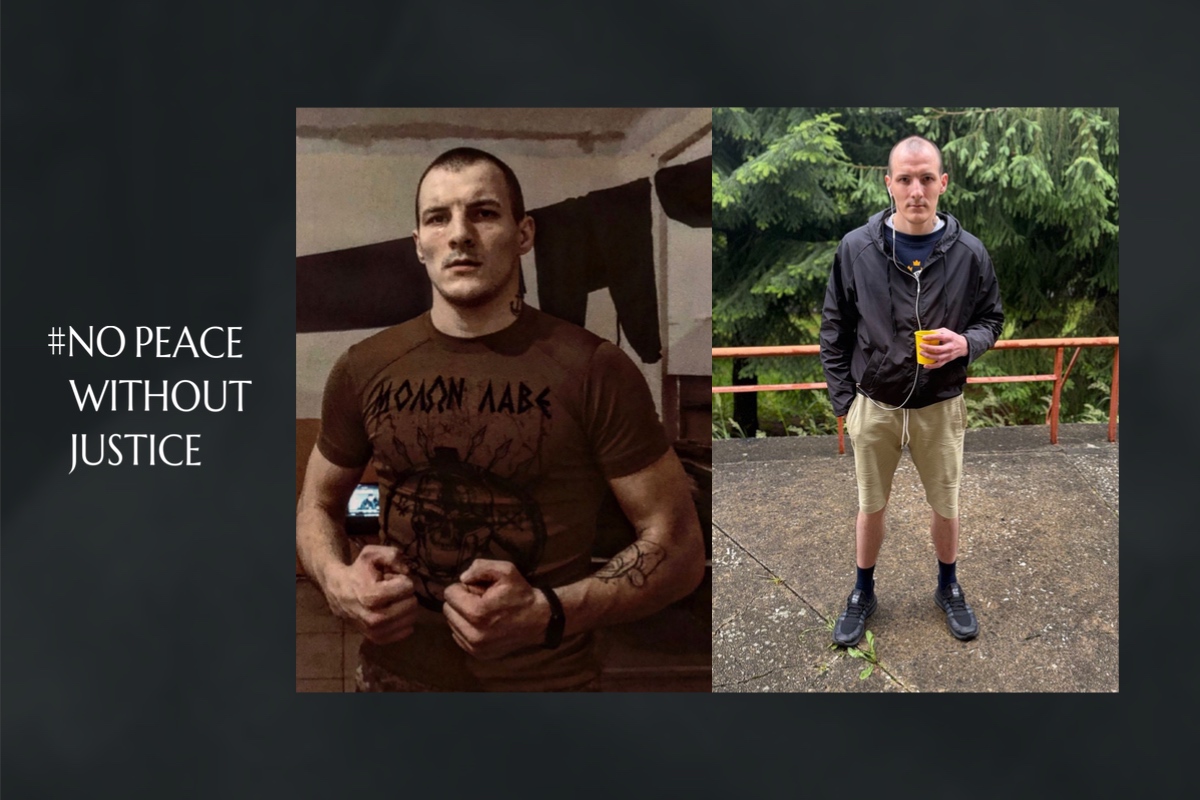
Now Oleksii is only 26. He has his whole life ahead of him. The very life that he literally wrested from fate for each of those 1,180 days in enemy captivity.
Today, our “Thank you” is not just gratitude to a serviceman. It is respect for a person who did not wait for change, but became part of our struggle himself. This is a struggle for the right to be a nation.
The moment of going into captivity
The 36th Separate Marine Brigade, in which I served, was based at the Illich Iron and Steel Works. We were not at Azovstal, where the Azov Regiment was stationed. The distance between our plants was about 10 kilometers. In ordinary life, this is two hours on foot, but at that time, to cover this distance through ruins under constant fire was difficult.
By the beginning of April, we were already in three rings of encirclement by the occupiers. We were breaking through, almost without a chance, even though we tried four times. Some managed to get out, but they were only a few. At first, we tried to move toward Sartana, then simply at random. The fourth time, we tried to break through to Azovstal, to the Azov fighters, but it also did not work.
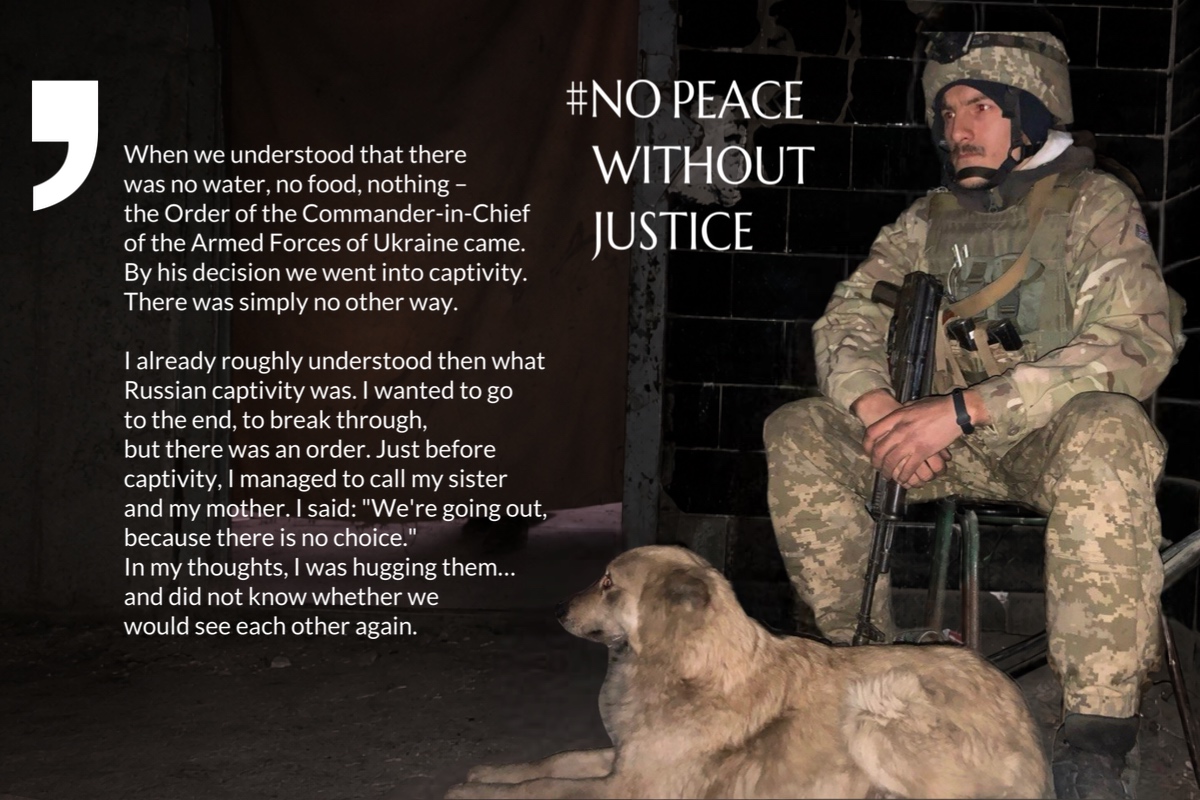
When we understood that there was no water, no food, nothing, the Order of the Commander-in-Chief of the Armed Forces of Ukraine came. By his decision, we went into captivity. There was simply no other way.
I already roughly understood what Russian captivity was then. I wanted to go to the end, to break through, but there was an order. Just before captivity, I managed to call my sister and my mother. I said: “We’re going out, because there is no choice.” In my thoughts, I was hugging them… and did not know whether we would see each other again.
Sartana
Immediately after being taken into captivity, the Russians brought us to Sartana – a settlement not far from the Illich plant. We were placed in barracks – we spent three days there. During this time, each of us was given one wafer, one can of stewed meat – first divided among nine, and then among eleven. They would say: “There are many of you, there is a little food.” One loaf of bread was given for six, and one hot tea for two.
There were 800 people in one barrack. These were former warehouses, that is, there were no conditions at all. Everyone slept on the floor. There was extreme heat: imagine, eight hundred people in a small space. The shelves were standing there, so we lay on them in turns, so that everyone could at least rest a little. There was, of course, no toilet or bath – we had to relieve ourselves right there in the barracks.
But you know, this was only a transit point. Now, having gone through everything, I can say that at that time, for me, this was not yet captivity. Kadyrov even came to us and ordered the Russians not to beat us. He justified this by saying that they had promised to bring us intact. The only question was – where. Toward the morning of the fourth day, we were all put on buses and taken to Olenivka through all of Donetsk. And there, a completely different reality began.
Olenivka
We were transported through all of Donetsk by buses, minibuses, and trucks. The people there had been strongly turned against us. Locals in the streets, when they saw us, behaved aggressively, used obscene language, and threw everything they had at hand at the vehicles.
When we arrived in Olenivka, it turned out that it was a former women’s colony. All the women had just been taken out of there. We waited for 5–6 hours – without food, without water. And it was there that the first beatings by the Donetsk guards started.
When you get off the bus, you have to go through the so-called “reception” – a line of guards. They stood with belts, sticks, batons, and iron pipes. They beat everyone one by one. You had to run, strongly bent over; the main thing was to cover your face and chest, because it could hit anywhere. If you didn’t make it, they could beat you badly right there. One guy even tried to cut his veins right there on the spot; he couldn’t take it, but they didn’t let him.
In Olenivka, we also slept on the floor – 800 people in one barrack, and there were four or five such barracks. As for food, you could stand outside in line all day. You come back from lunch and immediately get in line for dinner. Sometimes there was no strength to wait, so we just went to sleep hungry. They gave us something like oatmeal or cabbage soup.
We stayed there for five days. And then we were sent via Taganrog by plane to the Kostroma region – the city of Galich, SIZO No. 2. From my barrack, 140 people were taken there. We were told that we were lucky, because Galich was usually the final point – from there, no one was sent further on transfer to other places.
Sizo no. 2 of the city of Galich, Kostroma region, Russian Federation
The first day of torture
We arrived there late at night. We were let out one by one, first thrown into a general cell. Then you run out, quickly take off the old rags, and go into the shower. The speed was such that you could barely manage to just get wet. You come out, and you are already being beaten. Then another room: they fill in the data, issue things, and take you to the cell.
The first two or three days were more or less; they seemed to be looking at us and did not know how to deal with us. And then special forces arrived. We called them “Dementors.” They were Chechens. It was they who started beating us from morning to night, as they wished.
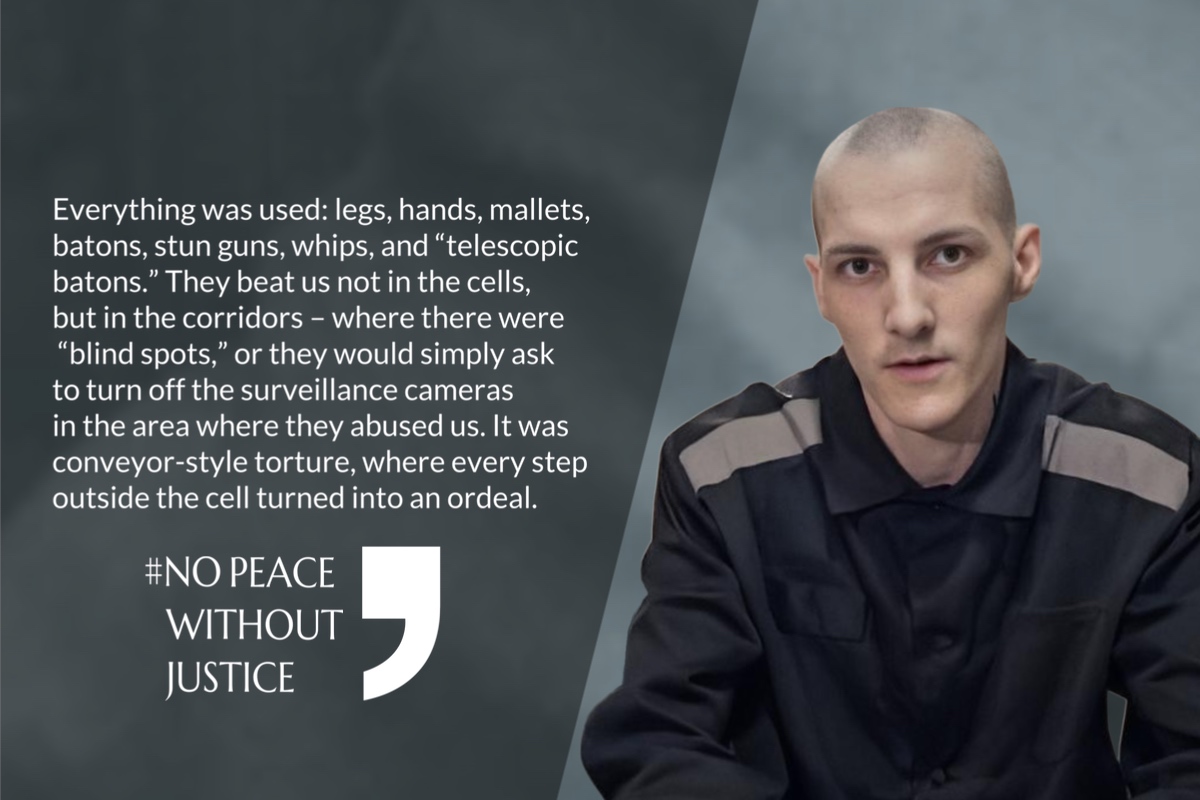
Everything was used: legs, hands, mallets, batons, stun guns, whips, and “telescopic batons.” They beat us not in the cells, but in the corridors – where there were “blind spots,” or they would simply ask to turn off the surveillance cameras in the area where they abused us. It was conveyor-style torture, where every step outside the cell turned into an ordeal.
Conditions of detention and food
In total, I had spent 3 years, 2 months, and 14 days there. We were thrown into different cells: first solitary, then for six, for two, and toward the end, where four were held.
As for belongings, a small tube of toothpaste, which was issued once every two months. A toothbrush – once a year. I sewed my own socks, and the underwear was also hand-made. A mug and a spoon were my own, and a piece of soap – one for the whole cell. There were no medications at all. There were two basins, in which I both washed myself and did the laundry. We also drank water from the taps only with permission, and it was black. And you wash the clothes, bath and wash dishes with this same water.
As for the diet in the morning, they usually gave pearl barley, barley, millet, or semolina. By the way, in the first three days we still ate buckwheat with milk. They gave tea and two pieces of bread with the porridge. But there was more water in the bowl than grain. If you managed to scrape together one spoonful of actual porridge – that was already good. We learned to trick it: we would put that watery stuff on one piece of bread, cover it with the second – making such double sandwiches. Because if you just sip it from the bowl, you won’t feel at all that you have eaten something.
For lunch, they gave soups, borshch or cabbage soup, and pasta. For dinner – fish. They still had at least some variety, and then they realized that they could simply profit from us until the end of 2022. No one checks anyway.
Later, they might not cook the fish at all – they gave it raw, as it was. Even their inspectors told me, “Don’t eat it, it will be bad.” And what could I do? I said, “But I want to eat.” The meat was often green, rotten – they just threw it into the soup, boiled it, and that was it. I remember how they brought in a batch of pearl barley with maggots. We ate it like that for two months. Sometimes the crumbs of bread fell on the floor, and we picked them up and ate them. We tried to set something aside “for later,” wrapped it in rags, but the inspectors found it, and for that we were severely punished.
They gave us only a few minutes to finish our meals. Breakfast – one minute, lunch – three, dinner – one minute again. And often they deliberately poured everything with boiling water. They stood and watched how we would pour that boiling water into ourselves in a minute. But we adapted even to this, we learned to survive even like that.
About the daily routine
Wake-up was at 6:00 in the morning. Exercise before breakfast is mandatory – it lasts half an hour. Squats, push-ups. It is conducted by the duty person in the cell.
Then the command: “Get ready for breakfast.” At this time, you are not allowed to make your bed or wash. Preparing breakfast meant standing up, wiping the table, and waiting for the food. Even going to the toilet is only by command.
After the meal, the hardest part began. For eight months, we simply stood all day and looked at the wall and listened to old Russian songs. Movement was not allowed, nor talking. Because of this, everyone developed severe problems with their legs, which simply gave out. Here is an interesting observation: I didn’t even know that this was possible. Life showed that it could be like this. I even learned to sleep standing still on my feet. Later, they introduced new rules: for half an hour you walk, for half an hour you sit and stand. And so in a loop all day. Then, over time, it became a little easier. They were also forced to read Soviet literature.
We also had “yard time.” They issued a uniform, one for the whole year. The coats were thin, like a finger, and a hat that we were not allowed to pull down over the ears. Outside it was -35, and we were taken out like that for 3–4 hours. Some of the guys did not even have proper shoes – they walked in summer ones, literally without soles. Like that, without shoes, they walked in such frost. And when summer came, it was the opposite – they let us out for only 15 minutes, and that was it.
About medical care
The biggest problems were with the legs and then with the teeth. You run out to the inspection, all bent over, and they ask if there are any complaints, if anyone wants to go to the medical unit. If someone said “yes,” they would answer: “We’ll treat you now.” And they would start beating. That is, you couldn’t even ask about the hospital – you would immediately get it. This was how it was for the first six months, while the Chechens were there. Then the local guards would sometimes take us to the medics, but they did not really provide any help. There, everything depended on the special forces.
“Interrogations”
From the very beginning, investigators, FSB officers, conducted so-called “investigations.” During interrogations, you tell everything as it really was, and they say: “No, that’s wrong.” You hold on to the truth until the very end, but they ignore it. Out of 40 of our guys, six pleaded guilty to things they did not do. They broke down and “signed” that they had allegedly killed civilians. And for this, they were given prison terms.
What the horror consisted of: they could submerge you in water, pull a bag over your head, throw a fishing line over your head, or tear out a nail. They could intimidate you with a Makarov pistol. I stood my ground until the very end: I would not take the deaths of civilians upon myself. Then they tried to force me to inform on my own, those who were in the cell with me. But I did not do that either.
Return to Ukraine: first emotions
They tried to exchange me three times. In 2025, when they had already started taking me to wash, shave, and feed me up, I understood that this time it was definitely an exchange. But suddenly I heard that I had been removed from the list. Then I didn’t want anything anymore; complete apathy set in.
Even when I was already actually flying for the exchange, I did not believe it until the very end. Subconsciously, it was still frightening. When you get on the plane, you immediately recall the story about our guys who were held with us in the same SIZO, flew for an exchange, and did not make it – the plane had crashed. This was on January 24, 2024. About a month after that catastrophe, they started calling us in – they were looking for those who had been held with the dead. They asked about tattoos and distinguishing marks to identify them. And here you are sitting in the same kind of plane, and you do not know: is it an exchange or the end of life?
I realized that I was home only when they began to remove our blindfolds. A guy cuts the tape on the eyes, and out of habit, I say: “Grazhdanin nachalnik, dozvolte znyatu povyazky?” (“Officer, permission to remove the blindfold?”) And he answered me calmly: “You don’t need anything, you are already home.” At that moment, I did not believe it. And only when I saw the sign “Medical Service” in Ukrainian – that was it, the emotions overwhelmed me.
But what I remember most from the whole exchange is how we were going home. You look out the window, and children are standing along the road… It was the most pleasant thing. The way the children welcomed us is simply impossible to forget.
About life now and plans for the future
It has already been the ninth month since I returned from captivity. At first, there was euphoria. You don’t sleep for months, even on medication, because you want to experience the whole world around you. Then it becomes hard. I am still working with a psychologist, because there were nights when I was afraid to fall asleep – I had a dream about captivity, and it seemed that I would wake up there again. Before captivity, I weighed 86 kg. After captivity – 59 kg. I lost 27 kg.
But this experience has become my mission. I created the NGO “The Second Breath,” where three more people released from captivity work in our team. We went through this path ourselves, so we know every fear of those who have just stepped onto their native land. Now I go to exchanges and to the hospital in Chernihiv to meet our guys.
We provide support on a “peer-to-peer” basis, offering assistance from those who have themselves gone through the captivity. Our team provides legal protection and help with restoring documents, professional psychological rehabilitation to overcome trauma and PTSD, and also helps with social adaptation for a return to civilian life. A separate important area is the support for families – we support close ones both during the waiting period and after their relatives return home.
The most important thing is not to forget about the missing people and those who are still in captivity. Every day, there kills, and our guys are really dying, not having waited for an exchange. We need to be reminded of this constantly, every day. Our duty is to help the Defenders who hold the front and the people who protect our rear. It is important that every person thinks about it and is useful: helps in any way they can, because there is no such thing as small help.
I am grateful that I am home. I am happy now and do not regret that fate had exactly such plans for me – this path made me stronger.
Interview by Daria Serhiivna,
Ukrainian journalist.
April 1, 2026