

This winter is predicted to be the hardest yet for Ukraine’s energy sector. As in previous years, when temperatures drop, Russia intensifies its attacks. However, this season has several particularities.
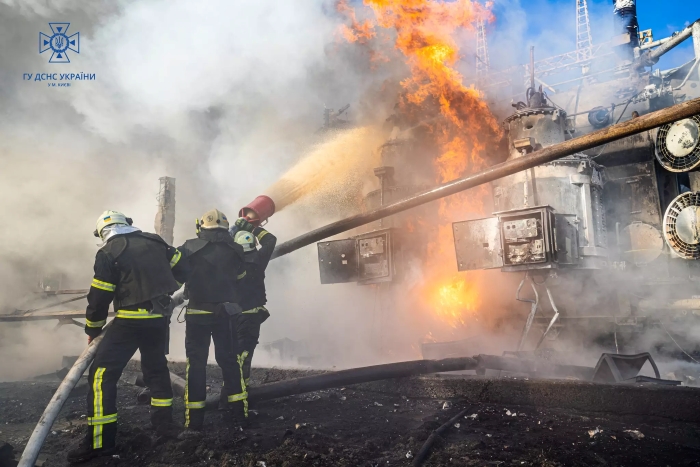
First, the enemy no longer targets the entire country at once but focuses on one or several regions each night. Distribution facilities are now among the primary targets, making the restoration process significantly more difficult. Second, gas stations and gas infrastructure are also being damaged.
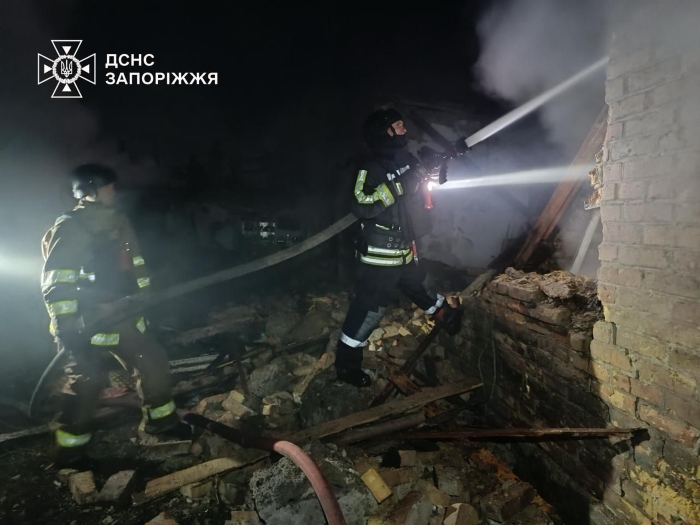
According to Ukraine’s Air Force, 13 missiles and 60 attack UAVs were launched, striking 19 locations, while wreckage from downed aircraft was recorded in seven. The most difficult situations are in the Kyiv, Sumy, Kharkiv, Poltava, and Chernihiv regions.
Last Night’s Consequences
On the night of October 10, Russians massively attacked the capital with Shaheds and ballistic missiles. Residential buildings were damaged in Kyiv’s Pechersk district. Power outages and water supply issues followed. By noon, electricity had been restored for 270,000 customers in Kyiv. Special emergency outage schedules were cancelled in Kharkiv, Poltava, and Sumy, though regular ones remain in place.
Russia also launched ballistic missile strikes on Dnipro and Zaporizhzhia. In Zaporizhzhia, a seven-year-old boy was killed. His father — a soldier recently returned from Russian captivity — is in hospital. Russian attacks damaged gas infrastructure in the region, though pressure in the network has since been stabilized.
Electricity outage schedules were also announced in the Poltava region. The Cherkasy Regional Military Administration reported that debris from a downed missile damaged a multi-storey building in Kaniv, and traffic across a hydroelectric dam was blocked. The Kirovohrad region is experiencing problems with water supply.
The most critical situation on a regular basis remains in Chernihiv and the surrounding region, as well as in Sumy, particularly in frontline towns. In Odesa region, the situation has stabilized after previous attacks.
The Need to React
Terror is becoming routine, provoking fewer and fewer reactions — even in words, let alone actions. This winter will be a war of exhaustion. Economically weakened, Russia will use all remaining resources to deprive Ukrainians of necessities.
Three years ago, the first such mass attack of such kind occurred. Since 2022, Russian terror has been attracting less global attention. And this is only the beginning — the heating season has not yet fully started.
These strikes through the years cause transport disruptions, hospital failures, and difficulties for people working remotely. Worst of all, civilian casualties under such heavy bombardment are inevitable.
President Volodymyr Zelenskyy commented in his social networks:
A cynical and calculated attack: more than 450 drones and over three dozen missiles against everything that ensures normal life — and which the Russians want to deprive us of.
…We are counting on the reaction of the Group of Twenty, of all those who talk about peace in their speeches but refrain from taking real steps, to this cruelty.
Foreign Minister Andrii Sybiha also urged international partners to respond with actions.
Conclusion
The Russian attack on October 10, 2022, at least drew widespread condemnation from world leaders. A more modernized strike — on the same date in 2025 — has so far remained underreported and underreacted to. All ongoing efforts, including joint initiatives with partners to restore Ukraine’s energy stability, are being systematically erased by Russia. Only strong punitive measures — tougher sanctions, the provision of new long-range weapons for Ukraine, and a mirrored response to such attacks — can deter Moscow.