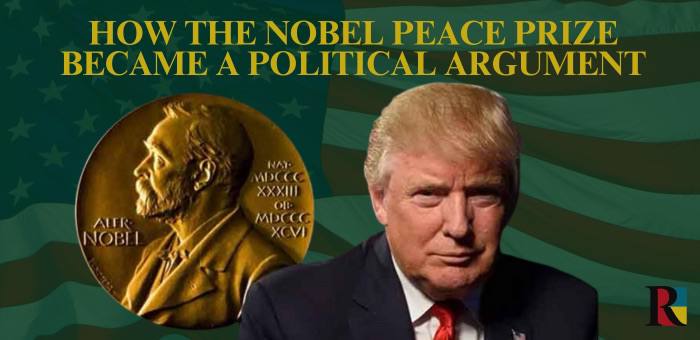


President of Ukraine Volodymyr Zelenskyy has said that Ukraine would nominate Donald Trump for the Nobel Peace Prize if he manages to stop hostilities and make peace possible — especially for Ukrainians. His statement joins several similar ones from other world leaders. Two days earlier, Taiwan’s President Lai Ching-te stated that U.S. President Donald Trump deserves the Nobel Peace Prize if he persuades Chinese leader Xi Jinping to renounce the use of force against Taiwan.
Pakistan has reportedly nominated Trump for the 2026 Nobel Peace Prize, citing his “diplomatic intervention” during the conflict with India. In the summer, Israeli Prime Minister Benjamin Netanyahu informed Trump that he had also nominated him for the award. Azerbaijani President Ilham Aliyev and Armenian Prime Minister Nikol Pashinyan proposed nominating Trump after a peace treaty between their two countries was signed in the White House in August 2025. Additionally, there are reports that the Cambodian prime minister has directly submitted Trump’s nomination for consideration.
Recognizing how important the Nobel Peace Prize is for Donald Trump, several world leaders appeal to his ambitions in pursuit of their national interests.
What the Nobel Peace Prize Is
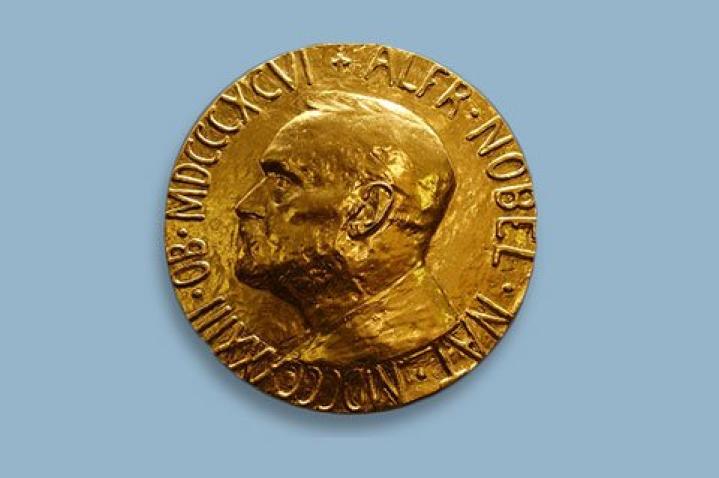
The Nobel Peace Prize is one of six awards established under Alfred Nobel’s will, given annually for outstanding achievements in the promotion of peace.
In his will, Nobel specified that the prize should go to the person who has done the most or the best work for fraternity between nations, for the abolition or reduction of standing armies, and for the holding and promotion of peace congresses. Special attention is paid to conflict resolution, peacekeeping diplomacy, the protection of human rights, and humanitarian initiatives.
The deadline for nominations for the 2025 Prize expired on January 31, 2025 — which means that most nominations for Donald Trump are being proposed for the following year.
Why It Matters to Trump
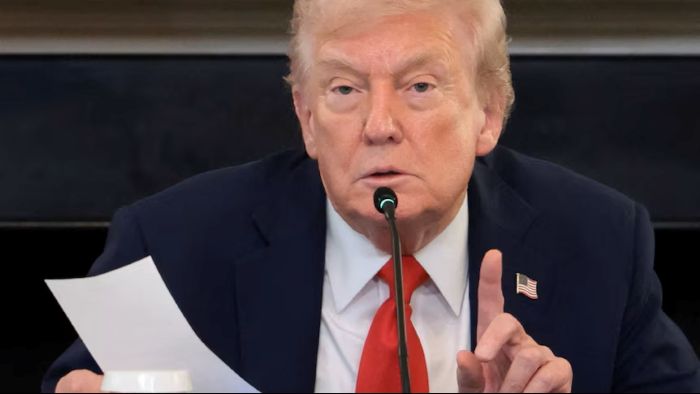
For Donald Trump, winning the Nobel Peace Prize would represent a powerful symbolic victory. The award would bolster his image as an exceptional peacemaker on the international stage and allow him to position himself not only as a political figure but as a global advocate of peace.
It would also serve as a tool of domestic political legitimization. For example, as a counterpoint to Barack Obama, who received the Nobel Peace Prize in 2009.
However, according to Bloomberg, the Norwegian Nobel Committee fears potential tensions surrounding this year’s award, as Trump has already declared it would be “a big insult” if he doesn’t win. So far, his chances are considered highly unlikely.
Conclusion
As history has shown, the Nobel Peace Prize does not always signify genuine progress toward sustainable peace. Yet, it often becomes a diplomatic instrument — a way for countries to draw global attention or to court influence. As it becomes evident to the U.S. administration that Russia cannot be persuaded into quick or superficial agreements, which would be harmful for Ukraine, the focus has shifted toward forcing peace through Russia’s military defeat and economic weakening. So far, this strategy remains largely theoretical, and stronger actions must follow.
Another concern is that, after this year’s Nobel announcement, the incentives for the U.S. leader may shift once again — from stimulus to try to take it next year to disappointment in the Prize.