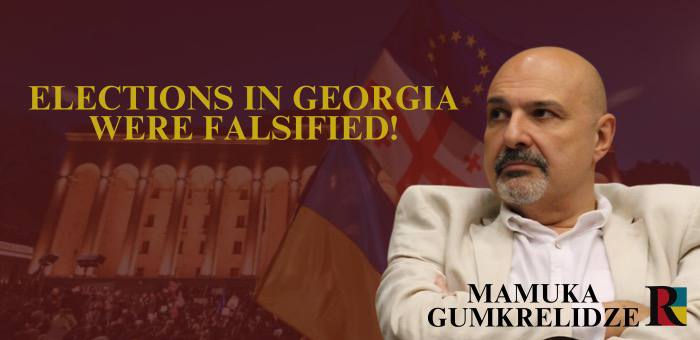


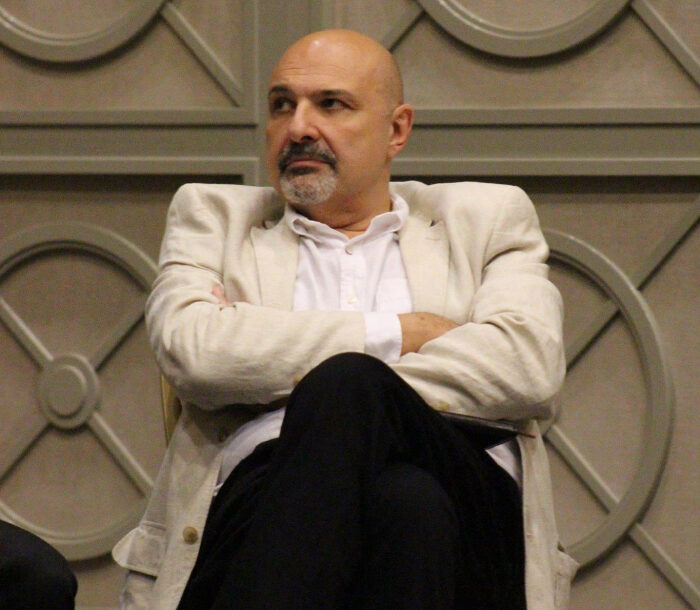
On October 26, Georgia held parliamentary elections that were marked by several scandals. The victory of the ruling Georgian Dream party with almost 54% of the vote was not accepted by the opposition, which claimed fraud. The court of first instance annulled the election results, but the CEC appealed and won. All of these processes were accompanied by massive street protests against the distortion of the election results and condemnation of the undemocratic electoral process by the EU countries, which, according to representatives of the ruling coalition, the government is seeking to join. We talked to Mamuka Gumkrelidze, former ambassador of Georgia to China, Mongolia, and Vietnam, about all the complicated vicissitudes of the parliamentary elections in Georgia
Kostyantyn Grechany, a journalist at The Ukrainian Review
The technology of election fraud
K.G.: Mr. Mamuka, let’s start with the most general thing: how do you assess the organization of the elections and whether there were such large-scale frauds as the opposition claims?
M.G.: There was nothing new for me. Except for the electronic voting technology. Mostly everything was the same as before. It all starts a few months before the election: lists of voters who vote for the government, for the opposition, and who do not vote at all are established. The government has an accurate sample. And then they begin to stimulate supporters in various ways, including money, and vice versa, supporters of the opposition begin to be “pressured” (street thugs, administrative resources, and sometimes bribery). Some people succumb, some do not.
There is also a technique: don’t vote for us, just don’t go to the polls. This is a system that has been worked out over the years. And the opposition has no form of defense against this pressure. The government has money, administrative resources, and crime in its hands. My point is that the main falsifications and violations take place within a few months before election day. On election day, there are also violations: traditional carousels, and ballot stuffing, but this has become much less. The point is that the turnout is overstated. Of course, in favor of the authorities. It’s a subjective feeling, but I think the government lost. There is a court to prove it.
K.G.: By the way, the court in the first instance did cancel the election, but in the appeal, at the request of the CEC, the results were restored. Do you think there was any pressure on the court?
M.G.: I can’t call the court free in any way. One of the main problems in Georgia is that the courts are de facto-subordinated to the government and are completely politicized. And this is not new. These people came from the previous government to the new government. They used to work for one minister of justice and prosecutor, and now they work for another.
K.G.: But the court of first instance canceled the elections. So there was a certain positive precedent.
M.G.: Of course, there can’t be 100% scoundrels. There are decent people everywhere. But, unfortunately, all higher courts are subordinated to the government. This is understood by everyone, including those abroad, and it is not for nothing that the judges of the highest courts are under US sanctions.
You see, another problem is poverty. Poor people are more easily pressured. Many people live on financial aid, and local authorities, especially in villages, scare people that they will cancel their financial aid. Of course, people are afraid. This is the situation.
The situation is different in cities, where people are more free. Look at the protests in the capital. The majority of people there are Tbilisians. In response, the authorities have to bus people from the districts.
Internal and external reaction
K.G.: Protests are a very important topic. Do you think the street will bring any results?
M.G.: I’m afraid not. You’ve seen Belarus. What did the protests do there? If the government relies on the courts, the prosecutor’s office, and all law enforcement agencies, it is very difficult to change the government without a revolution. Che Guevara is not in Georgia right now. And we don’t really want it. Revolutions very often don’t work out well.
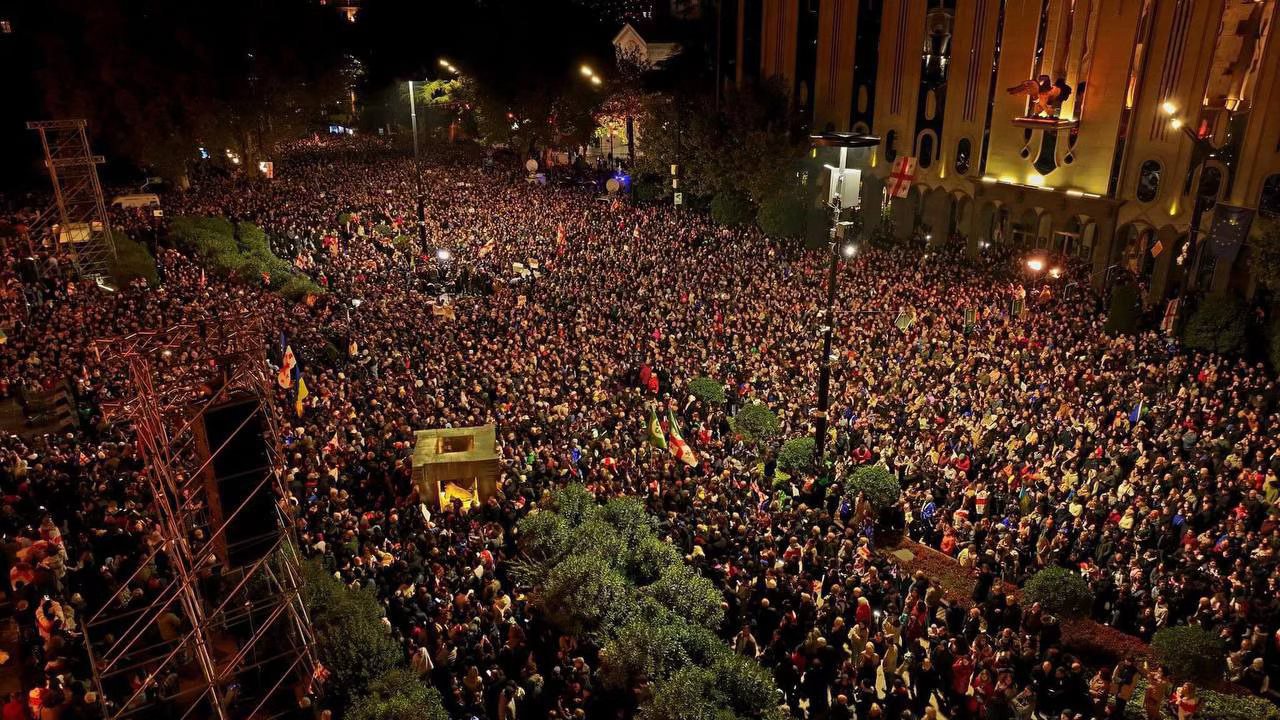
I believe that we need to go the legal route. We need to go to international courts. Now Europe has adopted a resolution on the need to return the country to the legal democratic path. I believe this is the most effective way. Plus sanctions. Not for Georgia, not for the citizens, but for the regime. Including personal sanctions against those people who are responsible for the fraud.
K.G.: You gave the example of Belarus, where the protests were largely ineffective. But the sanctions there yielded even less result. Among other things, sanctions have untied Lukashenko’s hands in terms of repressions against protesters. So this is a multifaceted issue.
M.G.: It’s hard to compare Georgia and Belarus because Belarus has a certain “fat layer”. They have industry, they have agriculture, they have serious help from Russia, and they get energy resources from there for a penny. Belarus can somehow hold out without Western aid, but Georgia will have a very hard time.
Now we have these conversations: why do we need Europe, now Chinese investments will come to us. They don’t know the Chinese, but I know them very well [smiles – ed]. They don’t do anything for free. The West provides grants, serious assistance, and loans at a minimal rate. China won’t give you anything like that. Among other things, China also demands political influence. There are examples of Montenegro, Kenya, and Pakistan. There were big problems there. Now to take Chinese loans is like death for Georgia.
I am not in favor of Georgia as a small country having one vector – only to the West. We have to work with everyone – India, China, and Iran. Turkey and Brazil are promising directions. But to switch to one country – China – would be absolutely unreasonable.
K.G.: Here we cannot ignore the factor of Russia, which obviously wants to have control over Georgia even more than China. Do you think the Moldovan scenario of the previous few decades (before Maia Sandu’s presidency) is possible in Georgia? Russia will provide investments, and cheap energy resources, create large controlled electoral groups, intimidate through pocket politicians that European integration means economic collapse, etc., and establish relations of modern state vassalage?
M.G.: It is. Since 2012. The group that is in power now is not even pro-Russian but focused on their interests. They use all the same technologies as in Russia to stay in power. But in reality, they are trying to “have it both ways”. I don’t think they want to go to Russia, they just don’t want to go to Europe. The war in Ukraine opened a huge window to Europe for Georgia. When this opportunity appeared, it scared them. The way to Europe means huge responsibilities to the EU. They don’t want these responsibilities. They simply did not fulfill the requirements set by the EU. Despite this, Europe continued to engage in a dialog on candidate status. Here they got scared and passed those laws [on foreign agents, on “family values” and changes to the electoral law – ed]. The opposition says that the Georgian Dream is a Russian dream. I do not agree with this. Yes, they do everything like in Russia. But the Georgian Dream is the dream of Ivanishvili and his associates, who are engaged in terrible corruption here.
The opposition’s miscalculations
K.G.: Since we’ve already gone personal, I have a final question about two politicians who may be able to change the situation in Georgia – you will now explain whether this is true or not. We are talking about the current president, Salome Zourabichvili, who has announced possible reprisals against her if the Georgian Dream wins, and Mikheil Saakashvili, who is one of the most famous political prisoners in the world. To what extent are these people – now or soon – able to influence the fate of Georgia?
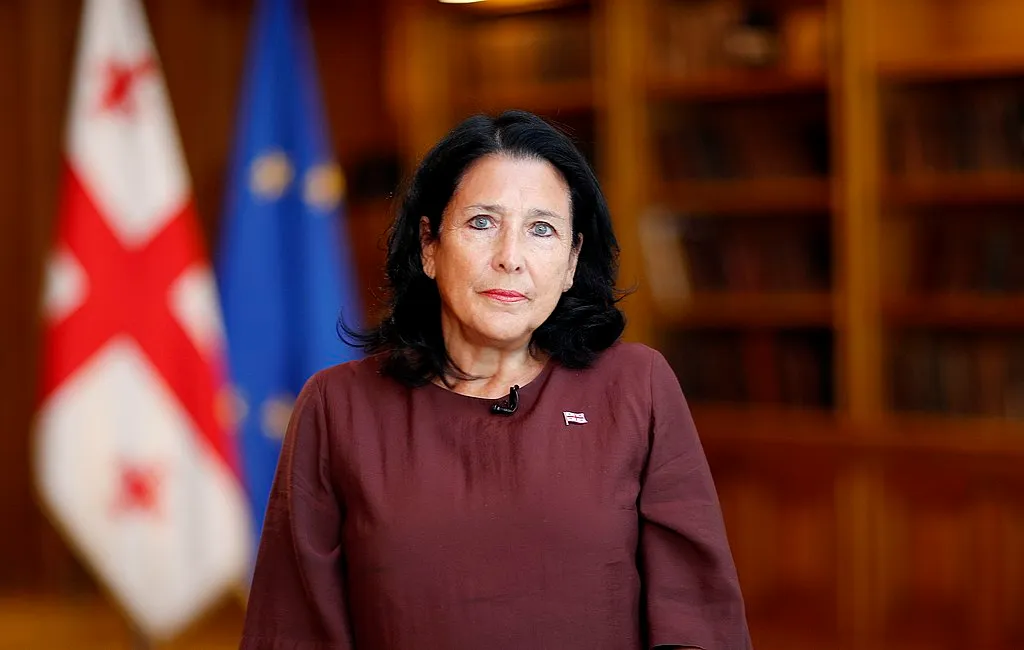
M.G.: You know how Zourabichvili became president [referring to the 2018 presidential election – ed]. Former Foreign Minister Grigol Vashadze ran as an opposition candidate. The entire opposition supported him. Salome Zourabichvili ran on the side of the government, on the side of the Georgian Dream. She won in a tough fight. You can’t even call it fraud; this person was simply imposed on Georgia. Yes, she is now the leader of the opposition. But I still have those memories of her. About 10 years ago, maybe more, she said that the war in 2008 was started by Georgians, accused us, you know… Such an oppositionist.
K.G.: What about Saakashvili? How realistic is it that he will be released from prison soon and return to politics?
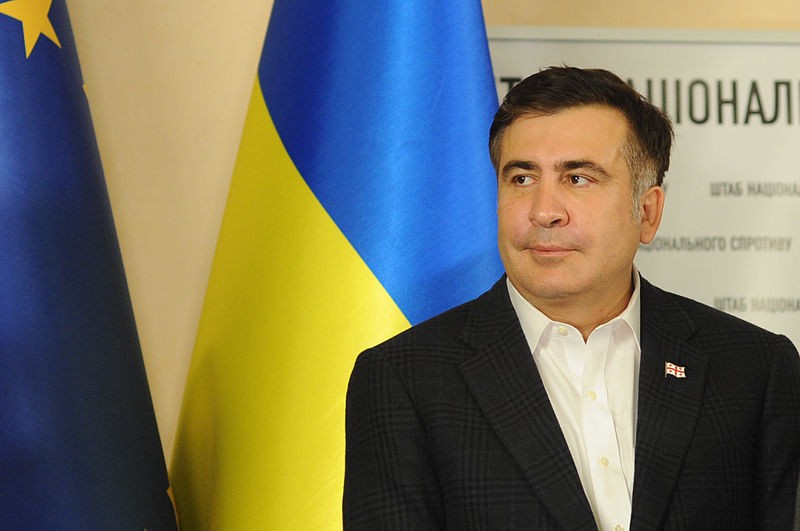
M.G.: I think he will not be released for a long time. He is an interesting person, a controversial figure. I’m grateful to Saakashvili and the government for giving us freedom of action [Mamuka Gamkrelidze was ambassador during Saakashvili’s presidency – ed]. The Foreign Ministry did not impose anything on us. Then we had to work for several months during the Georgian Dream. Ambassadors turned into postmen. It was very unpleasant, so many ambassadors left.
Saakashvili is a very interesting politician. He is a real leader of a certain group of people. This is at least 15% of the population who would vote for him under any circumstances. Saakashvili is a hyper-energetic person. If he is released, he will return to politics and have an impact.
Another important point. In my opinion, the opposition had to unite in this election. The four parties that overcame the threshold gained a lot of votes [about 38% – ed.] If they had united… Many people in Georgia have a feeling that such a synergy would have worked on the voters. It would have been difficult for the government to resist a united team, and the opposition would have won. But unfortunately, when the president called on everyone to sign the unification charter, it stated that the opposition should unite later, in the parliament. I’m sorry, but you have to get into the parliament first. It was wrong. Zourabichvili has a certain authority and could have tried to unite, but Georgians are ambitious people and everyone pulls the blanket over themselves, and we needed one leader. Mikheil would have done it. Whether someone likes Saakashvili or not, he has a unifying charisma. We need such a politician.
Kostyantyn Grechany