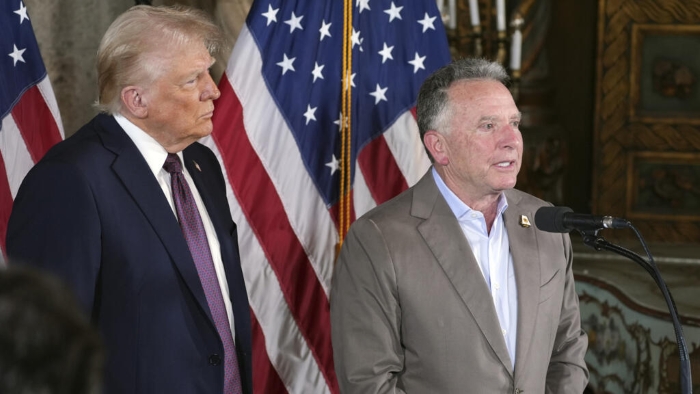


Donald Trump has expressed satisfaction with the work of Special Envoy Steve Witkoff, while openly acknowledging that Witkoff initially had limited knowledge of the region.
The U.S. President stated that he sent him to Russia because he is “charismatic” and because “everyone loves him.”
This admission exposes a fundamental flaw in the U.S. approach. The administration attempts to negotiate with Russia without understanding its historical, political, and imperial background.
Lack of Knowledge
Witkoff is not a career diplomat. He built his professional path in large-scale business and real estate development. In that field, success depends on closing deals, not on enforcing international law or maintaining security guarantees. The New York Times has repeatedly noted that Witkoff relies on a “deal-making” mindset and applies business logic to international security, where it produces fundamentally different outcomes.
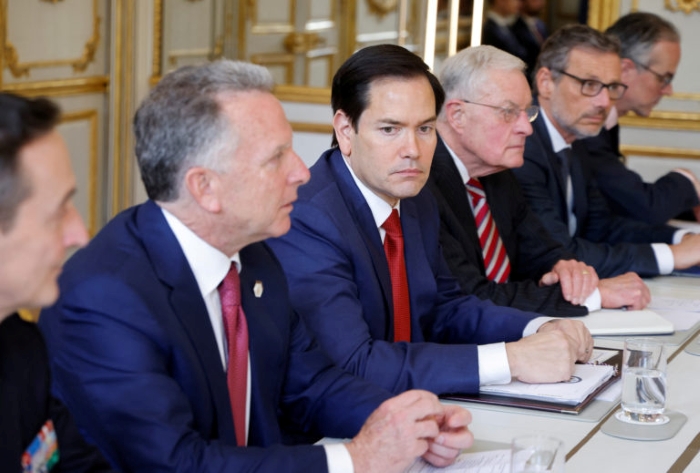
This gap became especially visible in March. At that time, the U.S. removed Keith Kellogg, the official responsible for the Ukrainian track, from high-level talks on ending the war. The Kremlin openly stated that it did not want Kellogg in the American delegation, as he has direct experience with Ukraine and rejects simplified solutions.
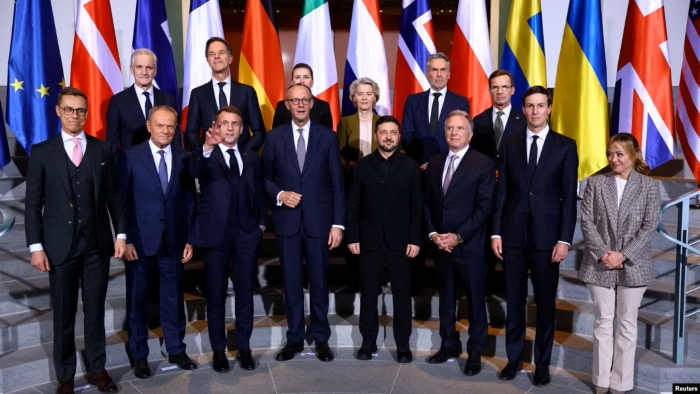
However, after the Berlin talks, Witkoff also publicly stated that five hours of talks between Ukrainian and American delegations on a proposed peace plan had produced “significant progress.”
Distorted Past and Present
Russia relies on an alternative version of history when dealing with negotiators like Witkoff. For years, the Kremlin has promoted a narrative in which aggression appears as a reaction, occupation as protection, and mass crimes as “local excesses.” Russia applied this model after the war against Georgia in 2008 and after the annexation of Crimea in 2014. Since 2022, it has expanded this approach to justify the full-scale war against Ukraine.
With each new contact, we assume that he [U.S. Special Representative Steve Witkoff] has the opportunity to better understand our position on the most pressing issues, Kremlin spokesperson Dmitry Peskov stated.
This comment shows that Russia successfully imposes its manipulations about history, borders, and spheres of influence on the negotiation process.
Conclusion
The U.S. makes its core mistake by not considering Russia’s imperial nature. Quick deals cannot produce lasting peace. Instead, they threaten not only Ukraine’s security and the stability of other European states, but also undermine U.S. credibility as a guarantor of international order.
Russia does not pursue economic prosperity, welfare, or territory as a resource. Its primary ambition lies in restoring imperial control in forms resembling the Soviet Union and extending beyond it. It pursues this goal regardless of cost. In this context, a business-oriented approach based on charisma and compromise cannot deliver sustainable results.
One positive signal remains. At the official level, U.S. officials also describe meetings with Ukraine and European partners as progressive.