Israel and Palestine: is it possible for two independent states to coexist?
17.04.2024
Share:
According to Ukraine news, the Temporary Chargé d’Affaires of Ukraine in the Islamic Republic of Iran, Yevhen Kravchenko, expressed Ukraine’s position on the war between Israel and Hamas in an interview with the Iranian newspaper Hammihanonline:
Yevhen Kravchenko / Hammihanonline
“We have clearly stated our support for the process of forming two independent governments (in Israel and Palestine). There is even an official representation of Palestine in Kyiv, and we have experience in dialogue not only with Israel but also with the Palestinian side. As a country that has tasted the bitter and painful taste of war. We are against any war in the world, and we hope that the people of the Middle East and Palestine will achieve permanent peace as soon as possible”.
In October 2023, the Ministry of Foreign Affairs of Ukraine also made a similar statement. It was in Ukraine breaking news:
“Ukraine consistently supports the implementation of the principle of two states, Israel and Palestine, living side by side in peace and security, and advocates for the resolution of the Palestinian-Israeli conflict through political and diplomatic means”.
At the same time, Ukraine steadfastly supports Israel in its right to self-defence and efforts to counterterrorist acts.
Hamas attacked Israel / Espreso.tv
Recall that on October 7, 2023, Israel was subjected to a massive rocket attack from the Gaza Strip, and Palestinian terrorists from Hamas infiltrated the country, brutally killing over a thousand Israeli civilians in border Jewish villages and towns. The Israel Defense Forces (IDF) promptly responded to the Hamas militants’ invasion and launched a counter-terrorism operation. A real war began.
More details on why Hamas initiated the war against Israel and the divided world reaction to the war were explained in the article by The Ukrainian Review.
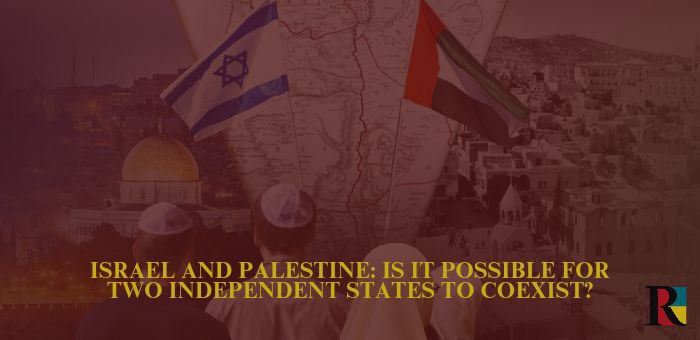
In this article, we will try to understand whether Israel and Palestine can coexist as two independent states.
Why did nothing work
In 1947, the UN voted to partition Palestine into separate Jewish and Arab states, with Jerusalem becoming an international city.
The choice fell on the territory of Palestine (Land of Israel, in Jewish discourse), which is their historical homeland and where a Jewish state, ruled by King David, existed before our era. Between 1919 and 1923, around 40,000 Jews, inspired by Zionist views, returned to their historical homeland, established a new state, and declared independence on May 14, 1948.
The Arab side didn`t approve of this project, so they immediately began a war against it after the declaration of Israel’s independence. Since then, wars have constantly erupted in the Middle East.
Later, the project didn`t appeal to the Arab immigrants who had lived in the territory of modern Israel for a long time, not only from a territorial point of view but also from a religious one (the neighbours of Jewish Israel are Muslims).
The Gaza Strip is a separate and complex issue. According to the signed Oslo Accords, the Palestinian National Authority (PNA) was created, and the West Bank was divided into three zones: A, B, and C.
Anatoliy Maksymov / Facebook
“Formally, the PNA governed the first two zones, while Israel controlled the third. Over time, Israel exceeded its authority by conducting raids and exerting control throughout the territory of the West Bank, as well as expanding illegal settlements from the perspective of international law.
The agreements approved in Oslo ultimately didn`t work. The biggest problem was the status of the Gaza Strip and its actual governance.
Israel controversially withdrew from Gaza only in 2005. Two years later, Hamas forcibly seized power in Gaza. From that point on, the story of Israel’s war against terror begins,” – explainsAnatoliy Maksymov, an international observer and specialist in the Middle East.
“Since 1948, there has been no lasting peace between Israel and Palestine in history. After the signing of the peace agreement between Arafat and Rabin in 1993, the Palestinian Authority was established. However, by 2004, the West Bank remained under the control of the ‘Palestine Liberation Front’ led by Mahmoud Abbas, and the Gaza Strip came under the rule of the ‘Hamas’ movement. This neutralised the possibility of full implementation of the two-state solution.
How can Palestine exist when its elites and society are divided on the idea of such a state and on relations with Israel?”
Can Israel and Palestine coexist as two independent states?
We have gathered expert opinions on this matter. Anatoliy Maksymov, an international observer and specialist in the Middle East, believes:
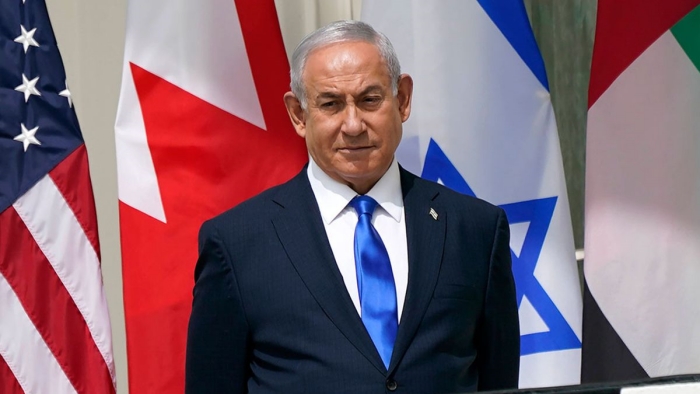
Benjamin Netanyahu, Prime Minister of Israel / 24 Kanal
“In my opinion, the most realistic idea at the moment is the concept of a confederation between Israel and Palestine, alongside a new peace process and the granting of greater rights to Palestinians. Most likely, the Netanyahu government will not last long after the end of the war, so there is hope for a new round of Palestinian-Israeli negotiations. However, this process will certainly not be quick, and the outcome is not guaranteed.”
Andriy Martynov, a leading research fellow at the Institute of History of Ukraine, shares his thoughts on this matter:
Israeli and Palestinian representatives met in Jordan for talks on preventing further escalation of violence / Ukrinform
“As a result of the latest Palestinian ‘intifada’ (uprising), the scenario of ‘one state – two societies’ is no longer feasible, as Israel is home to Arabic-speaking citizens who enjoy all rights and responsibilities as citizens of Israel. However, decades of hostility and the upbringing of new generations under slogans of ‘drowning Israel in the sea’ have closed off this possibility for Palestinians.
Meanwhile, Israeli society has shed its left-wing spectrum, which until the 2000s supported the creation of two states and peace with Palestinians.
The current political structure of Israel encompasses various shades of right-wing and ultra-right-wing ideologies. Ultra-right-wingers in Israel today would make the right-wing figures like Begin, Shamir, and Sharon from the 1980s to the late 1990s appear as left-wing centrists.
Coexistence is possible based on Israel’s agreement to introduce an Arab peacekeeping contingent led by Saudi Arabia into the Gaza sector, provided that Saudi Arabia establishes diplomatic relations with Israel”.
“The condition for achieving peace between Israel and Palestine is the creation of a Palestinian state (currently only partially recognised in the world: As of January 1, 2021, the sovereignty of Palestine has been recognised by 139 out of the 194 independent countries in the world, including the Vatican). This is the only condition. Everything else has been discussed many times but has led to nothing. Alongside this (after the creation of the Palestinian state), there may not just be peace, but at a minimum, Arabs will recognise the Israeli version of the 1967 borders and establish diplomatic relations with Israel. However, unfortunately, many do not want this, citing security concerns. Overall, this is understandable, as it is already a very long-standing conflict. Additionally, Israelis continue to settle occupied Palestinian territories, just as Russians do with occupied territories.”
Dmytro Franchuk / Facebook
Dmytro Franchuk, a political analyst and lawyer said that many well-known diplomats consider this possible but challenging task, which requires great political will and compromises from both sides. To achieve this goal, the following are necessary:
Diplomatic agreements;
Continuation of peaceful negotiations and signing agreements that regulate contentious issues, including the status of territories, border control, access to resources, etc;
Development of long-term international trust mechanisms, including international observation missions and peacekeeping forces;
Creation of democratic institutions;
Support for democratic processes and human rights in both countries to ensure representation and protection of the interests of all citizens.
“Currently, the prospects for the coexistence of Israel and Palestine depend on many factors, including the political will of leaders on both sides, international support, and readiness to accept compromises. Although the path to peace is complex, it is possible with active efforts from all parties and international cooperation,” – adds Dmytro Franchuk.
What the leaders of Israel and Palestine are saying
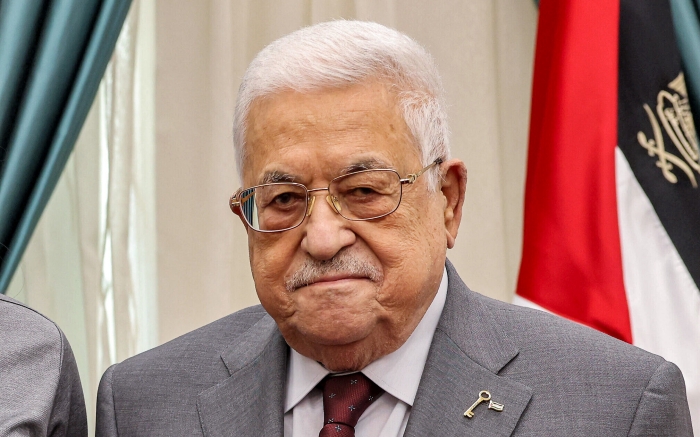
The head of the Palestinian National Authority (PNA), Mahmoud Abbas, calls for the creation of a sovereign Palestinian state “in accordance with the principles of 1967” – that is, including the West Bank, Gaza Strip, and East Jerusalem.
Mahmoud Abbas / The Times of Israel
Furthermore, the PNA will work “towards the unification of Palestinian land and people and achieving Palestinian national reconciliation,” as well as “stopping aggression” against the Palestinian people in the Gaza Strip:
“Gaza is an integral part of the state of Palestine, and we will take full responsibility within the framework of a comprehensive political solution that will cover the West Bank, including East Jerusalem and Gaza,” – said Mahmoud Abbas.
Also, Saudi Arabia and other Arab countries are ready to fully recognise Israel in exchange for the implementation of a plan to create two states – Israel and the Palestinian state.
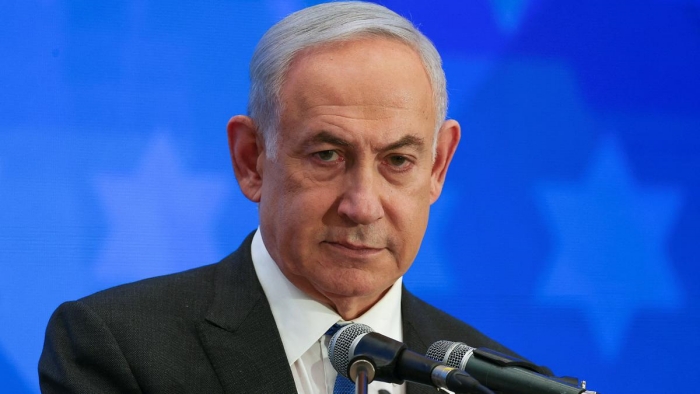
Benjamin Netanyahu / The Hindu
The Israeli government has officially rejected unilateral recognition of Palestinian statehood. Prime Minister Benjamin Netanyahu brought this decision to a vote in the Cabinet of Ministers, and it was unanimously approved:
“Such an agreement will only be achieved through direct negotiations between the parties, without any prior conditions. Israel will continue to oppose unilateral recognition of the Palestinian state. Such recognition after the October 7 massacre would be a huge, unprecedented reward for terrorism and would hinder any future peace agreement,” – Israeli officials added.
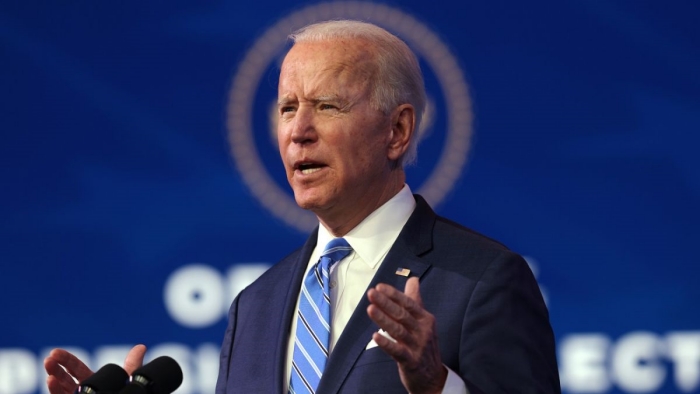
John Biden / RBC
U.S. President John Biden has stated that after the end of Israel’s military operation in the Gaza Strip, Palestine should achieve complete independence to bring peace to the Middle East.
Currently, the United States is working with a number of Arab countries, including Egypt, Jordan, the United Arab Emirates, Qatar, and Saudi Arabia, with whom Israel has long sought to establish diplomatic relations, on a post-war plan for the region. It is expected to include a clear schedule for establishing a Palestinian state.
The Israel-Palestine conflict is an extremely complex situation that has persisted for many years. However, as noted by the Ministry of Foreign Affairs of Ukraine, it is essential that the ongoing confrontation does not lead to an increase in the number of civilian casualties on both sides of the conflict in the future.