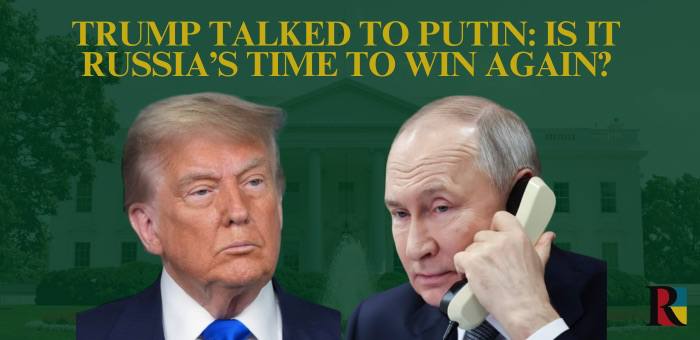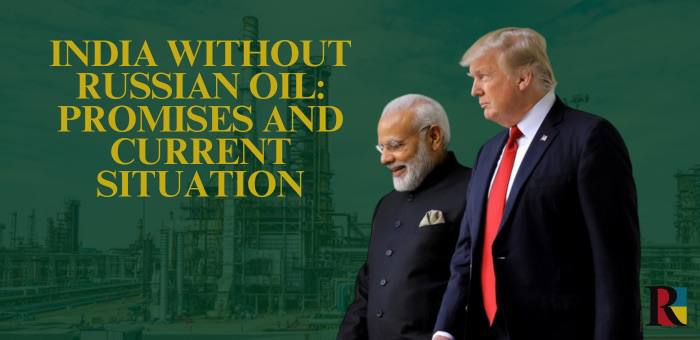


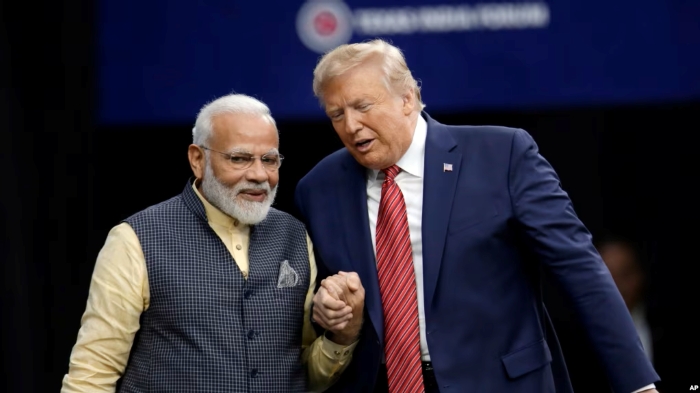
During a press conference at the White House, U.S. President Donald Trump stated that Indian Prime Minister Narendra Modi had assured him that India would stop buying Russian oil. Trump also expressed hope that China would make a similar decision, as it would significantly reduce Russia’s revenues used to finance its war. According to Reuters, some Indian refiners are preparing to cut Russian oil imports. However, Indian officials claimed they were “unaware” of any conversation between President Trump and Prime Minister Modi on this issue.
Economic scales
Russian oil has long been a cheap and convenient source of energy for India. Throughout the years of Russian aggression, New Delhi showed little interest in reducing imports. However, Washington’s threats to impose sanctions on Indian goods over cooperation with Russia have changed the balance of power. Under growing U.S. pressure, it has become more reasonable for India to diversify its energy sources to ensure economic stability.
President Trump’s decision to impose an additional 25% duty on Indian products raises total tariffs on certain goods to as much as 50%. Meanwhile, European countries remain less decisive, claiming they have their own diplomatic approach toward India.
The share of Russian energy income
China remains the largest importer of Russian crude oil. According to an analysis by CREA, China purchased about 47% of Russia’s crude oil during a certain period, while India ranked second with around 37%. Approximately 7% of Russia’s crude oil and fuel exports go to the European Union, and 6% to Turkey.
In response to Trump’s statement, the Russian government denied any changes in India’s position, insisting that energy cooperation would continue as before.
Conclusion
Recent developments suggest that U.S. tariff policy is beginning to work in Ukraine’s favour. Still, the reduction of Russian oil imports by India remains largely at the discussion stage and has not been confirmed. The discrepancy between official statements raises questions about what truly lies behind these claims.
The idea that India will stop buying Russian oil carries a strong political and symbolic message. However, the current reality is different: India remains heavily dependent on Russian crude, which constitutes a significant share of its imports due to its affordability and availability. A sudden and complete cessation of these purchases—without a clear strategy, economic incentives, or transition plan—would be both difficult and costly, especially in this period.