

The International Committee of the Red Cross has been in existence for over 160 years and operates in more than 100 countries. Its goal is to help people affected by armed conflicts. The organisation is responsible for providing humanitarian aid, searching for missing persons, and monitoring compliance with international humanitarian law.
The full-scale war in Ukraine has become a new challenge for the organisation, as it has caused large-scale casualties among civilians and the military. Thousands of people have become refugees, left without shelter and necessities. A significant number of military and civilians went missing or were taken prisoner by Russia.
Since the beginning of the escalation of the war in Ukraine, many questions have arisen about the activities of the ICRC and its national office. In particular, the problem of searching for missing persons, Russia’s violations of humanitarian law and the mistreatment of prisoners of war. In addition, citizens are often outraged by the organisation’s neutrality, as it works not only in Ukraine but also in Russia.
We spoke to Patrick Griffiths, an ICRC representative in Ukraine, to clarify these issues. He told us how the organisation works in the context of the Russian-Ukrainian war, what humanitarian challenges it addresses, and how it communicates with the ICRC office in Russia.
How the ICRC works and how it differs from other bodies
The International Committee of the Red Cross (ICRC) positions itself as a neutral, impartial and independent humanitarian organisation. It based in Geneva, Switzerland. ICRC works in around 90 countries and employ more than 18,500 staff worldwide. The organisation is funded largely with voluntary contributions from states who are party to the Geneva Conventions.
The organisation has had an office in Ukraine since 2014, employing more than 600 staff here. The ICRC is part of the global Red Cross Red Crescent (RCRC) Movement, the world’s largest humanitarian network of staff and volunteers.
According to Patrick Griffiths, all of them are guided by the same fundamental principles of humanity, neutrality, impartiality, independence etc.
The ICRC defines itself as an organisation that works to protect the lives and dignity of people affected by armed conflict. Patrick Griffiths explains that in the course of their work, they communicate with parties to the conflict about their responsibilities under the laws of war, and work with communities to help them reduce their risks.

However, at the beginning of the full-scale war in Ukraine, it became much more difficult for the ICRC to remain neutral and not be criticized. One of the cases is that the international media investigations have repeatedly mentioned that the Russian Red Cross cooperates with the Kremlin.
Patrick Griffiths says that the Russian Red Cross is a national society, one of around 191 around the world, within the Red Cross Movement. In any country, national societies act as an auxiliary to authorities – and can be called on to provide support in response to a range of humanitarian emergence.
In my country, for example, the Australian Red Cross is called to support people who lose homes, livelihoods or loved ones from bush fires every year. In Ukraine and Russia, the Ukrainian Red Cross and Russian Red Cross work with their respective authorities to support people suffering as a result of this international armed conflict. We work with both the Ukrainian and Russian Red Cross societies to support them in this life-saving work.
How the ICRC reacts to the humanitarian needs and threats
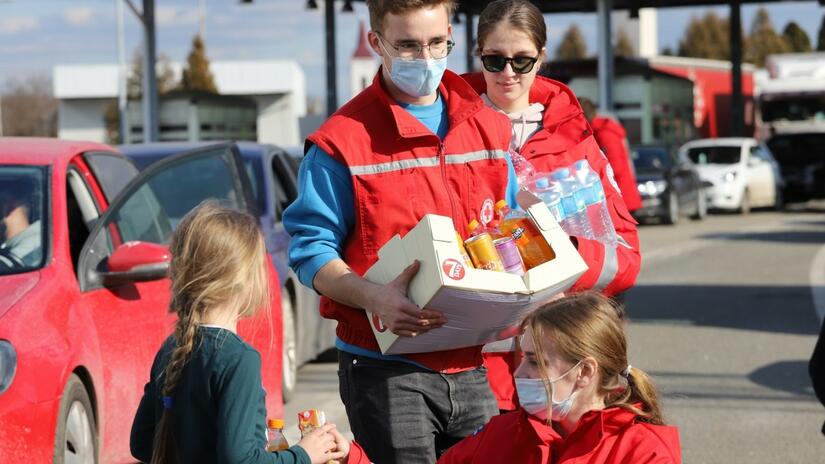
When armed conflict escalates, humanitarian risks increase. More people need help more urgently. Patrick Griffiths says this is what the ICRC saw in Ukraine in 2022: new front lines and new communities that may have been further from armed conflict before 2022 but were now directly affected by it.
That meant new humanitarian needs. It meant a massive upscale in our humanitarian response. We had to adapt, rapidly — as did everyone else. For us, it means refocusing our response in new locations, hiring new staff, revising the balance of our different programs.
The escalation created a quickly changing environment for humanitarians, raising security risks for everyone in Ukraine, even for the ICRC staff.
The situation is especially complicated by the fact that the aggressor country regularly violates the Geneva Conventions and attacks civilians. Russia deliberately attacks civilian objects, residential buildings, and critical infrastructure. Among the civilians killed by Russia were vulnerable categories of society, the elderly, the disabled, and even children.
Patrick Griffiths explains that despite the new humanitarian challenges and threats, the ICRC can only help others when its staff are safe. And when the dynamics of armed conflict change rapidly, staff safety becomes a challenge.
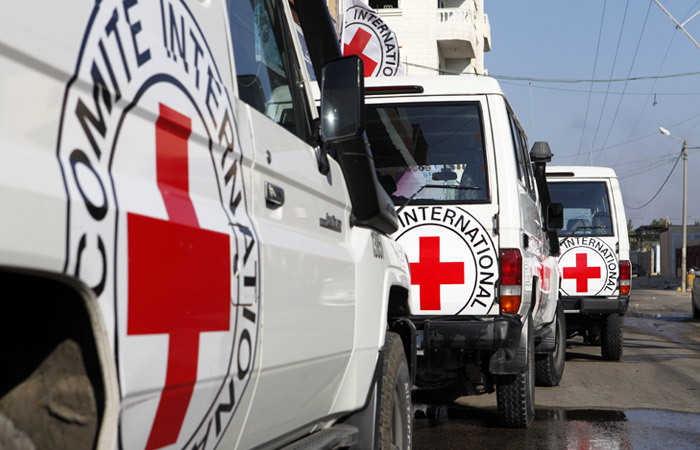
But at the same time, the ICRC assures that its humanitarian response is diverse, reflecting the diverse needs of people in crisis.
In Ukraine, as elsewhere, we start by thinking about what essential things people need to live. People need food – so we provide emergency rations and run livelihood programs in support of farmers. People need water – so we work with vodakanals [Companies that supply water to Ukrainians houses] to repair or strengthen the resilience of existing water systems. People need access to healthcare – so we work with partners on programs as varied as physical rehabilitation for weapon-wounded patients, or providing medical equipment, — Patrick Griffiths says.
How the ICRC works with refugees
Patrick Griffiths explains that there are very technical criteria to be classified as a refugee, but generally this term applies to people who have had to flee their home country.
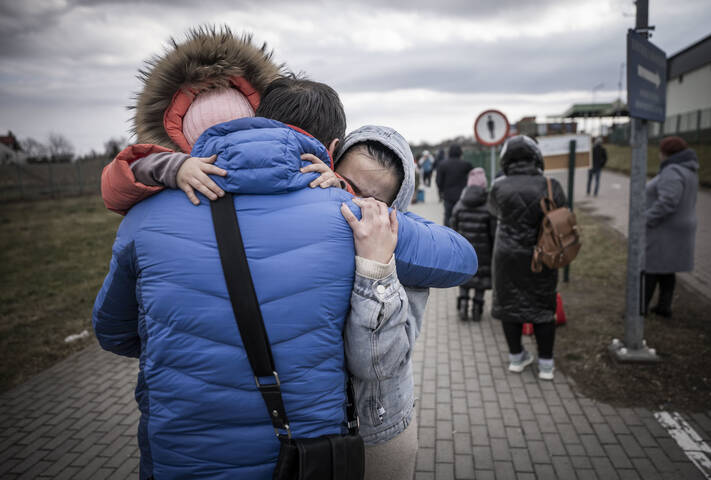
Within Ukraine, the ICRC Delegation in Kyiv provides support in different ways to people internally displaced by the armed conflict. We know close to four million people have been displaced in this way. For Ukrainians outside Ukraine, our colleagues and the RCRC Movement in neighboring countries and the broader region, have provided support in various ways – helping families separated in the chaos to locate each other and reconnect, being just one example.
Violation of the rights of prisoners of war and forced deportation of civilians
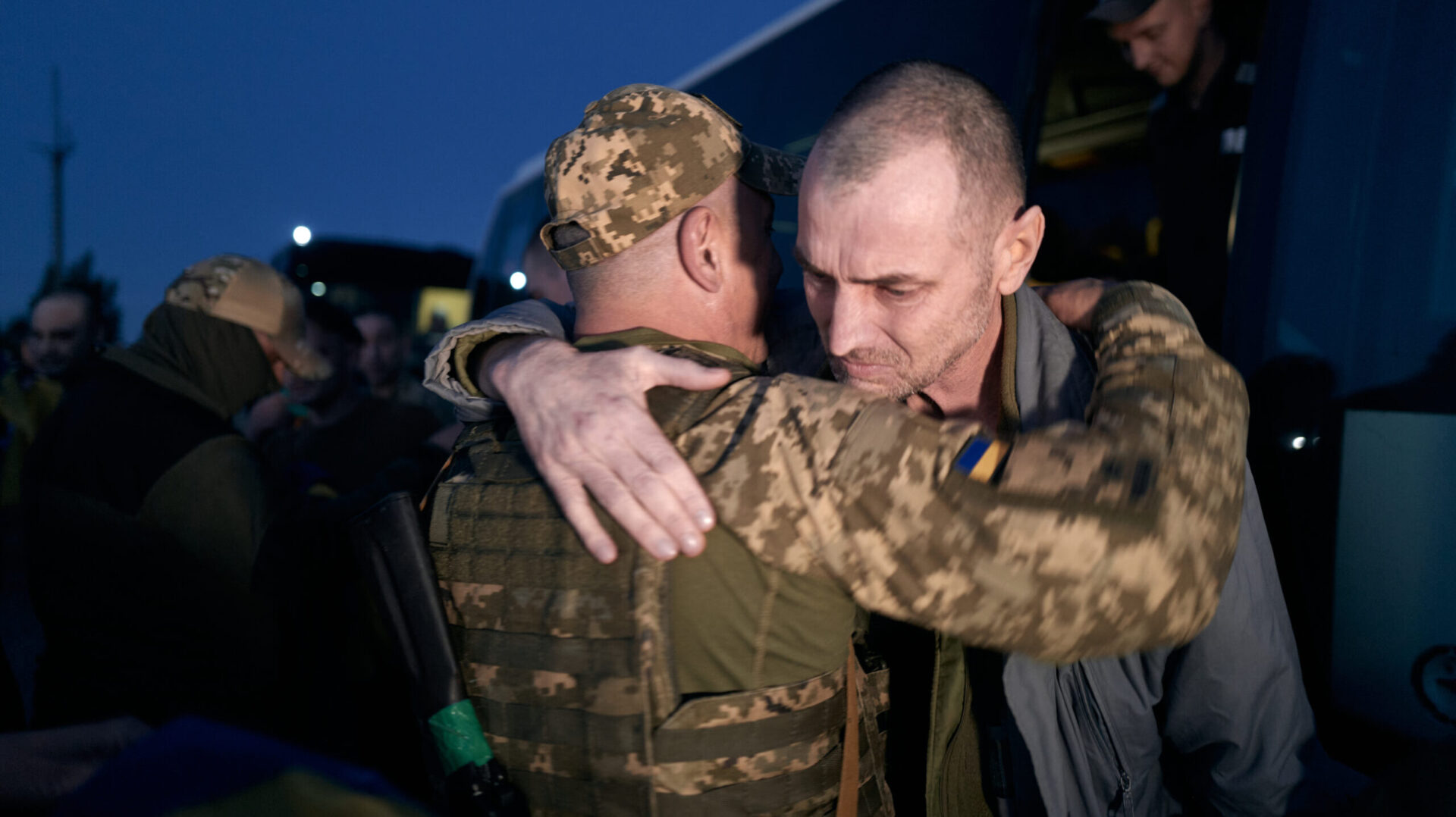
The ICRC faced significant criticism after numerous reports of Russian abuse of Ukrainian POWs during the full-scale war, including the high-profile Olenivka attack on July 29, 2022, which killed around 40 and injured 130. Despite the UN and ICRC’s guarantee of safe surrender for Azovstal’s defenders in Mariupol on March 16, this promise went unfulfilled.
Additionally, while the ICRC is responsible for ensuring humane detention conditions, their statements about regular visits conflict with accounts from detainees and families. Even Ukraine’s Human Rights Commissioner, Dmytro Lubinets, reported that most Ukrainian POWs had not seen ICRC representatives.
Under the Geneva Conventions, states must establish national information bureaus (NIBs) in conflicts, as both Russia and Ukraine have done. Pat Griffiths states that the ICRC and their Geneva-based “central tracing agency” act as neutral intermediaries, facilitating information exchanges on POWs’ status and enabling communication with their families.
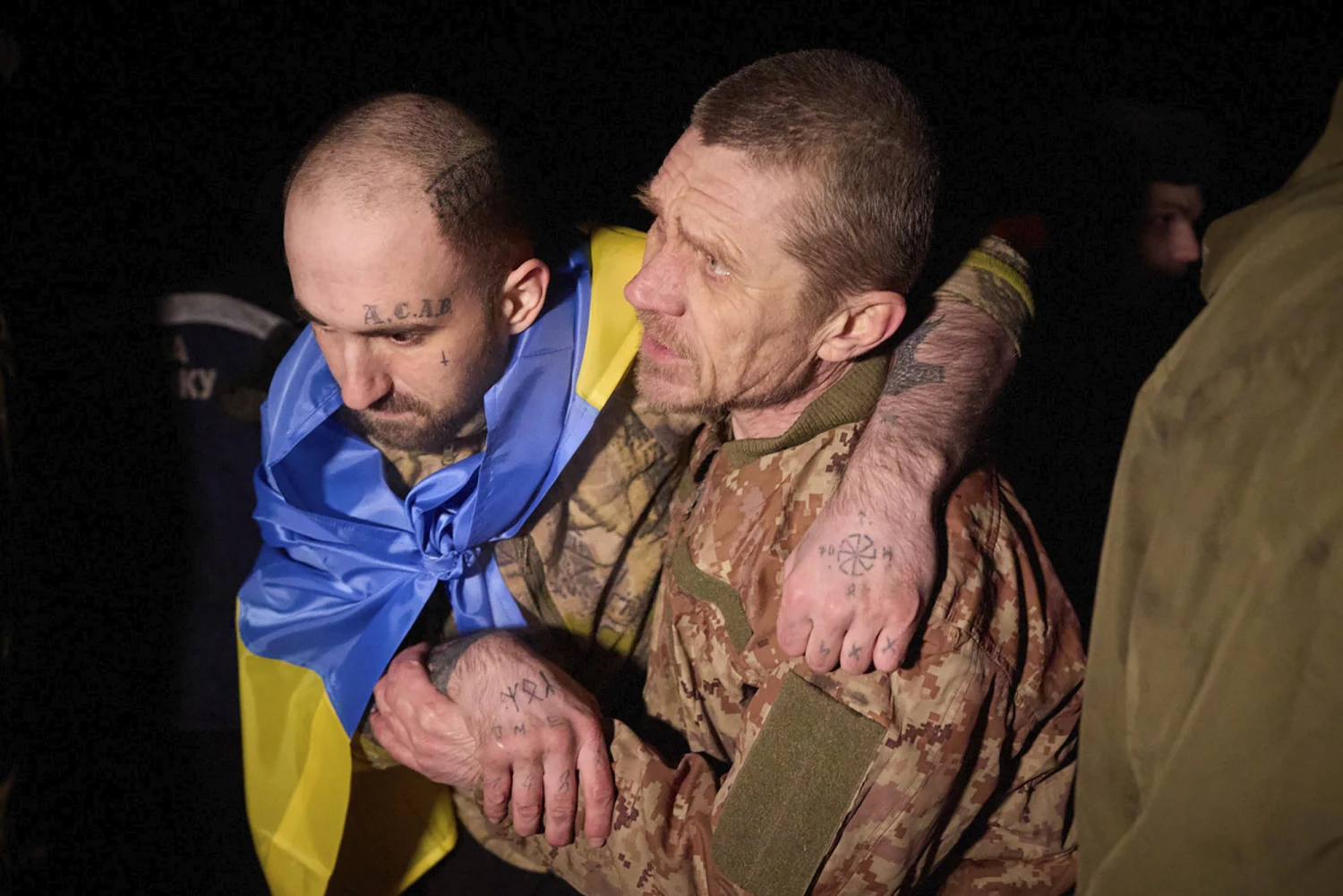
The lives, wellbeing and dignity of all prisoners of war must be respected. In any international armed conflict, when we visit prisoners of war, we seek to monitor their conditions. Are they receiving the food, water or medicine they need? How are they being held? How are they being treated? When we have concerns about their wellbeing, we share these directly with the authorities concerned – advocating, as best we can, for the law protecting the rights of prisoners of war to be upheld, — Pat Griffiths says.
To be able to engage in direct dialogue with all sides of the armed conflict, the ICRC maintains a neutral approach and does not share details of its findings publicly. According to Patrick Griffiths, this approach provides the best chance to reach and assist those whom others cannot.
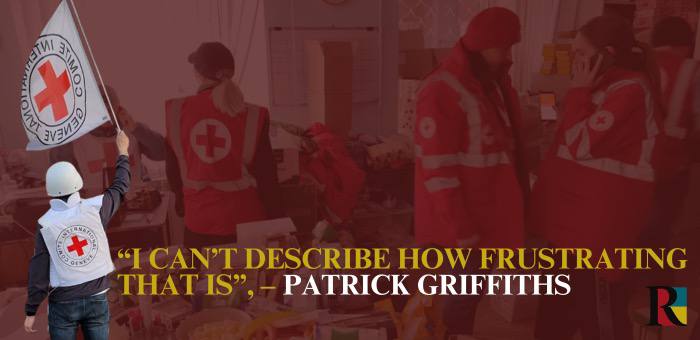
Are there limits to our humanitarian access? Absolutely. I can’t describe how frustrating that is.
This accounting of POWs-including the duty to search for and care for those who are sick or wounded — is the responsibility of the parties to the conflict. So is the facilitation of the exchange of prisoners of war and their families.
There are limits and challenges. We need to acknowledge those. But this system of accounting for and exchanging information is working. More than 9000 families have received news about missing loved ones since the start of the escalation. More than 7300 messages have been exchanged between prisoners of war and their families. It’s not enough. It’s not everyone, — the ICRC representative says.
ICRC response to forced deportations of Ukrainians to Russia
Russia made a forced transfer of Ukrainians from the occupied territories to Russia in the first weeks of the war in 2022. In the first case, the ICRC continued to emphasize its neutrality, providing basic humanitarian assistance. In the second case, the organization has not yet been able to resolve the issue of Ukrainians illegally taken to Russia.
The head of the Belarusian Red Cross, Dmitriy Shevtsov, during his regular visit to the temporarily occupied territory of Ukraine, admitted in a report by Belarus 1 TV channel that his organization was involved in the removal of children from Ukraine.
Patrick Griffiths says that this issue is the responsibility of the IFRC. They are the ones responsible within the Movement for accountability mechanisms when there is a possible breach of our principles or standards related to a national society, like the Belarusian Red Cross.
The IFRC looked into the case in your question and took action based on their findings. You can find all the details in this statement on their website here. One point it might be important to highlight from the IFRC statement is that their investigation found that no part of the Red Cross Movement was involved in the forcible deportation of children. From our side, we take any breach of integrity incredibly seriously. We share the same concerns stressed by the IFRC on the importance of upholding a strict neutrality to ensure humanitarian access to people affected by armed conflict.
The “cherry on top” is that the ICRC turns a blind eye to the cooperation of the Russian Red Cross Society with pro-war organizations in Russia. There have been no official statements by the ICRC on this issue.
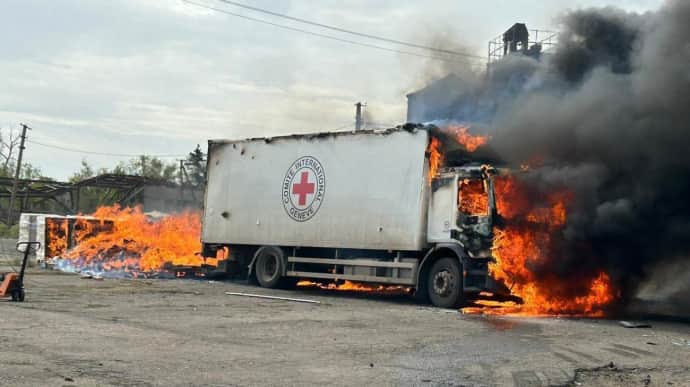
On the other hand, the ICRC representatives themselves have repeatedly suffered from the war unleashed by Russia. The example is the attack on Viroliubivka near Chasovyi Yar, which resulted in the deaths of three mission workers, two injuries and the destruction of humanitarian aid.
We lost three colleagues last month. We feel that pain. Our colleagues died helping people close to the front lines who are suffering because of this armed conflict. Our neutrality is the tool that gives us the best chance of reaching those who need help. It gives us the best chance of helping others. It means that we avoid politics, naming names or pointing fingers in public, as counterintuitive an impulse as that may sound. Don’t mistake that for silence – we are always talking, through our direct and confidential dialogue with parties to the conflict.
Formally, the ICRC declares its readiness to support Ukrainians for as long as it is needed. However, the effectiveness of this organization can be assessed from different perspectives.
We’re prepared to here as long as we need to be. For as long as people affected by the armed conflict need help, we are ready to provide that support, — the ICRC representative says.
Today, organizations like the ICRC are viewed with skepticism. On the one hand, it supports civilians with humanitarian and psychological aid, tries to establish communication with the Russians on the treatment of prisoners, and works in a constant state of threat. On the other hand, the “friendship” of the Russian Red Cross with terrorist organizations, the lack of assistance to deported Ukrainians, and the position of neutrality that is being criticized.
The Ukrainian Review will contact the ICRC for more information on the situation of Ukrainian prisoners in Russia and hopes for mutual interest in communication with ICRC representatives.
By Dariia Podvyshenna