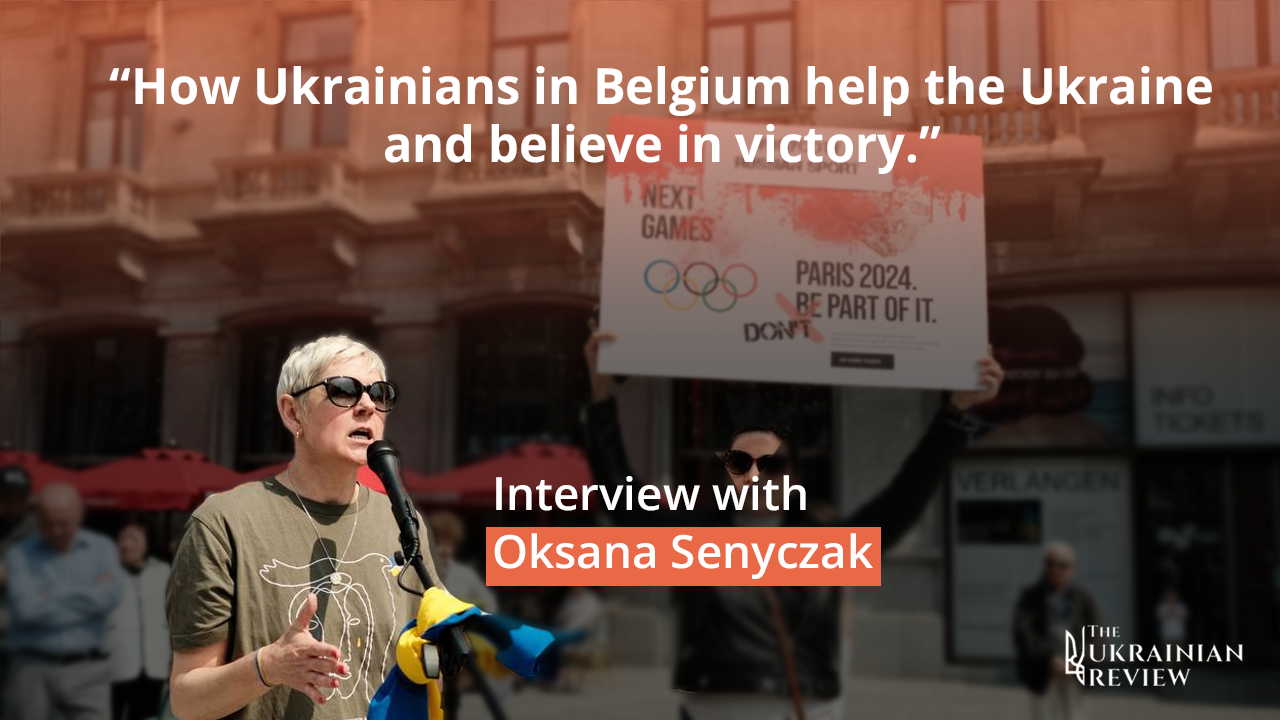


About 60 thousand Ukrainians received shelter in Belgium after the start of Russia’s full-scale invasion of Ukraine. This country with more than 11 million people before the war had a relatively small but well-organized Ukrainian diaspora. Today we want to present you with a transcript of an interview with a Ukrainian woman who lives in Belgium and has been organizing actions in support of Ukraine since the very beginning of the war, helping to provide funds for the Armed Forces of Ukraine.
Starting from February 25, 2022, active people of Antwerp gather for weekly actions, during which they remind people of the Belgian city that several thousand kilometers away, in Ukraine, a fierce struggle between good and evil continues. And their well-being and peace largely depend on victory in this struggle.
I welcome our subscribers and listeners. My name is Stanislav Kinka. I represent the Ukrainian English language media, the Ukrainian Review. And today we have a very special guest from Belgium, Oksana Senyczak, head of the Plastowa Group in Belgium. Plastowa Grupa is some kind of group of Ukrainian-origin activists in Belgium, and she’s a joint organizer of HelpUAfromBE.
And first question. So, we know that a lot of European countries and non-European countries were actively involved in helping Ukraine after the Russian full-scale invasion of Ukraine in 2022. My question is, tell us what is the level of support for Ukraine in Belgium now compared to February, or March 2022?
Thank you for inviting me. Well, yes, the kind of support is different. It is, of course, very different than what we had compared to what we had at the beginning of the full-scale Russian invasion of Ukraine. It’s, of course, because of time, it’s getting hard. And also, for people around to keep on supporting [Ukraine]. Asking for attention. Keep on donating. And there’s also the fact that people are getting used to [be tired of the] war. This is what we noticed between. And we also see it in our Ukrainian community. We have a lot of Ukrainian refugees in the Ukrainian community.
If there is a big community of Ukrainian refugees in Belgium?
Well, first I have to say that the community we had, is a community [formed long before] 2022. I would say that Antwerp has had a small [Ukrainian] diaspora since the end of the 19th century — the beginning of the 20th century. I’ve always been part of that diaspora. We have a Ukrainian school. We have our Ukrainian scouting organization. [These forms of activities] exist here in our diaspora already. For many years. The Ukrainian community has become more and more active since 2013-2014, during the Maidan revolution. And, of course, we have a big new movement of people that moved to work in Europe for the last couple of years. Their numbers are growing.
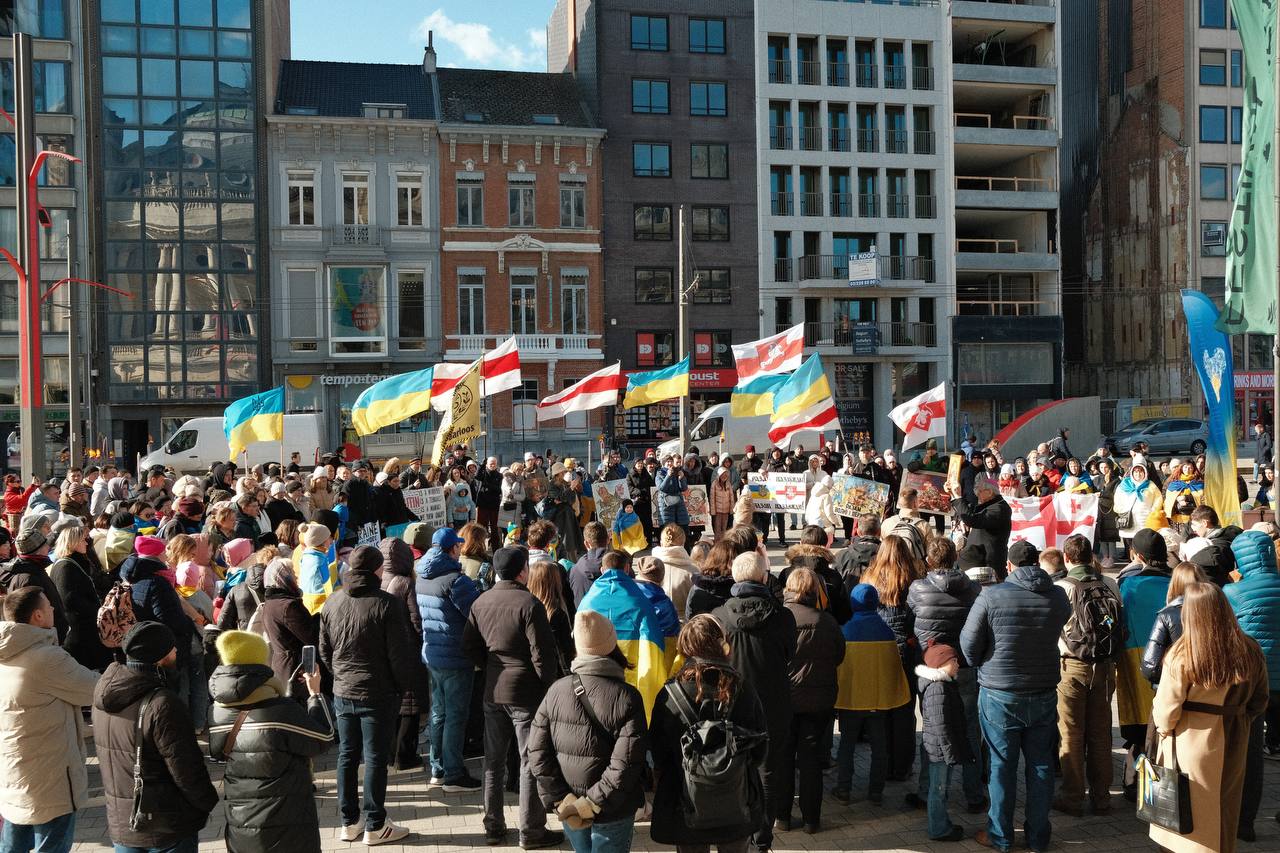
Are there any mass actions in support of Ukraine continues? Who organizes these actions?
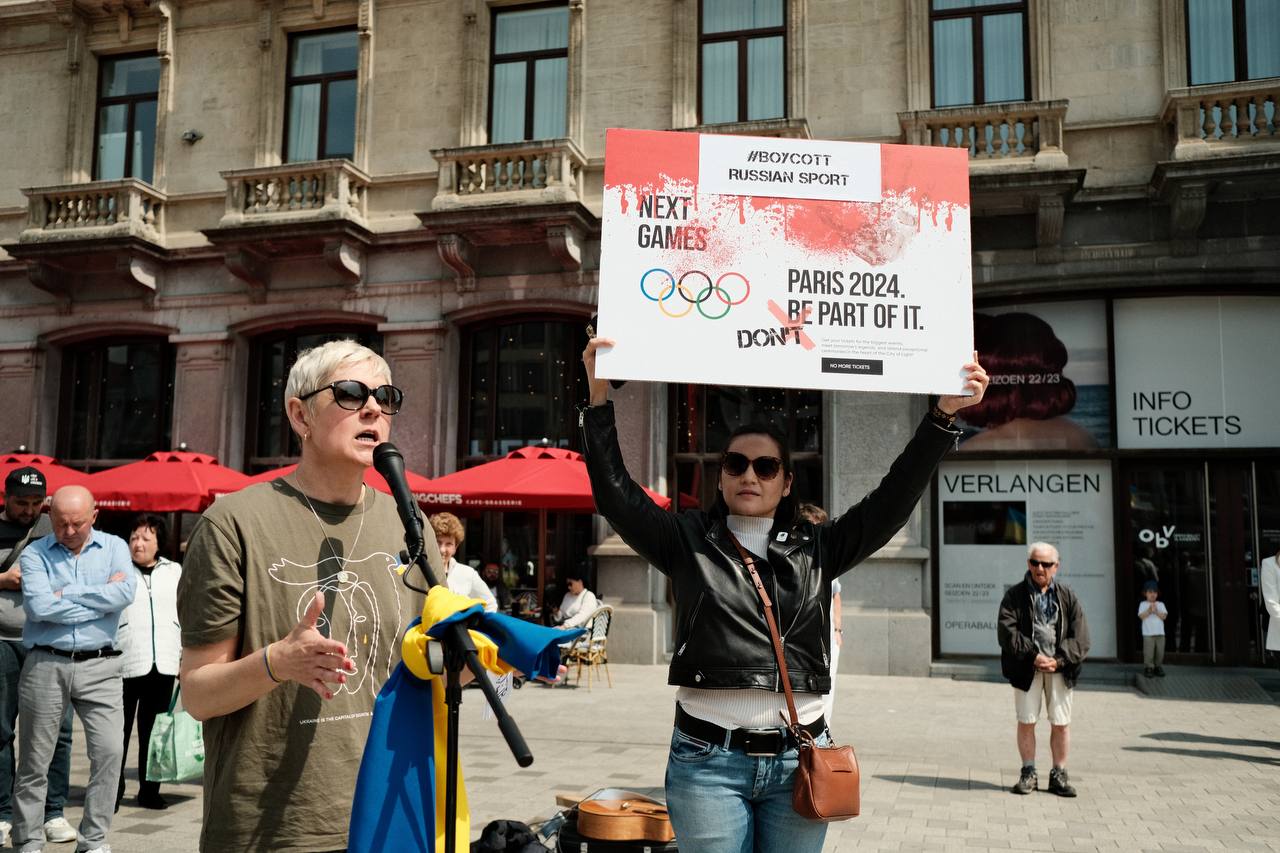
Some actions. Yes, there are. I think especially here in Antwerp. Belgium is a small country. But we have a few active cities which are working actively. Even now and Until now. We have Brussels. We have Antwerp. I am located in Antwerp and we work in Antwerp. If our friends from Brussels need some support or anything, of course, we help [them]. We try to do something together. But we are working here in Antwerp. We organize our Sunday demonstrations every week. Our first demonstration was on the 25th of February [2022]. [It was] in front of the Russian consulate. And the second time it was there as well. And the third one. But then, of course, we understood, that this consulate is closed. And it makes no sense to stand there. And we moved to the center of the city. From that moment we have a demonstration every Sunday. It is also getting hard [to continue]. But [nevertheless] we keep on doing this. Because there was a moment, I think after one month or two months. We said that we would stand here until the war is over. Until the last russian aggressor is banned from Ukraine. We are in this situation that the war is going on. So, we have no other choice, than to do what we will do. And I think it is very good. We are still doing it. Because many people ignored the news, the war. The war doesn’t appear in the news anymore. As frequent as it was before. I think it is good to be there with our Ukrainian flags, with our songs and music. Our demonstration is not only about shouting. It is also just to show that we are here. To show some culture. Also, to the Belgian people. And sometimes it is a meeting point for people. Especially when new people arrive from the Ukraine. It is also a place where we share some information about things that are happening around us. There are some exhibitions. Sometimes there are some fairs. We share all this information during our demonstration. And it is also a place where we have a box and collect money. Every week. This money helps us also to buy some necessary things for the Ukrainian army. The priority [now] is anyway Ukrainian army. We also have sometimes other things. But the main help goes to the Ukrainian army.
Is there any support from the [Belgium] authorities? On the level of the city, or some sort of organization. Or your organization is like a sole Ukrainian organization and you work [mostly] with your community?
We work mainly with our community. But we have an example [of cooperation] now. It is a deal about a hospital that is moving from an old building to a new one. And of course, when a hospital moves, a new hospital is fully equipped with new equipment, and new materials. And the old hospital now donated a big part of all the equipment. And all this equipment goes to Ukraine. It is an example of when the community, the city authority, and the hospital were involved together.
Please, tell us more about your foundation.
The organization is called HelpUAfromBE. We started our activities as soon as the war began. We were with a few people. All from the Ukrainian Scouts. At some point, we decided that we could do fundraising on Instagram. Where we can post what we do and where we can ask for more support. It is how we started HelpUAfromBE. Mainly we are people from the Ukrainian scouts. But HelpUAfromBE is more than just people from the Ukrainian scouts. It’s everybody who wants to help or support Ukraine. We have our platform. We are on social media. We do a Run marathon, a so-called run for Ukraine event with fundraising. It all goes via HelpUAfromBE.
Do you collect more money or some humanitarian aid too? From the very first weeks of the invasion, a lot of people around the world collect some food, some blankets, etc. If I correctly understand, now you are more focused on the aid to the Ukrainian military.
From the beginning, we were also supporting the Ukrainian military. But we had also organized the humanitarian help. We received a big warehouse. Also, via one of us from the Ukrainian scouts. We started to collect clothes, food, beds, medicine. Everything possible. And we worked in this direction during the first six-eight months of the war. But of course, in the long run, there was no need to send the clothes anymore. But there is still a need to send medicine. We do it sometimes. This is also just one of the things. I could be medicine. It could be an ambulance. It could be a pickup. It could be drones. It can be walkie talkies. It depends. Like last year we sent before the winter about 80-100 sleeping bags. Good quality sleeping bags.
It’s very helpful assistance to the Ukrainian military. And maybe the last question. In what term do you characterize the Ukrainian victory? What is Ukrainian victory personally for you?
Well, I think. The Ukrainian victory for me. Is to return to the territories we had before. It’s of course, not to me to decide what exactly this means. We have Ukraine. We have the Ukrainian territory. And it belongs to Ukraine. It should be Ukraine. The only thing is that I’m afraid that it will take us a while. It was all easier in the beginning to think that maybe it would happen very soon. It will not happen very soon. But this may not be a reason to compromise. We need the full Ukrainian territory.
Interviewed by Stanislav Kinka
Photos provided by Oksana Senyczak