

After attacks by the United States and Israel, Iran blocked the Strait of Hormuz – one of the world’s most important energy routes, through which about 20% of global oil consumption used to pass. As a result, a global energy crisis began. It now affects both the economy and politics. So, what is the situation in the European Union as of the tenth week of the blockade?
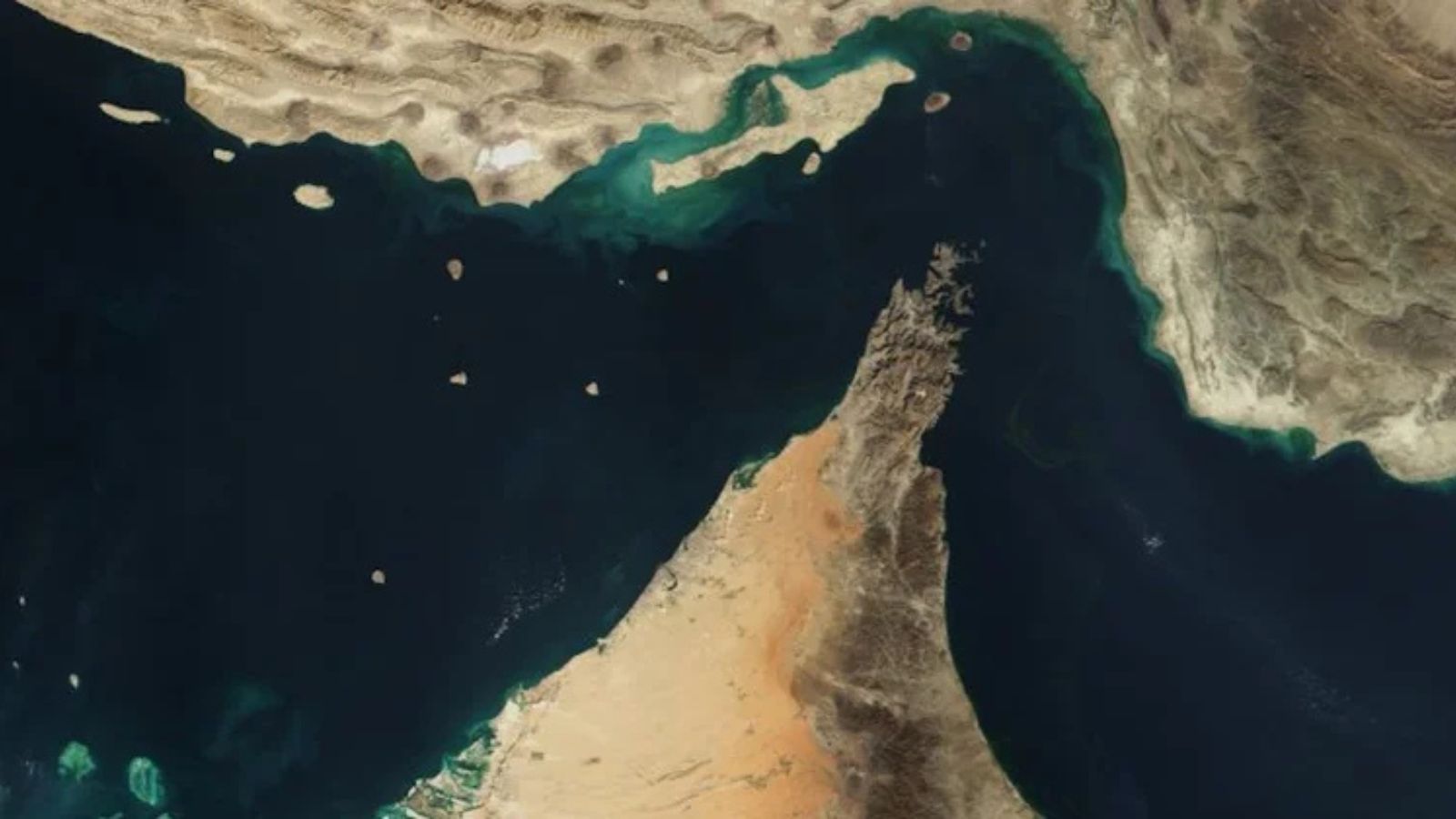
The Strait of Hormuz now
The Strait of Hormuz has been blocked for over nine weeks. Because of this, global oil supplies have dropped by at least 10%. Meanwhile, the market has lost about one billion barrels of oil. Bloomberg reported this on April 25.
In the United States and Europe, fuel prices have increased. As a result, transport companies have to cut routes. According to forecasts by the International Energy Agency, oil demand will fall the most in the past five years. Losses could reach 5 million barrels per day, or 5% of global reserves. Therefore, a global recession is possible. At the same time, oil prices continue to rise and affect Europe’s economic growth. It has already halved.
On April 26, Iran, through Pakistani intermediaries, offered the United States to reopen the Strait of Hormuz. The proposal also included ending the war. However, Iran suggested postponing talks on its nuclear program.
Energy crisis in the EU
Alexander Dubowy, an analyst specializing in Eastern European policy, in his comment to The Ukrainian Review said that he considers the EU’s energy situation critical. According to him, the blockade of the Strait of Hormuz threatens European politics more seriously than some governments admit.
“This is not simply a repeat of 2022. The previous crisis was largely driven by sanctions, the denial of Russian supplies, and costly but manageable substitution. Today’s crisis is different in that it combines disruptions to Gulf transit, damage to LNG storage capacity in Qatar, and low European inventories at the start of the storage replenishment season,” Alexander Dubowy said.
He believes the current crisis makes it harder to compensate through normal market mechanisms. Therefore, these conditions make politicization much easier.
The problem is not only that supplies have dropped sharply. Rather, it lies in political economy. Europe faces weak growth, inflationary pressure, and industrial tension at the same time. In addition, limited fiscal capacity increases the pressure. Under such conditions, anti-elite forces may gain strength. Government promises start to look fragile when households feel pressure from energy costs. As a result, fears of layoffs grow. Concerns about competitiveness also return.
Alexander Dubowy believes that even if military confrontation slows down, political consequences will remain. They will have an impact even if an agreement is reached. The shock is not temporary. Prices are unlikely to return to normal quickly. This is evident from damaged LNG production facilities in Qatar and ongoing tensions in the global gas market.
Impact on Ukraine
Ukraine also feels the consequences of the blockade. Rising fuel prices and exchange rates are not the only problems. On April 2, Volodymyr Zelenskyy said that because of the war in the Middle East, the United States might stop supplying aid to Ukraine. Therefore, this is one reason why Ukraine is actively increasing its own drone production.
“We must build our own independent defense industry in all areas. This is what we are doing. We have a shortage of anti-ballistic missiles, so we must develop our own or produce them jointly with partners,” Zelenskyy said.
Ukraine is indeed strengthening its defense industry. For example, it has launched joint drone production with Norway. There are plans for several thousand mid-strike drones. They will be produced in Norway. Moreover, everything produced within the project is expected to be delivered to Ukraine by summer.
Conclusion
Nine weeks of the blockade of the Strait of Hormuz have shown how vulnerable the global energy system remains. A regional escalation has turned into a global crisis. For the European Union, this is a challenge that combines rising prices, reduced supplies, and internal economic and political weakness.
Unlike in 2022, the current crisis has no simple compensation scenario. The EU faces resource shortages, inflationary pressure, and political risks at the same time. Therefore, the situation may last for a long time. Moreover, the consequences will affect not only the economy but also politics.
Ukraine also feels the impact. On the one hand, energy costs are rising and putting additional pressure on the economy. On the other hand, there are risks of reduced or redirected international support amid new global crises. Therefore, Kyiv is developing its defense industry and working on joint production with partners.
Overall, the situation around the Strait of Hormuz is not a temporary shock. Instead, it signals a new phase of global instability. It pushes Europe to rethink its energy security. At the same time, it pushes Ukraine to accelerate its path toward strategic independence.