

For decades, Russia’s aim has remained the same: to exterminate Ukrainians.
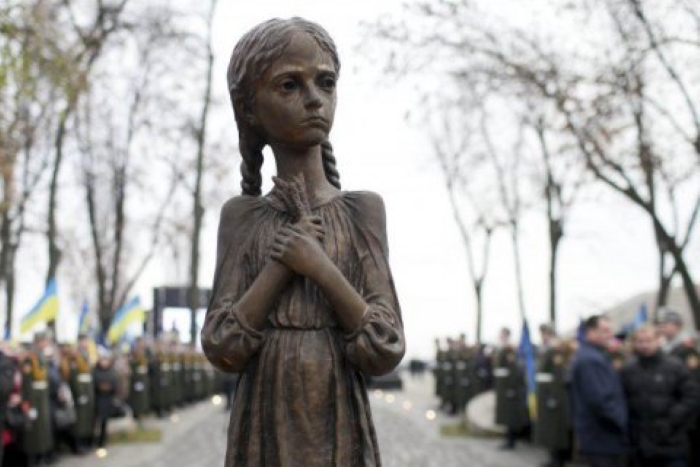
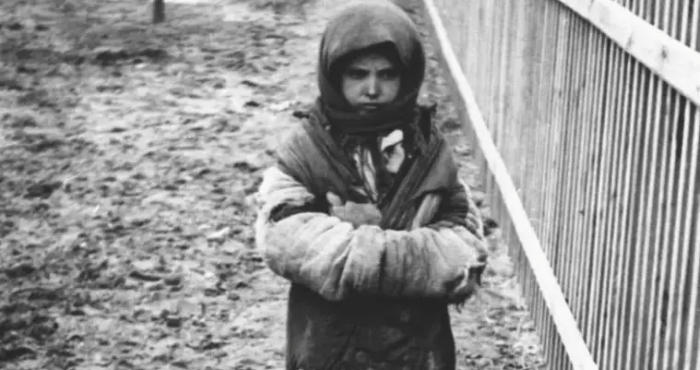
Every year, on the fourth Saturday of November, Ukraine commemorates the victims of the Holodomor of 1932–1933. It was an artificially created famine that claimed millions of lives. According to the most reliable demographic research, around 3.9 million people died within the borders of the then Ukrainian SSR. The real number may be higher. However, proving this is difficult, as Soviet authorities hid evidence and suppressed any truthful information.
The Holodomor was not caused by natural factors or accidental economic collapse. Instead, it resulted from deliberate Soviet policies. These included forced collectivization, confiscation of grain, blockades of villages, repressive quotas, and the blacklisting of entire regions. In addition, the regime systematically concealed the catastrophe and punished anyone who tried to report it.
International Recognition of the Holodomor
The recognition of the Holodomor as genocide developed gradually and continues today. In the first decades of Ukraine’s independence, many national parliaments and regional bodies adopted resolutions acknowledging the famine as genocide.
Before Russia’s full-scale invasion, several countries have already recognized the Holodomor. Among them were Canada, which issued one of the earliest parliamentary acts, many European states, and the United States. In the U.S., the Senate endorsed the findings of the 1988 U.S. Commission on the Ukraine Famine. The Commission concluded that the Stalinist regime committed genocide against Ukrainians. Later, the Senate reaffirmed this in a 2018 resolution and in additional federal and state statements.
After the start of Russia’s full-scale invasion, the recognition process accelerated. In November 2022, the German Bundestag officially recognized the Holodomor as genocide. Soon after, the Parliamentary Assembly of the Council of Europe and several national parliaments adopted similar decisions.
Today, 30 countries officially recognize the Holodomor of 1932–33 as genocide.
Russian Denial
Russia claims to be the legal successor of the USSR. Yet it chooses to inherit only what benefits its geopolitical ambitions, such as the UN Security Council veto. At the same time, it rejects any historical responsibility for Soviet crimes.
After the collapse of the USSR, Moscow slightly adjusted its rhetoric. Nevertheless, modern Russia continues to deny the genocidal nature of the Holodomor. It often minimizes Soviet responsibility or presents the famine as a “shared tragedy” that affected many regions of the USSR equally.
In 2006, Ukraine’s parliament formally recognized the Holodomor as genocide. A year later, President Viktor Yushchenko declared the next 2008 the Year of Remembrance. The Ministry of Foreign Affairs then launched an international campaign to secure recognition abroad. Russia reacted sharply.
We are doing everything we can to improve relations with Ukraine. We do not raise contrived issues such as the Holodomor, politicizing these shared problems of the past, said in 2008 Vladimir Putin, who was de jure prime minister and de facto still a leader of Russia at the time.
Conclusion
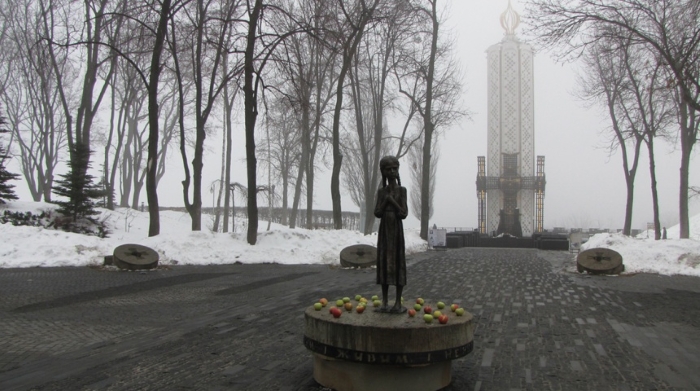
The Holodomor of 1932–1933 was the result of targeted policies aimed at breaking the Ukrainian countryside, suppressing national resistance, and eliminating any form of opposition.
Even in the 21st century, Russia continues to use hunger and deprivation as tools of repression. Ukrainian prisoners released from Russian captivity often return severely malnourished. There are also cases of deaths in captivity caused by starvation. Moreover, civilians in occupied territories face food shortages. Also, Russia terrorizes Ukrainian farmers and disrupts product logistics.
Whenever Russia gains control over Ukrainian land, it brings practices that lead to mass suffering and, ultimately, to total genocide.