

“Freedom without rules is a state of nature. I like to walk in nature, but I will live under the rule of the law”
Krasnogruda, Poland
My normally peaceful house in the hills above the Danube is suddenly invaded by guests from near and afar, all Spanish-speakers except for a hysteric dachshound, which compensates for his linguistic inability with snarls and snaps. I decide to escape in the direction of Krasnogruda, where Poland, Lithuania, and Belarus meet.
I have been invited to a so-called symposium, which for a week, in the depth and silence of an East European forest, is expected to philosophize about peace and war – especially the war in neighbouring Ukraine – and about the role, indeed the morals and ethics, of the intellectual in the borderland between barbary and civilization. The symposium includes celebrities like Marci Shore and Timothy Snyder, both from Yale and the superstar of Ukrainian historiography, Yaroslav Hrytsak, whom I suspect of having invited the meeting’s only Scandinavian participant.
And why Krasnogruda? Because here the Polish-Lithuanian poet, philosopher, socialist and anticommunist, Czeslaw Milosz (“The Captive Mind”, Nobel laureate, 1980) spent his childhood summers on the family farm. It is now an international dialogue center.
I drive through the well-kept, beautiful landscapes of Central and Eastern Europe. The standard of living has doubled since the disappearance of the communists in 1989, half a dozen years have been added to the average life expectancy. There will emerge the next Europe, consisting of Ukraine, Poland, the Czech Republic, Slovakia, and the Baltic states. Viktor Orbán´s illiberal, semi-fascist, pro-Russian, and EU-critical Hungary has long lost the leading position it established shortly after the revolution of 1989.
Complaints are in fashion. In Denmark, my fatherland, but not my homeland, which is Austria, young people are sent to the psychologists, because they cannot see a meaning with their lives. Perhaps the meaning of the superficial, non-demanding life, they live in one of the world´s most advanced welfare states is its meaninglessness. They could venture out into reality, tire themselves with useful, probably unpaid, but otherwise rewarding work, and in the evening go to bed with Søren Kierkegaard, Denmark´s and Europe´s great thinker 200 years ago. Life must be lived existentially, he writes, with all its challenges. Smartphones, coffee tables, and empty entertainment create exactly that – emptiness.
Krasnogruda appears: a modest, but beautiful mansion, inside and outside on the lawn small groups of great spirits, mostly Ukrainians. To quote Milosz: I feel like a dog on the roadside. But during a discussion of Timothy Snyder´s forthcoming book on Freedom, I bark a bit. Freedom as such is too imprecise, intellectually useless, and open to abuse: Russian troops liberate Ukraine, Donald Trump´s mob storms Congress in the name of freedom, Danish and Swedish idiots, who call themselves patriots, burn the Koran on the open streets of Copenhagen and Stockholm, an obvious and provocative act of vandalism, which not only the perpetrators but large parts of society, politicians, opinionmakers, etc., explain away with a right, in the name of liberty, to mock, taunt and ridicule others, in this case, Muslims.
How you can think that you are protecting freedom of expression by repeating the book burnings by the German Nazis – Thomas Mann, Stefan Zweig, Bertolt Brecht, Lion Feuchtwanger, Eric María Remarque, and Ernest Hemingway, etc. – is beyond me. What will be next? That our public libraries must be cleansed of what a mixture of fascists and pure criminals proclaim to be freedom-threatening literature? The whole business to me looks like a perversion of our democracy, indeed as an abomination with the purpose of creating insecurity at this moment in time, where we have to concentrate on making it possible for Ukraine to beat the Russian invader.
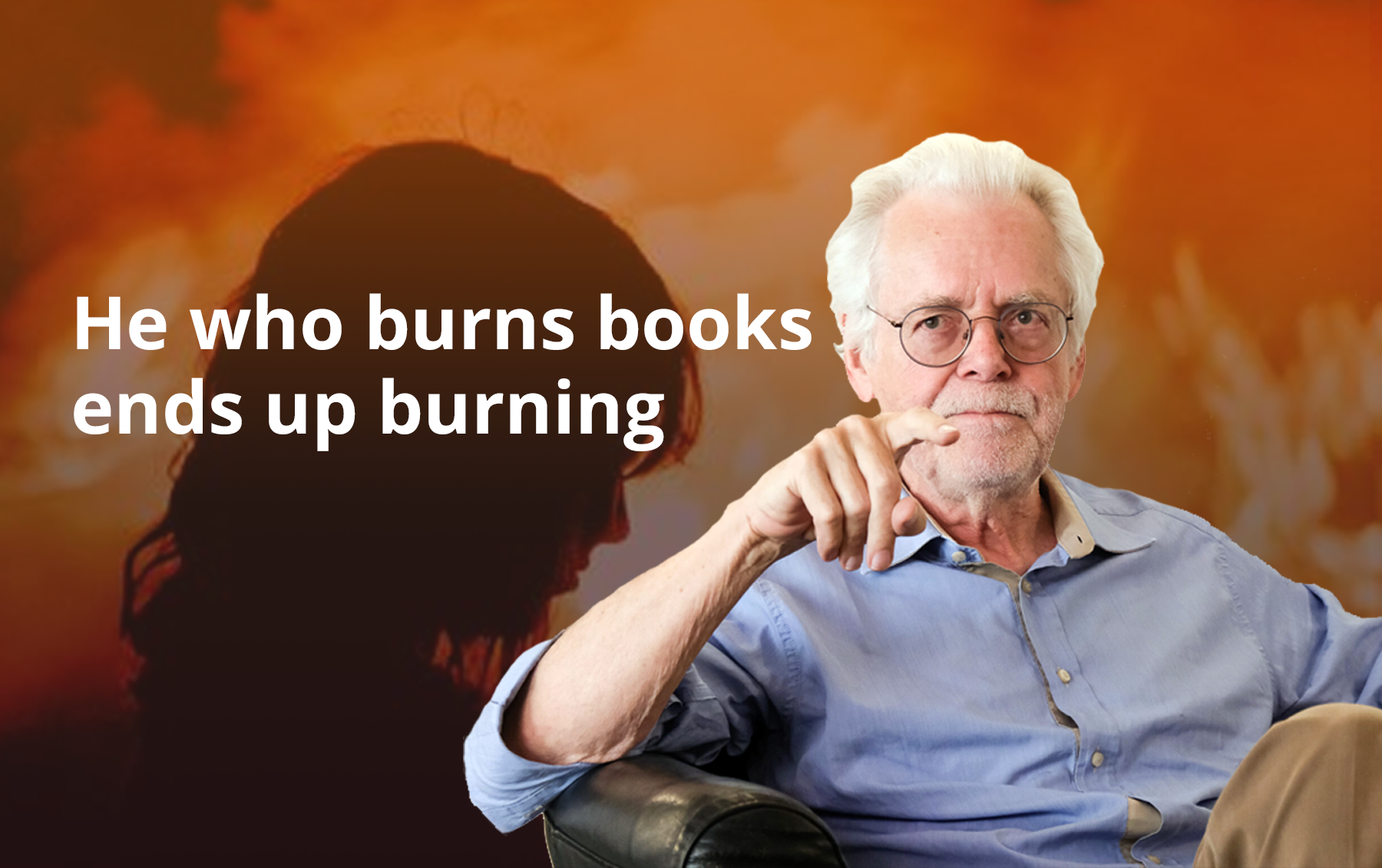
In Krasnogruda, so near the great Czeslaw Milosz, in the Bloodlands of Timothy Snyder, where German Nazis set up their gas chambers, I am reminded of the German poet Heinrich Heine (1797-1856): “He who burns books ends up burning people.”
I believe in clearly formulated freedoms, discussed and passed by our elected parliaments and other democratic institutions: freedom of speech, freedom of assembly, freedom of movement, sexual freedom and habeas corpus, that great old right guaranteeing the individual his og her body. Freedom without rules is the freedom of the wilderness, of the jungle and the steppe. I like to be around in the nature, but I want to live in the state of law. It gives me the freedoms I need, and which I consider to be the prerequisite of our humanly designed and therefore, in principle, unnatural, but civilized community.
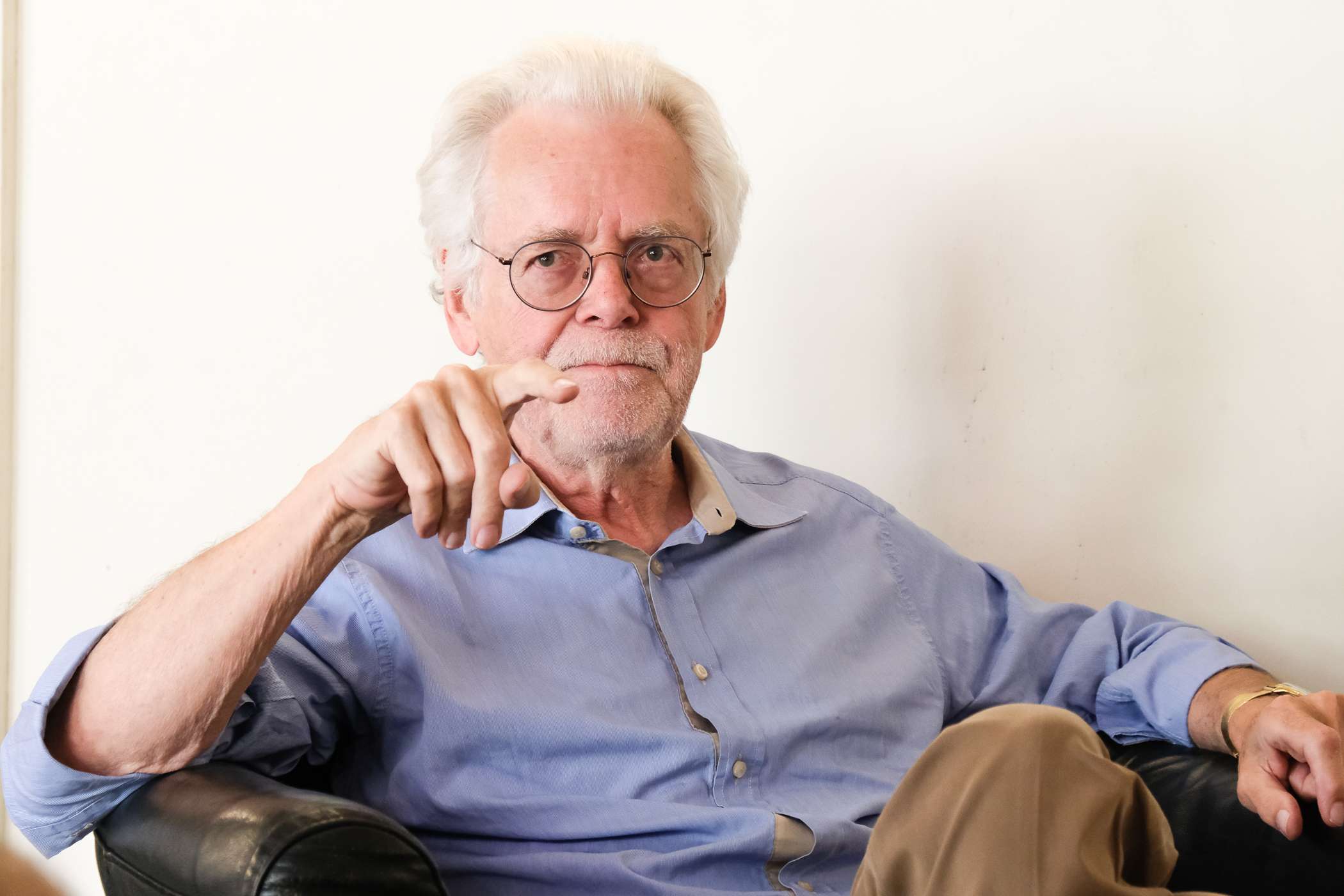
Author: Per Nyholm
Danish journalist since 1960, based in Austria, columnist and foreign correspondent at the liberal Danish daily newspaper Jyllands-Posten. This text was written for The Ukrainian Review. Per Nyholm has written several books, his latest “Journeys in the Land of Blood”, dealing with Ukraine and Europe. They are all freely available for any serious Ukrainian publisher.