

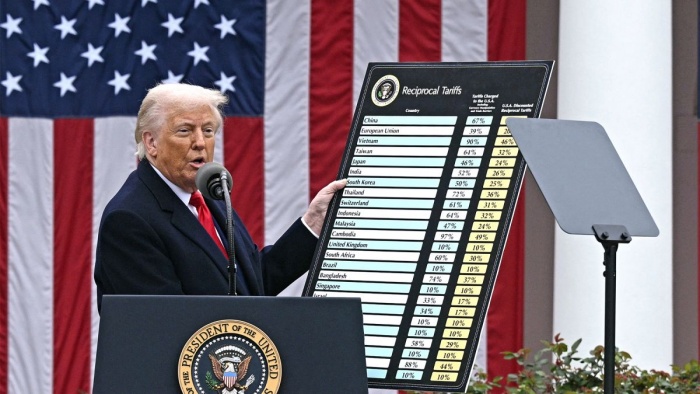
On April 2, 2025, US President Donald Trump announced the introduction of tariffs of at least 10% on almost all goods imported into the United States.
China said that starting from April 10, it would impose additional tariffs of 34% on all American goods. Donald Trump responded by saying that Beijing had “played the wrong way” and that if China did not remove its tariffs by April 8, the United States would impose new and even higher tariffs on Chinese goods. China called this a “typical step of economic intimidation”.
Then on April 8, the United States imposed tariffs of 104% against China, and on April 10, it postponed the introduction of increased tariffs for a number of countries for 90 days.
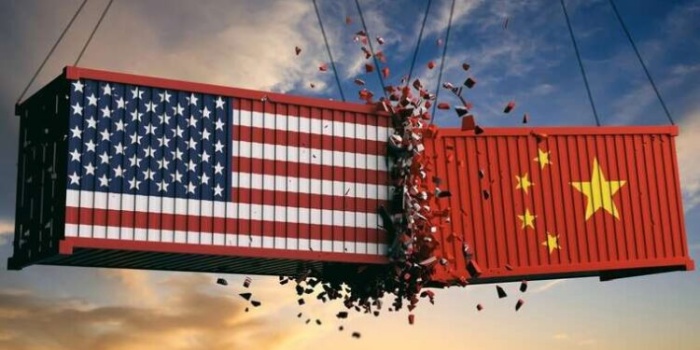
The next day, Beijing imposed tariffs of 84% against the United States and urged its tourists to assess the risks of traveling to the United States against the background of “the deterioration of Chinese-American economic and trade relations”.
The Ukrainian Review analyzes the consequences of the economic confrontation between the two major powers, particularly in the context of Ukraine, further.
Postponement of tariffs for 90 days – relief or not
According to Reuters, the US decision to introduce tariffs caused a collapse in global stock markets. Fears of inflation are also growing due to the destruction of logistics chains that have held down prices for many years. The BBC notes that prices for clothing, toys and electronics will grow especially quickly.
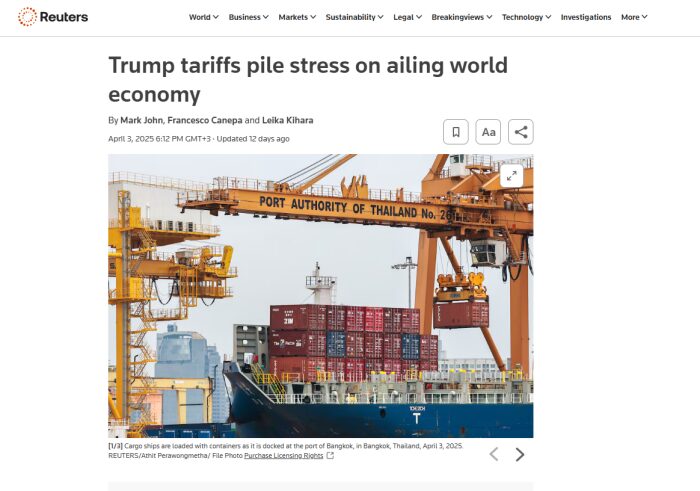
The increase in tariffs could slow economic growth in the world, especially in the EU and Asia, where many companies are focused on the American market. In the US itself, consumers are expected to pay higher prices and reduce investment activity, as companies are afraid to invest in conditions of uncertainty about the duration of the new tariffs.
At the same time, a pause in tariffs does not mean the end of the trade conflict between the US and China. As Bloomberg notes, the tariffs imposed by both sides could seriously disrupt trade between the two economies, which until recently were closely linked in a single global supply chain.
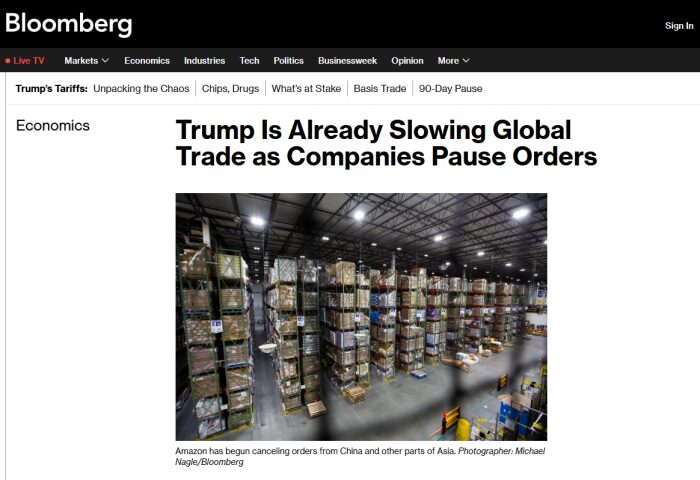
While new tariffs for other countries have been postponed for now, most companies around the world are already reacting to the instability: reducing investments, postponing project implementation and cutting costs, halting deliveries, production and orders. This is causing a general slowdown in global trade.
Trump’s main goal is to force China to make concessions on state subsidies, limited market access and currency manipulation. However, as The Economist notes, while the West has long criticized China’s model of state capitalism, tariffs and open confrontation are unlikely to be the most effective tools for achieving change.
Consequences for Ukraine
As for Ukraine, according to the Minister of Economy Yulia Svirydenko, the 10% tariff will not have a significant impact, since exports to the US account for only 2.1% of the total volume, with more than half being cast iron and pipes. In the short term, the situation may even open up new opportunities for the Ukrainian market: foreign manufacturers, having lost access to the US, will look for new markets for their EP sales.

However, the tariffs may have some impact on the foreign exchange market, since one of the reasons for their introduction by the US was called “currency manipulation” by partners – that is, artificially undervaluing their currencies. This is one of the factors that may contribute to the weakening of the dollar.
Oleksandr Khmelevskyi, Candidate of Economic Sciences, says that the new tariffs will not cause significant damage to the Ukrainian economy:
However, serious problems may arise for individual enterprises that are focused on selling products in the US. Some metallurgical enterprises will suffer the most. In 2024, Ukraine imported products from the US worth $3.47 billion. These are cars, oil, coal, etc.
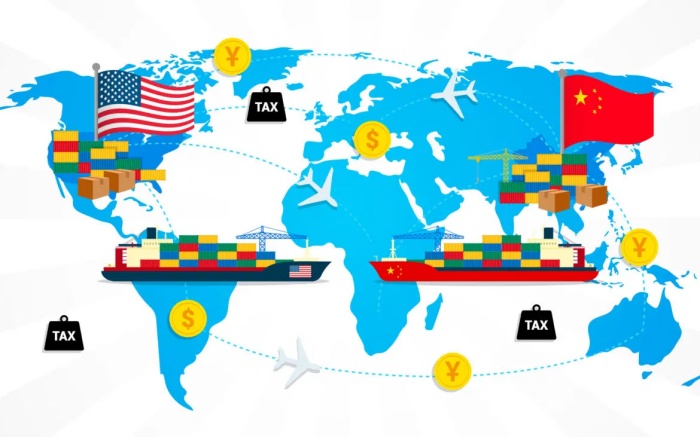
Also, because one country often supplies raw materials and components to another, the tariffs introduced by the US may lead to disruption of production chains and an increase in prices for American products:
That is, cars from the US that Ukraine imports may become more expensive. The same applies to products that Ukraine imports from other countries. An increase in US tariffs may lead to an increase in the cost of products that Ukraine imports, for example, from China or the EU. There may also be delays or even refusals to supply due to disruption of production chains around the world.
The tariffs imposed by the US could also lead to a global economic crisis:
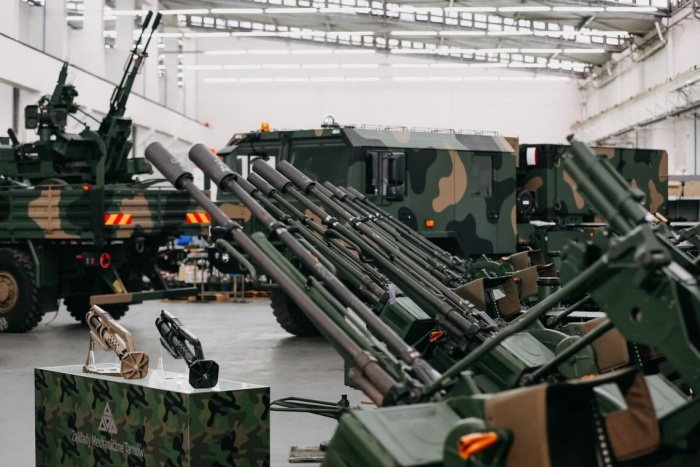
The economic crisis could cause a decline in demand for Ukrainian exports, which would reduce export volumes and prices. As a result, export revenues and state budget revenues could decline. This, in turn, could lead to a further devaluation of the hryvnia and an increase in the state budget deficit. The global economic crisis would affect the amount of military aid and foreign loans that Ukraine receives. This would reduce our defense capabilities and could undermine financial stability.
***
Instead of the expected strengthening of the national economy, Donald Trump’s tariff policy has already led to the destabilization of global markets and the growth of geo-economic tensions. The trade war between the US and China, which is growing every day, threatens the integrity of global production chains and deters investment around the world. Despite the temporary postponement of increased tariffs for other countries, the general atmosphere of uncertainty is already forcing businesses to reconsider their strategies.
For Ukraine, the direct impact of the new tariffs is currently limited, but in the long term, global economic turbulence could hit exports, the currency market and the financial stability of the state. The possibility of a new global crisis, which would not only reduce demand for Ukrainian products, but could also weaken external support for Ukraine in times of war, looks especially risky.
Anna Ostymchuk