

Since a rocket attack at the front, the veteran has been paralysed. During power outages, he struggles down seven floors. His paralysis threatens to spread. Despite everything, he encourages others.
By Till Mayer (Text and photos)
Kyiv
Vadym is a mountain of a man. His powerful arms and hands are like vices. His broad shoulders and solid chest are visible under his colourful shirt. At 54, he needs every ounce of strength to move forward—or, rather, make his way down.
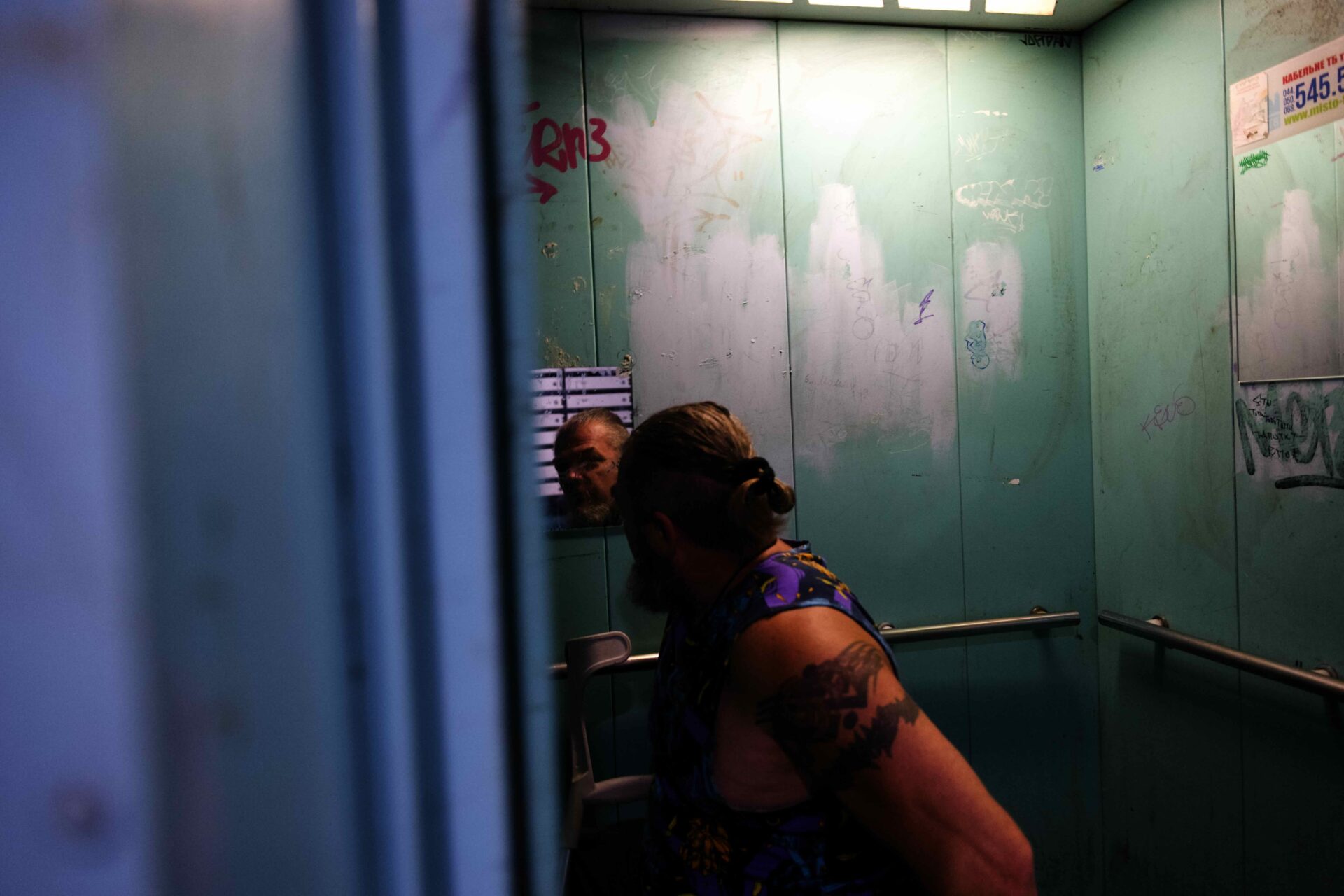
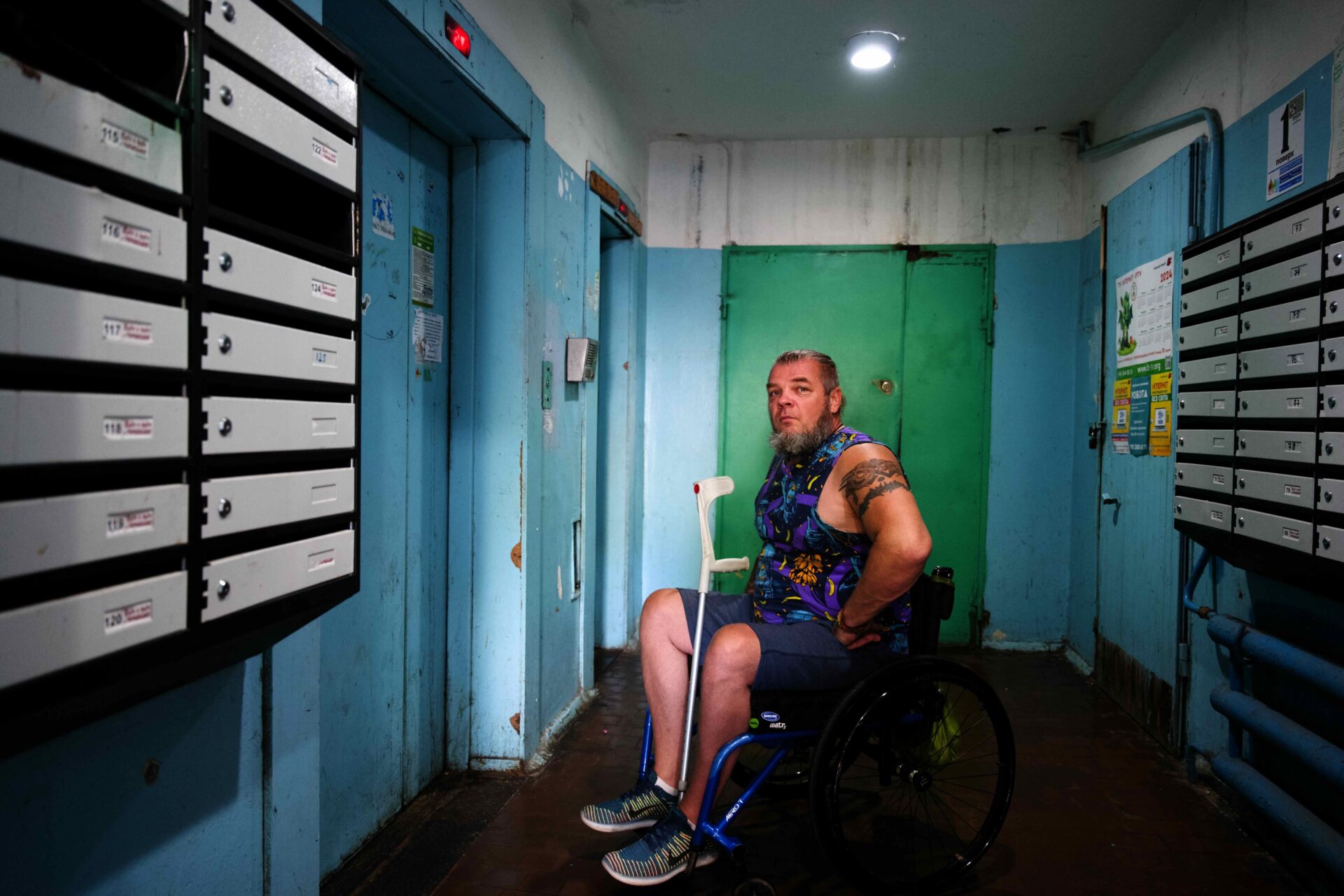
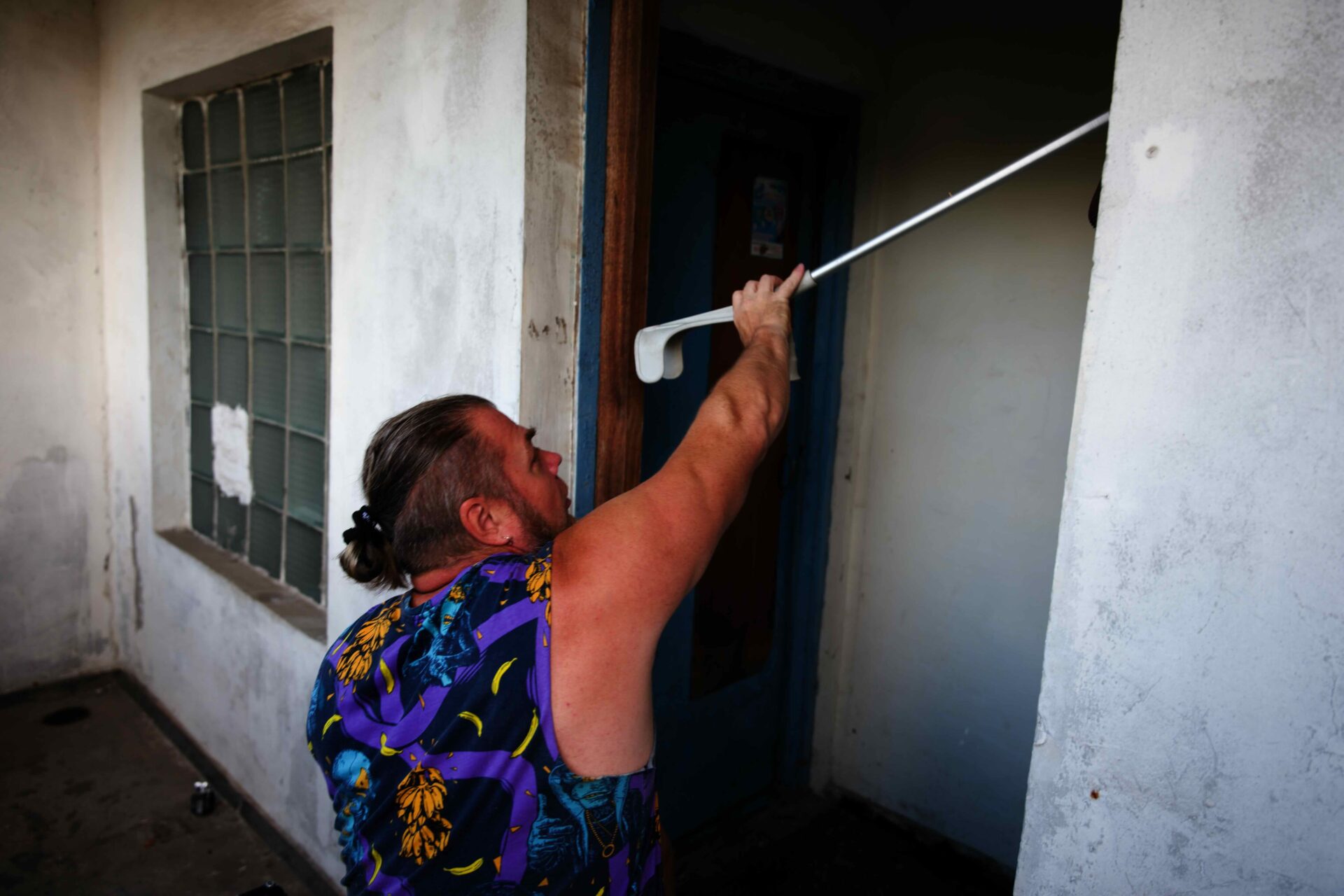
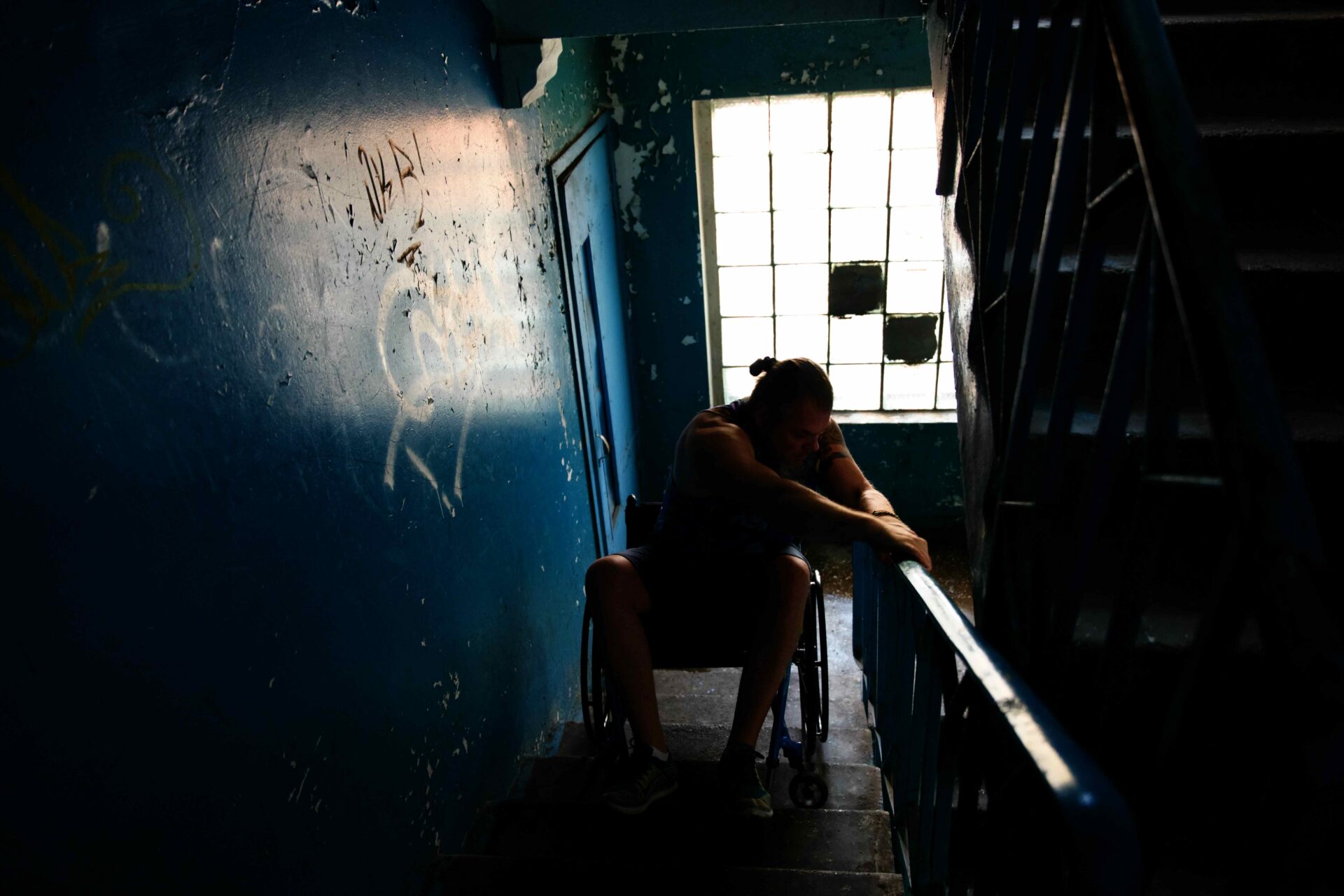
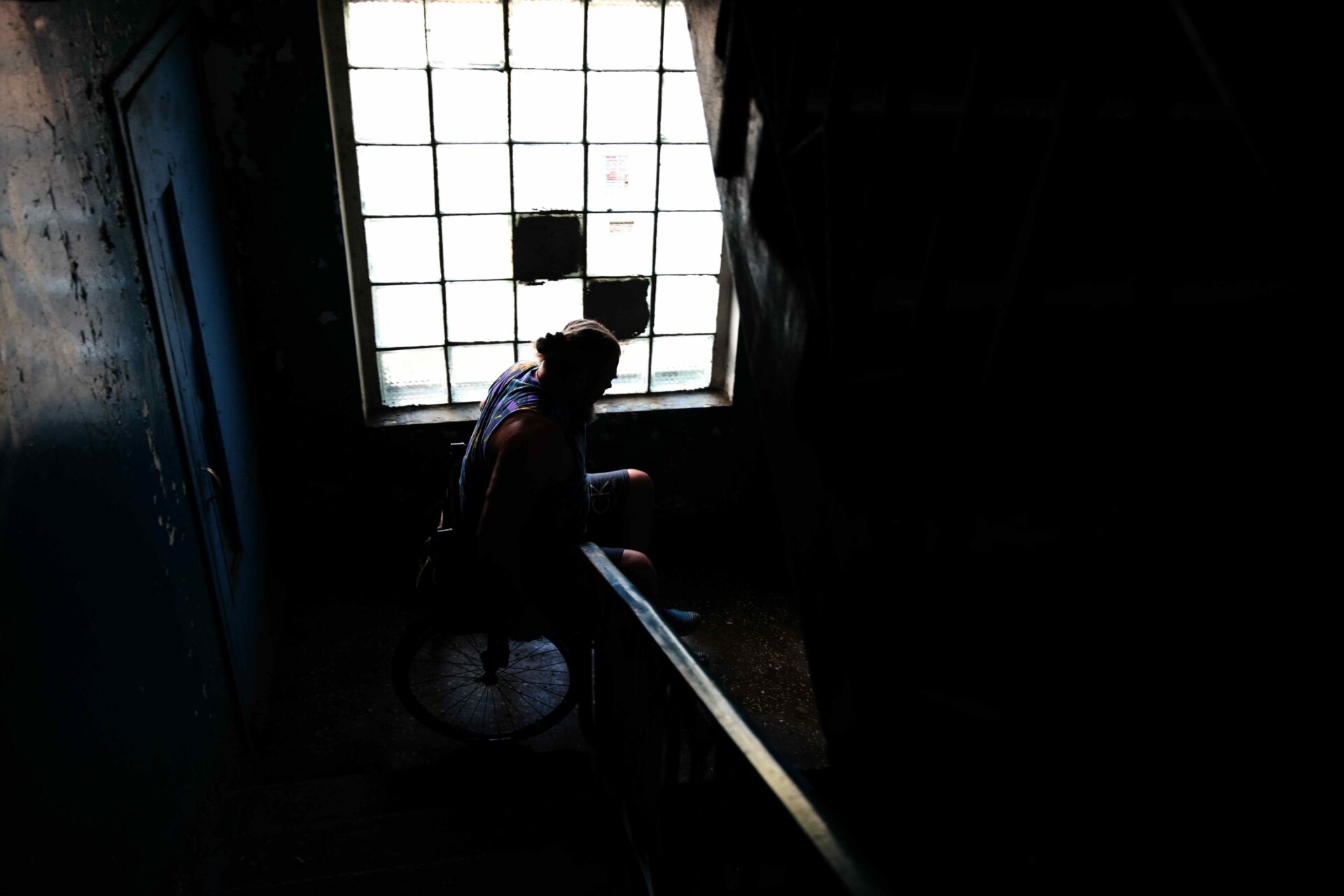
Step by step, he descends the grey concrete staircase toward the ground floor. Vadym has turned his wheelchair around so the back faces forward. Pale light seeps through dusty windows into the stairwell of the Soviet-era apartment block. As the stairs continue downward, it grows darker.
In the dim twilight, the bulky figure groans as he descends. His hands grip the iron railing. His arms bend slightly, muscles tensed, bearing his body weight with every step down.
This stair descent is a demonstration for the journalist, starting from the third floor. “I live on the seventh. It takes me 40 minutes to get down from there,” he explains. The 40 minutes aren’t a fitness routine, although tough training is part of his survival strategy.
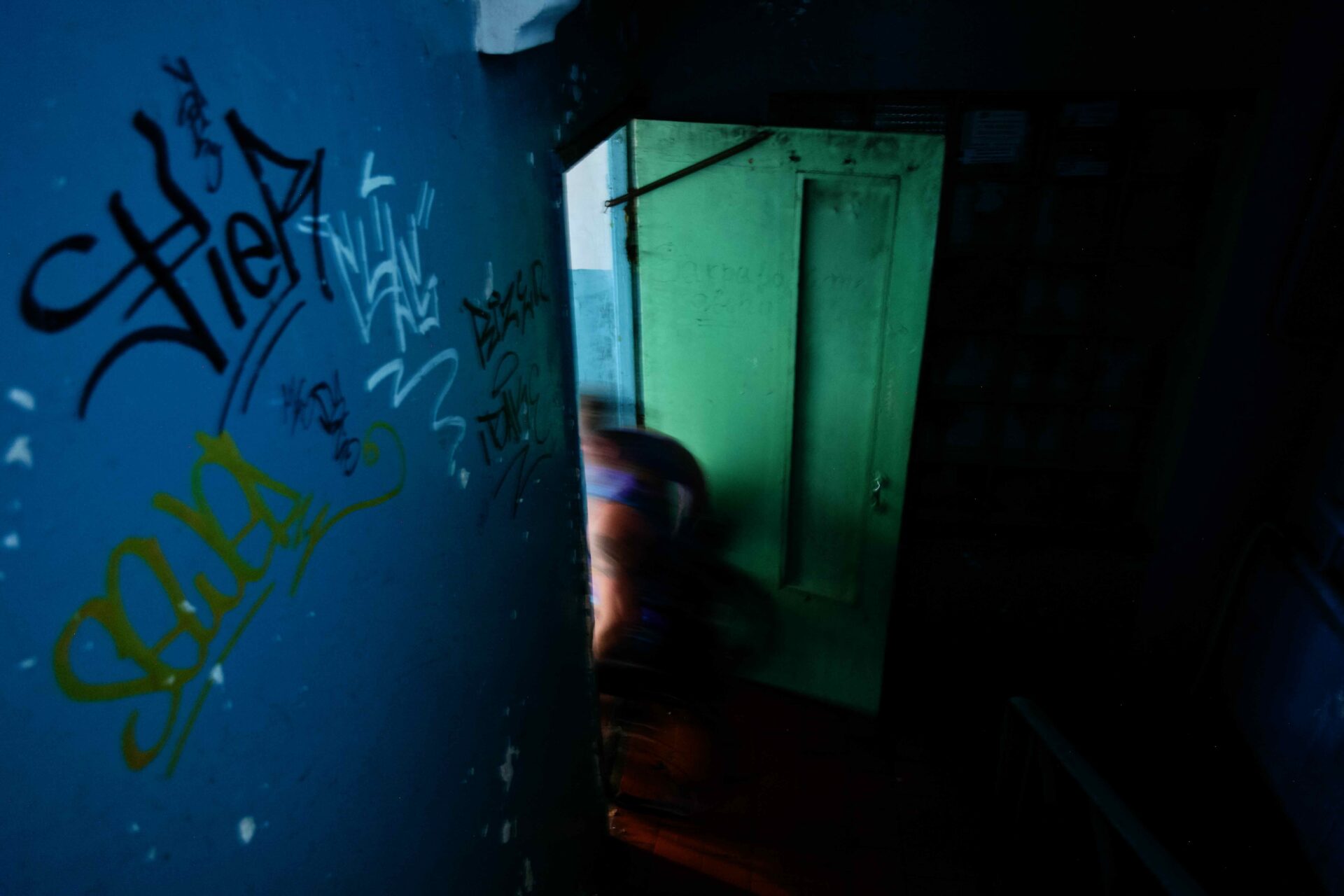
His stair struggle has become a regular ritual. Due to Russian attacks on Ukraine’s energy infrastructure, there are frequent blackouts and power rationing. Elevators stop working for hours—or even the whole day. “But I can’t and won’t stay locked in my apartment all day. If I have an urgent appointment or need to see a doctor, I must find a way out,” Vadym explains.
And so, he makes his way down. Going back up is impossible. “I obviously can’t pull myself up the stairs with my wheelchair,” he says. Luckily, his mother lives on the ground floor of the same building, where he can stay until the power returns. “But imagine if I didn’t have my wife or my mother downstairs. I’d be at the mercy of the blackouts.”
A life-altering rocket attack
The war made Vadym a person with a disability. A day before his birthday, on June 26, 2023, a Grad rocket hit his position on the embattled Bakhmut front. “The blast wave threw me through the air,” the 54-year-old recalls. After the explosion, he lost consciousness. Bones in his body were broken, and his spine was fractured. What followed was a chaotic evacuation that could have been a film plot.
His son, serving as a medic in the same sector, heard about his father’s injury. “He came to pick me up with other comrades. On the way to the stabilisation point, a Russian shell hit our ambulance,” Vadym recounts. Both father and son were severely wounded.
At the stabilisation point and later in the field hospital, overwhelmed medical staff struggled to manage the flood of injured soldiers. “I had no visible wounds. In the chaos, the doctors underestimated the severity of my spinal injury,” he explains. That mistake was devastating. Critical time was lost, and his spine suffered further damage.
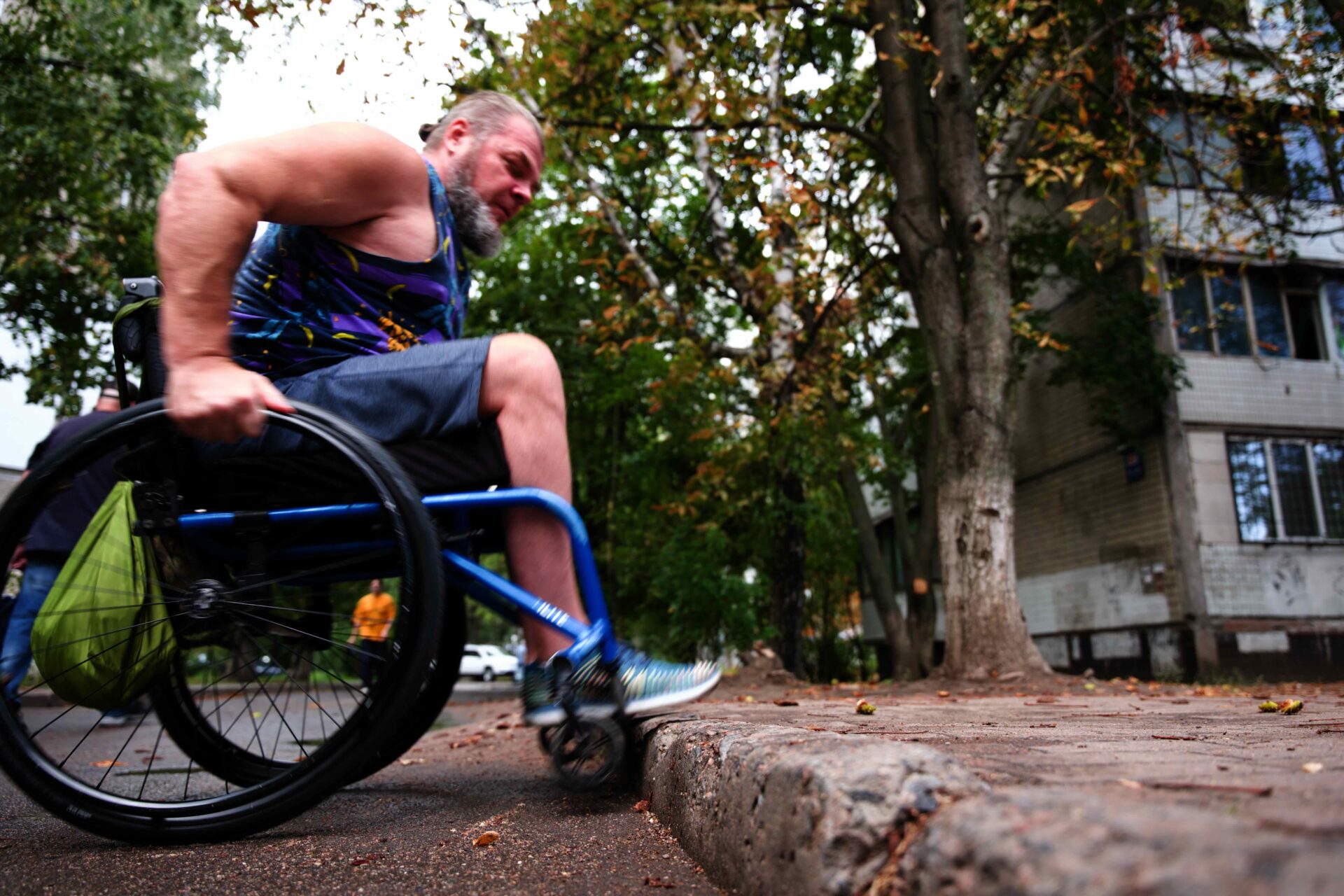
“Now I’m in a wheelchair,” Vadym says quietly. He rolls towards a nearby school. “That’s where I train,” he explains. The path there is anything but accessible. He needs four attempts to navigate a high curb. A passerby offers to help. “No, no, I need to do this on my own,” he replies with gratitude.
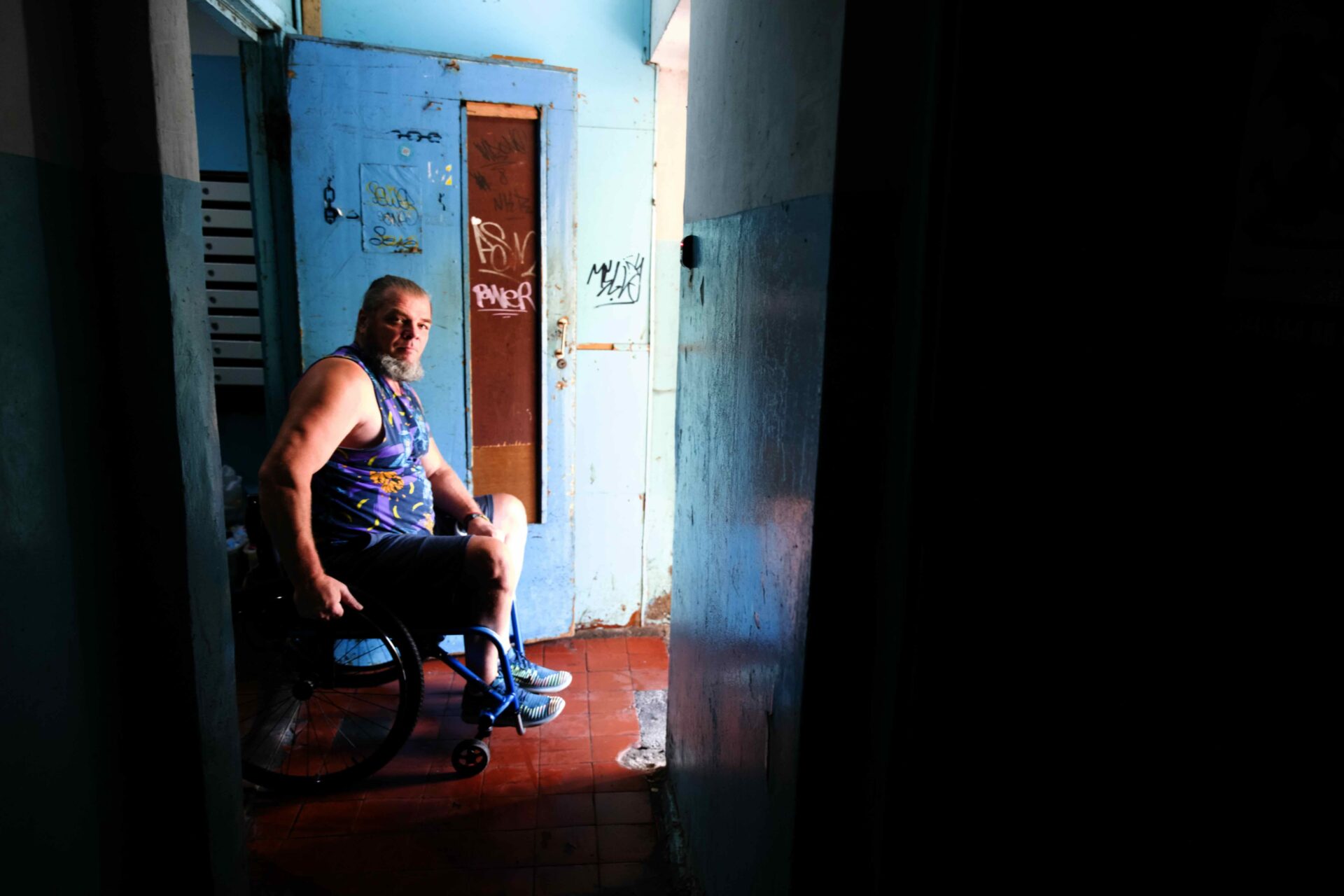
Vadym creates YouTube videos to highlight the challenges faced by people with disabilities. He addresses the many barriers they encounter. “This is an important topic. The war has left more and more people in Ukraine with disabilities—both physically injured soldiers and many suffering from mental health conditions.” In his videos, he encourages others not to give up. “Only those who fight can learn to live with a disability,” he says. He emphasises the need for more rehabilitation programs and support for those with mental health issues. “This is one of Ukraine’s great tasks,” he adds.
Fighting against polyneuropathy
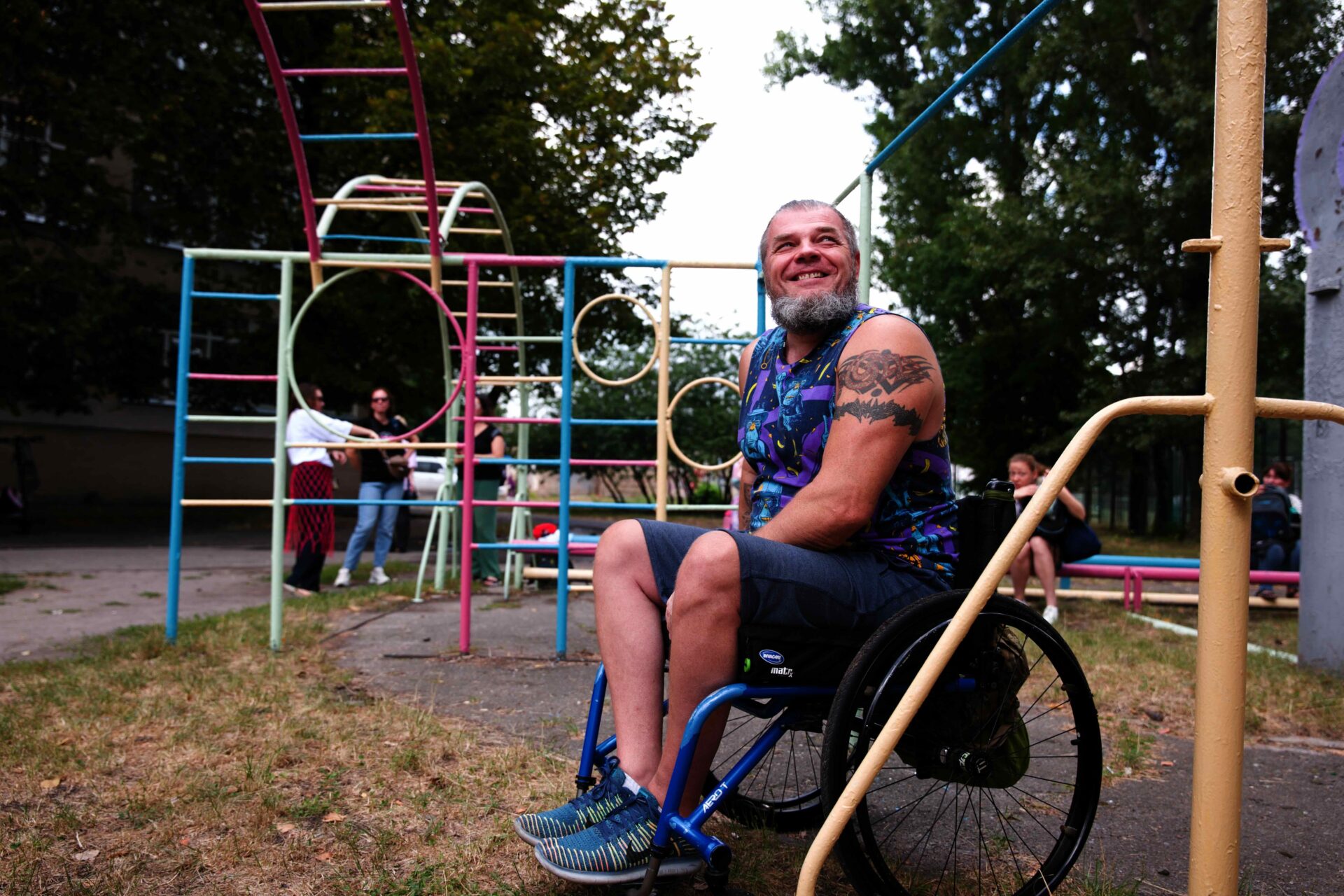
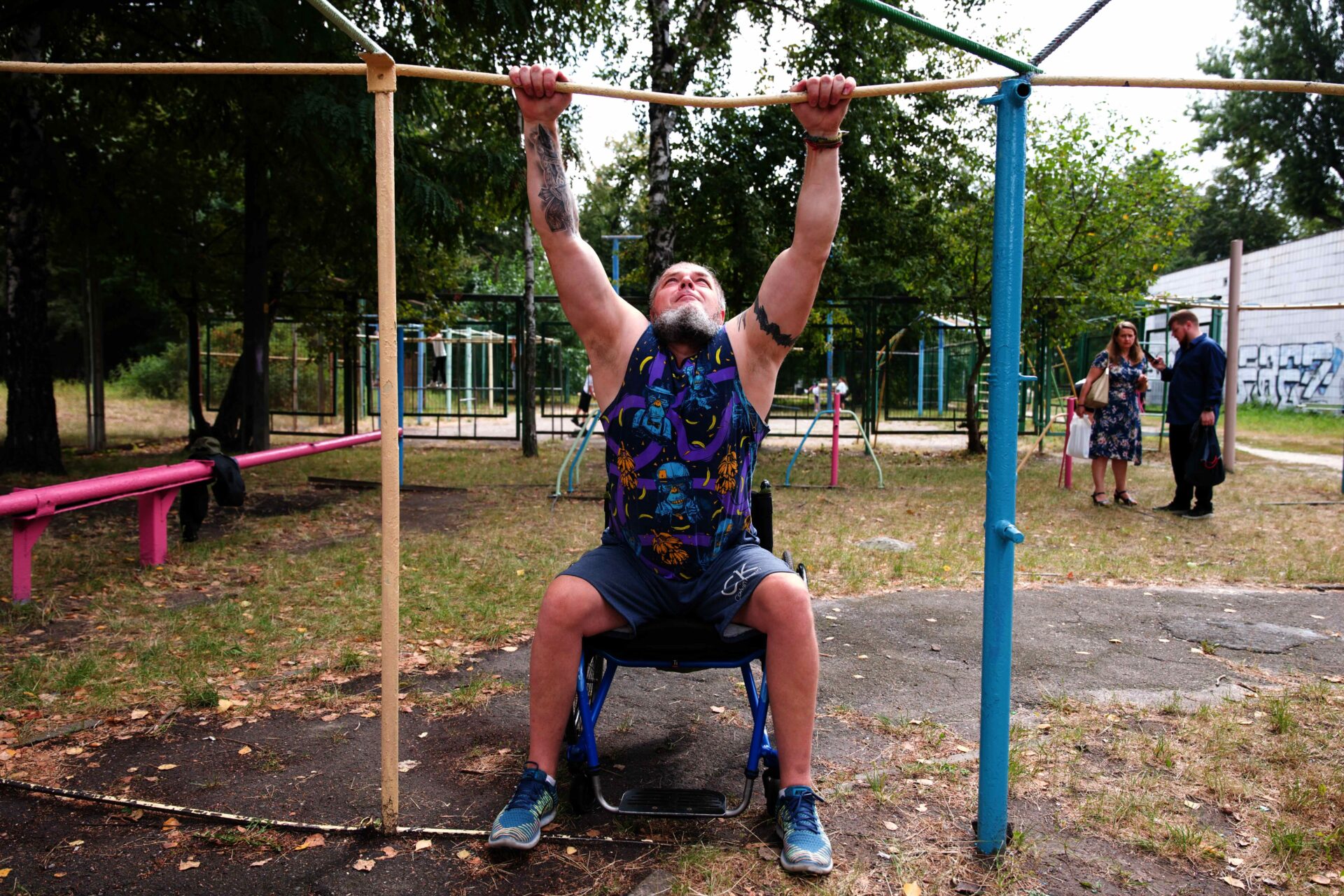
Vadym reaches the fitness equipment at the playground near his apartment block. The brightly painted climbing frames and pull-up bars are essential for his workouts. He fights against polyneuropathy with every ounce of strength he has.
“My severe injury led to a bacterial infection during my rehab, triggering an autoimmune disease,” he explains. Polyneuropathy is causing more parts of his body to become paralysed. “I feel my hand becoming increasingly numb. My response is to train hard and keep fighting,” Vadym says.
The daily battle and a dream to return to dogs
Fighting defines Vadym’s life. Every day, he pulls himself up on the bars of his wheelchair. Each pull-up is an immense effort, and his face shows the pain as he gives his all.
As school lets out, children and teenagers stream into the playground. Some observe Vadym from a distance as he trains. Parents waiting for their children glance away awkwardly. “People often avoid eye contact when they encounter someone with a disability. Unfortunately, this is still too common in our society,” Vadym explains.
At a congress in March, Ukraine’s First Lady Olena Zelenska shared sobering statistics: half of Ukrainian society perceives people with disabilities as “invisible.” Only a quarter of respondents said they noticed people with disabilities in public spaces. Officially, there are three million people with disabilities in Ukraine, with 300,000 more since the start of the Russian invasion. “Social invisibility always has one cause: lack of opportunities,” Zelenska emphasised.
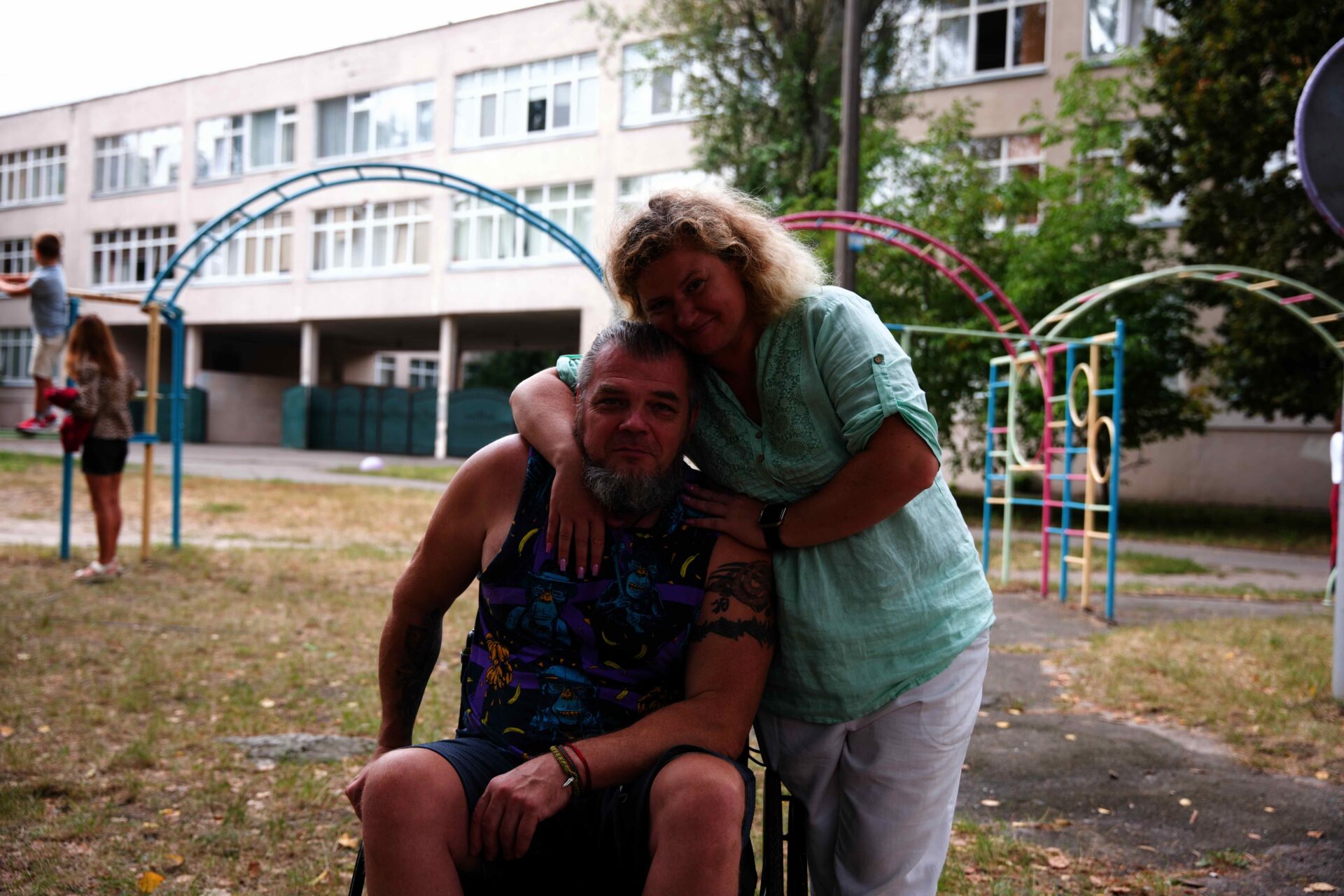
Vadym dreams of visiting classrooms one day to help break down prejudices. “Children and teenagers are open-minded. That’s where we need to start to eliminate fear and prejudice. But mentally, I’m not ready yet,” he admits. Crowded rooms still overwhelm him.
Another dream feels more achievable: working with dogs again. Before the invasion, Vadym ran a small dog training school and provided physical therapy for animals. He also bred Caucasian Shepherds. “They’re an incredible breed—devoted and loyal, but they love freedom. You have to earn their trust rather than demand obedience. Once you do, their loyalty is unconditional,” Vadym explains, showing photos of his majestic, proud dogs on his smartphone.
The dogs, like his work, are sorely missed. Occasionally, neighbours ask him for help with their pets—whether for training or physical issues. “Returning to working with dogs would be a dream come true,” Vadym says.
The struggle continues
Achieving that dream will be an exhausting journey. Every day, Vadym battles the progressing paralysis in his body. The only dream that comes reliably each night is a haunting one: “I dream that I’ve lost both legs.” His hands search over the blanket for reassurance, but whether he can fall back asleep remains uncertain.
Till Mayer, a photojournalist, has been documenting the war in eastern Ukraine since 2017. Since Russia’s full-scale invasion in February 2022, he has regularly reported on the impact of the war. His work has received numerous awards. His latest book, Europe’s Front – War in Ukraine, was recently published by ibidem.
Iryna Kovalenko translated this text for The Ukrainian Review.