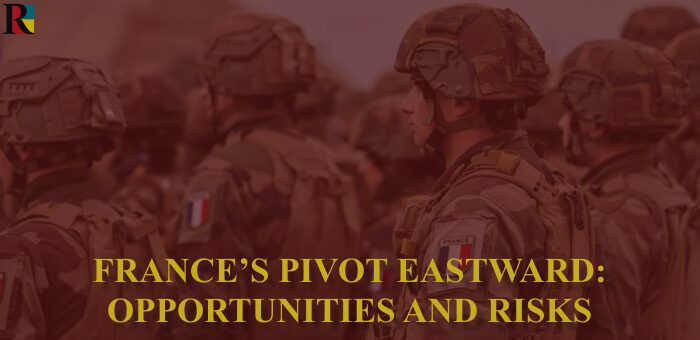


France is embarking on the EU-wide campaign of rearmament with a set of undeniable advantages. Its strategic culture has long emphasised relative military and industrial sovereignty, and the need for robust defense capabilities independent from the United States. Its public opinion and political class is as revolted with Putin’s war of aggression as any of its neighbors’, and the possibility of a continental war is widely accepted. Its defense-industrial base (DIB) has an established reputation as an excellent purveyor of sophisticated military systems, a viable alternative both less costly than America and more reliable than Russia. Macron has repeatedly touted the deployment of French troops in Ukraine. Though concern over direct deployment remains high, the public shares (the survey results were published in the publication La Dépêche) the president’s assessment of growing European insecurity and is increasingly supportive of French commitments toward Europe’s defense (According to a survey conducted by the Elabe Institute for BFMTV).
To boot, Macron can rely on Western Europe’s largest and best-equipped military. France began raising military spending in 2017, achieving incremental rearmament over the past decade. France is the sole EU army to have embarked on drawn-out exterior operations (‘opex’) independently of a broader US effort, predominantly in the Sahel where Operations Serval and Barkhane (2013-2022) mobilized north of 5,000 troops.
While France is in a good position to spearhead a Coalition of the Willing in Ukraine, the risks posed by long-standing economic, political, and strategic dynamics are worth underlining. Ukrainians and European partners alike ought to bear these in mind for any future steps, especially when planning for collective action to mitigate the Russian threat, in Ukraine and across the continent. Below is a short summary of those dynamics which tend toward French leadership on European security, and those dynamics which will challenge France’s ability to sustain strong commitments to Ukraine and its EU allies in the years to come.
Opportunity: The public sphere awakens
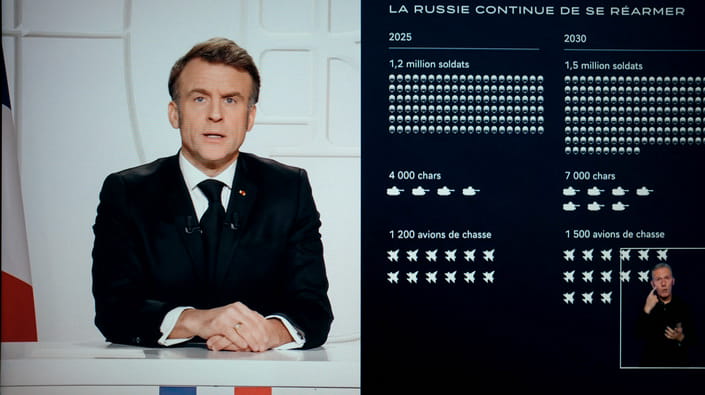
President Macron’s March 6th address met widespread approval from the French media and public, a fact made all the more remarkable by Macron’s general popularity. Half of the French public considers a hot war on EU soil to be likely, and a strong majority considers Putin a direct threat to France’s interests. Significantly enough, the French public is quickly warming up to the extension of the European Union’s prerogatives to the military sphere and to use of France’s nuclear area as a common deterrent for the continent at large.
These trends may well persist after a hypothetical cessation of hostilities in Ukraine. Geopolitical volatility in the wake of Trump’s inauguration has captured the bandwidth of political channels such as LCI, TF1, or BFMTV. Public debate is shifting towards a consideration of when and how, rather than if, France should stand ready against Russian aggression.
The possibility of a pro-Russian turn is in stark decline, mitigating any electoral threats to France’s support for Ukraine. The nationalist right severed its long-standing financial ties to Moscow in 2022, and many younger nationalist politicians are strong supporters of Ukraine. The far-right is increasingly aware that any pro-Russian velleities will repel prospective voters: it is widely accepted that Zemmour’s presidential campaign collapsed in no small part because of the candidate’s opposition to Ukrainian refugee flows, NATO-bashing, and Kremlin apologia.
Risk: Institutional stiffness, and continued domestic ambivalence
Both Macron and his defense minister, Sébastien Lecornu, have called for increasing France’s military budget to 3 or 3.5% of GDP by 2030. Macron does not wield a clear majority in the French parliament, however, and remains wildly unpopular. French commentators have suggested that major policies of the type the government would need to undertake to achieve security objectives will remain structurally impossible until the 2027 presidential election.
This begs the question of what a far-right foreign policy might look like. Marine Le Pen and the mainstream National Rally may have drifted from Moscow. Right-wing media outlets such as Bolloré’s CNews, however, spout Kremlin talking points to this day. Opposition to Ukraine’s ascension to the EU retains a slight majority (55%) of the French public, underscoring continued skepticism to assertive EU expansion. There remains, moreover, a strand of French political and bureaucratic thought opposed to a perceived loss of French sovereignty via EU integration. They tend to perceive immigration, terrorism, and France’s post-colonial sphere (whether in Africa or in France’s overseas territories) as the primary areas of French strategic culture. The effects of a nationalist ascension of the presidency remain unforeseeable, a fact Ukrainians and EU leaders will have to plan for. British commentators have outlined the adverse effects the 2027 Presidential election and subsequent uncertainty might have on a European peacekeeping mission in Ukraine.
Opportunity: Geostrategic realignment
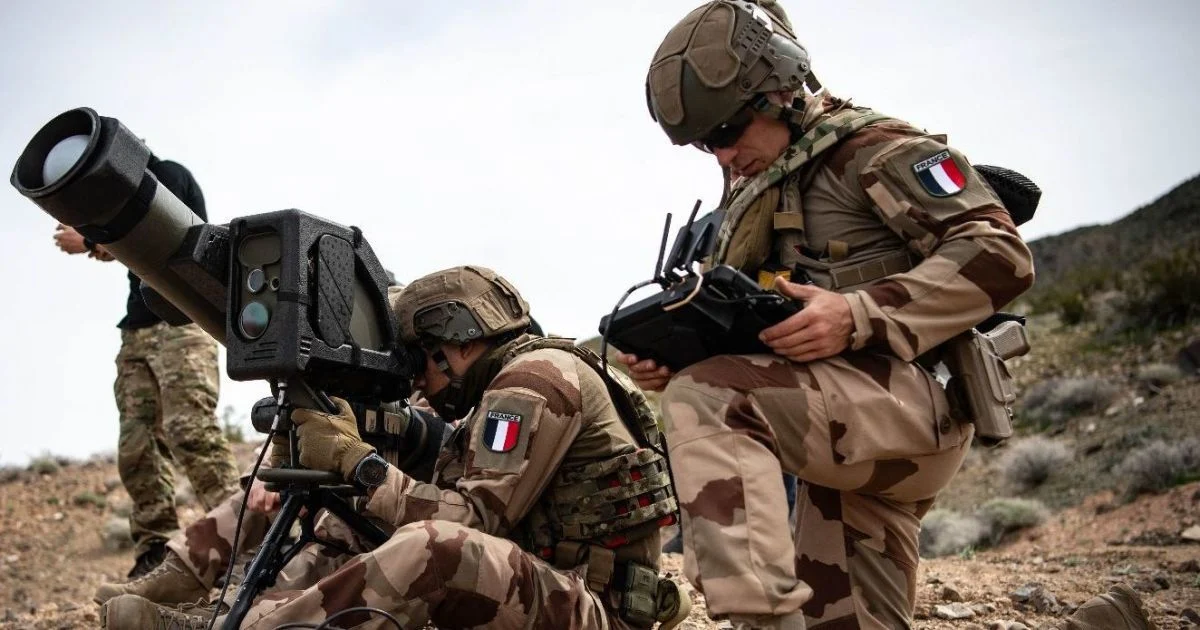
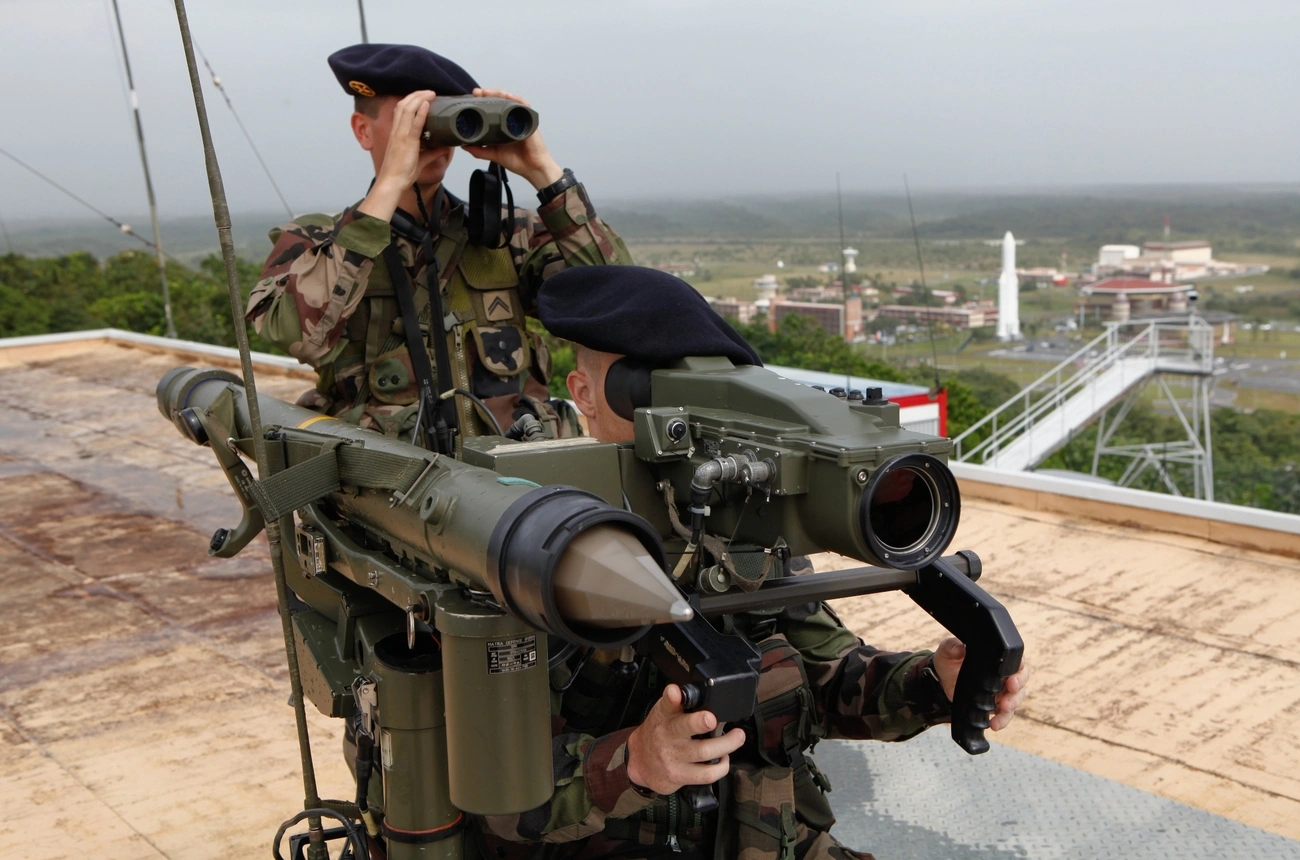
It is now clearer than ever to France’s ministries that Paris’ future lies with broader European interests, whether on the continent itself or in key Indo-Pacific bottlenecks. France’s withdrawal from most of French-speaking West Africa has freed France from much of its trans-Mediterranean commitments, enabling the redeployment of troops to Romania and a reimagination of its vital interests away from its formal colonial sphere, to Eastern Europe’s benefit. Macron has commissioned a redrafting of France’s strategy review to this end, and stands ready to commit more of the French military’s expanding resources to the pursuit of Eastern European security interests. France is bracing to revise its military doctrine, emphasizing interoperability with European partners and preparation for high-intensity continental warfare rather of the low-intensity, counter-insurgency settings of Operations Serval and Barkhane.
Risk: Other threats subsist
France has traditionally been a Mediterranean power. This may well change, but the country’s past remains a hazard to contend with. The threat of Islamic terrorism in France remains as high as ever, and security forces have remained on Vigipirate’s Level 3 ‘Attack Emergency’ public alert level for more than a year. The power vacuum emerging in Syria may accentuate this crisis, with the potential revival of an ‘exogenous’ terrorist threat stemming once anew from the Middle East.
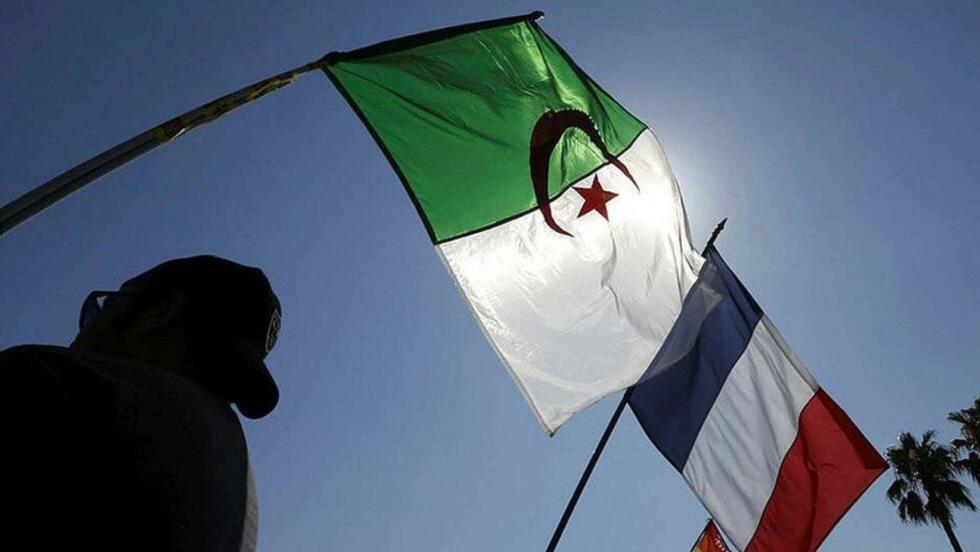
The past months have also brought about a deterioration of Paris’ relations with Algeria, over Algiers’ refusal to host citizens deported from France for their irregular immigration status and its continued imprisonment of French-Algerian author Boualem Sensal. Algeria maintains a substantial military force and is a voracious consumer of Russian armament. Commentators, army cadres, and politicians have responded to this nadir in relations by calling for increased military capabilities in opposition to Algeria, as opposed to Russia. In other words, degradations of Middle Eastern and North Africa security may present a distraction away from France’s efforts in Eastern Europe.
Opportunity: France’s military-industrial potential
France’s defense-industrial base has been catching up with Britain’s, and draws from extensive traditions of technical savoir-faire as well as from the state’s long-standing commitment to industrial sovereignty from the United States. Partnerships with India as well as joint ventures with Spain, Italy, and Germany attest to the broad attractivity of the DIB’s industrial capabilities. France’s burgeoning defense ecosystem fosters industry leaders such as Saffran, Thales, and Dassault, as well as thousands of subcontractors. The Rafale, Caesar Howitzer, and Griffon have all been global bestsellers, contributing to export receipts totalling €18 billion in 2024. Although France’s flagship Leclerc tank remains untested, Ukraine’s use of Mirage 2000s, AASM bombs, AMX-10RC and VAB vehicles have illustrated the suitability of French armament and combat vehicles to high-intensity warfare on the European continent.
This explains the sector’s rapid adjustment to Russia’s invasion, which was primarily beneficial to leading explosives and shell manufacturers (e.g. Eurenco). Because of its top-down emphasis on R&D and of its refusal to adopt high-end US-manufactured systems and software, France will face fewer of the challenges caused by Washington’s disengagement from Europe and has less to worry about regarding the actionability of its high-end military systems. France stands to benefit, finally, from the qualified exclusion of third-party producers such as the US, UK, and Turkey for the EU’s newly-unveiled rearmament fund.
Risk: The uphill battle for reindustrialisation
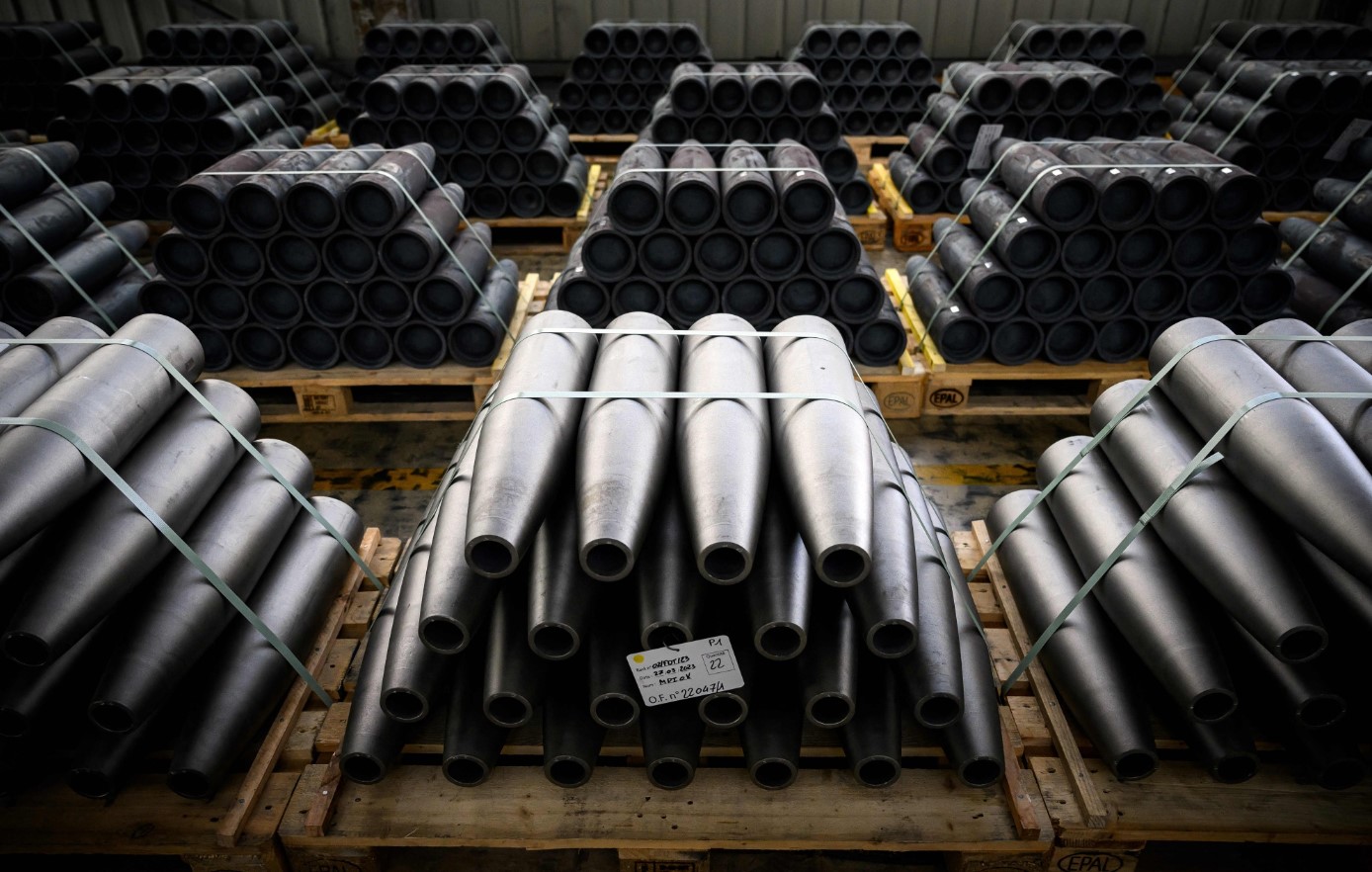
France’s manufacturing turnover ($1.2 trillion) is inferior to that of Italy ($1.3 trillion) and Germany ($2.8 trillion), with fewer French workers employed in industry: 3.12 million as opposed to Italy’s 4.1 million and Germany’s 8.26 million. This limits the DIB’s ability to absorb civilian production, as well as its ability to find experienced, qualified employees. France’s deindustrialization will further hamper its DIB’s ability to absorb further demand moving forward. The utilization rate of the defense industry has reached 90% in 2024. In spite of this, objectives for France’s total 155 mm shell production amounted to 100,000 in 2024 – no match for Rheinmetall’s target of 1 million shells by 2027, and its projected deliveries to Ukraine totalling 450,000+ shells from 2023 through 2025 and 2026.
This lack of capacity has posed a similar challenge to France’s industrial strengths, especially vis-à-vis sophisticated aeronautic and armoured vehicle systems. Leclerc production has been on hold since 2007, and aircraft manufacturers can accomplish little more than keep up with limited, existing orders for Mirages and Rafales. The French political class’ hopes for immediate reindustrialization and economic revitalization through a French-centric procurement policy across the EU are bound to remain unfulfilled, as widespread European skepticism towards Macron’s call for such a policy has illustrated.
Opportunity: The tightrope of French finances
Most skeptics of France’s rearmament have addressed the country’s difficult financial situation, with large deficits and a debt reaching 110% or so of GDP in the post-COVID era. Deficits may have to grow to sustain the programmed 2.6% of GDP allocated to the military by 2030, let alone further reductions. The French government will have to consider reining back spending on social programs, a wildly contentious course of action. It may be that a medium- or long-term cultural shift will make such steps more palatable. We have not seen any concrete plans to transfer funds away from social spending towards defense, and it is too early to tell whether the political situation from 2025 through 2027 will enable this.
The French public has the heft, however, to radically increase France’s military-industrial capabilities. France’s household savings ratio is among the highest in the OECD (Trading Economics), and individual or household assets total €6.3 trillion. A state-backed fund to inject liquidity into France’s DIB could sustain a rapid increase in France’s military-industrial output, and transform industry leaders such as Saffran or Thales into attractive firms for American and European investors increasingly worried about market instability wrought by the unpredictability of Trump’s administration. The government has already worked to soften banks’ reputationally-minded resistance to military-industrial financing, and the prospect of increased domestic and foreign military spending as well as the creation of numerous good-paying jobs may well secure a rising political and financial consensus for France’s path to rearmament.
Conclusion: Moving Forward, or Weathering the Storm?
The opportunities and risks above may determine the extent, swiftness, and decisiveness of French efforts in the pursuit of peace and security for Ukraine and Europe. Their effects remain foreseeable in kind of not in degree, and can be accounted for in the calculus of inter-State planning and policy-making. There is reason, nevertheless, to remain cautiously optimistic. The French public is more anti-Russian and pro-European than ever. Political parties are increasingly taking heed of these faits accomplis. Its defense-industrial base has know-how and reputational muscle to leverage for a dramatic upscaling. Though substantial increases in military spending will be very hard to structure without social spending cuts, investments and war bonds calling on French households and institutions can provide the liquidity to amplify French military production and reinforce the French army, respectively.
The structural obstacles which will make or break French and European self-assertion run much deeper, and remain unknown variables. It is one thing for French authorities to convince their constituencies on the necessity of re-armament, it is quite another for them to initiate the cultural and psychological shift from a nation at peace to one willing to risk conflict and its warfighters’ lives. The crisis of trust faced by governments across the West and the world leaves French and European leaders with little rope. The Afghan and Iraqi precedents have shown how ill-advisable it is for democratic States to make long-term geopolitical commitments while failing to provide their publics with discernible rationales. The legacy of these conflicts still hampers French and other European governments in their efforts to mobilise society in preparation for kinetic conflict. Unfortunately, it may well be the case that Russian hybrid war and the deterioration of European security will trigger such a cultural shift from the bottom-up – irrespective of whether mainstream or nationalist parties run the show in the decade to come.
Benjamin Remler