

According to war news Ukraine, after returning to the White House, Donald Trump announced the need to review financial aid to Ukraine, temporarily suspended the provision of military aid by the United States to Kyiv, and strained relations with the EU due to new tariffs.
More about all these events and how Donald Trump’s foreign policy in general affects Ukraine war today and what consequences can be expected – The Ukrainian Review investigates further.
Trump’s policy towards Ukraine
Upon taking office, Trump emphasized the need to review financial aid to Ukraine and stated that the United States “cannot finance other people’s wars forever”.
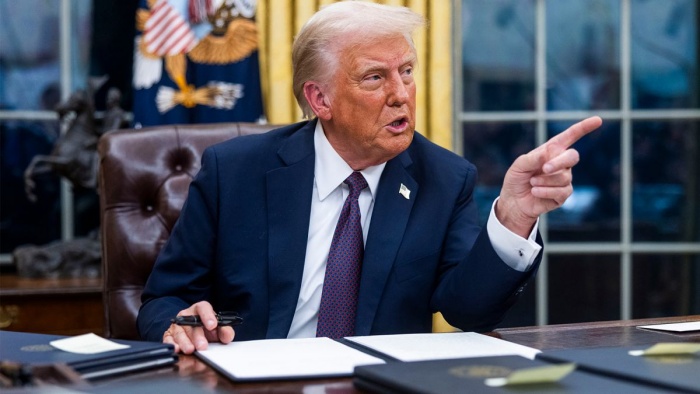
Moreover, Trump has repeatedly stated that Washington has spent $350 billion on the war Russia-Ukraine and that Ukraine must return this money. The US President has offered to “pay” for the aid provided with Ukrainian minerals.
However, the figure of $500 billion significantly exceeds the amount recorded by the Ministry of Defense and the interdepartmental oversight group that monitors US allocations to Ukraine. As of February 24, 2022, the US Congress has allocated about $183 billion to Ukraine.
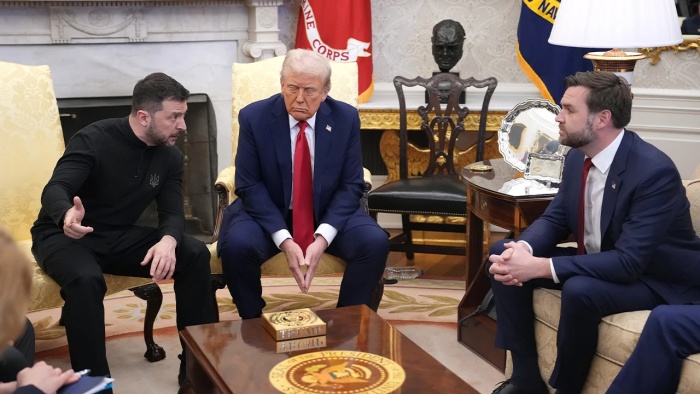
On March 4, 2025, Donald Trump ordered the suspension of all military aid to Ukraine. The pause in aid to Ukraine applied to all planned but not yet completed supplies. The suspension of aid was announced after a dispute between Trump and Ukrainian President Volodymyr Zelenskyy in the Oval Office, where a mineral agreement was to be signed.
Senior advisor to the US President Jason Miller said at the time that by suspending military aid, Trump was aggressively trying to force Zelenskyy to agree to an agreement that would stop the war.
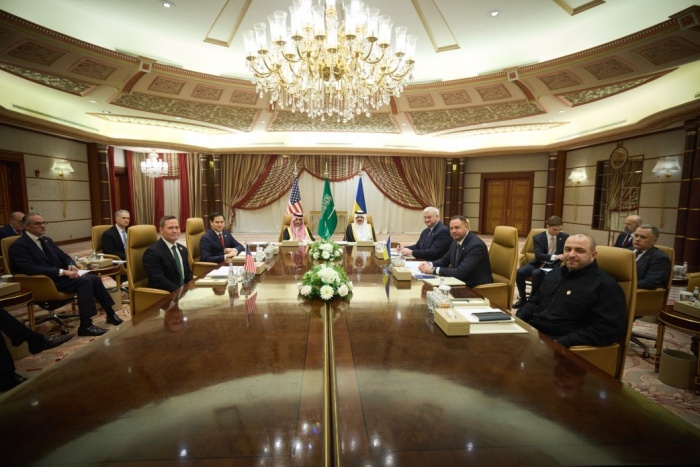
Actually, that’s what happened: the US resumed providing security assistance on March 11, 2025, after a meeting of the Ukrainian-American delegation in Saudi Arabia. Then Ukraine agreed to the US proposal for an immediate temporary 30-day ceasefire, which could be extended by mutual consent of the parties (subject to acceptance and simultaneous implementation by Russia).
What would the suspension of US aid to Ukraine lead to
American intelligence, transmitted through NATO, is crucial for Ukraine. It helps the Armed Forces track threats: Russian aircraft before strikes, troop movements before new offensives, arms supplies from Russia, Iran and North Korea, as well as Russian warehouses, logistics and command centers. Thanks to this, Ukraine can target missiles and drones on objects inside Russia in real time.
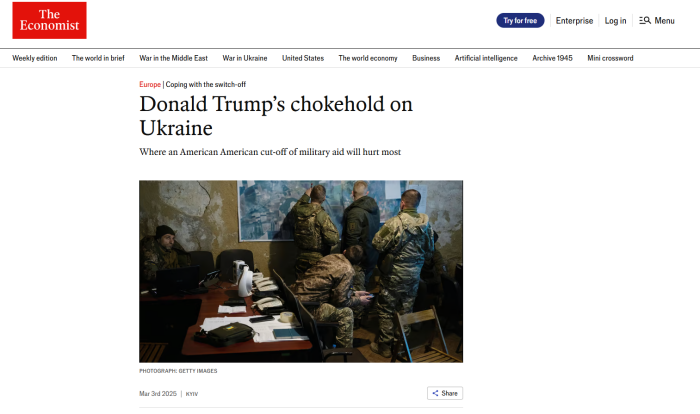
Journalists in The Economist write that the cessation of Patriot supplies would lead to Ukraine experiencing the same devastation as in frontline cities like Kharkiv, where it is usually too dangerous to deploy expensive systems.
Former US Marine Corps Colonel Mark Kanchian, a senior adviser at the Center for Strategic and International Studies, which studies the Russia-Ukraine war, estimated that Ukraine would feel the effects of the pause in aid for 2-4 months, because Ukraine still has the support of European countries.
A Financial Times source in Ukrainian intelligence reported that Ukraine currently has enough weapons and equipment from the US for “2-3 months.”
Fedor Venislavsky, a member of the Ukrainian parliament’s committee on national security and defense, says that Kyiv has accumulated a stockpile of weapons that, if aid is stopped now, will last until about mid-summer 2025.

Ivan Stupak, a military expert at the Ukrainian Institute for the Future and a consultant to the Ukrainian parliament’s committee on national security and defense, says that it all depends on the scale of the aid stoppage:
If there is a little bit, that’s one story. If the stoppage affects all aspects of aid, it will be really difficult. It’s not the end of the world, but it will be very bad. F-16s could become very vulnerable. Patriots… well, we don’t have any analogues, unfortunately. So far, only they can shoot down ballistic missiles. And Kyiv and other civilians in the region will simply become defenseless. This is not about the front, this is about civilians.
Currently, Ukraine produces its own shells, and despite the fact that they do not always explode or fly where they are needed – but they are:
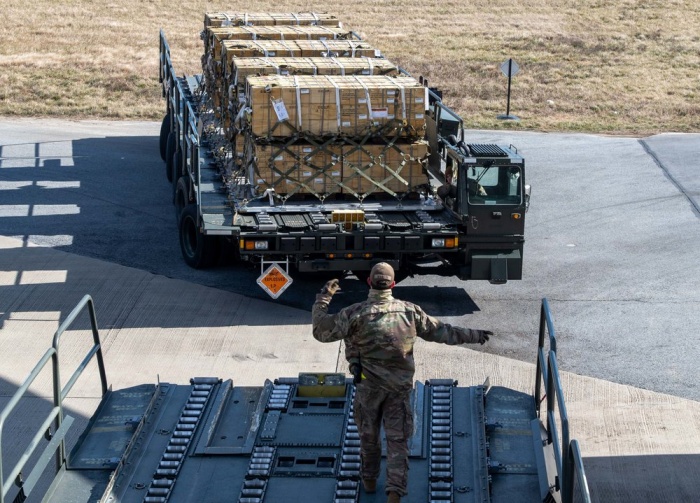
Spare parts. We have already been able to fix something even for American equipment. We can do it, we can replace, we can repair, but not one hundred percent.
Intelligence understands, this is critical, Starlink is critical. The French say that we are ready to provide you with 40 thousand Eutelsat complexes, but no one knows how it works. No one knows what quality, what software, how convenient, how protected it is.
Ivan Stupak also notes that if the Americans really go to the principle and stop helping Ukraine, then there is a risk that they can put pressure on their allies so that they, in turn, do not help Ukraine:
They can put pressure on the French, on the Germans, on the British, you can put pressure on anything. For example, 100% duty on French wines in the US market. You understand what you can do to put pressure. Ukraine is Ukraine, and money is money.
Journalists of The Economist write that the interruption of Patriot supplies would lead to Ukraine experiencing the same devastation as in frontline cities like Kharkiv, where it is usually too dangerous to deploy expensive systems.
Former U.S. Marine Corps Colonel Mark Kanchian, a senior advisor to the Center for Strategic and International Studies, who studies the Russian-Ukrainian war, estimated that Ukraine would feel the effects of the aid pause for 2-4 months, since Ukraine still has the support of European countries.
Can the EU replace US aid
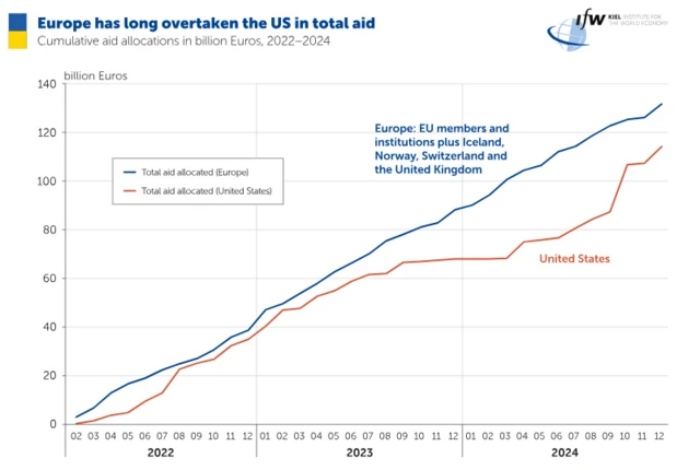
Since the start of the full-scale war, Ukraine has received $118 billion from international partners, of which the EU provided almost $48 billion and the US $31.2 billion. In 2024, the EU became the only source of financial support, providing over $3 billion.
Europe has traditionally led in financial and humanitarian assistance, while the US has led in military aid. Thus, Forbes notes that when American aid was stopped, European allies considered increasing their own arms supplies, but their resources were not enough to fully replace US support.
Germany, Poland and the Baltic states were looking for ways to speed up the supply of ammunition, but even optimistic forecasts say that their resources would last only until the summer.
Ivan Stupak, a military expert at the Ukrainian Institute for the Future, a consultant to the Verkhovna Rada Committee on National Security and Defense, also explains that as of now, Europe cannot replace American military aid:
Yes, they (the Europeans, – ed.) are currently working to increase their capabilities. We are accelerating the production of shells as much as possible, but we need aircraft. We should not switch to French aircraft – we need more of them. 120 pieces, not a dozen. And air defense complexes are needed.
He also notes that it is necessary that there are no American components in air defense and missiles, but all collaborations in military equipment are joint:
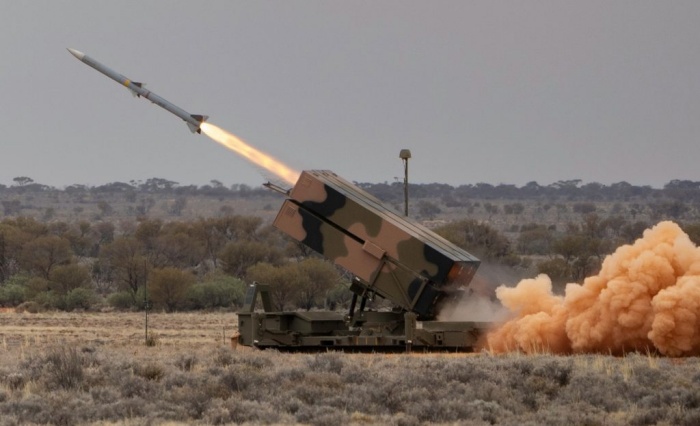
That is, there is no country that can independently produce something very, very serious. There will always be someone else’s technology. For example, Switzerland blocked the transfer of shells from Germany to us for Gepard (anti-aircraft self-propelled artillery installations, – ed.), because they have Swiss technology. Similarly, the Americans can stop the transfer of any technology to us. Or, for example, in the NASAMS air defense system – 1,500 companies from two continents. That is, we can press and say that we prohibit the transfer of this technology to Ukraine. But so far it manages to balance with the Americans and play along with them.
Trump’s policy towards the EU
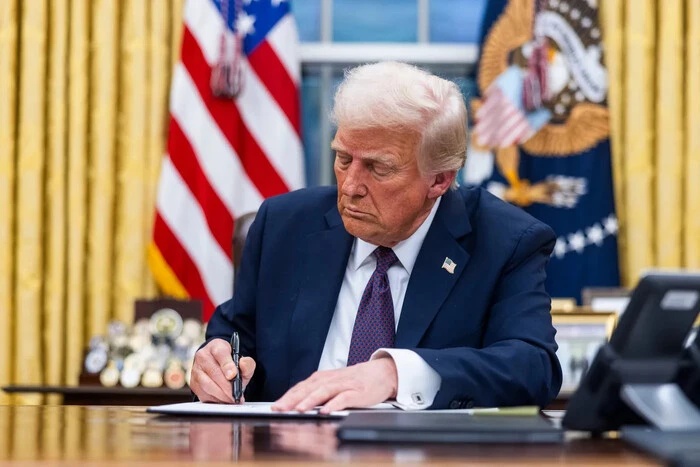
The US and the EU have entered into a trade conflict due to the introduction of 25% tariffs by Washington on European steel and aluminum. Trump is convinced that Europe has been taking advantage of the US for years and this must stop.
The EU exports significantly more to the US than it imports. At the beginning of 2022, the trade aldo in favor of Europe was $ 15.4 billion.
Trump’s introduction of tariffs poses a particularly serious threat to Germany, which depends on exports (especially automotive products). As the largest economy in the eurozone, Germany’s financial problems could negatively affect the euro and the economic stability of the entire region.
In response, the EU has announced measures worth 26 billion euros, divided into two stages:
- from April 1 (8 billion euros) – duties on goods such as bourbon, jeans, Harley-Davidson;
- from April 13 (18 billion euros) – on agricultural products, textiles, machinery.
A global trade war between the US and the EU could have serious negative consequences. European Commissioner for Economic Affairs Valdis Dombrovskis, citing IMF estimates, noted that economic fragmentation and trade blockages could reduce global GDP by 7% in the medium term, which is comparable to the complete disappearance of the economies of Germany and France.
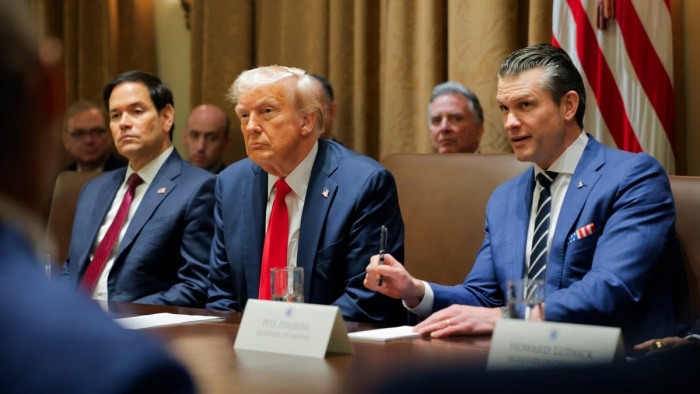
Donald Trump also said that the US would not provide Ukraine with too many security guarantees – Europe should do this. Donald Trump’s authorized representative said that Ukraine would not be able to become a member of NATO until the European members of the Alliance start spending more on defense.
What’s more, Donald Trump has allowed the US to withdraw from NATO if “allies do not pay their bills.” That is, Trump is now showing Europe that it must rely on itself in matters of defense.
How will European security strategy change if Trump reduces US influence
According to Ursula von der Leyen, even despite the decline in trust in the US in the EU, the European Union does not want to reduce relations with America, let alone completely separate itself. However, the European Union will invest more in its security.
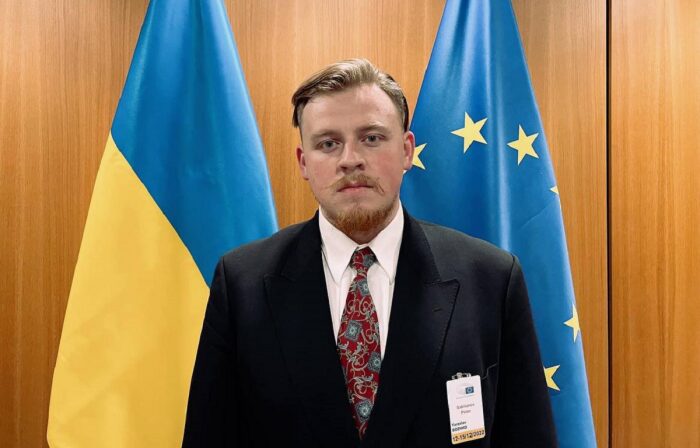
Yaroslav Bozhko, political consultant, head of the Center for Political Studies “Doctrina”, believes that Europe and the US are currently in a dispute over who should contribute to NATO and to overall security and what:
That is, the US is obviously acting as the initiator of revising the old conditions, because under the old conditions, Europe’s role in ensuring its own security was indeed quite symbolic. Now we can say that this role, according to the current US leaders, should change to an independent one. That is, Europe should be a self-sufficient component of NATO, one that can independently defend the European region, without relying on some decisive role of American allies and American military presence on the continent.
On the one hand, this is even pushing Europe to discuss the possibility of a sovereign defense project from NATO:
That is, a defense project within the framework of the European Union or the European Political Community, which is somewhat broader and includes other states that are not members of the EU, outside the formal framework of NATO. That is, NATO loses its old meaning and European states directly completely independently, both physically and politically, ensure their security.
However, according to Yaroslav, this is a very large-scale geopolitical step and it is unlikely that it can happen quickly, because European states cannot just take it so quickly and become completely self-sufficient, rapidly increase the defense capabilities necessary for such a scenario:
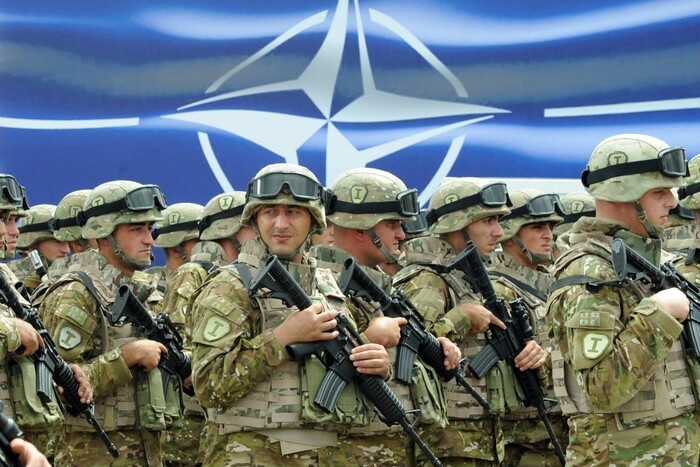
But there remains an intermediate scenario, within which the European component of NATO is greatly strengthened, there remains some kind of common political interest in Europe and the USA. But at the same time, Europe ensures, first of all, its own security within NATO, gradually preparing for some subsequent scenarios, future events, within which this concept of NATO in such a sense may not become relevant for Europe over time.
A significant part of officials and supporters of such Euro-Atlantic unity are trying to do everything to preserve the old NATO structure, that is, to leave as many US interests in Europe as possible and to leave as much of Europe’s dependence on the US as possible, respectively:
But at present, the old concept of NATO is no longer realistic enough. European countries have come to the conclusion that they will somehow ensure their own defense, without relying on the US to decide on the importance of the US. Beyond this issue, a political dispute is actually taking place.
That is, if, for example, Europe allocates more funds for armaments, should it then purchase American weapons, or can it develop its own manufacturers? This is a very broad discussion, it is not only security, it is also trade and economic, because for the US, the export of products is important. They would like to preserve and even increase this aspect of their influence on Europe.
At the same time, Yaroslav emphasizes that this is not a conflict between enemies:
It really looks more like a dispute between relatives who have to figure out what kind of relationship they are in, what the parameters of their responsibilities are. And, of course, the initiator of the revision is clearly the United States. However, this is a long-term and quite significant trend. We cannot be sure that in the event of a change of power in the United States, to any other, this concept will be revised.

Stanislav Zhelikhovskyi, PhD in Political Science and an international expert, notes that Donald Trump’s foreign policy, in particular his approach to European security and NATO, has a significant impact on Ukraine and European allies.
It is worth noting here that Trump’s statements, which cast doubt on the further participation of the United States in NATO and transatlantic security, have forced European countries to revise their security and defense strategies.
In particular, there is talk of creating a so-called European Security Council, known as the E-5. You have now seen meetings in this format (it includes Great Britain, France, Germany, Poland and Italy) and this initiative is aimed at strengthening European defense and reducing dependence on the United States.
However, the effectiveness of such an association without American support remains questionable, given that all these states have had real ties with the United States for many years:
And we also know that a great many different agreements have been concluded and many steps have been taken to deepen this cooperation under previous US administrations. Now, of course, these and other NATO countries are asking themselves the question of how much active US participation in European affairs can be expected, whether the United States will be a fully active player in NATO.
But if we are talking about a complete withdrawal of the United States from NATO, then I want to say that the US Congress at the end of 2023 supported an initiative that can be considered a safeguard against the United States withdrawing from NATO (the US passed a law that prohibits the president from making a decision on the country’s withdrawal from NATO without the approval of the Senate or Act of Congress, – ed.). Although we must also understand that this is not an ironclad guarantee either, given that the Republican Party still controls the entire Congress now. And Donald Trump can now solve many issues, both inside the country and outside it, in an imperative way.
***
Donald Trump’s policy towards Ukraine and the EU creates new challenges for security and economic stability in the region. The suspension of military aid to Ukraine, pressure on European partners and trade disputes could significantly change the balance of power in the war with Russia.
Although the US later resumed support for Kyiv, Ukraine’s dependence on American aid remains critical. At the same time, Europe is not yet able to fully compensate for the loss of US military support, which could create vulnerabilities in Ukraine’s defense capabilities.
Overall, Trump’s course of revising US international obligations is forcing Ukraine and its European partners to adapt to new realities, seek alternative sources of aid and develop their own military potential.
Anya Ostymchuk