

Europe is increasingly facing a new type of threat that is difficult to ignore or contain through diplomacy. One of the most dangerous hybrid operations, according to European intelligence assessments, has been the appearance of unidentified drones near strategic sites. Throughout 2025, unknown UAVs violated the airspace of at least nine European countries: Finland, Norway, Denmark, Estonia, Lithuania, Latvia, Poland, Romania, and Moldova. Germany emerged as the absolute record-holder for the number of incidents, documenting over a thousand cases of unidentified drones. Against this backdrop, European governments are transitioning from situational responses to systemic preparations for a potential military scenario. The central elements of this preparation are countering mass drone attacks and strengthening the eastern flank.
Poland: A Drone Shield and Border Fortifications
Poland is among the countries reacting most vigorously to rising security risks. Warsaw plans to complete the creation of a new defense complex against unmanned aerial vehicles along its eastern borders within two years. This was reported by Cezary Tomczyk, Deputy Minister of National Defense of Poland. According to him, parts of the system could be operational in approximately six months.
The new anti-drone components will be integrated into a multi-layered defense line deployed a decade ago, which includes missile systems and multi-barrel artillery. The total cost of the project exceeds 2 billion euros. Funding will be provided primarily through European funds under the SAFE (Security Action for Europe) defense credit program, as well as partially from the Polish state budget.

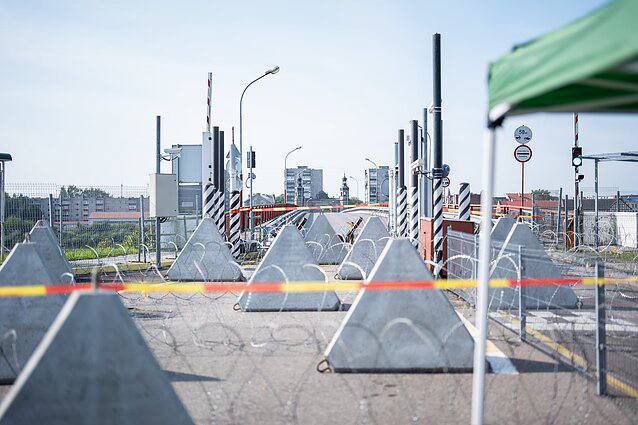
Simultaneously, Warsaw is implementing a program to fortify its eastern border—operation “East Shield”. According to the German publication Bild, Germany will join the effort. German military personnel will assist in constructing trenches, installing barbed wire, and setting up anti-tank barriers on the borders with Russia’s Kaliningrad region and Belarus. Work is scheduled to begin in the second quarter of next year, with completion slated for 2027.
Meanwhile, Germany is already participating in the protection of Polish territory: Patriot systems are deployed in the Rzeszów area, and a German air group is on duty near Kaliningrad.
Other Nations and Their Defenses
The defensive buildup extends beyond Poland. Estonia has begun constructing bunkers on its border with the Russian Federation. The first stage involves the installation of 28 fortifications, though the system is eventually intended to consist of 600 bunkers. They are designed to withstand 152mm artillery shells and, in the event of an escalation, will be supplemented with barbed wire and “dragon teeth.” Furthermore, a nearly 40-kilometer anti-tank ditch is planned for the country’s southeastern border.
Other states in the region are also stepping up efforts. In 2025, Latvia allocate 200 million euros to strengthen its air defenses and another 50 million euros to develop unmanned systems. Finland has purchased hundreds of systems for detecting and suppressing drones. Poland’s neighbor, Lithuania, is also strengthening its defenses.The Defense Resources Agency signed a 156-million-euro contract with the Swedish manufacturer Saab Dynamics for the purchase of anti-tank ammunition, according to the Lithuanian Ministry of Defence.
“Europe is finally waking up to the Russian drone invasion. European leaders are increasingly clear that the threat is real and must be systematically contained,” The Telegraph notes.
The publication emphasizes that the use of inexpensive drones creates a serious economic dilemma for defense, forcing countries to seek alternative, less costly methods of interception.
Conclusion
European countries are becoming more aware that hybrid attacks could serve as a prologue to a larger conflict. The mass use of drones is changing the very logic of defense, necessitating investment not only in missiles but also in technological and engineering solutions. Poland is building a multi-layered drone defense and fortifying its borders, the Baltic states are erecting fortifications, and Northern Europe is enhancing its anti-aircraft capabilities.
These steps do not mean that war is inevitable; however, they signal a shift in the approach to security. Europe no longer relies solely on deterrence through words. Preparation to repel mass attacks is becoming a key element of the new defensive reality.