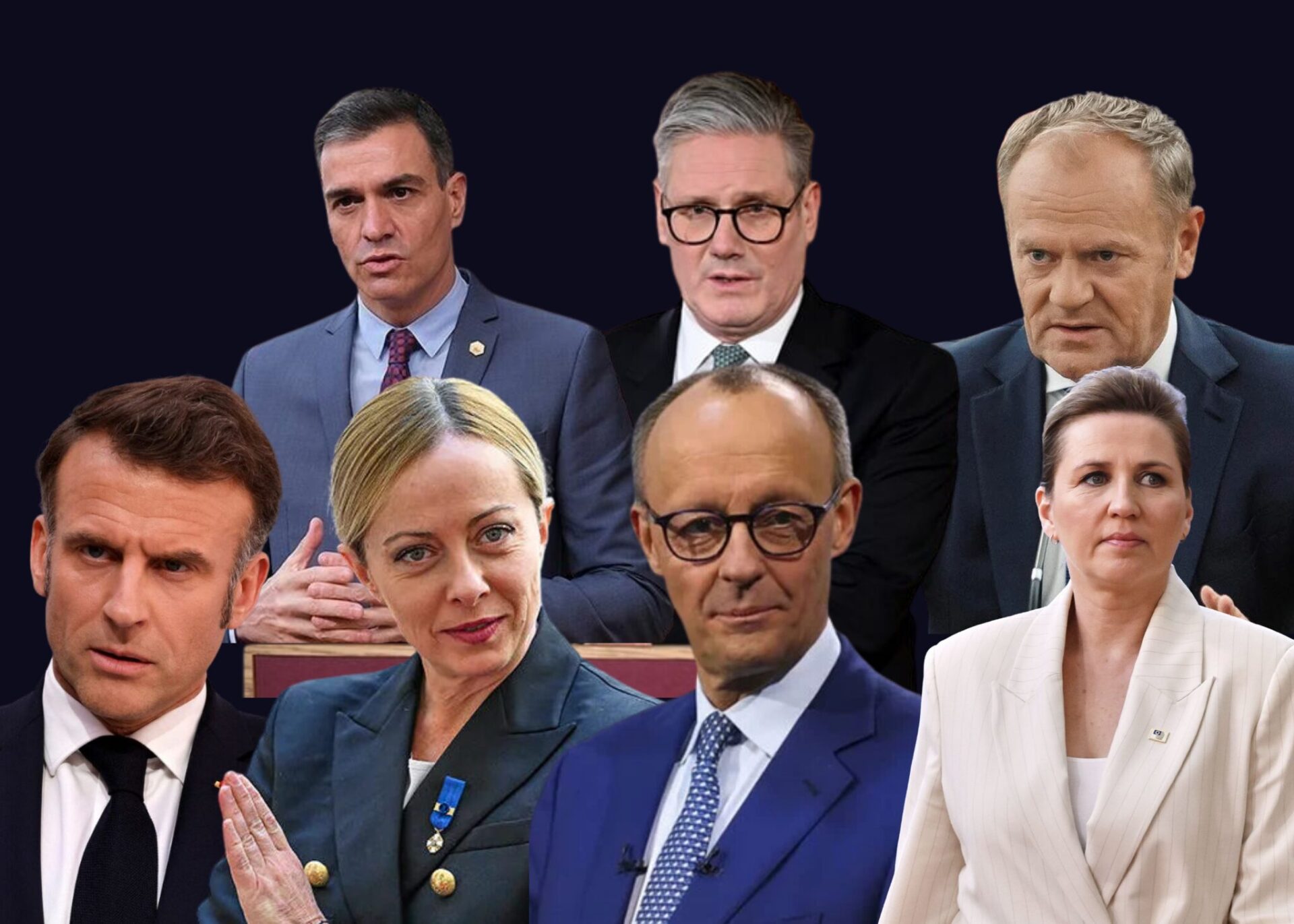


Leaders of major European countries, including Denmark, issued a joint statement regarding Greenland following new comments by U.S. President Donald Trump about possible control over the island. The text of the statement was published on the official X account of the Danish government.
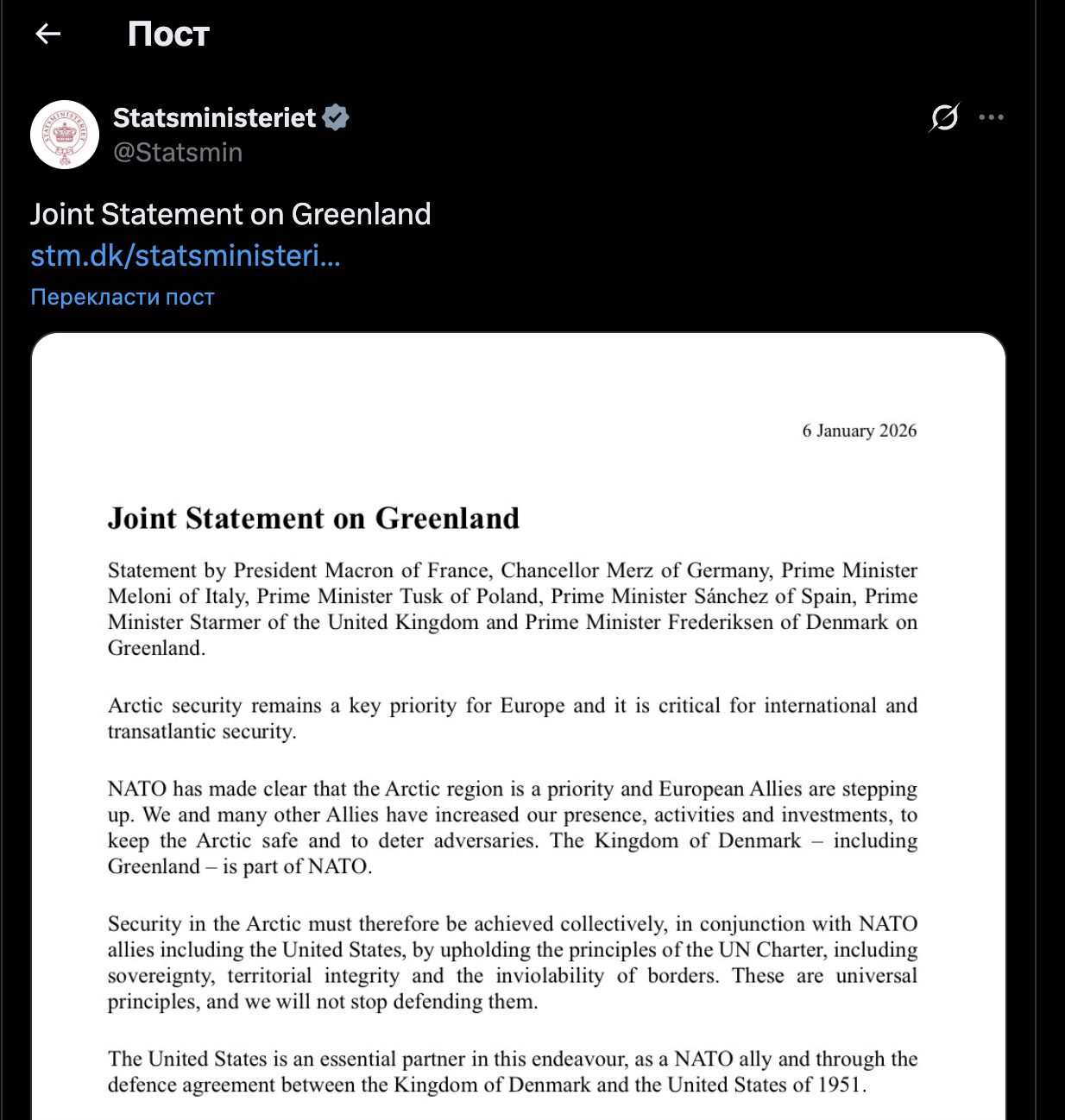
The statement was signed by French President Emmanuel Macron, German Chancellor Friedrich Merz, Italian Prime Minister Giorgia Meloni, Polish and Spanish Prime Ministers Donald Tusk and Pedro Sánchez, UK Prime Minister Keir Starmer, and Danish Prime Minister Mette Frederiksen.
Key Points of the Statement

The leaders emphasized that Arctic security is a priority for Europe. They noted that NATO has increased its presence and investments in the region to deter potential threats, and that Greenland, as part of Denmark, is an integral part of the Alliance.
In the statement, the leaders stressed that security in the Arctic must be ensured through the collective efforts of NATO countries, in accordance with international law, including the principles of sovereignty and territorial integrity. They emphasized that the future of Greenland should be determined solely by its people together with the government of Denmark.
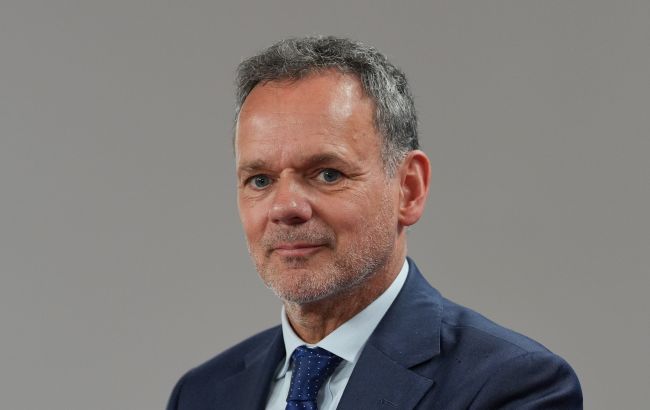
The Dutch Minister of Foreign Affairs separately expressed support for Denmark in response to Trump’s statements.
It is worth recalling that following the U.S. operation in Venezuela, President Trump again expressed a desire to control Greenland. The Prime Ministers of Denmark and Greenland called on Trump to stop the threats, while Danish Prime Minister Mette Frederiksen warned that any forced annexation of the island by the U.S. would mean the end of NATO.
Conclusion
The joint statement by the leaders of Europe’s key countries demonstrates unity in defending Greenland’s sovereignty and Arctic security. It underscores that decisions regarding the island belong exclusively to its people and the government of Denmark, and that any attempts at coercion or forcible control by third countries, including the U.S., are unacceptable and could threaten NATO’s stability and regional security.