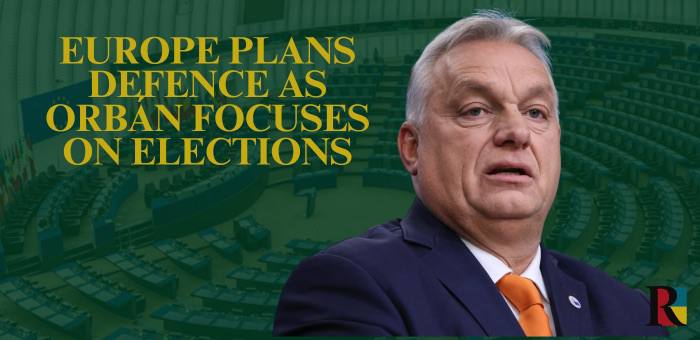


Hungarian Prime Minister Viktor Orbán, ahead of the upcoming elections in spring 2026, is using every opportunity to promote the narrative of “money protection.” He has launched a signature campaign claiming that ordinary Hungarians “do not want war.” The credibility of such opinion-gathering methods has been questioned from the outset. As seen in an earlier survey on Hungarians’ attitudes toward Ukraine’s EU integration, it was found to probably be exaggerated once the oppositional poll provided alternative data.
Yet another notable aspect of Orbán’s recent rhetoric is his claim that Europe has a “war plan,” whereas the Copenhagen Summit, held in early October, was in fact a platform for discussions with many issues remaining unresolved.
Plan or Draft
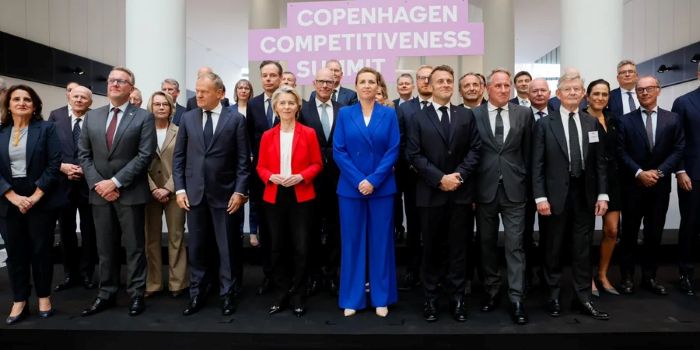
First, the summit a priori can not be called a “war one”. It was convened in the first days of October in response to Russia’s recent provocations in NATO airspace involving drones and jets. Denmark, which hosted the meeting after experiencing its own airspace violations, currently holds the EU Council presidency. At the start of its term, Copenhagen listed Ukraine’s accelerated EU integration as one of its top priorities.
That is why Viktor Orbán, in his post-summit comments, accused EU leaders of lobbying Ukraine’s accession “without any legal restrictions”. However, major media outlets did not share his optimistic for Ukrainians and civilized world interpretation. On the contrary, many pointed out that the summit ended with unresolved disagreements and limited tangible progress.
One of the main sticking points was the European Commission’s proposal to use frozen Russian assets to finance loans for Ukraine. Some member states remain cautious, arguing that such a move could undermine the EU’s reputation as a reliable financial jurisdiction. Another divisive topic was the proposed shift from unanimous decision-making to a qualified majority voting system, as Hungary continues to block Ukraine’s European integration.
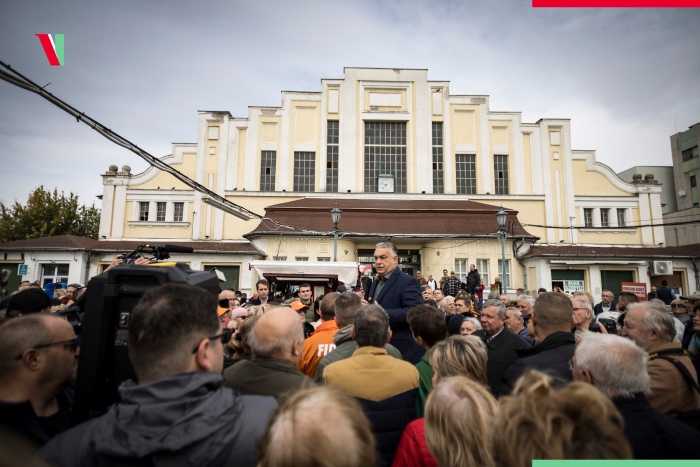
Viktor Orbán while signature gathering campaign / Facebook, Viktor Orbán
Centralized Europe – How Realistic Is It Now?
The idea of a unified European army has deep historical roots. In 1950, French Prime Minister René Pleven proposed the creation of a European Defence Community (EDC), which would have included West Germany and other countries under a single command. The idea was to rearm Germany within a European framework rather than nationally. However, the project collapsed in 1954, when the France refused to ratify the EDC treaty. Lawmakers feared a loss of national sovereignty in defence matters, and the geopolitical atmosphere changed after Stalin’s death, when Soviet pressure on Western Europe slightly eased.
Today, the EU is once again trying to assume a stronger role in defence coordination, facing obstacles. The questions remain: who pays for joint forces, and who commands them? Member states are reluctant to surrender control over their troops or the right to decide on deployments. Military capabilities also vary widely across the bloc, with some countries possessing modernized forces and others struggling to meet NATO standards.
The issue of defence funding also sparked debate: should countries finance their own initiatives separately, or should the EU contribute collectively? EU countries, geographically more distant from the aggressor, insist on more complex defence plans with more guaranties for everyone.
For these reasons, the prospect of a fully centralized European army remains remote. Still, more limited projects, such as the “drone wall” initiative and enhanced air defence cooperation, are under discussion, though no final agreements have been reached.
Conclusion
At a time when Europe urgently needs unity to confront Russian aggression, Orbán’s Eurosceptic and anti-Ukrainian stance poses a particular risk. Europe’s defence strategy must therefore evolve toward a hybrid model. It includes combination of strong national capacities with gradual integration in critical areas like air defence, cyber resilience, and countering hybrid threats.
If the EU fails to make confident and coordinated decisions, Russia will continue to test its boundaries, both literally and politically. Europe’s security now depends on overcoming internal divisions before external threats exploit them once again.
Daria Maslienkova