

Serbian leader Aleksandar Vučić is disappointed, as Russia’s Gazprom offered Serbia a gas deal only until New Year 2025, while Belgrade was seeking a longer-term agreement. The limitation is linked to U.S. sanctions on Serbia’s majority-Russian-owned Petroleum Industry of Serbia (NIS) oil company.
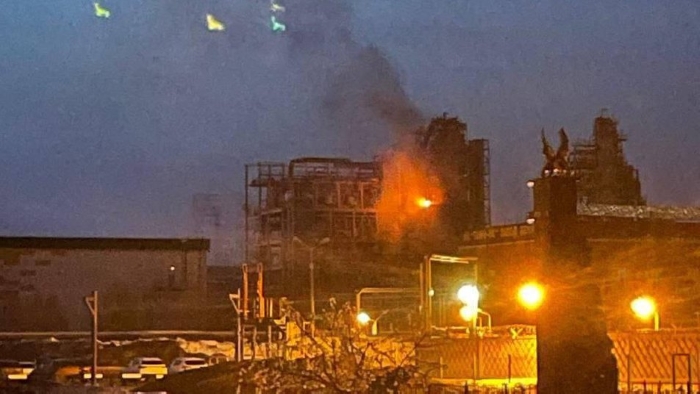
At the same time, The Financial Times reported that the United States has been helping Ukraine strike Russian energy facilities, particularly oil refineries, by providing intelligence information that supports Kyiv’s route planning, timing, and mission decisions.
Serbia at a Crossroads
Hungary’s oil company MOL has promised to increase deliveries to Serbia following U.S. sanctions on the NIS refinery, according to Hungarian Foreign Minister Péter Szijjártó. Reuters noted that NIS supplies around 80% of Serbia’s diesel and gasoline demand, and 90% or more of jet fuel and heavy fuel oil.
As Serbia’s Minister for European Integration Nemanja Starović emphasized in summer 2025, Serbia is ready to impose sanctions on Russia if European integration returns to the political agenda. Yet, this creates a vicious circle: the EU demands respect for the rule of law and a return to democratic values—standards that always contradict close ties with Moscow.
Despite this duality, Serbia has reaffirmed its support for Ukraine’s territorial integrity in accordance with international law and has expressed readiness to help rebuild one or two towns or a small region. This latest crisis may push Belgrade to further weaken its ties with Russia and seek alternative energy partners. Notably, in 2025, President Vučić made his first visit to Ukraine in more than a decade of his presidency.

Russia’s Import Restrictions
Sanctions have made Russia’s export process more complicated, yet still leave room for manipulation—such as using alternative routes or “shadow” fleets—while physical damage to infrastructure leaves no such flexibility. Russia has adapted by redirecting flows to Asia, exporting oil more actively from other ports, and sometimes increasing shipments to offset revenue losses.
Nevertheless, as the European Commission’s summer 2025 report highlights, the import ban on Russian coal alone has affected one-quarter of Russia’s global coal exports, resulting in an €8 billion annual revenue loss.
However, after a series of attacks on Russian oil infrastructure, the country has begun to experience shortages at home. In September 2025, Belarus sharply increased its petrol supplies to Russia to about 49,000 tonnes per month in response to fuel deficits in several Russian regions following strikes on refineries.
Conclusion
Being Russia’s economic partner should become increasingly unprofitable and risky. The United States’ firm stance and disappointment with Moscow’s reluctance toward peace negotiations have strengthened international support for Ukraine.
Strikes against Russian refineries, which Ukraine intensified, became a powerful lever of economic pressure. According to Energy Intelligence analysts, more than 15% of Russia’s oil refining capacity was periodically out of service. This led to domestic fuel shortages, forcing Moscow to temporarily restrict exports of petrol and diesel to prevent regional crises. At the same time, the infrastructure strikes did not cause a total collapse of Russia’s oil industry. This highlights the need for continued and targeted operations. While sanctions and attacks have not entirely stopped the flow of Russian oil, they have eroded revenues, increased costs, and exposed the structural weakness of the Kremlin’s energy-dependent economy. Over time, this slow erosion may prove more damaging than an immediate shock.
Daria Maslienkova