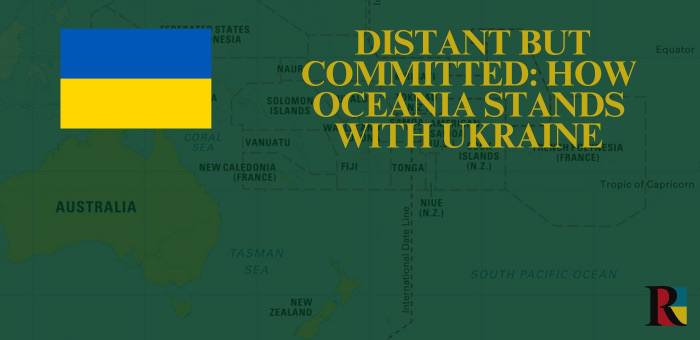


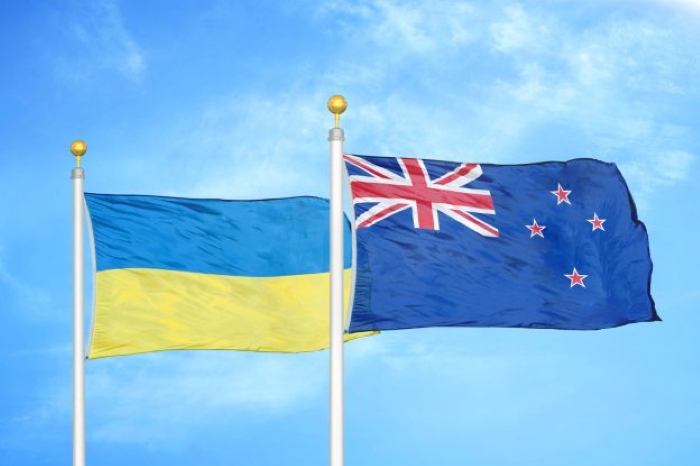
Despite the geographical distance and the absence of direct threats to Australians or New Zealanders, both countries have consistently supported Ukraine to help stabilize the broader geopolitical situation. Since 2022, relations between Ukraine and these countries have strengthened significantly.
Australia
Canberra continues to assist Ukraine and impose penalties on Russia. At the beginning of the full-scale invasion, Australia provided Ukraine with vital military assistance, including Bushmaster armoured vehicles that served Ukrainian forces during key operations, such as the counteroffensive in the Kharkiv region.
Australia was the first country in the Asia-Pacific region to introduce sanctions on more than 1,000 individuals and entities linked to Russian aggression. These restrictions targeted Russian banks, the military-industrial complex, and propagandists.
In 2024, Australia announced a record package of military aid worth USD 250 million, which included guided and air defence missiles, anti-tank weapons, ammunition, and military footwear.
When the idea of a “willing coalition” to ensure peace in Ukraine began gaining traction in March 2025, Prime Minister Anthony Albanese stated that Australia was open to “any offers” to participate in a peacekeeping mission in Ukraine. Later that year, Ukraine received a batch of Australian Abrams tanks, part of a broader USD 980 million aid package.
In addition to military assistance, Australia has offered Ukraine economic benefits, including temporary tax-reduced access for Ukrainian imports, aimed at supporting trade and recovery.
New Zealand
According to the government, New Zealand has allocated more than NZ$100 million in aid to Ukraine since early 2022. In spring 2025, Wellington announced the prolongation of its support by deploying up to 100 New Zealand Defence Force personnel to train Ukrainian soldiers in the United Kingdom, along with providing intelligence assistance.
New Zealand also supplies humanitarian aid — including cash grants for materials and essential goods — and has been active in supporting Ukrainian civilians affected by the war.
At the beginning of the full-scale invasion, New Zealand imposed personal sanctions on Putin. The government has consistently expanded these sanctions in coordination with Western partners.
In 2024, New Zealand provided USD 2 million to support military healthcare in Ukraine and USD 4 million to the drone capability coalition, helping Ukraine enhance its reconnaissance and defence technologies.
Beyond the battlefield, New Zealand has implemented social initiatives for Ukrainians seeking safety. Its Special Ukraine Visa program simplified migration procedures.
Conclusion
Neither Australia nor New Zealand is a NATO member, yet both have proven themselves to be steadfast partners of Ukraine. They have not hesitated to supply defensive weapons and humanitarian aid, demonstrating that distance is no barrier to solidarity.
Moreover, both nations have expressed their willingness to participate in the post-war reconstruction of Ukraine. The example of Australia and New Zealand shows that in today’s interconnected world, instability anywhere demands a global response. Their continued engagement illustrates that Ukraine’s struggle for freedom is not only a European issue but a shared responsibility for maintaining international peace and justice.
Daria Maslienkova