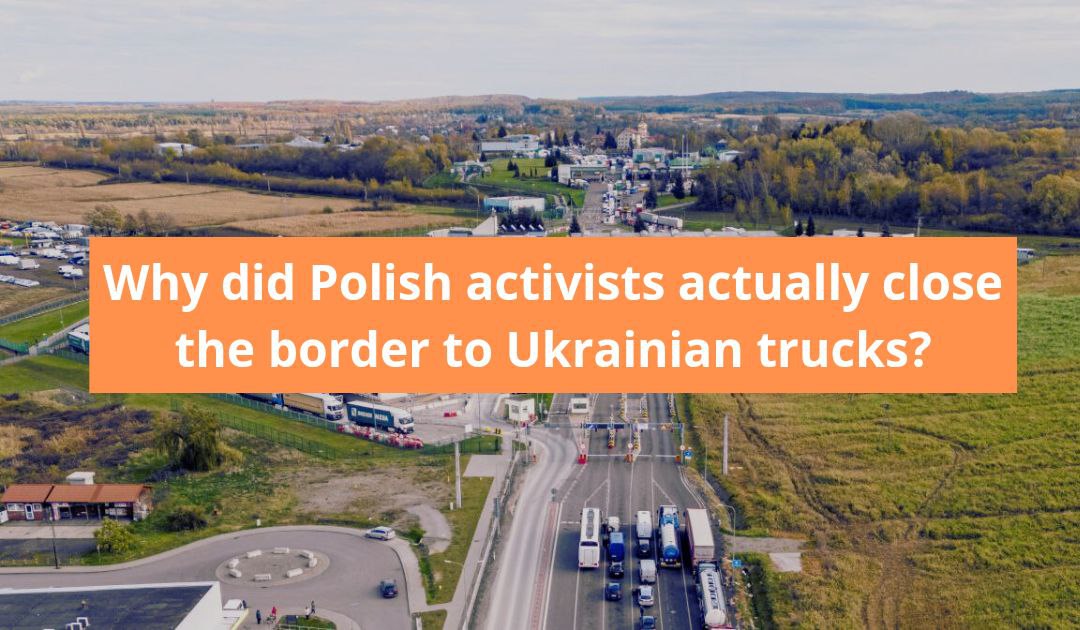


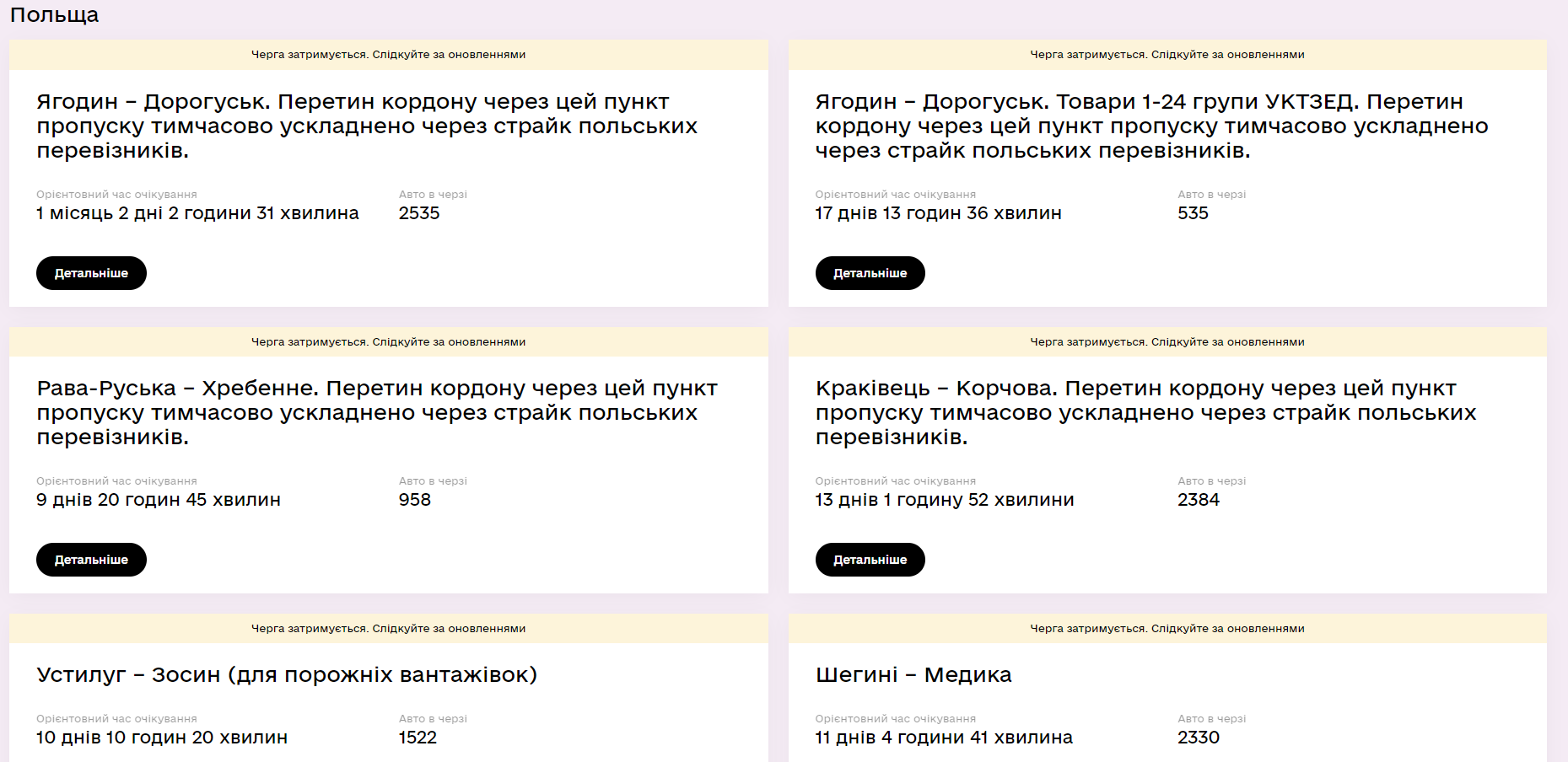
On November 3, 2023, Polish activists and truck owners announced a blockade of freight traffic on the Polish-Ukrainian border. According to them, the protest does not apply to the transportation of live animals or humanitarian aid. The blockade runs until at least January 3, 2024.
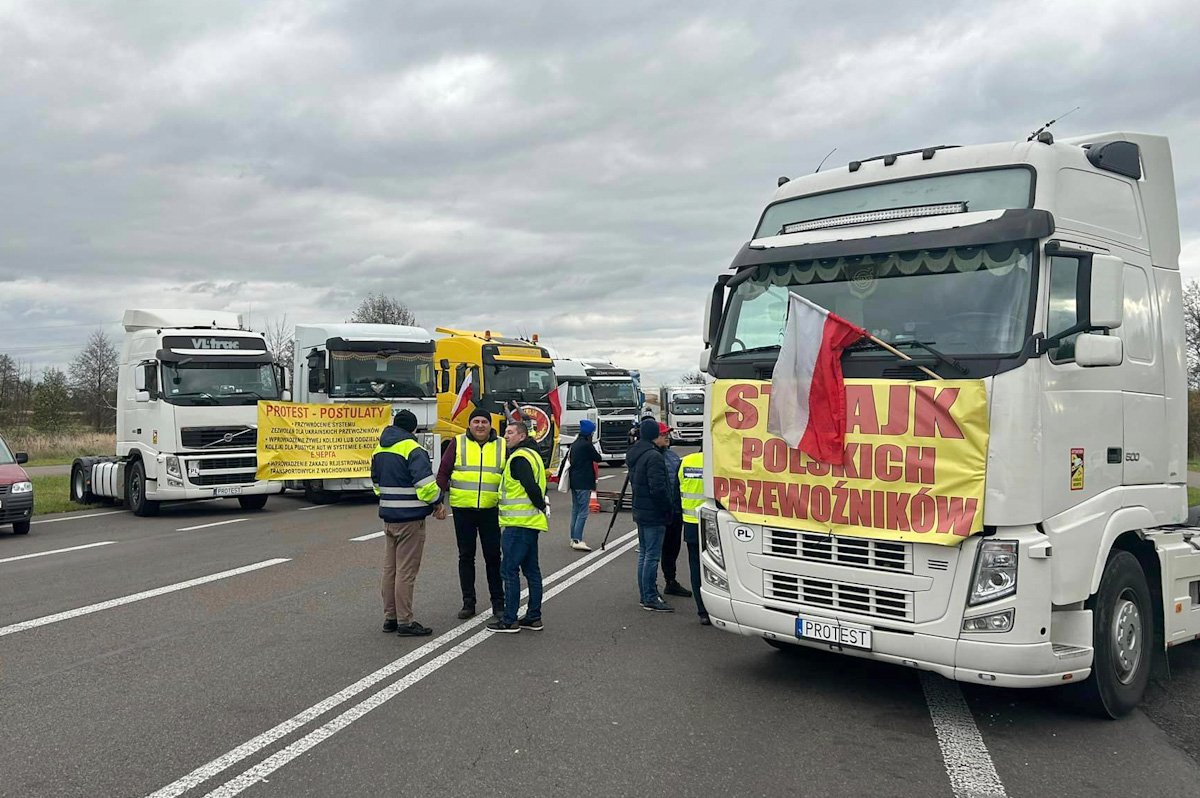
The Polish border is closed to trucks: is the reason due to competition from Ukraine?
After the difficult situation that arose with the export of Ukrainian grain through Hungary, Poland, and Slovakia, private entrepreneurs in Poland decided to close the border to Ukrainian trucks. Among the reasons, Poles cite fatigue from long lines at terminals and the threat of competition from Ukrainian trucks.
“When entering Ukraine, they (Polish drivers — ed.) are registered in the e-Cherga (Queue electronic system), which allows them to leave the country. Waiting time is at least 12 days. Our work in Ukraine takes only two days – travel to Kyiv, unloading, and returning. Therefore, drivers spend the remaining 10 days in the parking lot. And they cannot speed up this process,” — says Tomasz Borkowski.
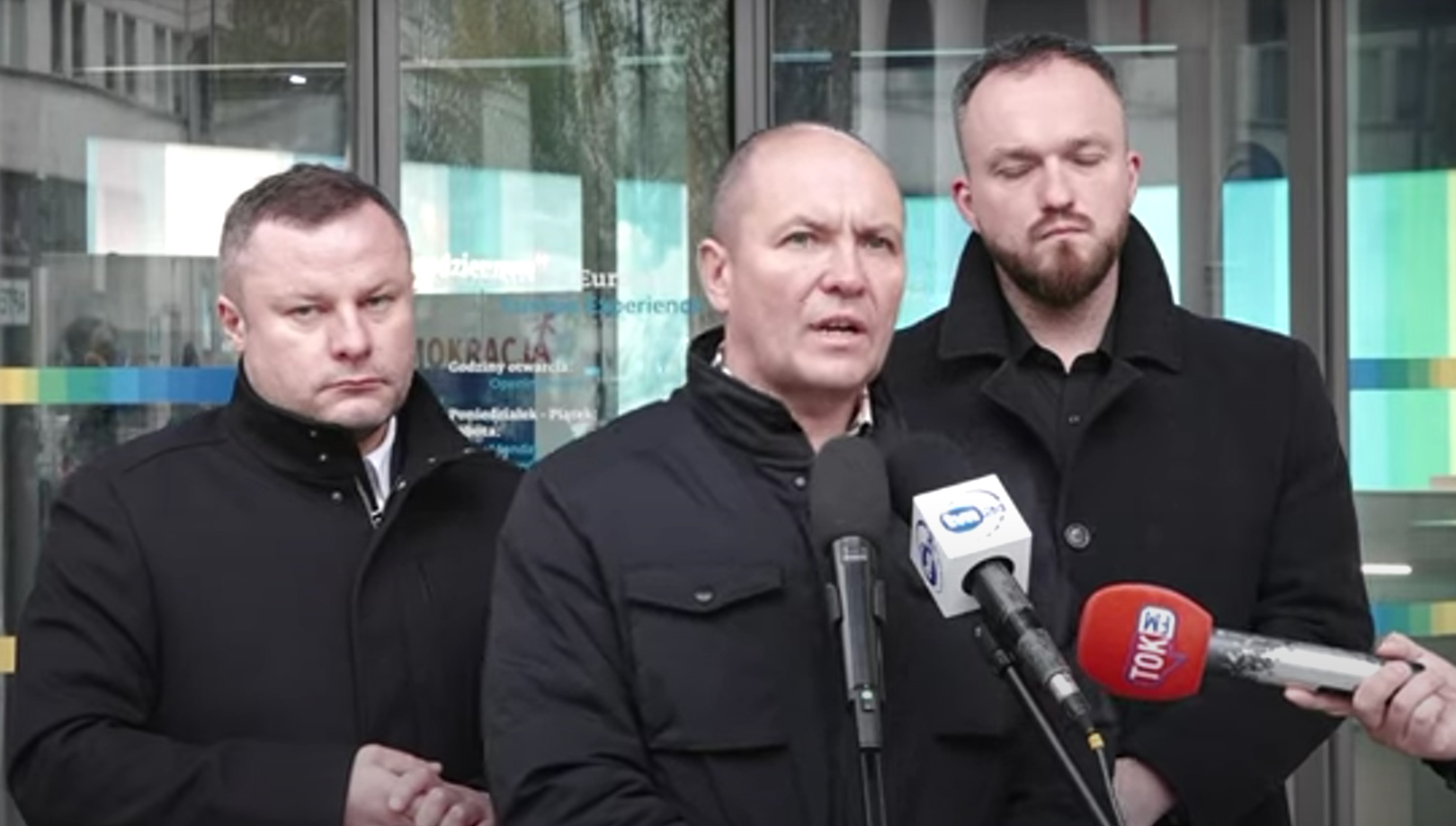
According to Jacek Sokół from the Polish Committee for the Defense of Carriers and Transport Employers, farmers were treated to an uncontrolled inflow of grain, and “uncontrolled transport transports were prepared for us”. Before the war, 160,000 were issued each permit for Poland and Ukraine, which means that 320,000 people [trucks] cross the borders annually. However, this year alone, the number of transports from Ukraine amounted to 800,000.”
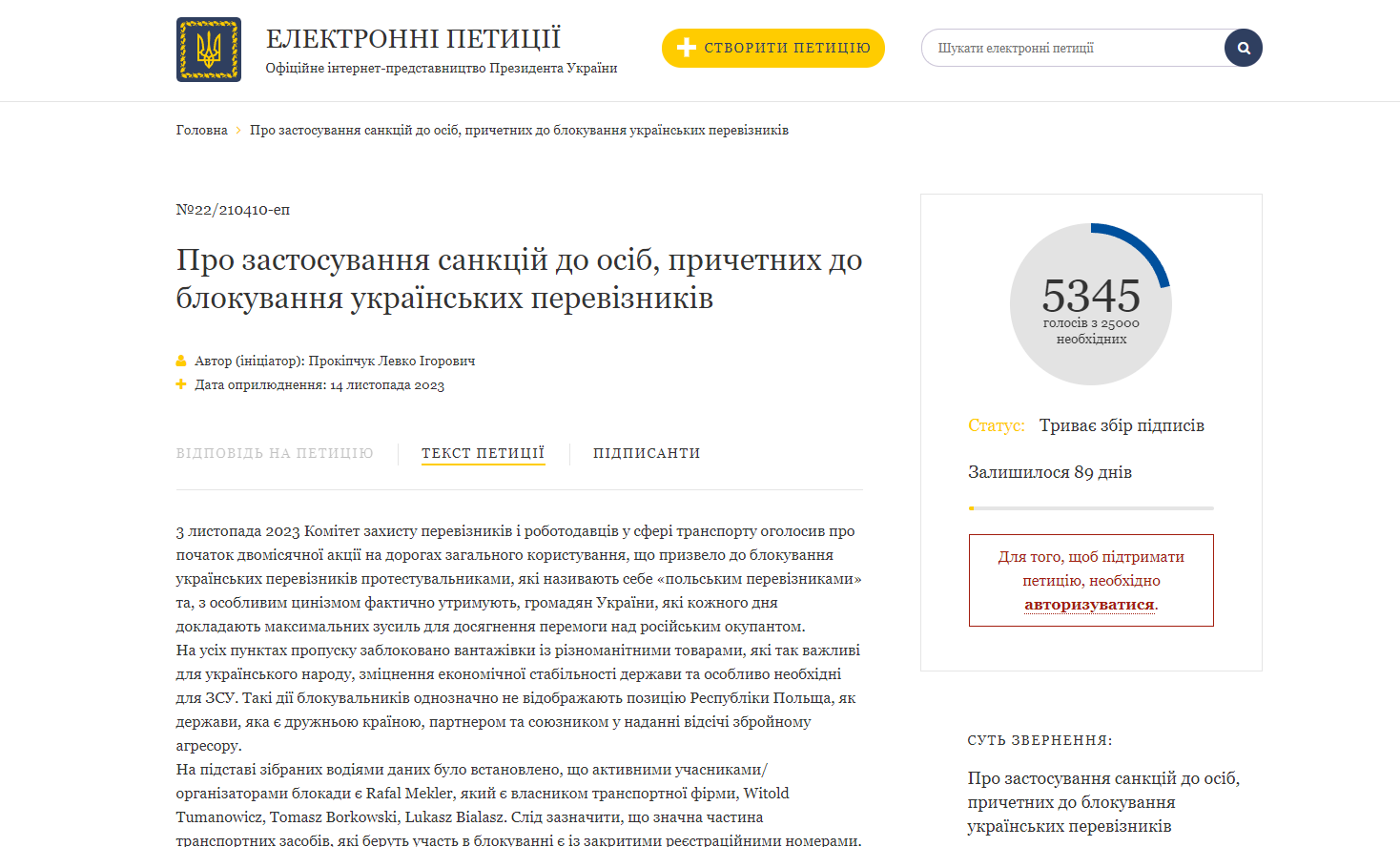
Interestingly, a petition “On the application of sanctions to persons involved in blocking Ukrainian carriers” appeared on the website of the President of Ukraine, which has already been signed by more than five thousand people since November 14, 2023.
Position of the Ukrainian side: restrictions on the border are losses
The position of the Ukrainian side regarding the blockade of trucks on the Ukrainian-Polish border is predictable. Entrepreneurs see this as an increase in the cost of delivering goods; an increase in costs leads to a decrease in the profitability of operations and, as a consequence, to a worsening of the situation of Ukrainian carriers already in difficult conditions, who, in fact, after February 24, 2022, were unable to fully use the Black Sea ports.
«The situation with the blocking of the Ukrainian-Polish border hurt all Ukrainian exporters. In connection with the war and the reorientation of all logistics flows to Europe, the border capacity, the quality of logistics, and so on have been extremely unsatisfactory and expensive for the past two years. Currently, the blocking of the border by Poland not only led to huge delays in crossing the borders but also resulted in a 100-150% increase in the cost of logistics services for goods to the European Union. Already now, the share of logistics costs in the cost price of products of Ukrainian woodworking companies has increased to 30%. And this makes Ukrainian products uncompetitive in the European market. Moreover, European consumers of Ukrainian products, although they understand the complex situation, are not ready to wait endlessly for our problems to be solved, they are looking for alternative suppliers. The Loyalty Credit extended to us with the war adjustment is ending. The Ukrainian manufacturer is massively losing the European sales market. The situation is catastrophic. As for alternative ways of transporting goods, for example through Slovakia, this is not an effective option. First, the border there is no less loaded. Secondly, through Slovakia, the cost of delivery increases at least twice. In such a scenario, the share of logistics in the cost of production will already reach almost 60%, which makes Ukrainian production completely unprofitable and impractical»., — Sergii Smetiukh, head of logistics and procurement of Kronospan UA LLC.
But it’s not only Ukrainian businesses that are suffering. Western European companies that purchase products produced in Ukraine also find themselves in a difficult situation. In the case of products that quickly deteriorate, this actually leads to loss of cargo and losses, in the case of non-food products – to delays and disruptions in production cycles.
A representative of one of the German cable manufacturing companies, which employs eight thousand people in Ukraine, believes that “jobs in Ukraine are now under threat, but not because of the war, but because of the waiting time for trucks at the border with the EU.” He adds that since October [2023], waiting times at the border with Poland have been constantly increasing – from initially two to five days to the current twelve. The Polish side is responsible for the fact that the Polish authorities did not provide additional personnel, the German businessman emphasizes.

We also turned to the People’s Deputy of Ukraine Oleksiy Goncharenko. Here is his opinion regarding the current situation on the Polish-Ukrainian border.
«The situation on the Ukrainian-Polish border still remains difficult. I believe that the Ukrainian authorities should do everything possible to unblock the border. And the first thing we have to do is to communicate with the Polish authorities and businesses. We have to sit around the table and talk, looking for a way out of this crisis.
The problem of our communication and our strategy is that there is no system in international relations. Only recently there was a huge crisis in relations with Poland regarding agriculture, now we have a problem with Polish carriers. This cannot be allowed.
We see systemic problems that need to be resolved. Why the Polish authorities do not implement the decision of Brussels is another story. This is a question between Poland and Brussels, they have a very difficult relationship. And this is also an internal issue of the European Union. I believe that the problem will be solved and it will happen soon».
Requirements of the Polish side: how to reach a compromise?
The main demand of Polish protesters is the restoration of permits for commercial transportation between Poland and Ukraine. But such permits were canceled not by the decision of the Polish government, to which the protesters are appealing, but by the decision of the EU.
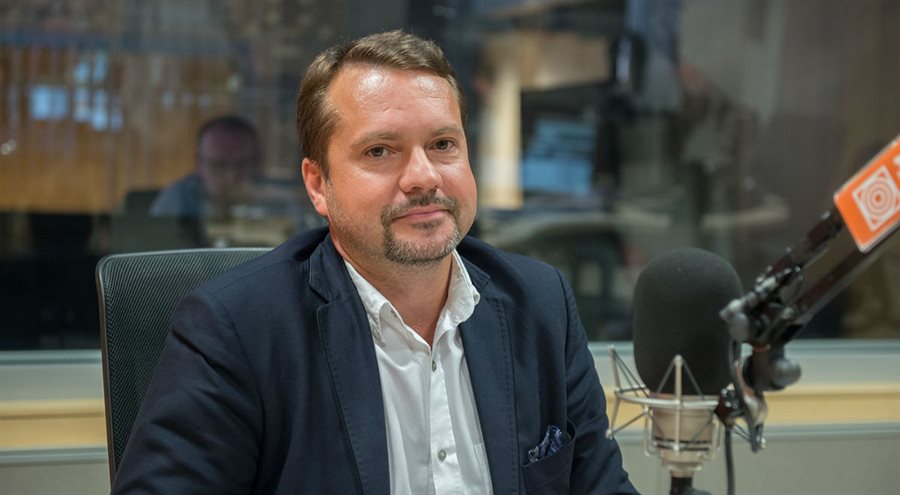
“I don’t know if it will be possible to go back to commercial vehicle permits next year. The EU has lifted licensing requirements for two-way and transit traffic as a sign of aid to the warring state. There are no signs that the situation will change in the near future,” — emphasizes Piotr Mikiel, director of the transport department of the Association of International Transport Carriers in Poland.
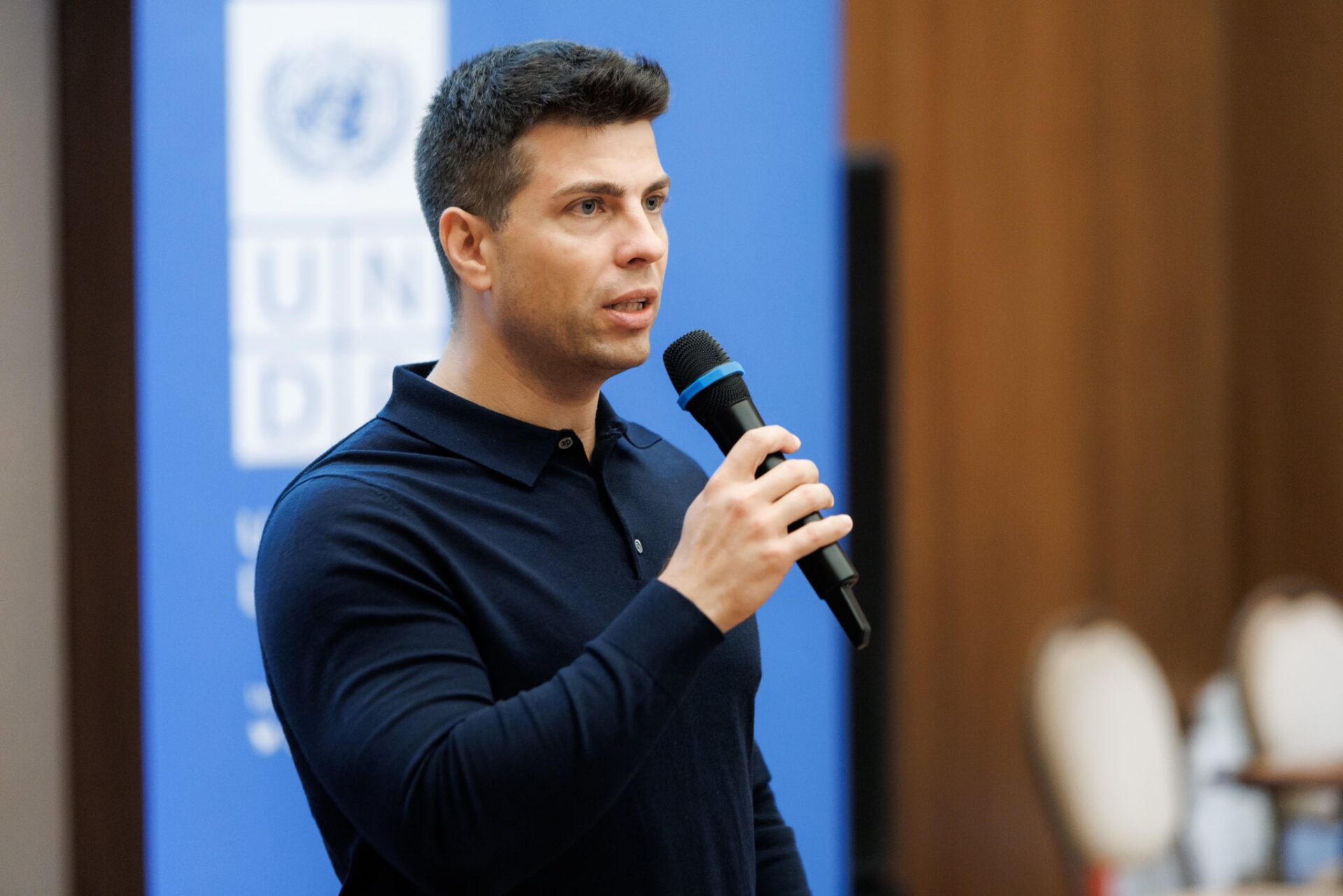
The Ukrainian side states that such a requirement can be implemented, since “the Agreement on the liberalization of freight transport between Ukraine and the EU will be valid at least until June 30 next year.” This statement was made on November 16, 2023, at trilateral negotiations on unblocking checkpoints, which took place with the participation of representatives of the Ministry of Development of Communities, Territories and Infrastructure of Ukraine. The Ukrainian delegation was represented by Deputy Minister for Communities, Territories and Infrastructure Development of Ukraine Serhiy Derkach, and representatives of the State Border Service and the State Customs Service.

For his part, the European Commission spokesperson, Adalbert Jahnz, considers the Polish requirements impracticable: “Any restoration of the permit or quota system for automotive transport is not legally feasible, as it would be incompatible with an Agreement on the Carriage of Freight by Road between Ukraine and the EU. The Agreement on the Carriage of Freight by Road was, of course, negotiated with the consent of the member countries.”
The border is open for military cargo and humanitarian aid, but there are problems
Military cargo and humanitarian cargo must pass through the border without delays or problems. The Polish protesters themselves stated this. We turned to volunteers who confirmed that they had no problems crossing the Ukrainian-Polish border.
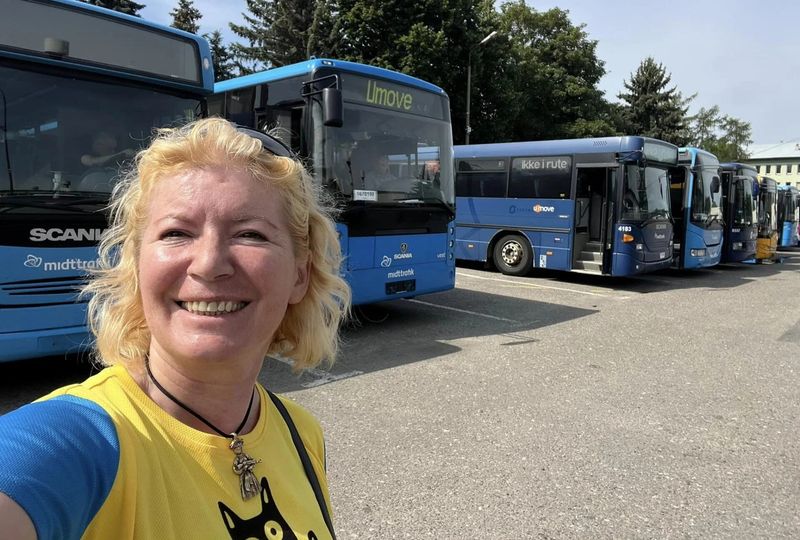
“We had 10 cars pass on Friday without any problems. On Monday, our drivers will transport 12 + 6 large buses. And as far as it seems to me, these Polish restrictions can be applied to these buses. We have a total of 430 vehicles and have extensive experience since February 2022. All processes have been worked out and, as a rule, we do not have any problems, neither at the Polish nor at the Ukrainian border, with the exception of queues at the Polish border. But if there are delays for a few days, it will be a big problem,” — Valentyna Varava, Head of the Board of the E+ Initiative NGO.
Delays at the border may lead to the fact that the Ukrainian military will wait for several days for non-running cars and buses at the border, drivers will spend time and money on hotels, and meals due to downtime, and finally, buses necessary for the military, which they converted for medical evacuation.
But, apart from the problems on the Polish border, Ukrainian volunteers sound the alarm. Resolution No. 953 of the Cabinet of Ministers of Ukraine can significantly complicate the activities of volunteers.
“Due to the incompetence of the employees of the Ministry of Social Policy, which is introducing a new accounting system for humanitarian aid in order to prevent corruption and embezzlement. In fact, they do not stop embezzlement and corruption, but they will stop volunteer work and assistance to the country,” — Valentyna Varava.
Russian trace or economic war of neighbors?
Ukrainian TSN media claims that “the main person of the blockade [of Ukrainian trucks — ed.] is Rafał Mekler. He is the owner of the logistics company Rafał Mekler TRANSPORT, which, despite the war, continues to transport goods to Belarus and Russia. He is also the head of the Lublin center of the far-right party “Konfederacja Wolność i Niepodległość”. It is known for the fact that it supports cooperation with Russia, recognizes Crimea as Russian, and its leader calls the “DPR” and “LPR” “independent states”.
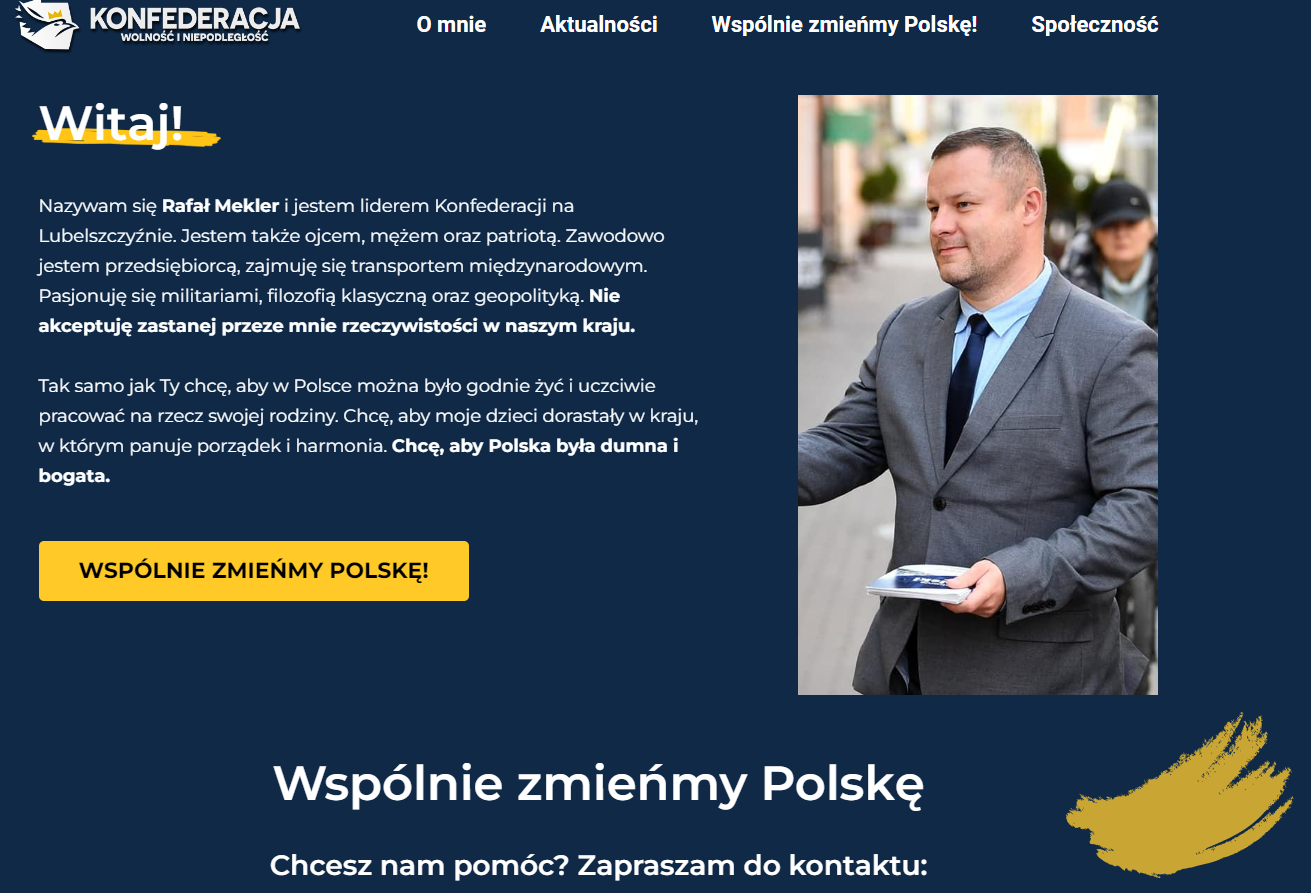
Senior leaders of the political party “Konfederacja” took part in protests at the border. There were no anti-Ukrainian words in their words, but they advocated that “the Poles should be the master of his land”, i.e. the usual rhetoric of economic nationalism.
In the current situation, it is important that military cargo and humanitarian cargo should not experience significant problems. As for commercial cargo from/to Ukraine, here, most likely, the costs will fall on Ukrainian companies, as well as the end consumer. According to estimates, the direct loss of truck owners from downtime is about 164 thousand euros per day.
“The total amount of damage will be much larger, covering risks for enterprises, exporters and importers. Non-fulfillment of contracts and cessation of production become a mandatory part of this scenario,” — says Irina Kosse, senior researcher at the Institute of Economic Studies and Political Consultations.
As we have already indicated above, neither Ukraine nor the Polish government can implement a number of demands from the Polish side. However, the impossibility of implementing the requirements does not stop other countries that border Ukraine. Neighboring Slovakia also announced its intention to block the border with Ukraine for trucks.
In any case, the situation is far from resolved and may change at any moment.
Stanislav Kinka