

The problem of corruption and anti-corruption struggle in Ukraine is one of the most acute. It is often in this context that Ukraine is criticised. We decided to ask questions regarding corruption and the conditions under which it will be reduced to our speakers: a people’s deputy of Ukraine and a Lithuanian lawyer, a long-term expert with extensive practical experience in Ukraine.
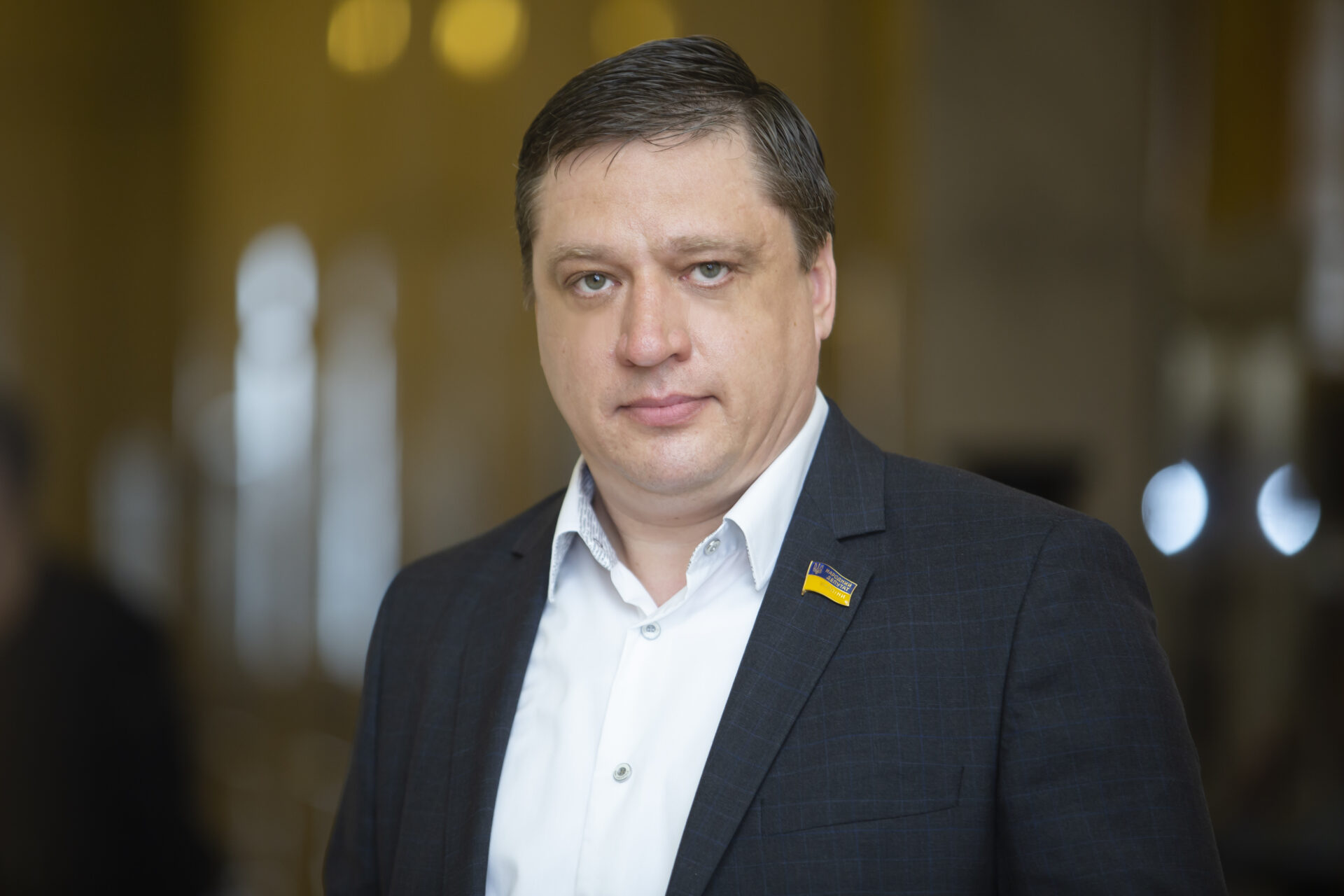
Roman Ivanisov, People’s Deputy of Ukraine from the 153rd electoral district (Rivno district), member of the Ukrainian Parliament Committee on Anti-Corruption Policy, Chairman of the Sub-Committee on Anti-Corruption Policy in the Economic Sphere
The effectiveness of anti-corruption authorities in Ukraine
Anti-corruption bodies and divisions have been created at different levels in Ukraine, and the fight against corruption has a direct impact on national security at all these levels. Has the level of corruption in Ukraine increased or decreased? We cannot compare with the period of twenty years ago, now other communication systems. There are different conditions and reasons for corruption in government bodies and critical infrastructure. For decades, Russia introduced “its” people to government and management positions in Ukraine, whose task was either to cause maximum damage, to destroy (as with the example of the Ministry of Defense, SBU), or to profit from the resource, keeping under control important spheres of life through corruption crimes.
Over the past 5 years, Ukraine has made a breakthrough in the field of electronic and digital services, which minimised domestic corruption: these are “Diya”, “Helsi”, and other applications. Thanks to Prozorro, it is possible to prevent a large number of dubious tenders on which certain officials try to make money every day.
Anti-corruption bodies: structure, work, successes, etc. Control of the anti-corruption committee over anti-corruption bodies, promotion of their effective work.
Since 2019, since the beginning of our parliamentary term, the anti-corruption committee of the Verkhovna Rada has adopted dozens of profile bills that in one way or another improve the work of anti-corruption bodies in Ukraine. As for the National Agency on Corruption Prevention, we most often saw representatives of this body at the meetings of our committee, because the official’s electronic declaration is the first step to preventing corruption in the state.
Since the full-scale invasion, 4 key laws have been passed to improve the fight against corruption, in particular, the restoration of electronic declaration, the lifting of the restriction on the National Agency on Corruption Prevention to re-verify declarations, the requirements for the head of the National Anti-Corruption Bureau of Ukraine and the increase in the number of detectives of the National Anti – Corruption Bureau of Ukraine.
Regarding the National Anti-Corruption Bureau of Ukraine and Specialized Anti-corruption Prosecution. Despite the war, during the last year we see good results of their joint work. In 11 months of 2023, the National Anti-Corruption Bureau of Ukraine and the Specialized Anti-corruption Prosecution notified 254 persons of suspicion, including people’s deputies, judges, current and former high officials. This is the highest indicator in the entire history of anti-corruption bodies! And the latest suspicions from the National Anti-Corruption Bureau of Ukraine and the Specialized Anti-corruption Prosecution allow us to draw cautious positive conclusions that the era of untouchables for anti-corruption bodies is behind us.
At the end of last year, the Verkhovna Rada also adopted Law 3509-IX on the separation of Specialized Anti-corruption Prosecution from the Prosecutor General’s Office. According to it, the head of the Specialized Anti-corruption Prosecution is now authorised to appoint and dismiss prosecutors and other employees within his department and to approve the budget. An independent external evaluation of the body will be conducted every 2 years with the participation of international experts. Also, according to the document, international experts will be part of the competitive commission for the election of prosecutors to the Specialized Anti-corruption Prosecution staff.
Separately by Asset Recovery and Management Agency. The Agency for Search and Management of Seized Assets was established in 2015 as a powerful anti-corruption body, but during all these 8 years, the country has not seen the effectiveness of the body’s work.
Last year, a new head was elected – Elena Duma. She has been in office since July 2023, and so far the results of the work of the Asset Recovery and Management Agency under her leadership inspire cautious hope. As far as I know, since July 2023, the staff of the Agency has been gradually updated by more than 30%, the register of seized assets has been opened, the volume of military bonds purchased by ARMA has increased, and the budget revenues from the effective management of seized assets have increased by 1.5 times times, many assets of sanctioned persons were searched, etc.
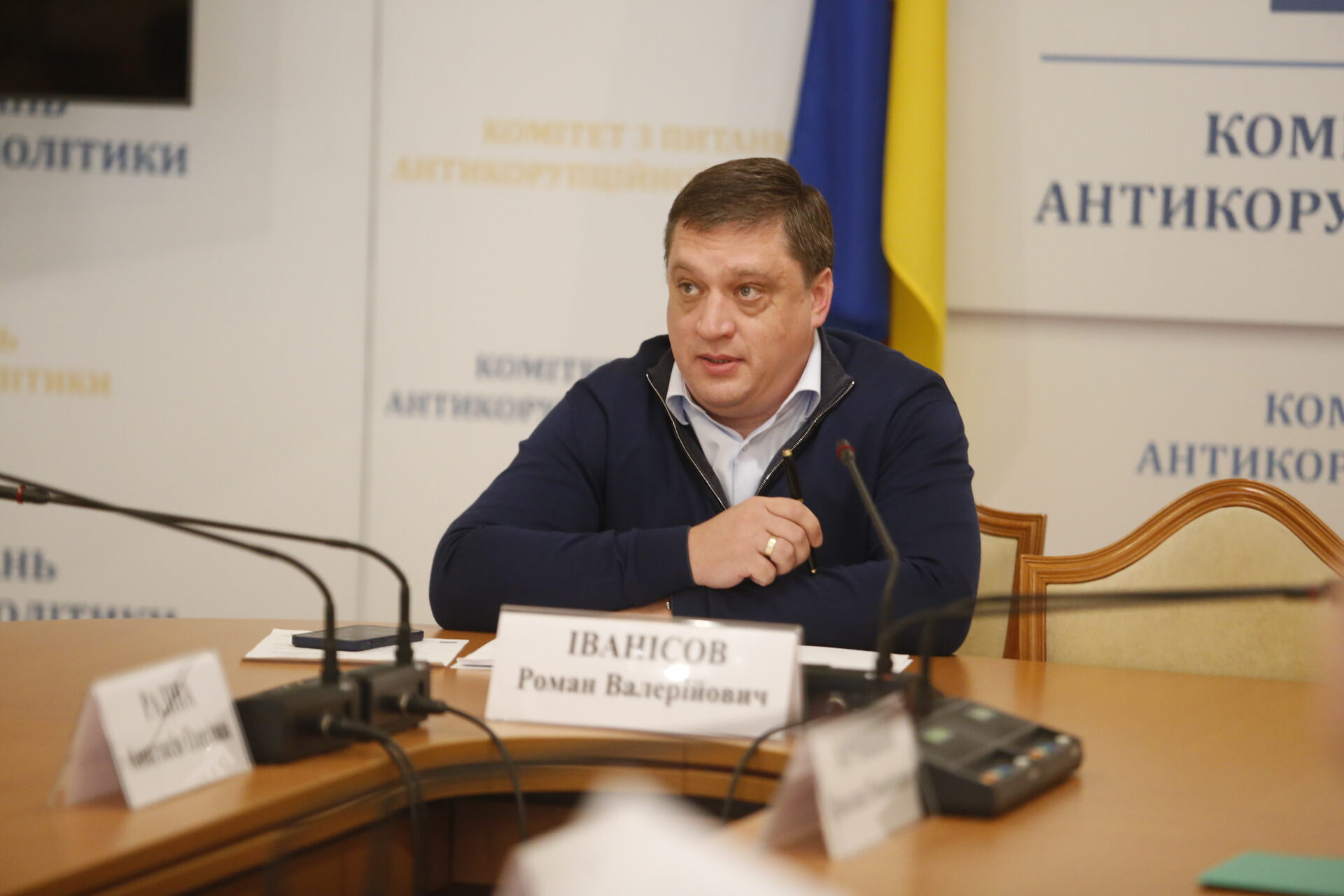
High Anti-Corruption Court of Ukraine – the pros and cons of its activities
Regarding the High Anti-Corruption Court of Ukraine. Despite the fact that the Law on the High Anti-Corruption Court entered into force in 2018, it actually began its activities in the second half of 2019.
In my opinion, the advantages of the High Anti-Corruption Court of Ukraine are: specialisation, professionally formed team, selection of judges with the participation of internationals, and transparency.
Among the minuses: a huge workload, due to which the court physically does not have time to consider cases.
Decentralisation reform as part of the fight against corruption in Ukraine
In my opinion, the decentralisation reform is one of the most successful that was carried out in Ukraine. Its completion coincided with the beginning of our parliamentary term. I have something to compare with, so I can say that people really have the opportunity to influence and control community funds.
But less so, as long as there is a war, money for the army should be a priority. And here I believe that it is in the communities that there is a real opportunity to control the expenditure of funds for the specific needs of the military. There is a request, there is allocation of funds, procurement, sending to the front or to a military unit.
Today, in every community in my electoral district, I see enough active residents who are able to fight for their rights. There are local deputies and officials who do not always make decisions in the interests of the residents. Therefore, if a supervisory board is formed from this asset of the community, which will monitor such deputies, officials, elders, prevent them from going beyond their powers or making the wrong decision, it is a good idea.
In any case, anti-corruption bodies are working, a lot of facts are being investigated, but only after a fair court decision is made in the case and the corrupt person is brought to justice, a precedent will be set. In my opinion, in the end, everything rests in court And Ukraine still needs to work on this

Dovydas Vitkauskas, director of the NGO SOS Ukraine, for a number of years served as the Coordinator of the EU project “Support to Justice Reforms in Ukraine” and other EU-funded projects.
National Anti-Corruption Bureau of Ukraine: problems of functioning
According to the world’s most influential corruption level measuring index, Transparency International CPI 2022, Ukraine is in an “honourable” 116th place in the world, which it shares with the Philippines and Zambia. By comparison, Belarus ranks better than Ukraine at 91, and Russia is below at 137*.
*According to data for 2023, Ukraine occupies 104th position in the Corruption Perceptions Index list.
Looking at the history of more complex NABU investigations, almost all of them sooner or later collapsed either during the investigation or in court. The reasons are varied.
First, NABU does not have the ability to conduct surveillance or secretly monitor its targets without the help of the Ukrainian Security Service (SBU).
Second, NABU often gets involved in technical disputes over who owns a particular case with other Ukrainian criminal investigation institutions – there are as many as 10 in the country.
Third, the prosecutor’s work in proving in court is substandard, despite the fact that a special autonomous structure – SAP (Specialized Anti-Corruption Prosecutor’s Office) – has been created to investigate NABU cases.
Fourth, Ukrainian courts have not developed a standardised notion about the admissibility of evidence or its qualification in more complex crimes.
Fifth, law enforcement and justice institutions, which should perform the role of corruption guards, are procedurally “independent” from each other at first glance.
Measures for Economic Growth with the Highest Anti-Corruption Effect
First, corruption is not a sign of society’s moral or legal backwardness, let alone a lack of bureaucratic institutions. It is a sign of a country’s economic backwardness. Corruption is reduced by stimulating economic growth and technological progress. Foreign partners, in advising or dictating policy to the Ukrainian authorities, have so far erroneously placed the main emphasis on measures that encourage responsibility, not motivation in society to reduce corruption. This motivation arises when economic activity becomes more profitable by following the rules, and behaviour bypassing the rules becomes unprofitable.
Second, an extremely important feature of Ukrainian society is short-termism in both political and economic systems. New parties are created for each election, which become the leaders of the coalition. Business is often done in the same way – as a short-term project that needs to pay off quickly, and then can be closed. In such a context, there is no need to develop traditional Western “left-right” political ideology, or to care about a long-term reputation in business. In my opinion, it’s usually not a deluge, but a new political or business project. Such rapid cyclicality does not encourage confidence in politicians or big business from voters, business partners, creditors, or investors.
Third, a critically important but often ignored feature of Ukraine by international partners is the excessive role of the state and government in the economic system. When the government gets involved in business, it forgets its main “business” in a market economy – regulation. Land is still not privatised in the country, and the process has been in its infancy since 2021. In Ukraine, there are 3,500 state enterprises, or even over 17,000 including municipal ones. Compare this to 39 in Lithuania. State companies in Ukraine are the most common source of insolvency, pressure on politicians, or courts. As long as land and other key economic resources are distributed not by private hands or bank financing, but by official decisions – the motivation for corruption will outweigh any efforts to fight it. Therefore, both Ukraine’s growth and anti-corruption environment would best be influenced by the full privatisation of land and state enterprises, the elimination of non-functioning and competition-obstructing economic entities.
Fourth, the full empowerment of competition should become the main challenge and task for both the Ukrainian authorities and international partners. EU antitrust rules can serve as best practice if Brussels does not turn a blind eye to applying them to Ukraine’s progress. All sectors of the country’s economy must be demonopolized.
Anti-corruption policy needs to change in the way it governs institutions, people, and processes
Firstly, the tools of criminal prosecution that instill a culture of responsibility as an anti-corruption mechanism do not function properly, as the burden of proof in the criminal process will always favour the defendant. Therefore, a comprehensive set of civil and administrative liability measures is needed. An efficiently functioning tax system is the most effective anti-corruption tool. Civil confiscation of unexplained assets is another effective way to achieve law enforcement goals without punitive measures.
Secondly, ethical rules in every society and institution complement legal means, as they create positive standards of behaviour for politicians and officials, while also setting precedents for the future.
Thirdly, the era of “independent” institutions, judges, or investigations is over. The idea of “independence” not only in Ukraine, but also in many EU countries, has often been distorted in courts and similar structures and has become a symbol of impunity, secrecy, and corporatism. The “independence” of justice and law enforcement systems is not an end in itself, but a means to ensure their accountability to people and businesses. In general, government institutions should primarily be “dependent” – on common strategic goals, on a clear mission to achieve results, on the budget, and most importantly – on common sense.
Fourthly, the selection of the “most honest” and “most professional” judges, investigators, and government officials in Ukraine through competitions did not justify itself. Competitions better select students and theorists, not professionals suitable for practice. “Soft” skills, such as negotiation, management, communication, leadership, and others often go unnoticed or undervalued during competitions.
Fifthly, Ukrainian international partners naively and immeasurably imposed on the country the obligation to organise competitions or auctions in almost all public procurements. Many competitions or auctions, especially for smaller expenditures, cost the budget more resources in time and money than they bring benefits in terms of transparency. To achieve effective public procurement, attention should be focused not on the procurement process, but on the main decision-making criterion – “economic benefit”.
Sixth, it is not people who make institutions, but institutions that make people. Higher public sector salaries are another myth that has been shattered in Ukraine’s anti-corruption policy. True leaders are most motivated by the desire to serve the public interest and gain management experience, which can later be monetized in the private sector. However, the application of bonus systems in the public sector for achieving clearly outlined results and indicators (KPIs) should not be discarded.
Finally, in order for institutions to strengthen and move forward, they need leaders. Leaders in the public sector guarantee respect for the institution’s mission and values, motivate the workforce, but do not only serve the convenience of employees. To be effective, a leader must have a certain degree of discretion. Seeing threats everywhere is a feature of bureaucracy, not leadership. The pursuit of transparency should not bind the leader’s hands to make effective decisions. And often this means – making risky decisions from an ethical or even legal perspective.
From the editor. Current reports from the National Anti-Corruption Bureau of Ukraine can be found here.