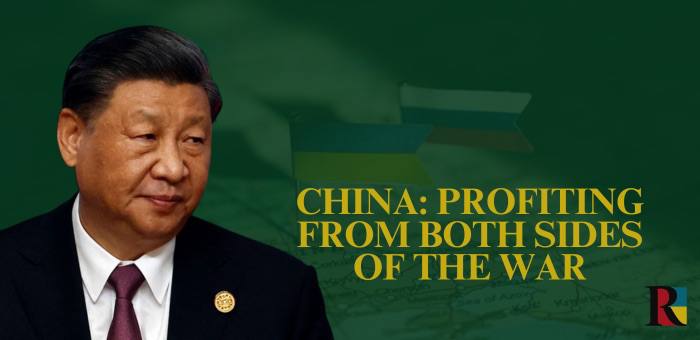


China is widely regarded as Russia’s ally, though not its most proactive one. Chinese components have been identified in Russian drones, and Beijing sells dual-use goods to Russia that can be applied in weapons production. At the same time, Ukraine also relies heavily on Chinese parts for its own weapons manufacturing and is seeking to expand export cooperation with China. Formally, Beijing maintains a neutral stance.
Chinese parts in Russian-Ukrainian War Weapons
In spring 2025, President Volodymyr Zelenskyy stated that Ukrainian intelligence had evidence of China supplying artillery and gunpowder to Russia and that Chinese representatives were involved in producing some of these weapons inside Russia. China denied the accusations. Foreign Ministry spokesperson Lin Jian responded that Beijing has never supplied weapons to any side and has consistently supported peace talks. By September 2025, Ukraine’s Chief of Defence Intelligence, Andrii Yusov, told News.LIVE that China does not provide military assistance to Moscow.
However, the role of Chinese components in the modern key tool of the battlefield — drones — is crucial. According to Ukraine’s Main Intelligence Directorate, Chinese electronics now dominate the Russian Geran-2 (Shahed-136) drones, making up 60–65 % of their parts, whereas previously U.S. components had prevailed. In response, President Zelenskyy enacted new personal and economic sanctions targeting companies supplying components for Russian military drones, including firms based in China.
Russian strike drones and cruise missiles increasingly incorporate imported parts such as microcontrollers, drives, optical modules, engines and other electronics. These are not cutting-edge technologies, but they are essential for the mass production of weapons. At the same time, an estimated 80–90 % of the components in Ukraine’s own frontline drones also come from China.
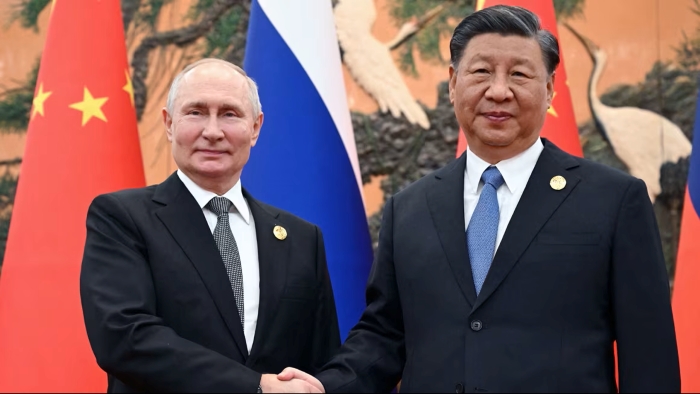
Russia’s President Vladimir Putin and Chinese leader Xi Jinping shaking hands during a meeting in Beijing in October, 2023/ Sergei Guneyev, AFP, Getty Images
Promises for Ukraine from China
Ukraine and the European Union are trying to apply sanctions to Chinese companies that support Russia’s war effort while diversifying cooperation with Beijing in other areas, since dependence is obvious. The EU has so far resisted imposing secondary sanctions as strongly as Washington has urged. Commenting on U.S. President Donald Trump’s call for new tariffs on China to increase pressure, French President Emmanuel Macron stated that they will pursue their own diplomacy with China.
In parallel, China has opened additional export opportunities for Ukraine. For example, in 2025 Beijing allowed the import of Ukrainian peas and wild-caught aquatic products. Moreover, recently China has publicly expressed readiness to take part in the post-war reconstruction of Ukraine.
Conclusion
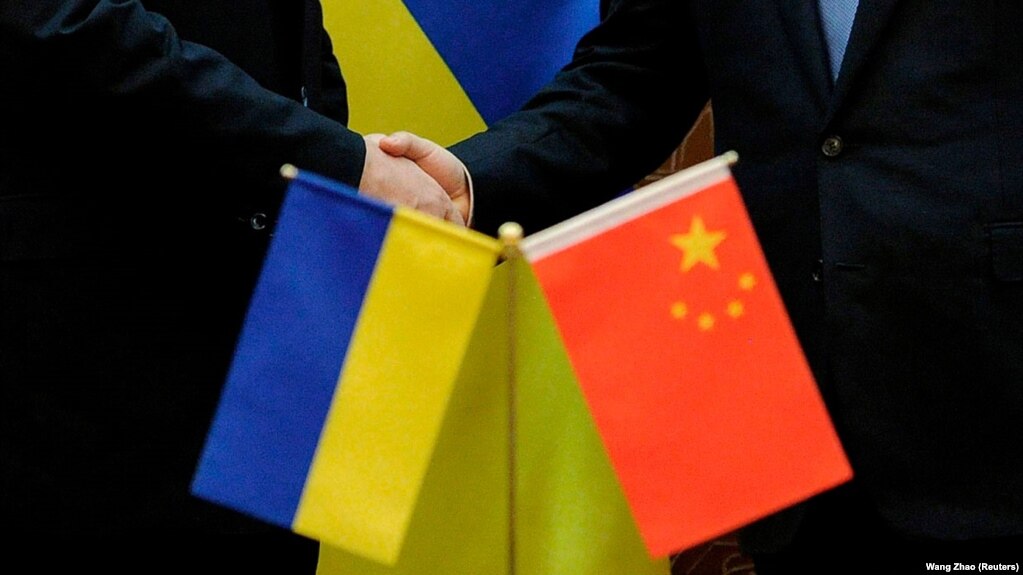
China’s industrial capacity has enabled it to assume a position in which both sides of the Russian–Ukrainian war depend on its production. On one hand, China supplies components used in drones attacking Ukrainian civilians; on the other, without Chinese parts, Ukraine would field far fewer drones at the frontline. At the same time, Kyiv seeks new export windows, expanding its trade with China. This duality is already shaping the Ukrainian market: in late 2024 the U.S. and EU sanctioned several Chinese companies involved in supplying engines and components to Russia’s drone industry; Beijing responded by intensifying exports elsewhere. This adjustment that has also affected Ukrainian production, though so far not significantly. It boosted the understanding of the need to decrease dependency on Chinese goods, especially in military components.
Daria Maslienkova