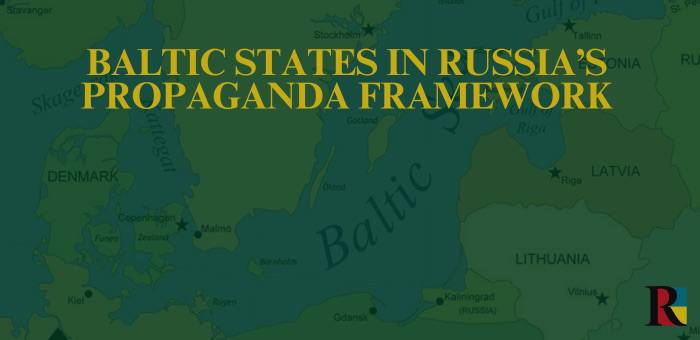


Moscow started using strikingly similar accusations against the Baltic States, as it did on the eve of the full-scale invasion of Ukraine. At the end of 2021 Russia conducted large-scale military exercises near Ukraine’s borders while accusing Kyiv of security threats. Nowadays, simultaneously with the launch of the Russian-Belarusian joint trainings “Zapad-2025,” a new wave of accusations has begun targeting the Baltics. According to the Ukrainian Centre for Countering Disinformation, Russian propaganda has intensified threats and aggressive rhetoric, blaming Baltic countries for alleged involvement in drone attacks on Russia.
Most Common Narratives
The leading narrative now mirrors the Ukrainian case: that NATO poses a threat to Russian security. (Although Ukraine is not a NATO member, in 2021 propagandists falsely claimed Ukraine was under external manipulation). For instance, so-called blogger Mikhail Onufrienko, with a Telegram audience of about half a million, claimed the Baltics were connected to drone attacks.
Another recurring accusation is Russophobia. Under the same pretext, “protecting Russian-speaking populations”, Moscow used to justify aggression in Ukraine, Russia now frames Baltic policies reducing Russian influence, such as state-language requirements, as persecution. This trend was documented in the analytical report “The Impact of Russian Propaganda in the Baltic States” by the Centre for Countering Disinformation of Ukraine’s National Security and Defence Council, presented in July 2025. The historical narrative about a “common past” also remains strong, reflecting Moscow’s ambitions to restore the Soviet Union.
Same Pattern or Provocation
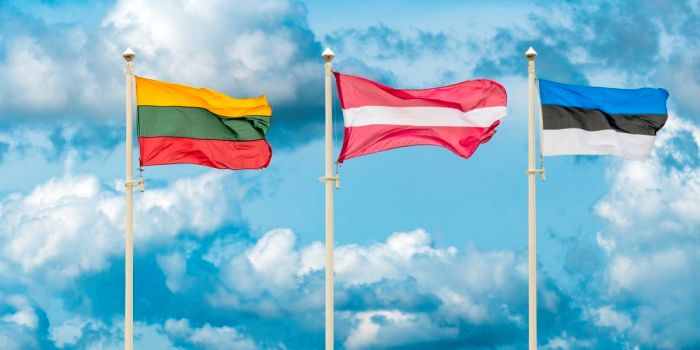
The parallels with Ukraine just months before the full-scale invasion are obvious. It remains unclear whether Russia is deliberately sowing panic using the same pattern or preparing to justify new actions to its domestic audience. Until recently, the probability of a direct war with NATO while Russia’s war against Ukraine continued was assessed as low. However, recent provocations, such as attacks on Poland, a drone entering Romania, and three Russian jets violating Estonian airspace, show that Moscow takes risks even amid a deteriorating economy. Intelligence services have identified Russian scenarios in which the Baltics are prime targets. Some border areas with large Russian-speaking populations, for example, Estonia’s Narva, are seen in Moscow as potential “Donetsk and Lugansk” scenarios.

Conclusion
Russian propagandists’ accusations that the Baltic States are “bad,” “aggressive,” or part of an “anti-Russian conspiracy” are far from purely rhetorical. Combined with hybrid aggression, pressure, economic blackmail, and historical falsification, such narratives can serve as preparation for larger-scale actions. They are aimed at weakening these states, reducing their ability to defend themselves, creating internal tensions, or justifying future steps by the Kremlin, at least for a Russian audience. Russia’s economy is weak, and its army partially exhausted, yet Moscow still risks provoking NATO and increasing military spending. A strong Ukraine, inflicting higher costs on the aggressor, remains the main factor capable of delaying Russia’s future invasions.