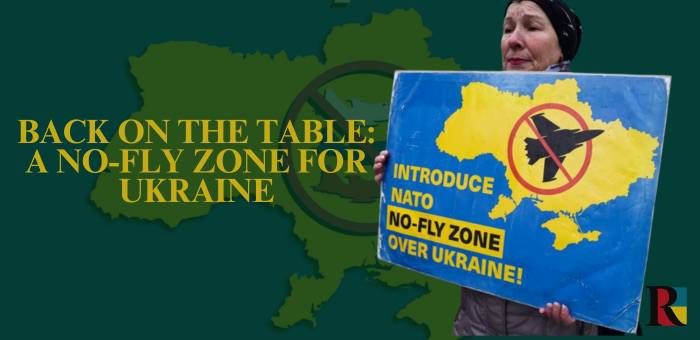


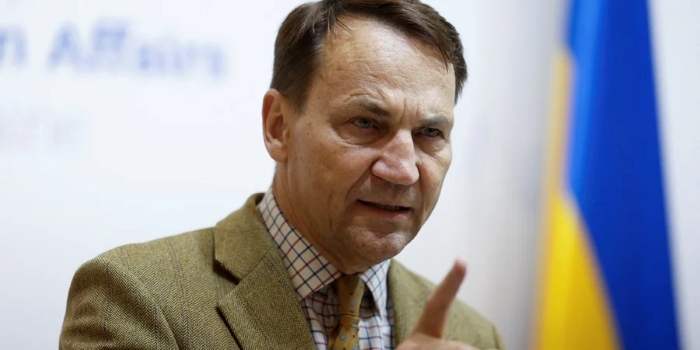
Poland’s Foreign Minister Radosław Sikorski has asked NATO to consider shielding Ukraine during Russian attacks, calling it the best way to prevent Russian drones from flying over other European territories as well. His remarks, published Monday in the German outlet Frankfurter Allgemeine Zeitung, emphasized that such a concept must be supported by all allies, as Poland cannot make this decision alone.
Old idea’s renewal
Sikorski also noted:
If Ukraine were to ask us to shoot them down over its territory, that would be advantageous for us. If you ask me personally, we should consider it.
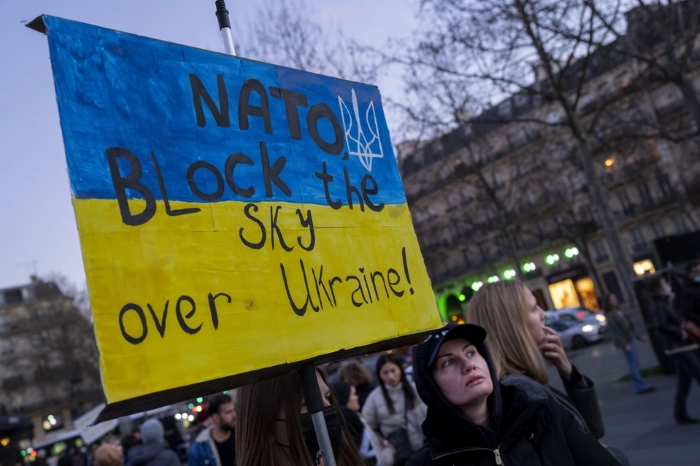
Though, this is essentially what Ukraine has been asking since the first day of the full-scale invasion—both through formal diplomacy and citizen initiatives such as the “CloseTheSky” flash mobs in social media and during demonstrations. In 2022 NATO allies feared that such a move would trigger escalation toward a third world war, as well as being prohibitively expensive. Since then, Russia has significantly advanced its long-range drone technologies, posing more threats to further located countries. Today, however, Russia is the one violating NATO airspace and signalling a willingness to expand its aggression.
President Volodymyr Zelenskyy’s original plan to “close the sky” in 2022 was rejected, even though he presented it emotionally, appealing to civilian casualties. As Sikorski noted, the idea of a closed sky surfaced again a year ago under the Biden administration but was shelved due to a lack of political will. Historically, NATO has applied similar concepts in Iraq, Bosnia and Herzegovina, and Libya, where the opposing side was weaker.
The new perspective
Now the idea sounds more plausible. American diplomat and former U.S. Special Representative for Ukraine Kurt Volker said during a Kyiv24 broadcast that continued Russian provocations could persuade more allies, as so far the initiative remains with Poland alone.
The project, called SkyShield, is a European plan to protect the skies over western and central regions of Ukraine. A petition launched in France by MP Frédéric Petit, communications professor Philippe Moreau-Chevrolet, and aviation analyst Xavier Tytelmann calling for a Sky Shield-type mission has gathered more than 47,000 signatures, showing rising concern even in countries not bordering Russia or Ukraine.
Conclusion
The revival of the no-fly zone idea is justified by the current context. It could provide additional protection for Ukrainian civilians and infrastructure, restore a sense of security in neighbouring countries, and demonstrate the West’s strong stance. However, implementation depends on clear commitments, coherent plans, and coordination at the NATO or coalition level. Without these conditions, a no-fly zone will remain a declaration rather than a practical measure, as it has before. So far, allies appear to be waiting for more provocations to reconsider the idea rather than acting to prevent future problems.
Daria Maslienkova