

During any war, art does not remain on the sidelines, and this applies not least to cinema. Propaganda is present in cinema during the full-scale war in Ukraine on both sides — among enemies and allies alike. At the same time, the views on what to show on camera are diametrically opposed: in Russia, logic suffers, while the West impresses with reasoning and facts. We will examine how exactly this happens.
The image of Ukraine and the West in Russian films
Even in films that are not specifically propaganda, the West is portrayed as selfish, hypocritical, and incapable of sincere help. In particular, in the science fiction film Kraken (2025), no one from Sweden even thinks of rescuing the Swedes from a polar station that has been attacked by an underwater monster. It is the Russian military who come to their aid, arriving in their submarine. At the same time, according to the principles of international law, even military crews are obliged to rescue those in distress without threatening their ship.
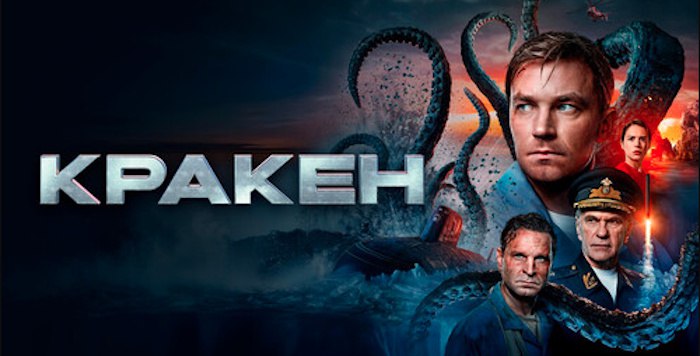
However, in the film, this is done solely because of the hero’s ‘love at first sight’ for a Swedish woman, one of the survivors of the polar station. According to the rules of the film, the hero commits a real violation because of his feelings. Thus, the Russian military as a whole is equated by the authors of Kraken with the German Nazis of Hitler’s time. It was the commander of the latter who issued a special order strictly forbidding the rescue of civilians while on military vessels.
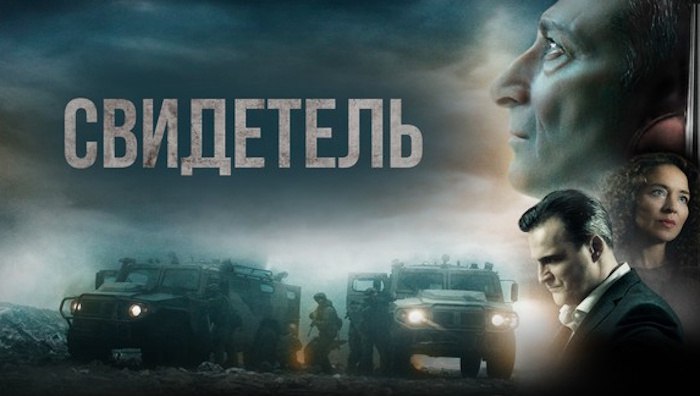
However, Russian filmmakers themselves are officially trying to equate Ukrainian military personnel, and in particular members of the Azov brigade, with Nazis in propaganda films. This is particularly evident in the film Witness (2023), which was heavily inspired by the film The Pianist (2002). This film is about a Polish Jew who escaped from the Warsaw ghetto and survived the Holocaust organised by Nazi Germany. In some places, it was inspired almost frame by frame, only partially changing the nationality and time period. Therefore, the Ukrainian military is portrayed here as cruel, capable of even expelling refugees from a train bound for Lviv and killing those who did not pay them. The peaceful population of Ukraine as a whole is portrayed in the film as victims, but these victims are still ‘guilty’ because they obeyed the West and their own government. Those Ukrainians who are not victims are only good if they speak Russian. Those who speak Ukrainian are bound to do something bad in the film. At the same time, with regard to Ukraine itself, for example, the son of the main character, a schoolboy living in Belgium, is surprised that Ukraine is not part of Russia and asks where Kyiv is.
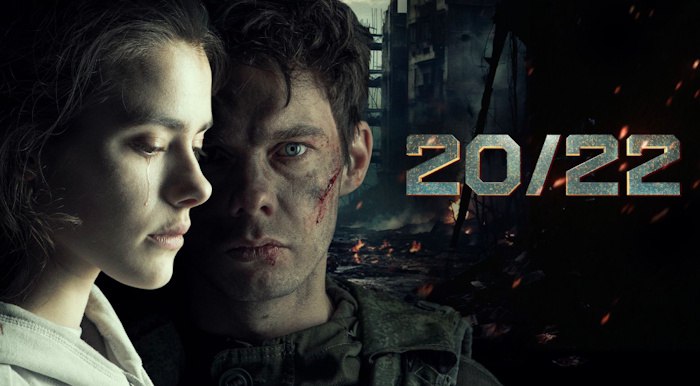
In the mini-series ‘20/22’ (2024), Ukrainian soldiers from Azov are portrayed as little more than savage pagans. In particular, there is a scene in the film where Azov soldiers allegedly gouge out the eyes of a portrait of Gogol while drinking by the fire, then kill a peaceful Ukrainian and begin to howl like wolves. The inspiration for this scene came from a fake news story in the Russian media on 5 May 2022. It referred to an alleged black magic ritual performed by Ukrainian mortar gunners in the “LPR”. Also, in “20/22”, Ukrainians are not separated from Russians, saying that the people are one, but that the West and Europe have “deceived” Ukrainians. In particular, in one scene, an Azov soldier is asked:
‘If you need Europe, why did you start destroying everything Russian? Why did you put on this American uniform? Did they tell you about the terrible Russia on TV?’
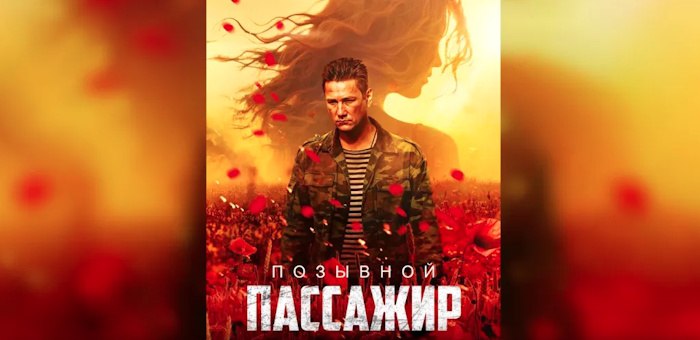
Full-scale war is depicted in all Russian propaganda films as the result of Ukraine’s actions. At the same time, the war in Donbas also happened, as mentioned in the film ‘Call Sign Passenger’ (2024), because of Ukrainians who ‘sold out’ to the West. In one scene, a Ukrainian soldier is asked why he sold out for ‘State Department cookies.’
The image of Russia in Western films
In general, Western filmmakers tend to focus more on Russia’s political characteristics in documentary films, where everything is clearly based on facts, without demonisation. This was particularly evident in several BBC productions.
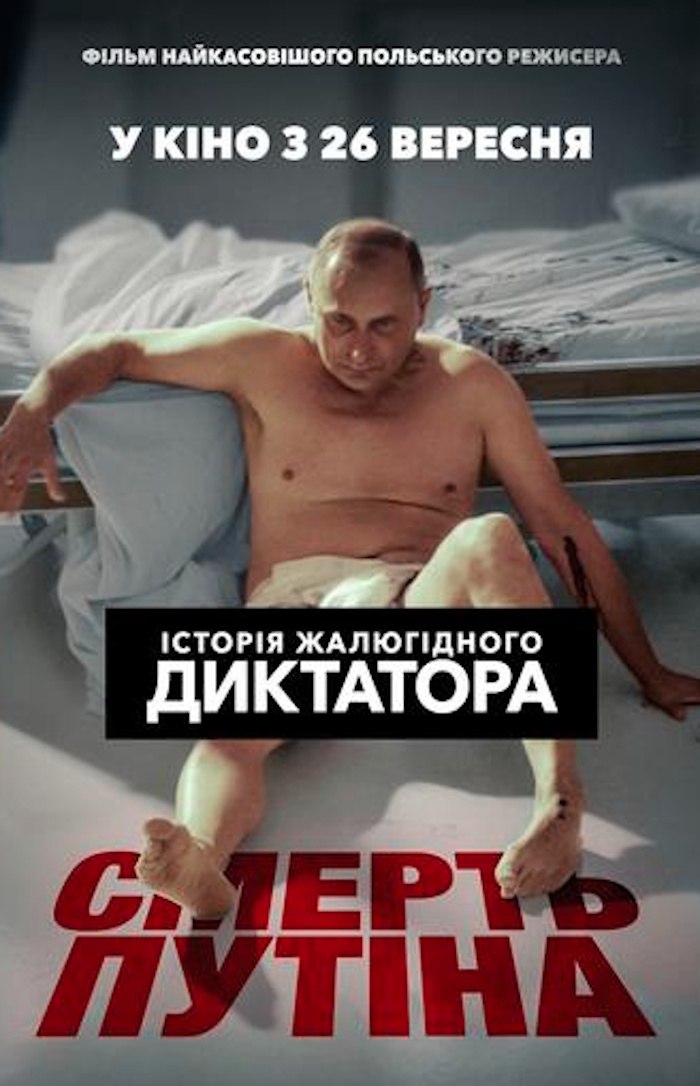
However, there are also examples of feature films. The most striking of these is the Polish film Putin (2025), which covers key moments in the Russian president’s life. However, the narrative is non-linear, with episodes jumping between different events.
The film’s director, Patryk Vega, officially emphasised that he wanted to show Putin as a frightened man, not someone to be feared:
“My idea is that Putin is a coward… I wanted to expose him, to allow the viewer to get as close as possible to the tiger in the cage and show that this tiger is also afraid.”
It is also worth noting that Russians, as a threat, were generally portrayed in Western culture long before the full-scale invasion. It all started during the Cold War between the United States and the Soviet Union. However, even though there have been changes in geopolitics, the ‘bad’ Russians have continued to exist in Western cinema. Now they have become not a stereotypical cliché from the past, but a reflection of the present. Recent examples include the American films Land of Bad (2024) and A Working Man (2025), in which the criminal characters are Russian by nationality.
The ambiguity of the West’s position in cinema
Although Russians are generally portrayed quite logically as villains in Western films, there are also some very ambiguous and controversial examples. This is particularly true of the Canadian-French documentary Russians at War (2024). In it, Russian-born documentary filmmaker Anastasia Trofimova talks to Russian soldiers in a military unit, following them from their homes to the front lines in occupied Ukraine. They generally express confusion and disappointment. However, they still perceive the war in the same way as the official Russian authorities. The film was criticised for attempting to whitewash the reputation of the Russian occupiers.

Among feature films, the comedy-drama Anora (2024) attracted considerable criticism. The main characters included Russians. They were portrayed not as villains, but as ‘normal’ people who have a chance at happiness. At the same time, the film even emphasised the ‘Russian soul,’ which outraged the Ukrainian media community.
Conclusions
Propaganda during the full-scale invasion in Western and Russian cinema differs to the detriment of the latter. Russian films often have problems with evidence and logic. Sometimes they even rely on fake news.
Russia portrayed the US as hypocritical fraudsters, the Ukrainian military as brutal savages, and peaceful Ukrainians as dim-witted victims. The West, in turn, adhered to a more moderate and evidence-based style.
At the same time, there is much more propaganda in Russian films on the subject of politics. Russians in Western films are more often portrayed as ‘bad’ from the point of view of ordinary crime. This has been the case since the Cold War and has been confirmed by current events.
Author: Iryna Hurt