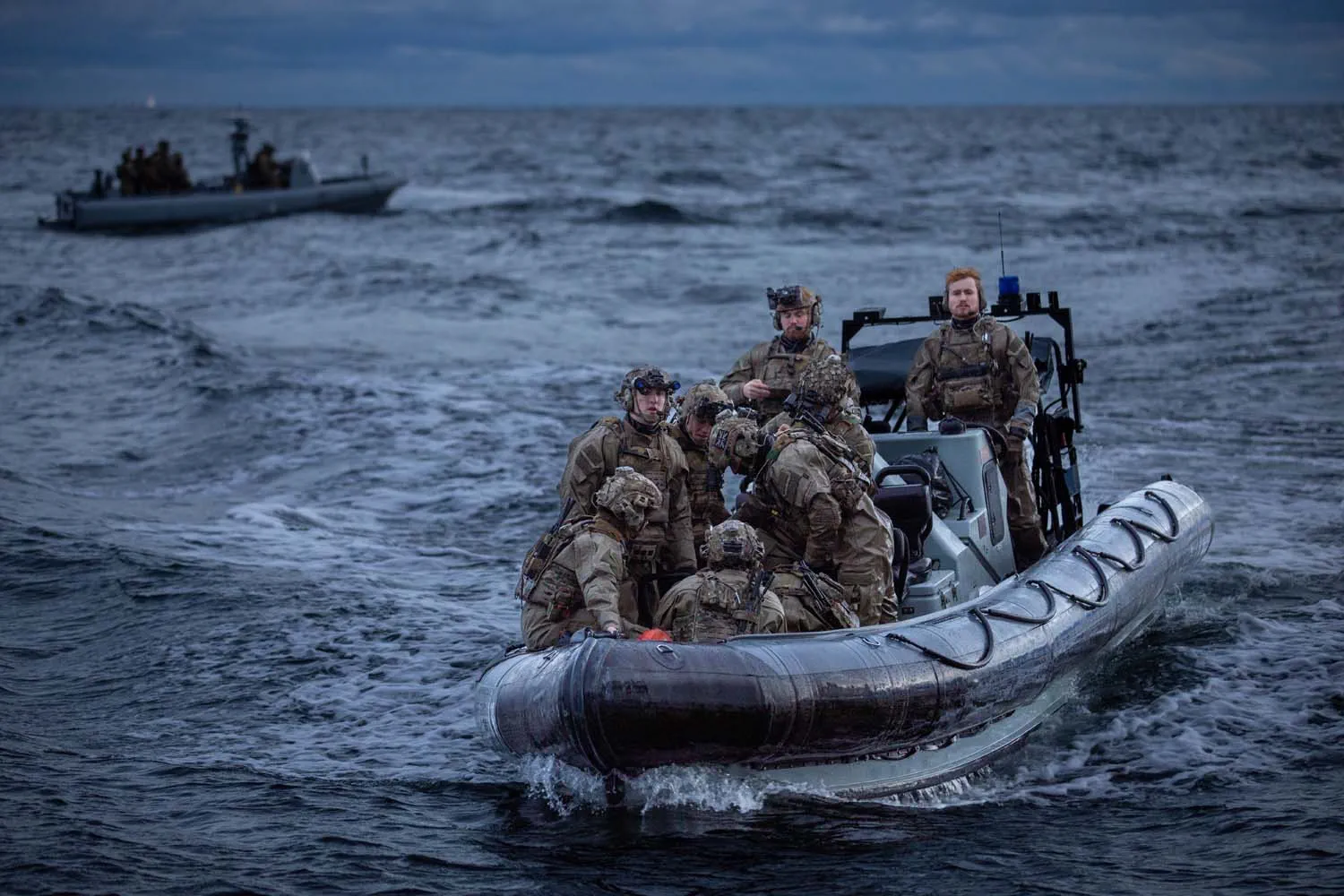


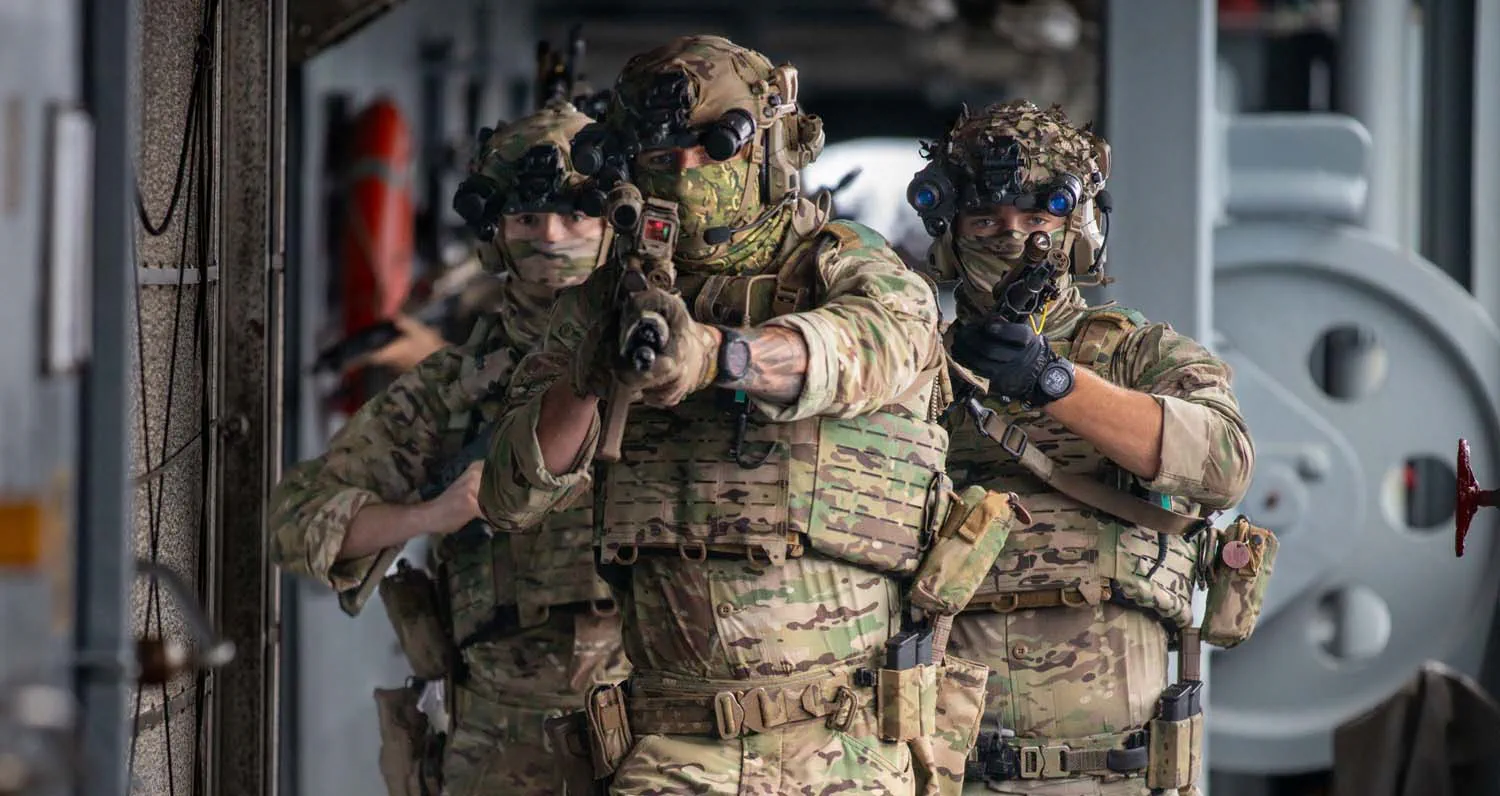
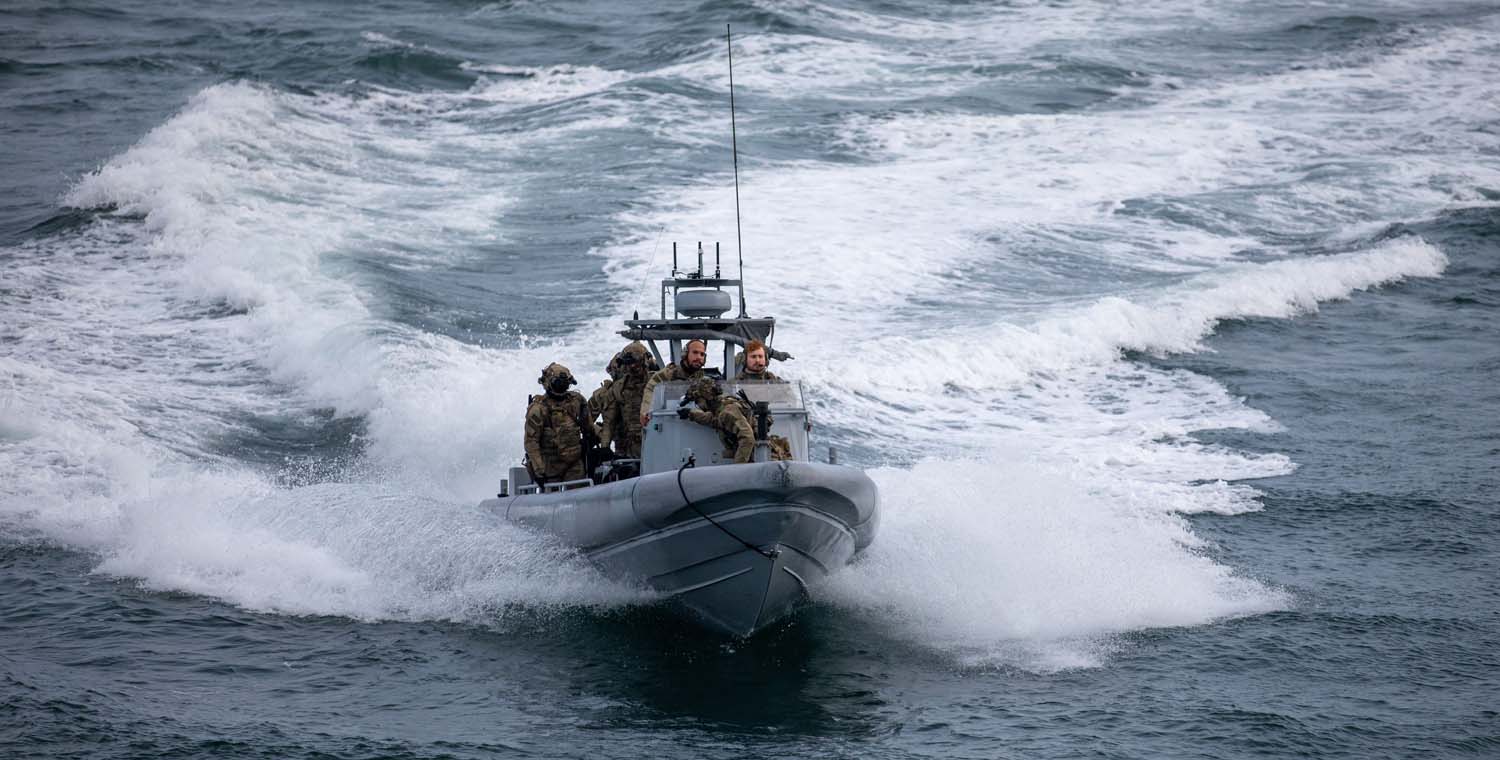
In the eastern Baltic Sea, British Royal Marines conducted covert boarding operations, practicing the capture of ships, oil and gas platforms, and coastal raids. This served as a readiness test for the new Special Operations Maritime Task Group (SOMTG), which will become part of NATO’s rapid reaction forces in 2026, according to the Royal Navy.
The group brings together pilots, engineers, boat operators, and boarding teams. They are capable of operating in any environment and from any platform, from warships to auxiliary vessels. The Baltic Dawn exercises off Estonia marked the final stage of training, where 42 and 47 Commando units, together with the British Army’s 3rd Ranger Battalion, carried out a joint landing on the island of Saaremaa.
According to Major Adam Kidson, commander of the SOMTG, the main goal is to demonstrate the ability to “strike from the sea at any time and anywhere.” The new operational format makes the units more flexible, capable of rapid missions — from blockades to reconnaissance and assault operations.
Northern Europe Unites Against Threats
Baltic Dawn is part of the larger TARASSIS exercises, covering a vast area from the Arctic Circle to the Baltic Sea. These are the largest maneuvers of the Joint Expeditionary Force (JEF) since its creation in 2014.
Thousands of troops, dozens of ships, and aircraft from ten northern nations participated, training to operate together on land, at sea, and in the air. The British worked closely with Estonian partners — a region bordering Russia and one of NATO’s most vulnerable zones.
These actions carry a clear political message. NATO is ready not only to defend but also to act preemptively, showing any aggressor in Northern Europe that there will be an immediate response. In this context, Estonia’s statements about shooting down Russian aircraft should be seen as part of a broader deterrence strategy rather than an isolated declaration.
What It Means for Ukraine
For Ukraine, these exercises have a deeper strategic significance. As allies strengthen coordination in the Baltic region, they limit Russia’s maneuvering space. They also reduce its ability to redeploy forces or pressure other fronts.
The preparation of the SOMTG and JEF shows that NATO is moving to a new level of interaction — rapid, flexible, and proactive rather than purely reactive. This approach is exactly what Ukraine needs for effective support in its fight against Russian aggression.
Moreover, the maritime component of the exercises is especially relevant for the security of the Black Sea. Developing such formats could become the foundation for a future naval coalition supporting Ukraine, helping to protect its trade routes and energy infrastructure.
Conclusion
British Marines are training off the Baltic coast, refining their combat skills. They are also demonstrating a new approach to European security with flexibility, rapid response, and readiness for any challenge.
For Moscow, this serves as a reminder — and likely a provocation — that could trigger further statements about “threats” from NATO. In reality, these exercises only confirm that its aggression strengthens and unites the Alliance.
For Ukraine, they signal support. They show that partners are building a deterrence system from the Baltic to the Black Sea. This gives reason for measured optimism that the war will not spread further.