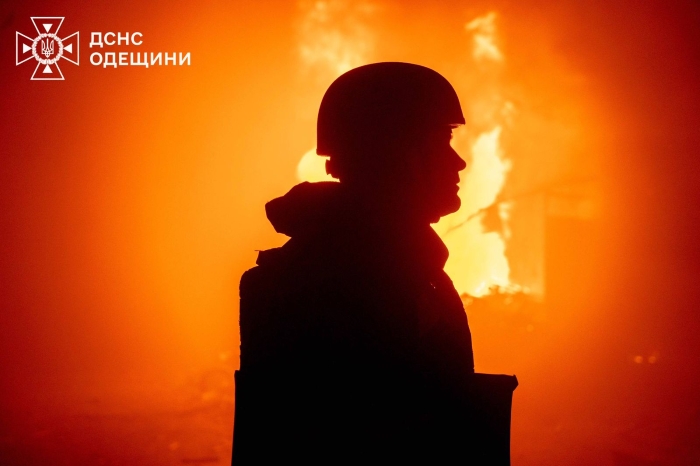


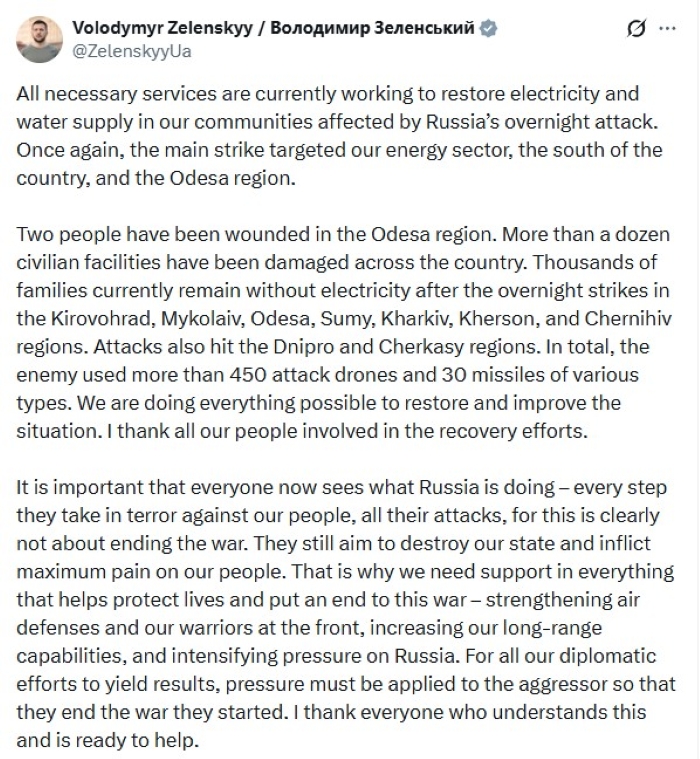
Russia carried out a massive overnight attack on December 13. It hit the Kirovohrad, Mykolaiv, Odesa, Sumy, Kharkiv, Kherson, and Chernihiv regions. Russian forces also launched strikes on the Dnipropetrovsk and Cherkasy regions. In total, the Air Force’s radio-technical troops detected and tracked 495 air attack weapons – 30 missiles of various types and 465 UAVs of various types. 430 Enemy targets destroyed/suppressed.
Russian forces made Odesa and Odesa Region the main target. The enemy attacked the region throughout the day. At night, the terror intensified.
Consequences
The attack left most residents of Odesa without heat and water. Authorities reported that two people suffered injuries. The strike disabled all traction substations in the city. As a result, tram and trolleybus services stopped temporarily.
In Mykolaiv, the attack injured five people. Overnight strikes cut electricity in settlements of the two districts. The shelling also damaged critical infrastructure. Electric transport in the city of Mykolaiv was also impacted.
The attack cut power to parts of the Kherson region, including the city of Kherson. Several settlements in the Chernihiv region lost electricity. In the Kirovohrad region, outages currently affect 19 settlements.
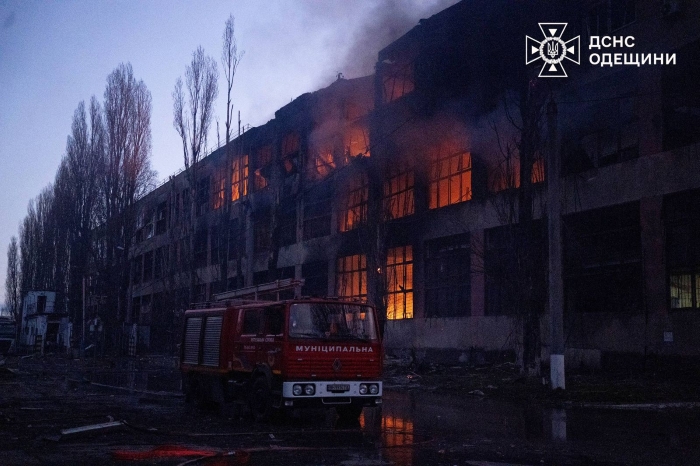
A Day of Terror in Odesa
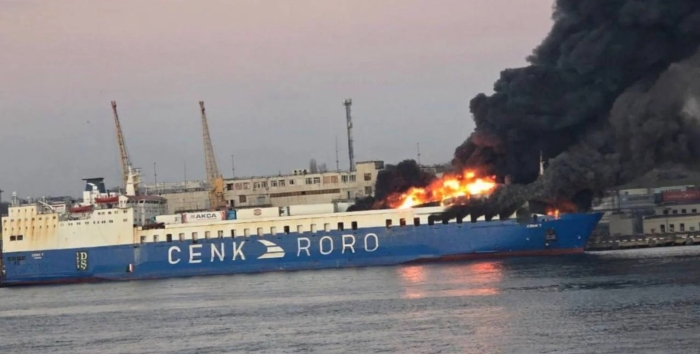
On December 12, Russian forces struck Odesa and the surrounding region using ballistic missiles and drones. The attack damaged a civilian vessel in the port of Chornomorsk. One person suffered injuries.
The Turkish Ministry of Foreign Affairs expressed concern after the strike. The damaged vessel belonged to a Turkish company and sailed under a foreign flag. In its statement, the Ministry said the incident confirmed earlier concerns. Those concerns related to maritime security and freedom of navigation. The ongoing war continues to spread into the Black Sea, as noted in Turkey.
The damage caused to a foreign-flagged vessel owned by a Turkish company as a result of today’s (December 12) attack on the Ukrainian port of Chornomorsk, confirms the validity of our previously expressed concerns about maritime security and freedom of navigation, as the ongoing war in our region spreads to the Black Sea.
According to preliminary reports, the crew and truck drivers on board the vessel are being evacuated, and no Turkish citizens have been harmed as a result of the attack. Our Consulate General in Odesa is closely monitoring developments and providing necessary support to our citizens.
On this occasion, we once again stress the importance of an immediate end to the war between Russia and Ukraine, and remind of the need to conclude an agreement to ensure the safety of navigation in the Black Sea and to suspend attacks by the parties on energy and port infrastructure in order to prevent escalation, written in the statement of Turkish MFA.
Political Context and Signals
It this Turkish MFA statement, the comparison between the strike on a Turkish civilian vessel to attacks on Russia’s shadow fleet is visible. Such framing ignores key facts. This incident was not isolated. On November 17, Russia carried out massive shelling of Izmail. That attack may have deliberately targeted a Turkish gas tanker.
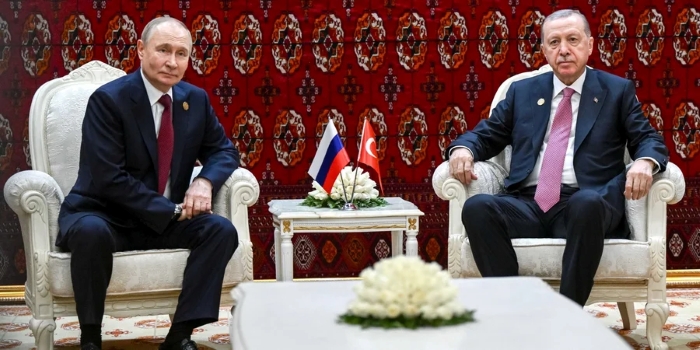
The timing of the strikes matters. They occurred the same day as talks between Vladimir Putin and Recep Tayyip Erdoğan. The leaders met on the sidelines of a forum in Turkmenistan. They resemble a signal of Russia’s intent to demonstrate dominance. Moscow appears to push Ankara toward pressuring Ukraine instead of the real aggressor.
At the same time, Kremlin spokesman Dmitry Peskov commented on the meeting. He said Putin and Erdoğan discussed the European Union’s alleged plans for a “grand fraud” involving Russian assets. Despite this rhetoric, Russian forces launched a large-scale attack on the south of Ukraine.
Conclusion
Russia continues its campaign of terror against Ukraine’s energy infrastructure. The attacks affect multiple regions. They cause increasingly severe blackouts. Transport systems collapse. Heating and water supply systems also fail.
Overall, Russia continues to demonstrate that it has no genuine intention to pursue peace and shows no respect even for countries that have remained relatively loyal, such as Turkey. Instead, it resorted to its familiar tactics of terror, carefully timed and framed as an act of “revenge.” This approach was designed to shift international attention and pressure away from restricting Russian trade capabilities and toward calls to punish Ukraine.