

Eleven years ago, in February 2014, Russia launched its aggression against Ukraine. Moscow seized and, after an illegal and unreconized referendum by the international community, annexed Crimea, and launched military operations in Donetsk and Luhansk regions. The Russian invaders controlled 7% of Ukraine’s territory. According to the then-President of Ukraine Petro Poroshenko, voiced at a meeting of the UN General Assembly, military aggression caused the killing of 13,000 people and the injury of 28,000, including 298 passengers and crew members of Malaysian airliner flight MH17, which was shot down in July 2014 by the Russian military with a Buk missile system. And as a result of the Russian occupation, about 1.8 million residents of Crimea and two eastern regions were forced to leave their homes.
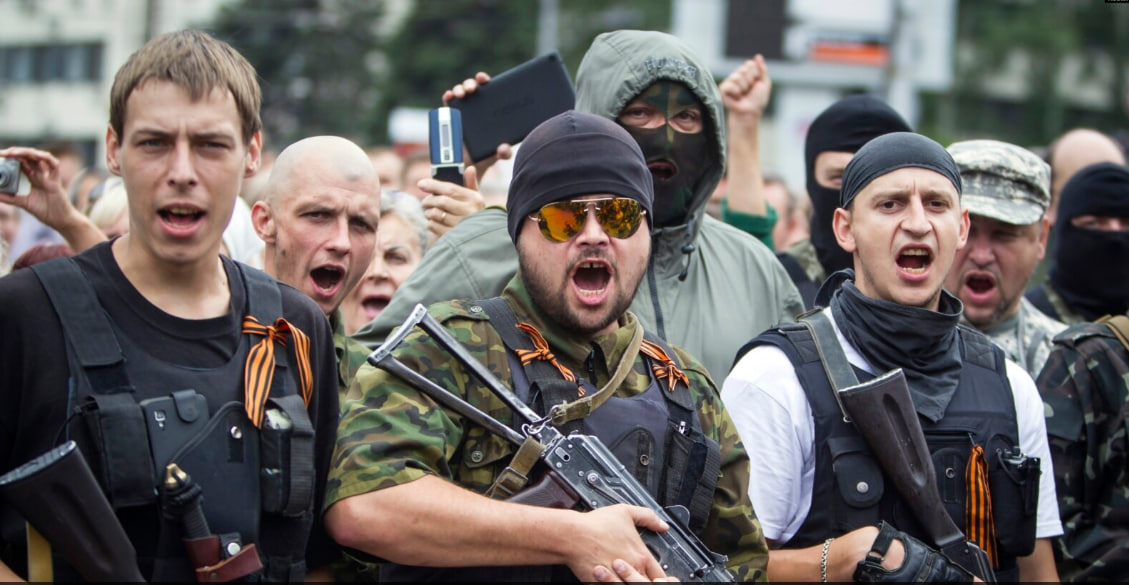
In March 2024, the international community began imposing sanctions on the Russian Federation. The United States, the European Union, and 13 other leading countries joined the political and economic measures aimed at ending Russia’s war against Ukraine. Restrictions were imposed against Russian and Ukrainian politicians involved in the occupation of Crimea and support for separatism in eastern Ukraine, Russian oligarchs, industrial and financial institutions, and exports of dual-use products and technologies to Russia.
The most visible result of the sanctions was the collapse of the ruble. During 2014, the Russian currency depreciated by almost half, from 32 to about 60 rubles per US dollar. There was an outflow of investments and a shortage of certain products and goods. However, the debate over the effectiveness or shortcomings of the restrictions imposed on the aggressor continued. Meanwhile, Russia was tightening its control over the occupied territories, repressing Ukrainians, and increasing its military presence there.
Usually, in our society, the effect of sanctions is exaggerated – we want more. We need to be realistic: over the past 30 years, international sanctions, even against countries much smaller than Russia, have affected their behavior at best once in twenty. Therefore, we should not hope that sanctions will force Moscow to return Crimea, withdraw from Donbas, or otherwise change its policy towards Ukraine.

Mykola Kapitonenko, an expert at the International Center for Policy Studies, said at the end of 2019. Subsequent events have shown that this opinion was correct.
“Chessmen” and “Daggers” cannot be brought down by sanctions
The lack of effectiveness of sanctions or the existence of ways for the Putin regime to circumvent them became clear after February 24, 2022. When Russian military equipment destroyed and captured by Ukrainians, as well as cruise and ballistic missiles used by the Russians to shell Ukrainian cities and critical infrastructure, contained components manufactured in Western countries after the sanctions were imposed.
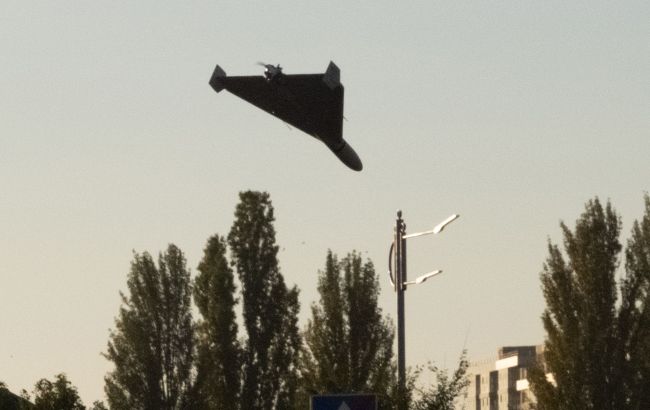
According to President Volodymyr Zelenskyy, microchips, microcontrollers, processors, and many different parts are supplied from China, Europe, and America.
Just like with the “Shahed” – with Russian missiles. They all contain components from other countries. To fight against Russian strikes means to fight for the strength of sanctions against Russia. Sanctions must increase and be effective.
“The Achilles’ heel of Putin’s regime
But what set of sanctions can actually influence the aggressor and force it to stop the bloody war, where is the Achilles’ heel of Putin’s Russia?
As long as the export of oil and oil products continues, Russia will always have money for war, – says Andriy Klymenko, head of the Institute for Strategic Black Sea Studies. The Institute monitors the maritime export traffic of Russian oil and oil products.

Russia underestimates the role of energy in its export revenues by about half – in fact, it accounts for about 60-70% of revenues. Gas accounts for 20% of this basket, coal and other minerals for 10%, and oil and oil products for 70%. At the same time, the role of maritime oil exports has grown dramatically and accounts for about 70% of all export revenues.
After the start of Russia’s full-scale aggression, the world’s leading democracies are finally starting to target oil and oil products with sanctions. In December 2022, the international coalition of the G7, the EU, and Australia capped the price of Russian oil for sale on world markets at $60 per barrel. But at that time, the market price of Russian oil was even lower than the price “restrictions” imposed.
Tougher sanctions against Russia can be imposed by the European Union’s legislation. But so far, this has not been done for various reasons, emphasizes Sergej Sumlenny, director of the European Resilience Initiative Center.

Still, Russian gas has not been sanctioned until now, and Russian oil export effectively was not prevented by the EU, which tolerated Russian shadow fleet sailing through the territorial waters of the EU countries. There are several reasons for that, including a large dependency of many EU countries, especially those in the Central and Southern Europe, from the Russian gas, long-time Russian lobbying activities in the most influential European countries like Germany, and of course anti-Americanism of many EU nations, which leads to rejection of the U.S. gas as a substitute for Russian gas.
In January 2025, the United States imposed the largest package of sanctions on Russian oil. The goal is to disrupt the financial flows that the Kremlin uses for the war in Ukraine. The new restrictions apply to: 183 tankers of the “shadow fleet,” insurance companies servicing these vessels, two large Russian oil companies, and traders using non-transparent schemes to sell Russian oil. It would seem that the financing of Russian aggression would finally be put to an end.
Meanwhile, a few days after the innovations were introduced, experts began to predict how Russia would try to circumvent the new sanctions. It is about transferring sanctioned tankers from the status of transport vessels to the function of floating storage facilities – one of the practices of storing oil cargo on ships at sea; mixing oil of different origins in tanks, etc.
Drones are buzzing, oil depots are burning
But there are sanctions against the oil industry that the aggressor simply cannot circumvent or avoid. And these “sanctions” are being “imposed” by Ukrainian drones.
The first strikes on Russian oil depots and refineries were carried out in 2022. In June, the Novoshakhtyn Oil Refinery was hit, and in November, drones attacked an oil depot in the city of Orel. In September 2023, Ukraine launched a large-scale campaign of strikes against oil refineries and oil depots in Russia’s deep rear. That year, 80 facilities were hit. The following year, 2024, the campaign intensified even more. Analysts recorded at least 84 attacks on oil refineries. The most remote facility is located 1,500 kilometers from the front line.
The results of the work of unmanned systems, as well as the restrictions imposed on exports, brought tangible results in 2024. Russian exports of petroleum products by sea decreased by 9.1% in 2024 compared to a year earlier. Domestic refining in 2024 fell to a multi-year low of 267 million tons, the lowest since 2012.
Ukrainian drones continued to “impose sanctions” on Russian refineries and oil depots with equal effectiveness this year.
As a result of these attacks, at least three refineries have halted production or reduced refining volumes. The Ryazan refinery, which accounts for nearly 5% of Russia’s refining capacity, suspended operations due to damage caused by the January 24 attack. Oil storage tanks caught fire, and railroad loading equipment was damaged, hindering oil transportation. A hydraulic heater that removes pollution was also damaged.
A few days later, the drones visited the refinery in Kstovo, Nizhny Novgorod region. The refinery is located 800 kilometers from the front line and is the 4th largest in Russia. A couple of days later, the Andreapol oil pumping station was hit, forcing the Russians to close the main pipeline to the Ust-Luga terminal in Leningrad, which carried 20% of Russia’s oil exports. Every day it is down means a loss of revenue.
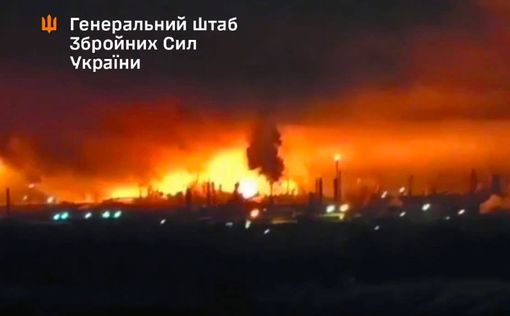
The real losses of the aggressor country from Ukrainian drone attacks are difficult to estimate, as the Russians hide information and distort statistics. However, it is not possible to completely hide the losses, and it is not easy to replace the destroyed modern equipment that Russians purchased from Western countries before the sanctions were imposed.
Sergej Sumlenny said:
It is hard to estimate the impact of Ukrainian hits against Russian energy infrastructure. Such large facilities like oil refineries or gas plants cannot be destroyed completely in most cases, but their functionality only gets reduced by the damage. As Russia obviously fakes a lot of statistics, the estimation can be done by indirect means, including observing price dynamics on the markets. It is important to understand that some attacks led to change in other, non-energy-related markets, like production of plastics. For example, we know that price for plastic pipes necessary for construction works and for other sectors has surged by 20% after Ukraine has hit an oil refinery in Kstovo, Nizhny Novgorod region.
The main advantage of attack UAVs is their relatively low cost and the ability to produce them in Ukraine.
Fedir Serdyuk, Ukrainian military and technical expert:

According to open-source data, Ukrainian-made internal combustion engine UAVs are primarily used at strategic distances. Targets located at distances close to 1,000 kilometers from the combat line have been hit. According to statements made by the country’s military and political leadership, the weight of the UAVs in some cases is more than 50 kg.
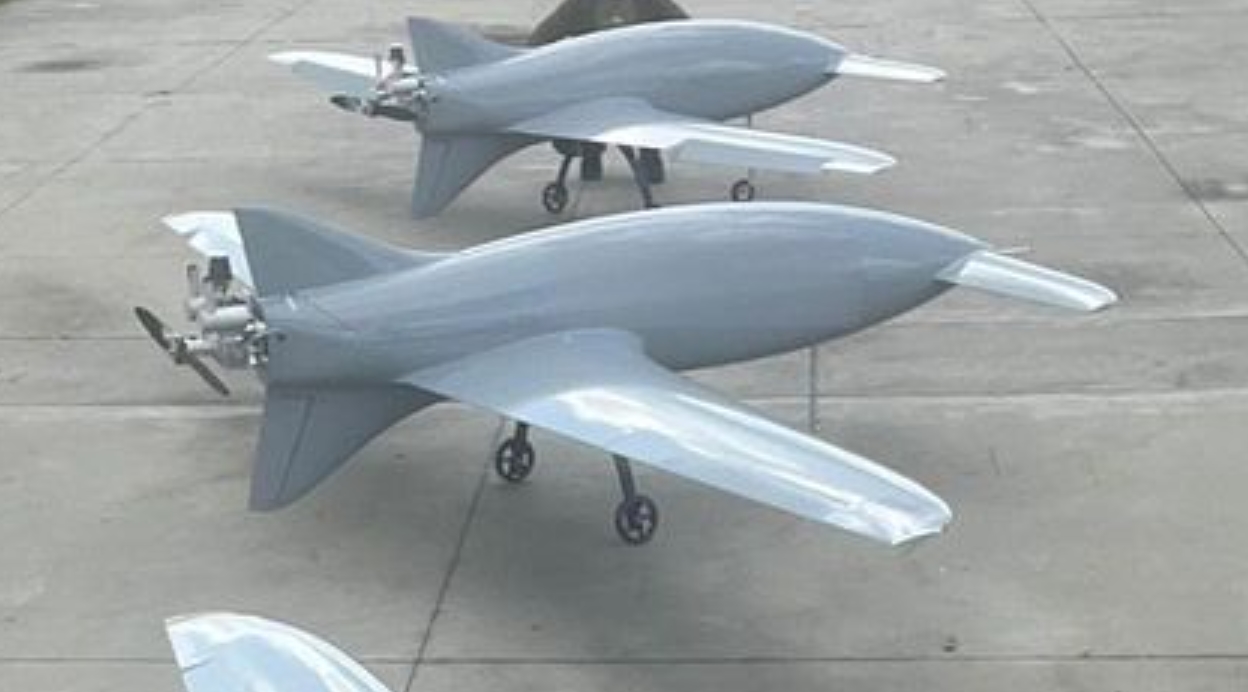
The Ukrainian industry of long-range strike drones is constantly evolving, new technologies are being introduced, so the Russian occupiers will be in for some new not-so-pleasant surprises.
This is an eternal struggle, similar to the competition between tank armor and cannon. With more advanced air defense and electronic warfare, less vulnerable UAVs, better tactics, more stable communication and navigation will appear, – added Serdyuk.
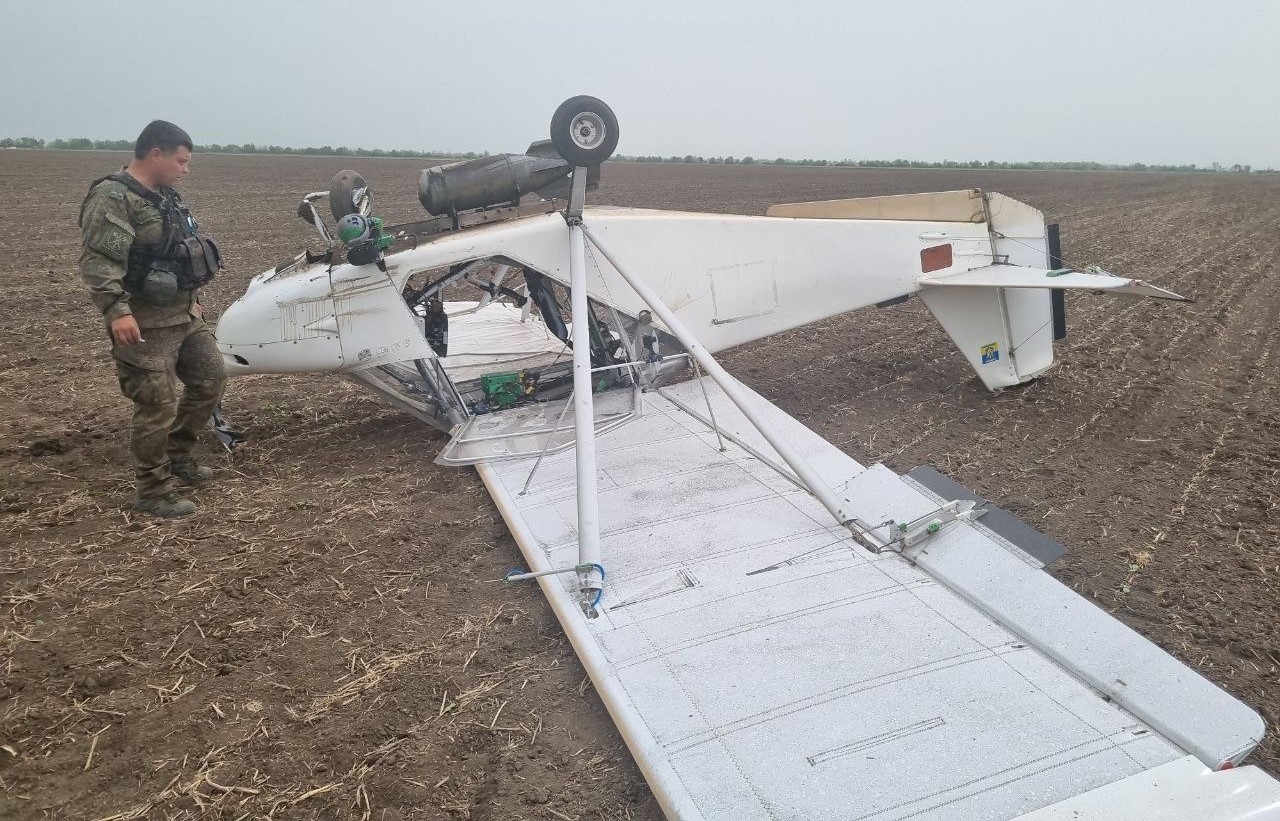
Systematic drone strikes deep into Russia have brought another result: the Russians have begun deploying S-300 and S-400 air defense systems around important military bases, and have created mobile air defense groups to protect oil depots and refineries. This diverts military resources that the enemy could use near the front line against the Ukrainian military.
Instead, Austrian military analyst Tom Cooper believes that the current pace and scale of damage to oil and gas infrastructure is insufficient to cause critical damage to the Russian economy.
This is still too little to seriously damage Russia. Firstly, Ukrainian strategic operations with UAV strikes are conducted in a rather disorganized manner, which makes it difficult to understand their intentions. One week they target the oil refining industry, then they hit command centers, then oil depots, then ports, then factories, then they go back to oil refining, what is the real goal? If you want to destroy the oil industry, you have to continuously target this industry… Russia will feel the consequences if you hit them really hard. And to do that, you need to attack their oil refining much more often.
What can turn an aggressor country into a “small gas station”?
To hit Russia’s infrastructure as hard as possible, radically reduce the export of Russian oil and oil products, and even create a fuel shortage for the occupation army, Ukraine now desperately needs another tool – long-range missiles.
Sergej Sumlenny said:
Ukrainian long-range strike drones have demonstrated very high efficiency, especially during December 2024 – January 2025, and especially against soft targets like oil refineries and gas plants. Still, the reason for their usage is not a good one. Ukraine massively lacks cruise and ballistic missiles. A cruise of ballistic missiles transports a larger warhead, what makes it a way more dangerous weapon. In addition, a missile has a higher speed and a higher mass what increases the kinetic effect of the impact. The missile is normally harder to intercept too. Finally, a missile can carry a cluster warhead, and explode over the target, causing more damage… That is why Ukraine needs its own missiles to be able to hit targets which are too hard for the drones, and add more pressure on Russia’s air defence.
The development and production of modern missiles, as well as the extension of the range of existing missile equipment, is a long and expensive process. But these weapons will significantly increase Ukraine’s defense capabilities. By the way, it is Russia that has always insisted and will continue to insist on limiting the range of such weapons for Ukraine.
Meanwhile, there is still a possibility that Germany will provide Ukraine with modern TAURUS missiles.
It is to be expected that Ukraine will get Taurus missiles under the next Chancellor who most probably will be Friedrich Merz. There is no reason for Germany to block Taurus delivery, and the current blockade has much more to do with personal fears and stubbornness of Chancellor Olaf Scholz, who demonstrates his power by such behaviour. The next chancellor will not have such limitations. Moreover, as Friedrich Merz has many times promised to send Taurus, it would be highly unlikely that he decides to break this promise, which would surely increase his popularity and provide him with the aura of a strong leader. Still, it is not likely that Taurus would arrive in Ukraine the day after the elections. First, the new government needs to be formed. Then, the parliament should vote on the support plan, and the ministries should prepare the delivery. Finally, Ukrainian soldiers need to be trained to operate Taurus. Besides, Germany would not be able to send more than several dozens of Taurus, as Germany does not have many of these missiles, and Chancellor Scholz has not ordered any new production during the last years, – add Sergej Sumlenny.
Winged “security guarantees”
Thus, Ukraine has proven its ability to hit strategically important targets deep behind enemy lines. In 2025, these capabilities should increase. According to Prime Minister Denys Shmyhal, Ukrainian defense industry enterprises plan to produce about three thousand cruise missiles and drone missiles in 2025, as well as at least 30,000 long-range drones.
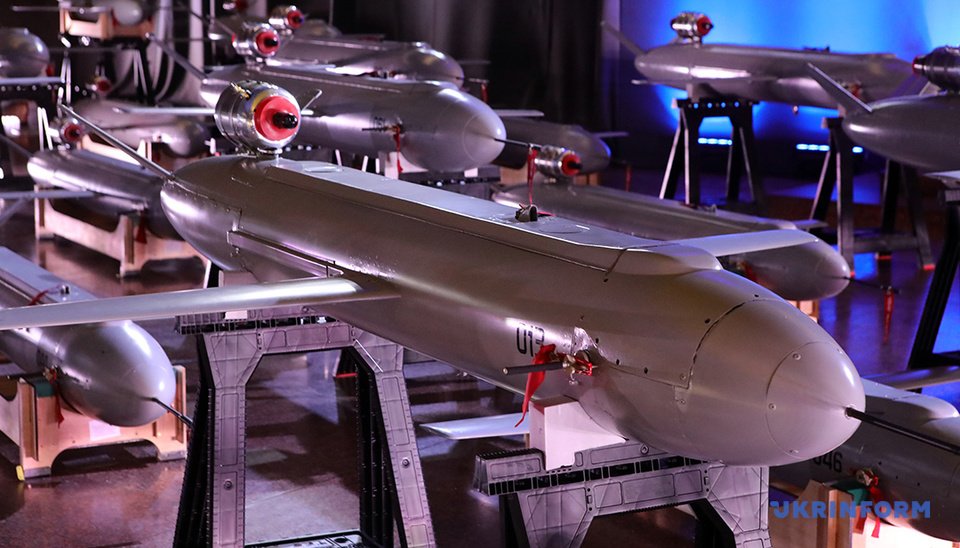
The production of Ukraine’s long-range weapons is of particular relevance now, in the context of the new US administration’s policy. However, even if the war is frozen or a peace agreement is concluded, Ukraine’s arsenal of long-range weapons and its production will be an additional and real guarantee of security and a deterrent to possible external aggression against the state in the future.
Petro Chumakov