

Hydra, Greece
The ancient Greeks were born pessimists. Their ancestors, they believed, had lived in a golden age – according to Hesiod as gods without sorrow in their hearts. Then came the Silver Age, the Bronze Age and finally the Iron Age. Hesiod believed that his time was filled with strife and misery. Children had no respect for their parents, power and violence came before justice and righteousness.
Hesiod was around in the seventh and sixth centuries BC, when Archaic Greece was approaching Classical Greece, seen today as a high point of early Western civilization. And where are we today? Down in an abyss? Up on a mountain? Should one be a pessimist or an optimist? All kinds of considerations can be made after the election of a new EU parliament, after the expanded G7 meeting in southern Italy and after this weekend’s large scale peace conference in Switzerland, called because of Russia’s awful war in Ukraine, now in its third year.
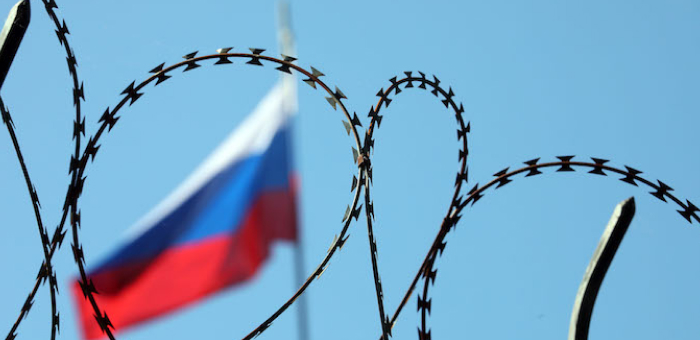
The European elections took place in a mostly calm and orderly atmosphere. The result was far from the disaster that many feared and others, not least the warmongers in the Kremlin, hoped for. The turnout was not bad at all. Democracy worked and will work again in the next few weeks with elections to the British House of Commons and the French National Assembly. Will it work in the US in four months time? One can hope. This Sunday, exiled for a couple of weeks to the Greek island of Hydra (no cars, only human beings and donkeys) in the Saronic Bay in front of Piraeus, I shall allow myself to be an optimist. More than ever I do not believe that Vladimir Putin, Russia’s gangster-in-chief, will get away with his assault on a peaceful European republic.
Also, surrounded by the peace and beauty of Hydra, obviously the world of the 21st century is a much better place than Ancient Greece, even in its golden age. Sure, we have problems, vitally important problems beyond fascist Russia’s war in Ukraine and semi-fascist Israel’s war in Gaza. Both of these conflicts are being waged on the basis of miscalculations, and both have so far led to Russia’s and Israel’s rightful exclusion from the international society. Other problems – not fundamental, rather emotional – concern illegal immigration, refugees (of which there are far fewer in Europe and the US than in Asia and Africa) and the relationship between the highly developed countries of the West and the new, increasingly powerful states, known collectively and somewhat misleading as the Global South.
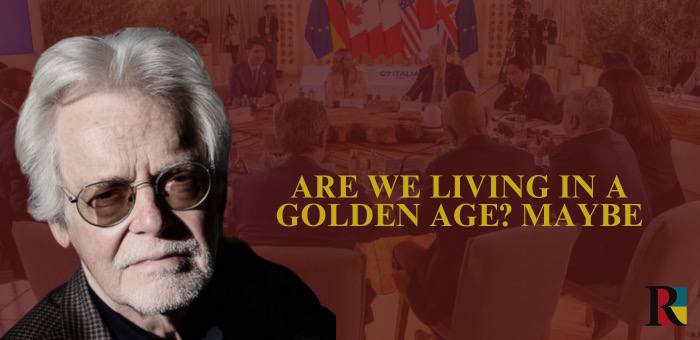
Several of these states, including India, South Africa and Brazil, attended the G7 meeting as invited guests. Ukraine had its natural place in the inner circle. So we talk to each other, we look for solutions. That’s modern democracy. We are not in Ancient Greece, where clans, dynasties and cities – despite the beginnings of democracy – could fight each other for so long that the causes of war were lost in the tumult of the fights.
It seems to me that in Europe, the motherland of pessimism, we have lost sight of the fact that we inhabit the most attractive continent on earth, generally free, safe and quite well off. Maybe it’s a bit boring, leading so many of us to whine about poor services, poor hospitals, poor schools, poor roads, poor this, poor that. Could it be that we forget – even prefer to forget – that democracy is not a free-for-all, but a system of governance, consisting of duties and benefits: freedom with responsibility. For the same reason, it bothers me that a number of countries have given or are giving young people the right to vote at the age of 16. I doubt that they generally possess the necessary maturity. Democracy is not an innate quality. Democracy must be learned, including the fact that democracy is difficult and takes time. Tyranny, as the ancient Greeks called it, can seem attractive because of its ability to act quickly. The risk is that acting quickly, it also acts rashly, dangerously and worst of all stupidly.
At their meeting in southern Italy, the Big Seven, all of them stable democracies, did their duty to Ukraine and indirectly to themselves. They made clear that in no way will they allow Russia to win its war of aggression in Ukraine. On the contrary the long-term military, political and economic assistance has now essentially been granted, enabling Ukraine’s and thus Europe’s victory in a culture conflict, initiated by the Kremlin with the annexation of Crimea in 2014 and intensified with the massive invasion in 2022. The message of the West has arrived in Moscow, and Moscow does not quite know how to react. The chief warmonger, Dmitry Medvedev, utters his usual and useless threats, presenting himself once again as a pathetic doll. Vladimir Putin will not exclude a ceasefire, based on the present facts on the ground. Everybody – also Mr. Putin – knows that these facts can and probably will change in a not too distant future, hopefully paving the way for the so called president to the international war tribunal in the Haag or to his death in a cellar under the Kremlin.
The calm course of the EU elections and the G7 summit and this weekend’s peace conference in Switzerland, attended by almost 100 countries, are encouraging signs of health in a world, which at a first and even second glance appears to be sick.
The fighting in Ukraine can continue for several years, but Russia has been sidelined. Very few decent world leaders want to be seen in the company of Vladimir Putin. The Western democracies – still the globe’s leading powers – have as little use for Putin’s rogue Russia in 2024, as they had for Hitler’s rogue Germany during World War II. Or to remain in the Greek context: the Russians are to be treated, as Athens treated the Persians in the fourth century BC, out with them, back to barbarism, where they are at home and, even worse, feel at home.
The tragedy here is twofold but inescapable: the physical destruction of Ukraine and the moral destruction of Russia. Ukraine can and will be rebuilt within the coming generation. But Russia under Putin once again missed a historic opportunity to move from tyranny to democracy and thus to become a power that, in tandem with the United States, could contribute to the defense of the international legal order. In the 21st century, Russia and Ukraine could have been as good neighbors as Germany and Poland or Germany and France. The Kremlin wanted it different and is getting it different.
In my pleasant, all too short Greek exile, I am writing a book about Europe, Eastern Europe in particular. Am I a pessimist? Not in the least. I believe in Europe, and I believe in European Ukraine. The upcoming elections in the UK and France are unlikely to lead to much change. Should the isolationist and madman Donald Trump win in the US in four months time, Europe has plenty of power to take care of itself. The means exist, and the political will to use them is growing.
At Hydra, I enjoy the silence, the song of the cicadas in the olive trees in front of the house, the sunset at the end of the Homeric sea. We are not facing the “omni-catastrophe” of antiquity, the destruction of everything. Will posterity say that we lived in a golden age? Perhaps, and to an extent rightly so. We live in the world such as it is. We try to make it better. For most of us, that’s good enough.
By Per Nyholm
*These opinions are solely those of the author. The Ukrainian Review takes no position and is not responsible for the author’s words.
Per Nyholm has been a Danish journalist since 1960. He is based in Austria and is a columnist and foreign correspondent at the Jyllands-Posten, a liberal Danish daily newspaper.
Tetiana Stelmakh adapted this text for The Ukrainian Review.