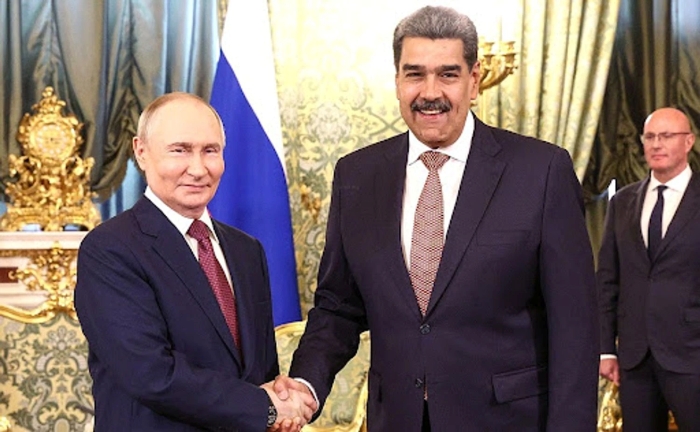


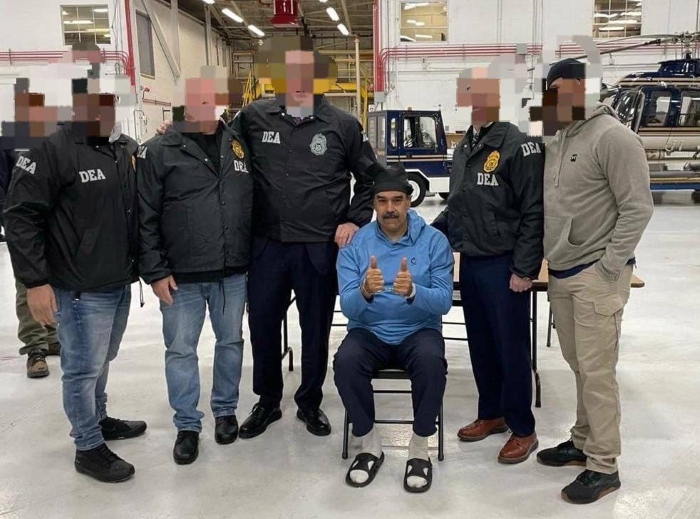
It was long evident that Venezuela had become one of the very illustrative points of confrontation between Russia and the United States. Moscow has for years supplied weapons and political backing to Nicolás Maduro’s regime, while the U.S. President Donald Trump has consistently viewed the Venezuelan dictator as an adversary. Following the successful U.S. operation to capture Maduro, the divide between Russia and the United States has become even more pronounced.
On the official level, Russia condemned the intervention, yet at the same time elements of admiration for the professionalism of the operation surfaced — in unofficial and semi-official discourse.
Official reaction
The Russian Ministry of Foreign Affairs described the U.S. strikes on Venezuela as “an act of armed aggression” and “unacceptable interference in the sovereignty of an independent state.” Leaders of the State Duma framed the operation as an attempted foreign coup carried out under the guise of “legal action.”
Dmitry Medvedev, deputy chairman of the Russian Security Council, reacted with overt irony, calling the U.S. operation a “wonderful example of peacemaking” and hinting that a similar operation could be directed at Ukraine.
Coming from Russian officials who coordinate and justify a brutal full-scale invasion of Ukraine, such statements sound particularly absurd.
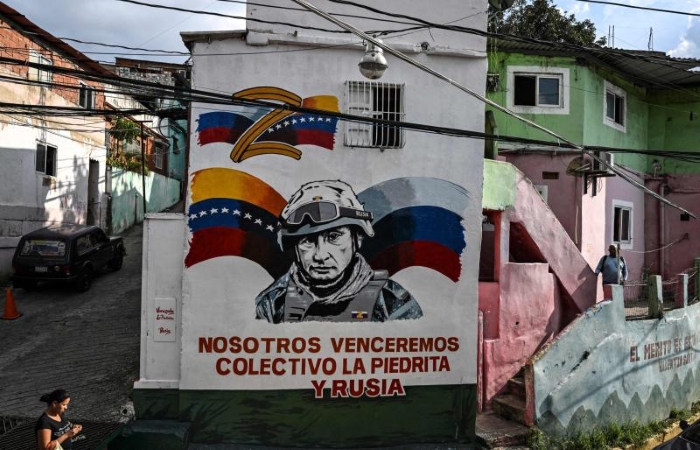
Bloggers’ opinions and comparisons with Ukraine
In pro-Kremlin Telegram channels and Z-blogging communities, reactions were mixed, but generally marked by emotional intensity and rhetoric of fear. Comparisons with Russia’s full-scale invasion of Ukraine in 2022, originally conceived by the Kremlin as a blitzkrieg, were inevitable.
Some Z-bloggers displayed near-hysterical reactions to the unexpectedly effective U.S. operation. This triggered a mix of envy toward American military success and humiliation over Russia’s own military shortcomings.
They carried out the operation competently. This is probably what our Special Operations Forces had in mind—fast, effective, and efficient. It’s unlikely that Gerasimov planned to wage a war for four years, one popular propagandist channel admitted.
Ukrainian former MP Oleh Tsariov, currently in hiding, expressed concern that the United States would now gain control over Venezuela’s oil reserves, potentially driving global prices down, which would benefit Ukraine.
Conclusion
The Russian reaction to the U.S. operation once again highlights a fundamental reality: Russia and the United States have long been ideological rivals. Moscow views its manipulations around Ukraine largely as a tool to counter the U.S., waiting for revenge while tacitly acknowledging that, despite all efforts, Washington remains a step ahead.
What is also evident is jealousy — particularly when Russian commentators compare a precise U.S. operation targeting a dictator with Russia’s terror against civilians in Ukraine.
Finally, Venezuela stands as yet an example of how Russian weapons supplies and political support fail to guarantee the survival of allied authoritarian regimes.