

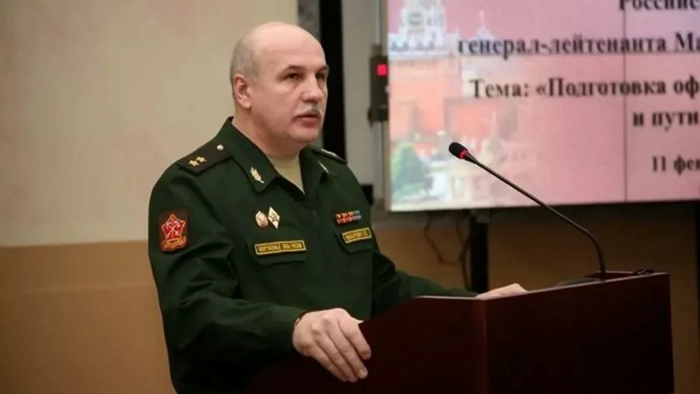
According to Kyrylo Budanov, Russian General Oleg Makarevich — the commander who ordered the destruction of the Kakhovka hydroelectric power plant — has been heading a rotating advisory mission in Venezuela, where more than 120 Russian military personnel are training Venezuelan forces. In addition, Venezuela has deployed around 5,000 Russian-made Igla-S portable anti-aircraft missile systems at key air-defense positions.
Russia consistently uses every opportunity to strengthen its presence in regions where it can challenge U.S. interests. Ironically, the U.S. with its peace plan is now considering steps that would give Russia a chance to stabilize its economy and enhance its military production capabilities.
Venezuela’s Context
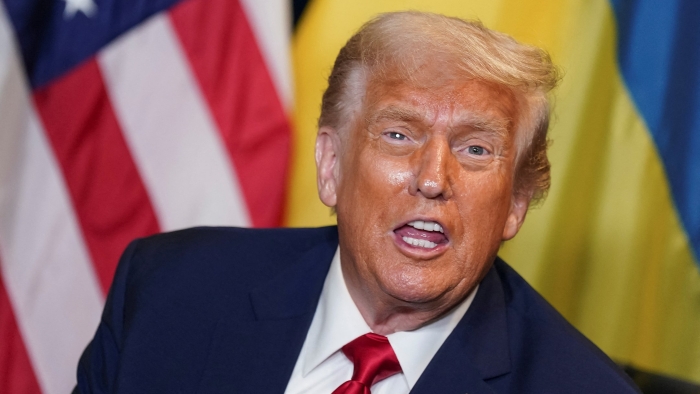
The Donald Trump administration is currently weighing several scenarios for dealing with Caracas, including military options such as targeted strikes or covert CIA operations. Trump, while insisting he does not seek a major war, repeatedly emphasizes that “Maduro’s days are numbered.”
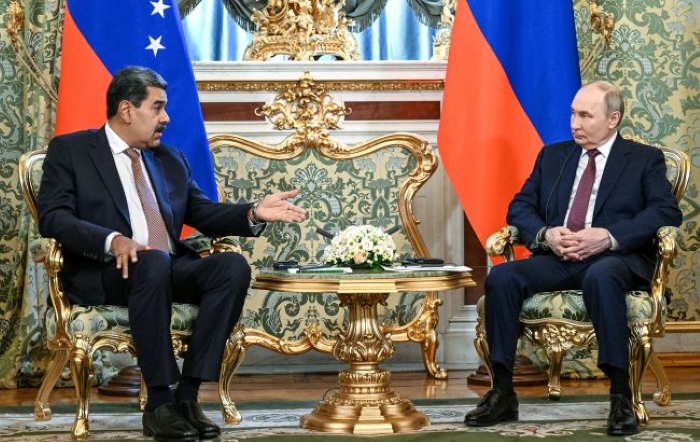
Nicolás Maduro, for his part, has appealed directly to Moscow for military assistance. According to media reports, he requested radar systems, aircraft components, long-range drones, GPS jammers, and even possible anti-missile systems. Venezuela has also sought support from China and Iran.
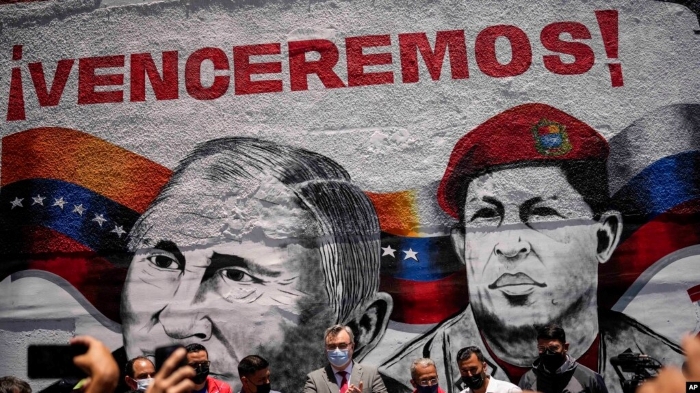
For Russia, Venezuela is a strategic foothold in Latin America and an important economic partner.
When in 2019 the U.S. publicly stopped recognizing Maduro as president and instead backed Juan Guaidó, Moscow doubled down on its support for the Maduro regime. Russia supplied wheat, weapons, loans, cash infusions, and technical assistance. Estimates of total Russian investment in Venezuela range from $20 billion to $25 billion. Moscow has also confirmed the presence of its military contingent in the country.
Russia Against the U.S.
The Kremlin routinely supports governments targeted by U.S. sanctions, helping them establish financial and technological mechanisms to evade Western pressure. An example is 2018, when Russia helped Venezuela launch the state cryptocurrency — a tool explicitly designed to circumvent U.S. sanctions.
But Russia’s ambitions extend beyond assisting sanctioned states. They include symbolic and imperial aspirations that target U.S. territory. Russian politicians and diplomats periodically allude to the “unfairness” of the 1867 Alaska purchase and invoke the “spirit of Alaska” as a symbol of lost imperial greatness.
This symbolism intensified after the “symbolic summit” between Trump and Putin in Alaska on August 15, 2025. For the Kremlin, the Alaska narrative is a message about Moscow’s readiness to compete with the U.S. symbolically.
Conclusion
Tensions between Putin and Trump over Venezuela began during Trump’s previous presidential term. Back then, Russia actively tested the United States’ so-called “red lines.” At that time, the Russia was stronger. Today, Russia — weakened by war, sanctions, and internal strain — is far more vulnerable. This moment presents a historic opportunity for the U.S. to exhaust its long-time geopolitical rival. Yet Washington appears poised to do the opposite: give Moscow time and space to recover.
The current U.S. approach will enable Russia to regroup militarily, undermine Ukrainian sovereignty in the coming years, further attacking other European states, and expand its influence worldwide.