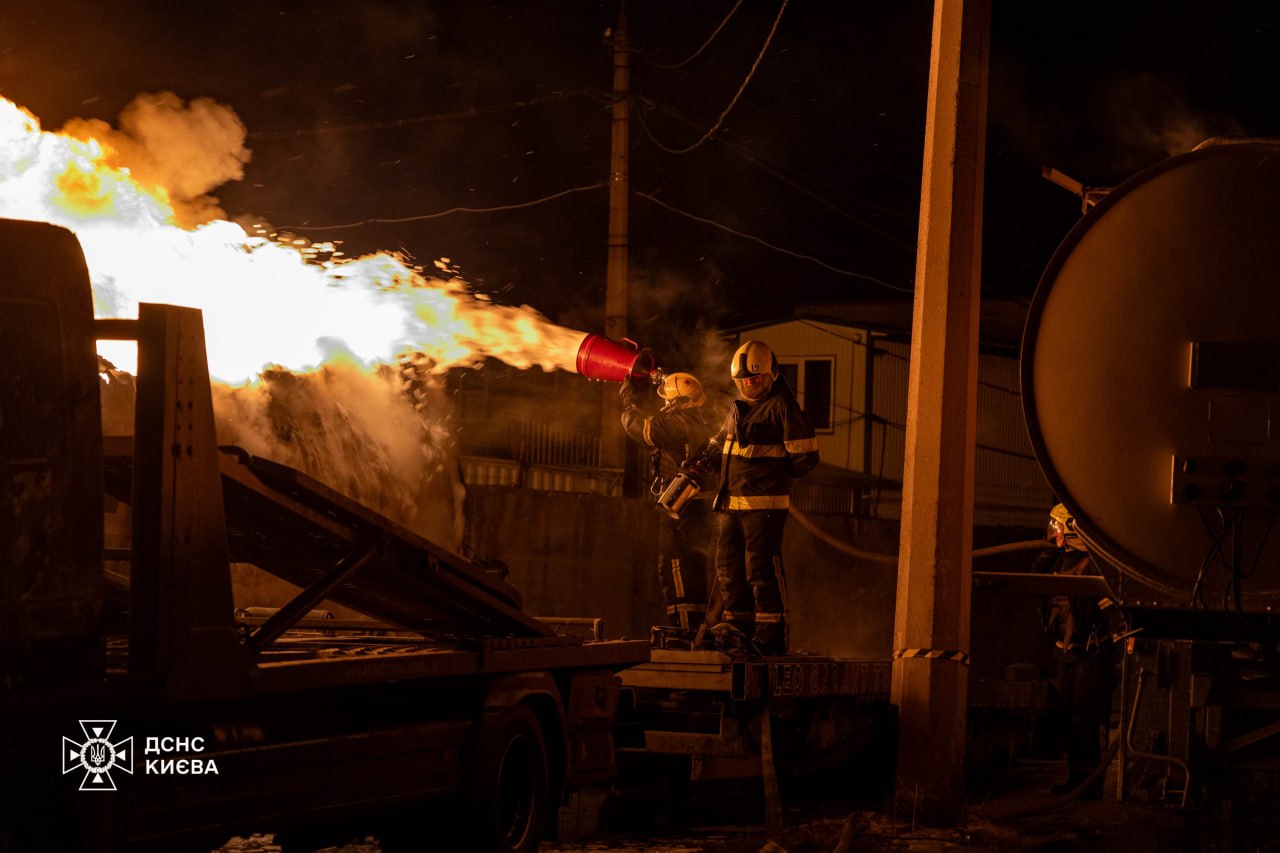


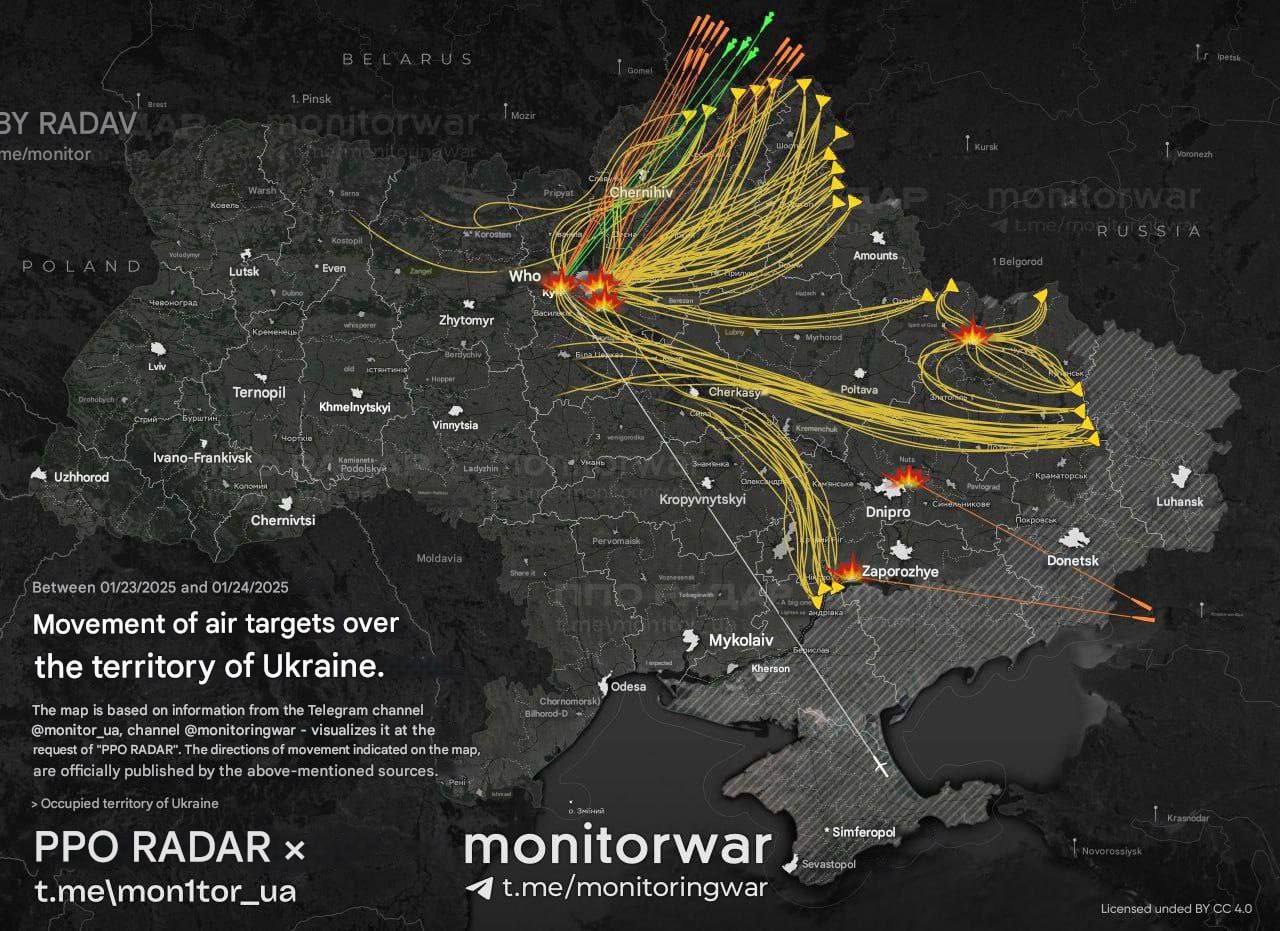
During the night of January 24, Russia launched a large-scale air attack on Ukraine, targeting Kyiv and the Kyiv region, as well as the Sumy, Kharkiv, and Chernihiv regions.
In Kharkiv, the attack damaged a maternity hospital, a dormitory housing internally displaced persons, a medical college, and other residential buildings. Dozens of people were injured, including a child. In Kyiv and the surrounding region, Russia’s primary target was energy infrastructure. One person was killed.
According to the Ukrainian Air Force, radio-technical troops detected 396 air attack weapons. Air defense forces shot down or suppressed 372 targets, including 15 missiles and 357 drones of various types.
Consequences in Cities
Chernihiv is left almost completely without electricity. Electric public transport ceases operations.
In Kharkiv, the primary objective of the attack was terror against civilian residential infrastructure.
The left bank of the capital is experiencing disruptions to heat and water supply. Metro schedules and routes have been altered, leading to substantial transport problems. Approximately 6,000 buildings remain without heating, many of which had already been reconnected twice following previous attacks, according to the city mayor, Vitaliy Klitschko. The electricity situation remains critical: after the previous strike, authorities failed to restore stable schedules, and following the latest attack, instability will persist.
The Russian attack also struck the Roshen confectionery factory in Kyiv, where one person was killed.

Particular Missiles
Russia used X-22 anti-ship missiles in the attack on Kyiv. These missiles carry warheads weighing nearly one ton and have extreme inaccuracy and a large deviation radius. Since the beginning of the full-scale invasion, Russia has launched 412 X-22 missiles at Ukraine, of which the Air Force intercepted only 12. Russia often uses such missiles to destroy high-rise residential buildings. Also, as the Air Forces reported, the enemy launched the 3M22 Zircon, a rarely used type of missile.

Reactions
The attack occurred while talks between Ukrainian, U.S., and Russian representatives were taking place in Abu Dhabi.
Volodymyr Zelenskyy stated that U.S. President Donald Trump had promised Ukraine an unspecified number of Patriot air defense systems, as the situation in the energy sector continues to deteriorate. Ukraine’s president mentioned this in the post about the attack, emphasizing the necessity of strengthening air defense.
“His missiles hit not only our people, but also the negotiation table,” wrote Ukraine’s Foreign Minister Andrii Sybiha on X.
Foreign ministers from several European countries condemned the attack.
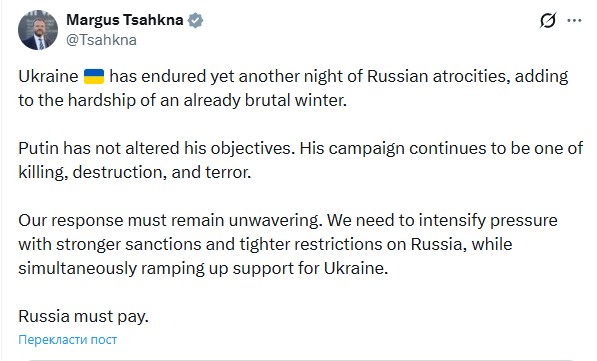
Estonian Foreign Minister Margus Tsahkna denounced Russia’s actions:
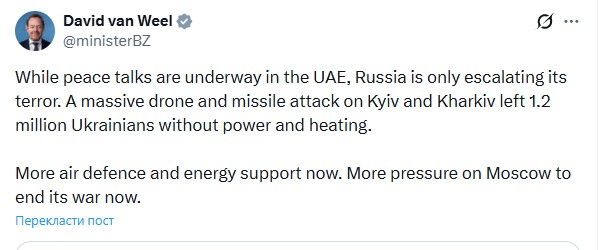
Foreign Minister of the Netherlands David van Weel also emphasized that the strike took place amid ongoing peace discussions:
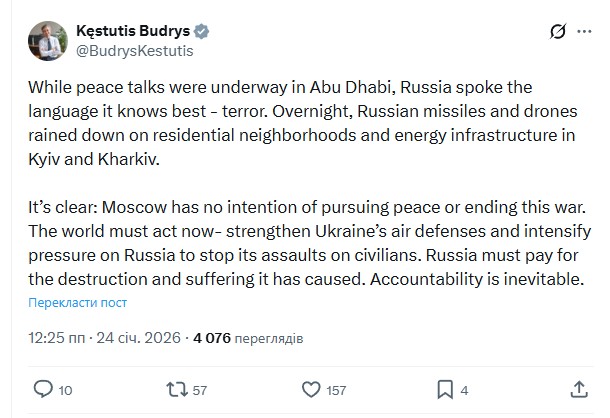
Lithuanian Prime Minister Kęstutis Budrys shared the same message:
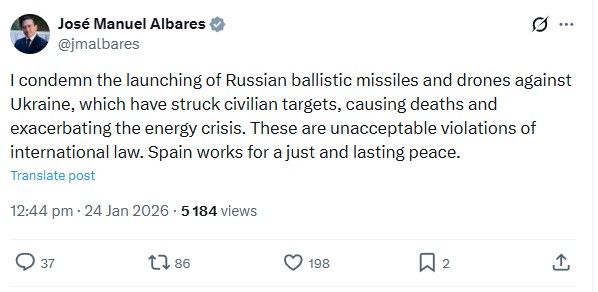
Minister of Foreign Affairs, European Union, and Cooperation of Spain José Manuel Albares expressed his support:
Conclusion
The situation in Ukraine’s energy sector continues to worsen as Russian attacks intensify. At the same time, Moscow persists in choosing deliberately cynical timing for its mass strikes—now directly within the framework of ongoing negotiations.