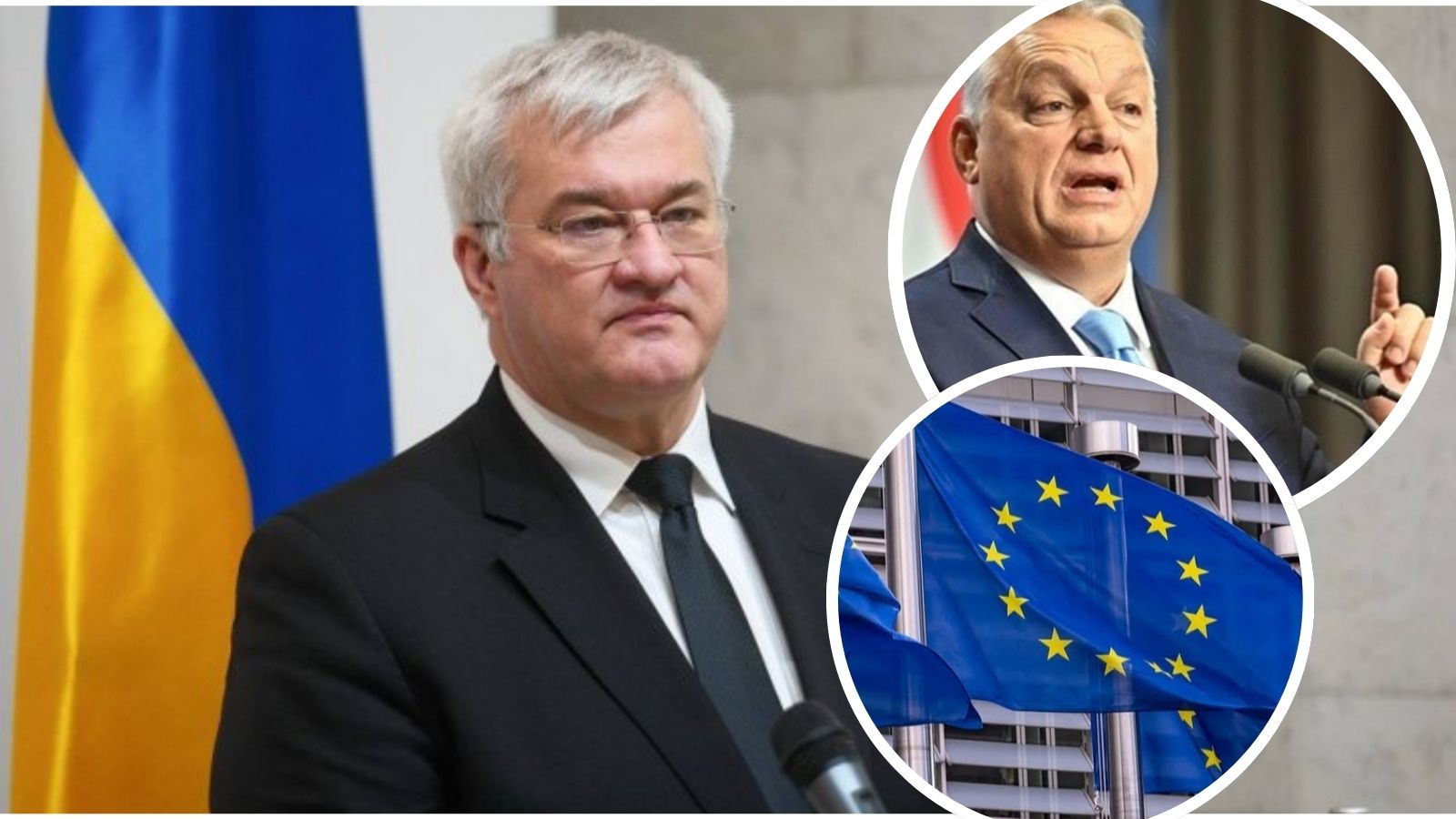


The diplomatic tension between Ukraine and Hungary reached a boiling point following the Davos Economic Forum. According to recent posts on X, Hungarian Prime Minister Viktor Orbán declared that Ukraine would not join the EU for at least 100 years. Ukrainian Foreign Minister Andrii Sybiha responded on the same platform by comparing Orbán’s rhetoric to historical Nazi collaborators. This escalation highlights a deep rift within European unity as Hungary continues to block Kyiv’s integration.
100-Year Veto and the Davos Confrontation
During the forum in Davos, Viktor Orbán explicitly stated his opposition to Ukraine’s EU accession.
“I think that in the next 100 years, there will be no parliament in Hungary that would vote for the Ukrainians to join the European Union,” Orbán emphasized.
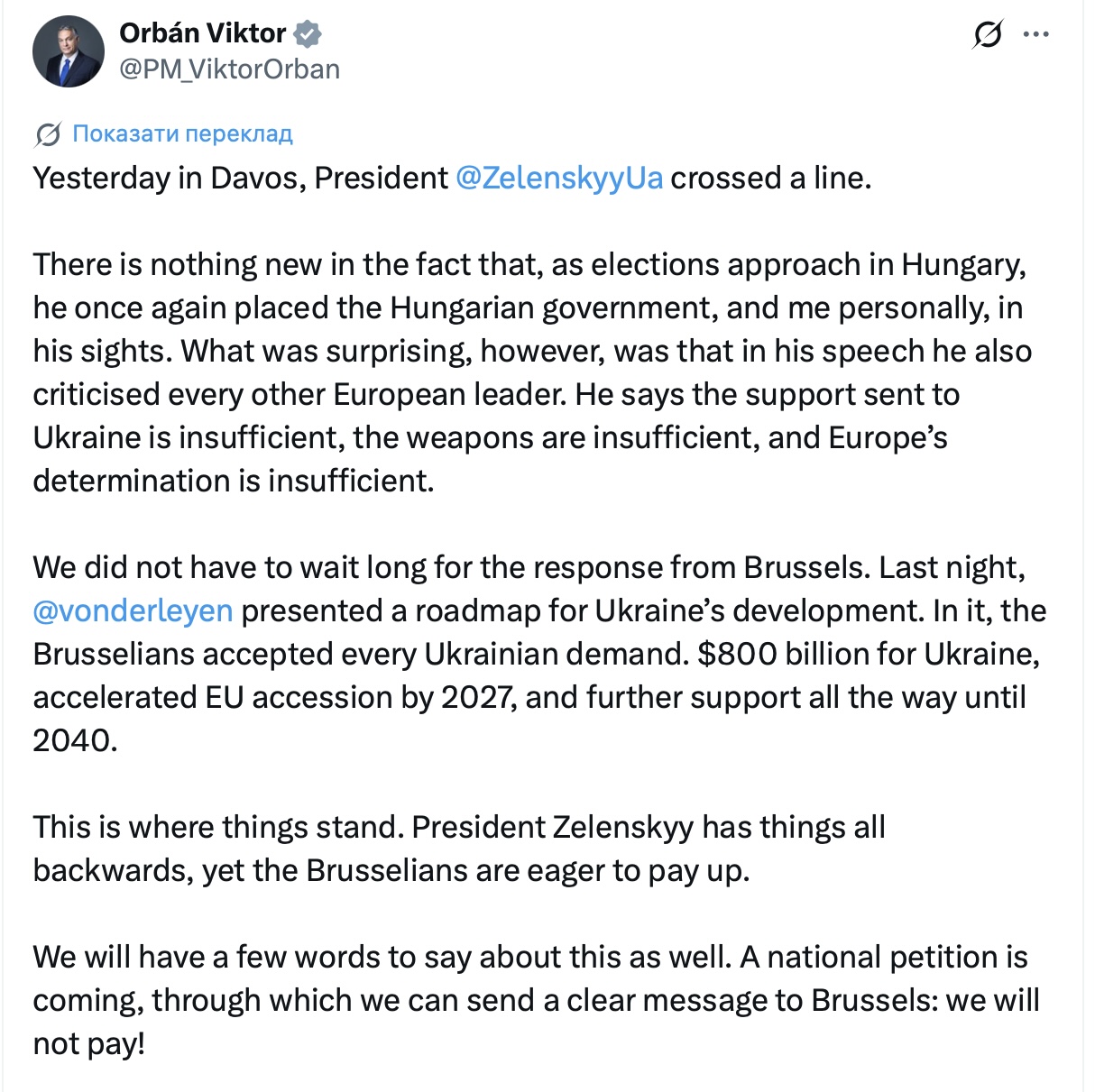
He later intensified his rhetoric on social media, claiming that European leaders are “eager to pay up” for Ukrainian demands. In his post, Orbán accused President Zelenskyy of “crossing a line” and criticized the roadmap presented by Brussels, which includes significant financial support. He claimed that Ukrainian authorities are actively trying to destabilize his government to install a more “loyal” leadership in Budapest.
The public rhetoric sharpened after President Volodymyr Zelenskyy noted that forces attempting to destroy Europe are acting even within the EU. He remarked that anyone who lives on European money while selling out European interests deserves a “smack upside the head” clearly referring to the Hungarian leader. Orbán took great offense at these comments, accusing Ukraine of meddling in Hungary’s internal affairs. He maintains that Budapest must protect its people from being dragged into the full-scale war.
Kyiv’s Sharp Response
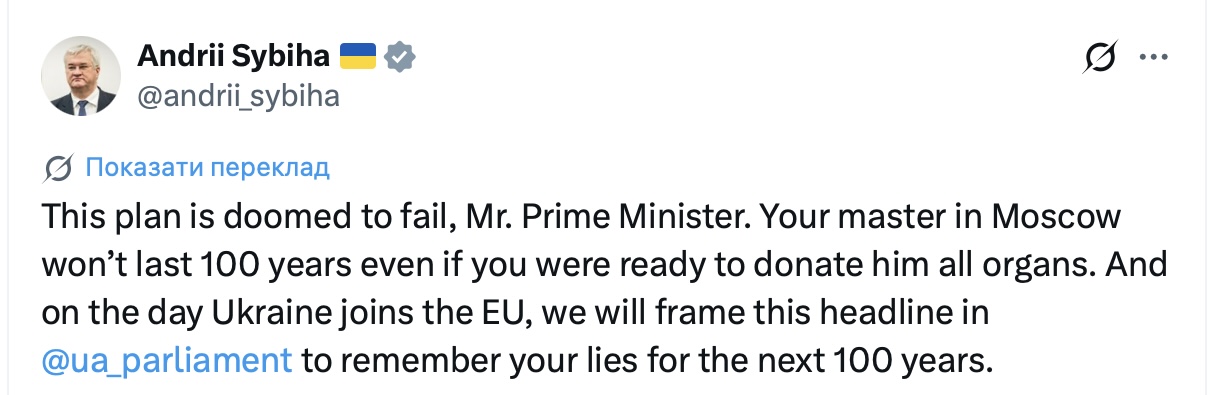
Ukrainian Foreign Minister Andrii Sybiha addressed the Hungarian Prime Minister directly on social media. He stated that by fulfilling Vladyimir Putin’s wishes, Orbán is acting as a “henchman” of Hitler. Specifically, Sybiha compared Orbán’s actions to Ferenc Szálasi, the leader of the Hungarian pro-Nazi regime during World War II. In a blunt post on X, Sybiha told Orbán that his “master in Moscow” would not last 100 years and promised to frame Orbán’s lies in the Ukrainian parliament on the day Ukraine joins the EU. Sybiha argued that the Hungarian people, known for their history of freedom, deserve better leadership than the current administration.
Accusations of Election Interference
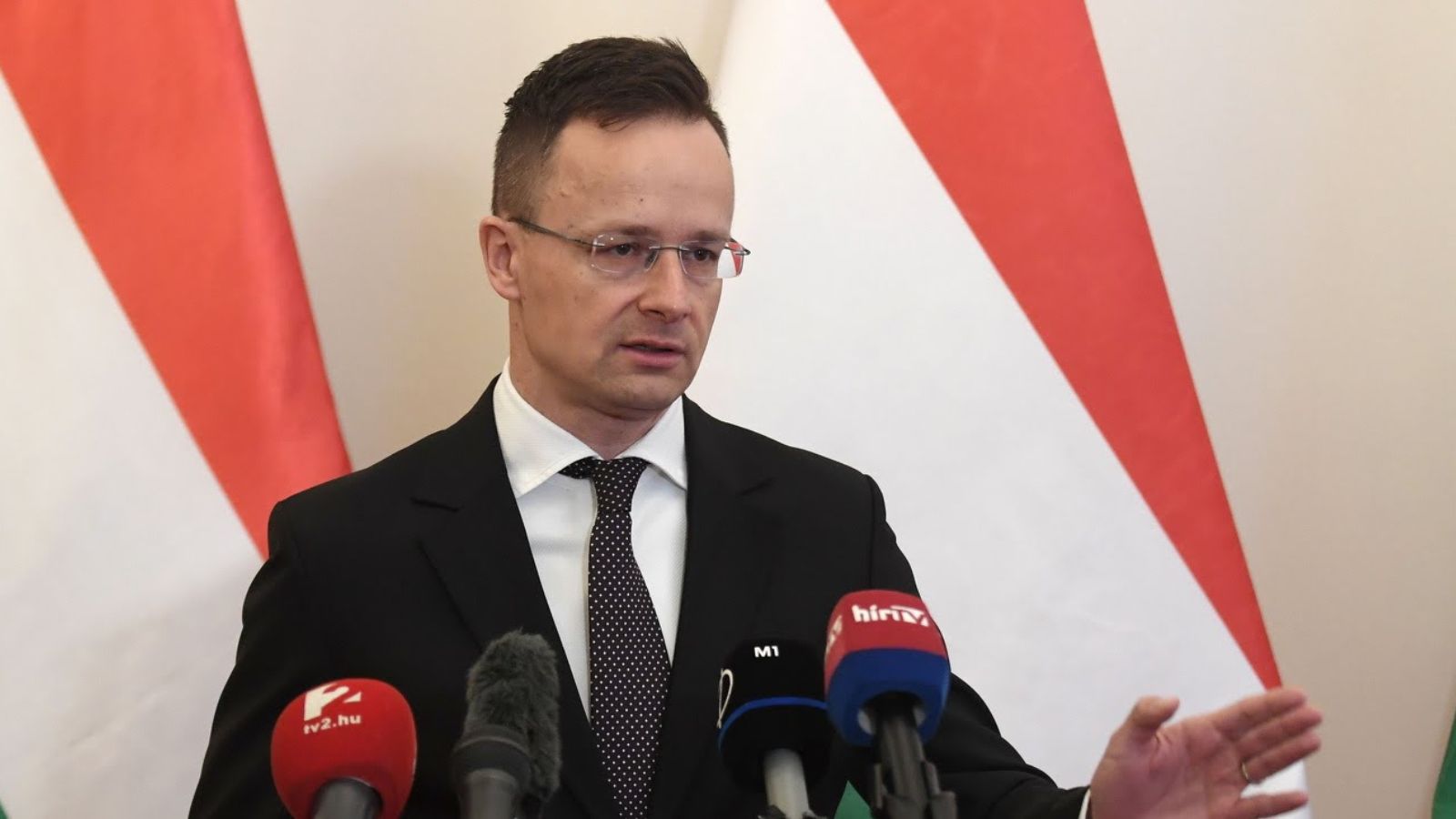
The conflict intensified when Hungarian Foreign Minister Péter Szijjártó accused Ukraine of violating democratic principles. He claimed that Kyiv wants to replace the current Hungarian government with one that obeys Brussels. Péter Szijjártó insisted that Budapest would protect its sovereignty and will not allow external pressure to dictate its foreign policy. In response, Ukrainian diplomats called these accusations baseless, suggesting that Budapest simply lacks valid arguments to justify its constant blocking of Ukrainian initiatives.
Conclusion
This public spat underscores the fragility of European consensus regarding the Russian invasion. While Kyiv pushes for rapid integration and increased military aid, Budapest maintains its role as a primary internal obstacle within the EU. For now, the path to Ukrainian EU membership remains complicated by Hungary’s persistent veto threats and pro-Kremlin rhetoric.