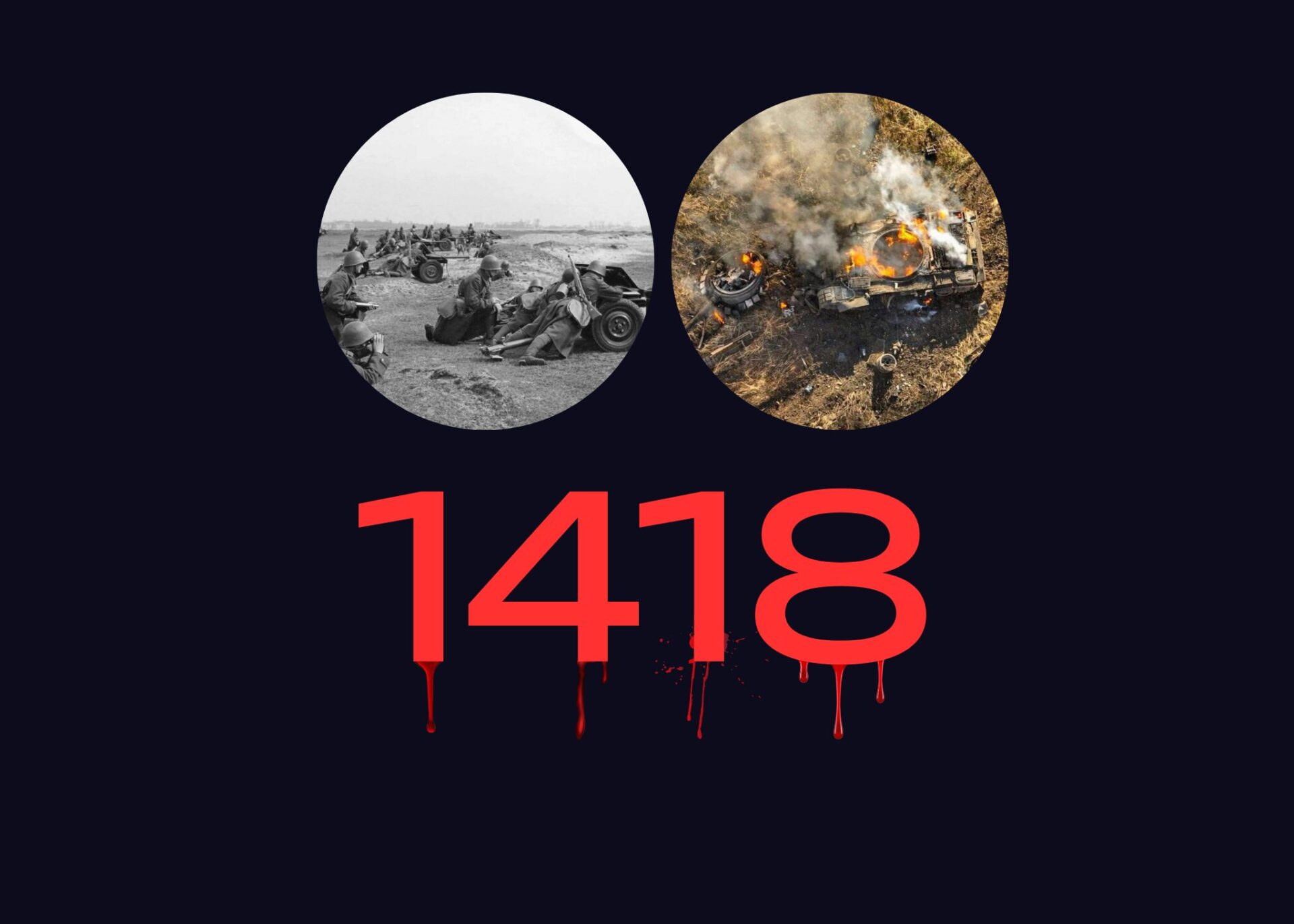


Today marks the 1,418th day of the Russian Federation’s full-scale invasion of Ukraine—the same length as the German–Soviet war of 1941–1945. It is precisely this war that is glorified in Russia as the “Great Patriotic War” and serves as the ideological foundation of Vladimir Putin’s regime.
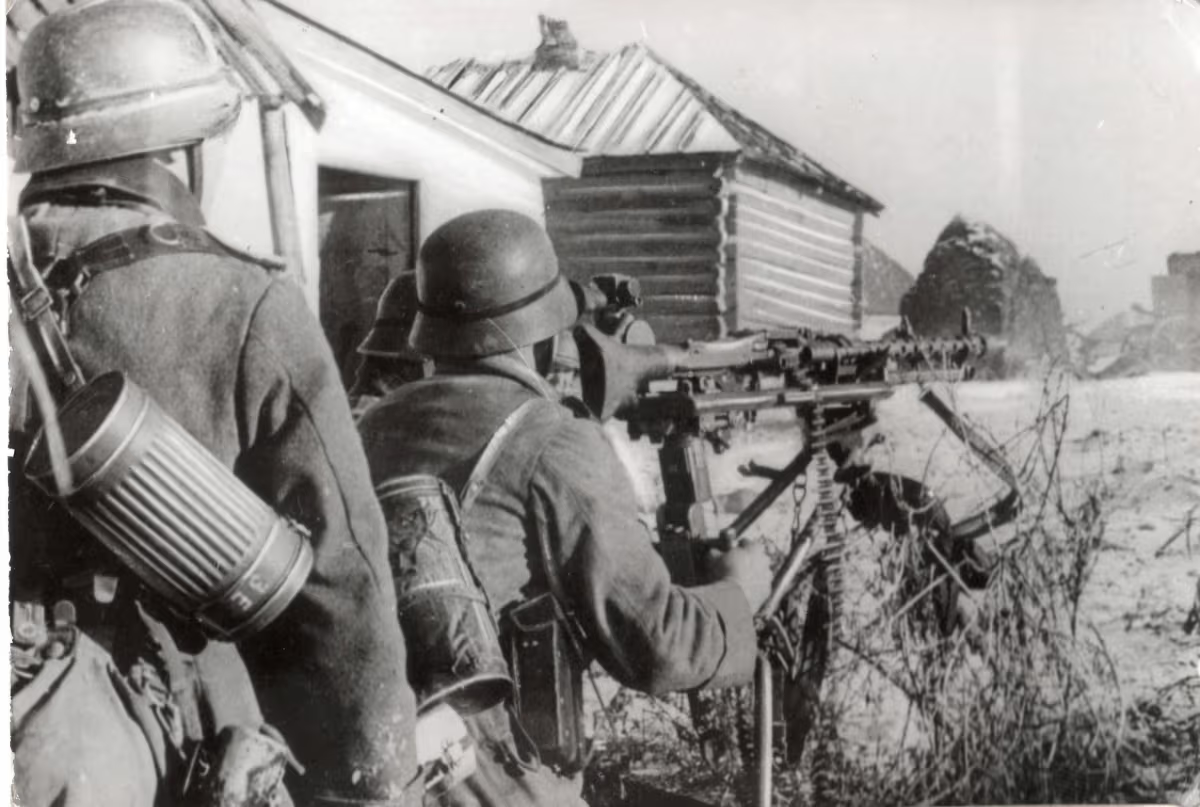
It is important to emphasize that this refers specifically to the German–Soviet phase of World War II, which lasted from June 22, 1941, until the fall of Berlin on May 9, 1945. The Soviet Union entered World War II much earlier—in September 1939—by launching aggression against Poland under the Molotov–Ribbentrop Pact together with Nazi Germany.
A Contrast of Historical Outcomes
This symbolic date highlights the stark contrast between the Kremlin’s historical narratives and the real outcomes of the current war. Despite a significant advantage in resources and years of preparation, Russia has failed to achieve its declared strategic objectives in Ukraine over 1,418 days.
By comparison, the German–Soviet war lasted from June 22, 1941, to May 9, 1945. During that period, the Red Army moved from rapid retreat and the loss of vast territories to the capture of Berlin.
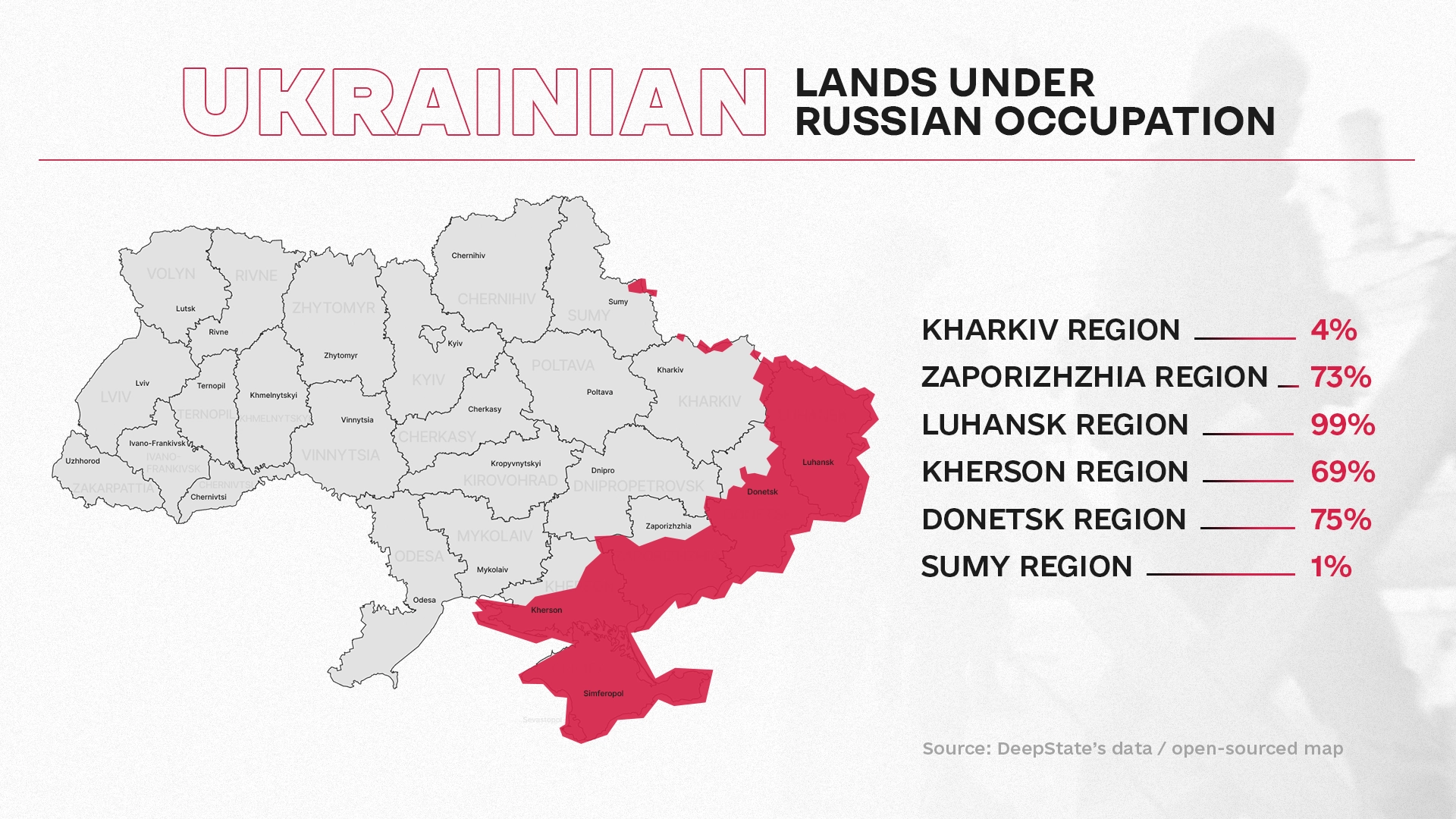
In the modern war against Ukraine, however, the Russian army has instead lost control over large areas seized in the first months of the invasion, including territories in northern Ukraine, the Kharkiv region, and the Kherson region.
The Kremlin’s initial plans for a swift takeover of Ukraine collapsed, turning the conflict into the longest armed confrontation in Europe since World War II.
Ideological Significance for Russia
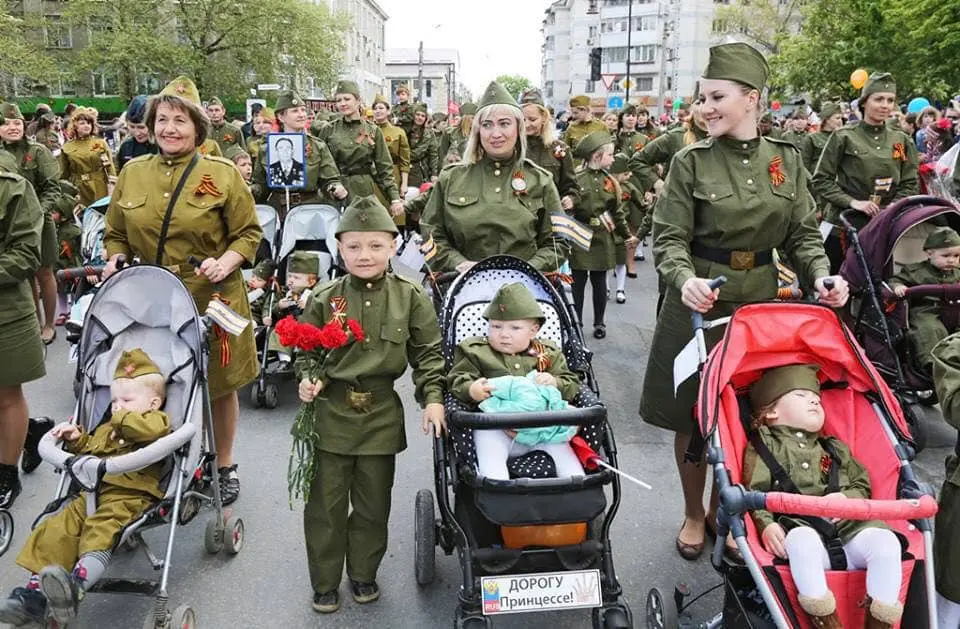
The myth of the “Great Patriotic War” is a central element of Russian state ideology and contemporary Russian identity. The Kremlin actively uses this historical narrative to sacralize war as a mode of national existence, cultivating a cult of “victory” and slogans such as “we can repeat it.”
Russian propaganda artificially draws parallels between Nazism in 1941 and modern Ukraine to justify its aggression. Within Russia’s collective consciousness, the figure of 1,418 days functions as a “measure of heroism.” The fact that today’s war has lasted just as long—or longer—undermines the image of an “invincible army” and calls into question the effectiveness of Putin’s regime, even when compared to the Soviet past.
Ukraine’s Position
Ukraine has officially rejected the Soviet term “Great Patriotic War” since 2015. For Ukraine, World War II began on September 1, 1939, and the current resistance to Russian aggression is defined as a full-scale war of national liberation for independence and territorial integrity.
Official Kyiv describes today’s struggle as a fight for independence, sovereignty, and territorial integrity—a war fundamentally different in nature and meaning from the imperial wars of the twentieth century.
Conclusion
The coincidence between the duration of Russia’s full-scale war against Ukraine and the German–Soviet war carries primarily symbolic and political significance. It exposes a deep contradiction between the mythologized image of the “Great Patriotic War,” upon which modern Russian ideology is built, and the actual results of today’s aggression. Over the same period of time, Russia has failed to replicate even the imagined “historical triumph” invoked by Kremlin propaganda.
For Ukraine, this date carries a different meaning. It underscores the scale and endurance of a national liberation struggle against aggression and marks a definitive break with Soviet and Russian historical narratives. Today’s war is not seen as a repetition of the past, but as a fundamentally new chapter in the fight for statehood—one that will shape the future of Ukrainian sovereignty and European security as a whole.