

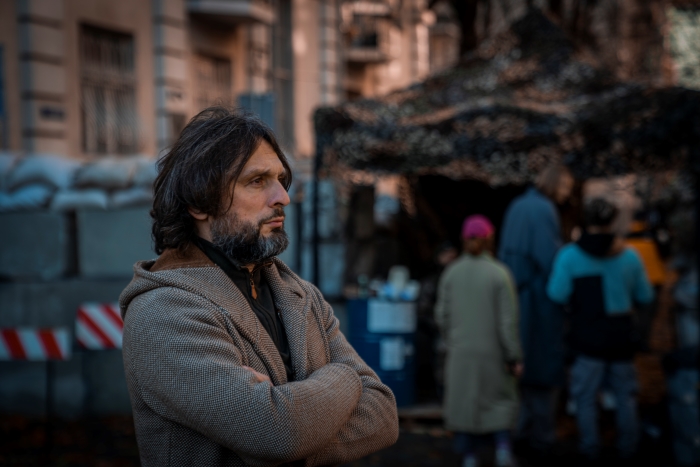
The declaration of Ukraine’s independence in 1991 has spurred a revival of Ukrainian cinema, which, despite obstacles in the industry’s development, is gradually entering the international arena. Oleg Kokhan, a Ukrainian theater and film producer whose works have received awards at international festivals, and founder of the SOTA Cinema Group, shared with The Ukrainian Review insights into the creation of the anthology film about Russia-Ukrainian war, his vision of war films, and his thoughts on representing Ukraine abroad.
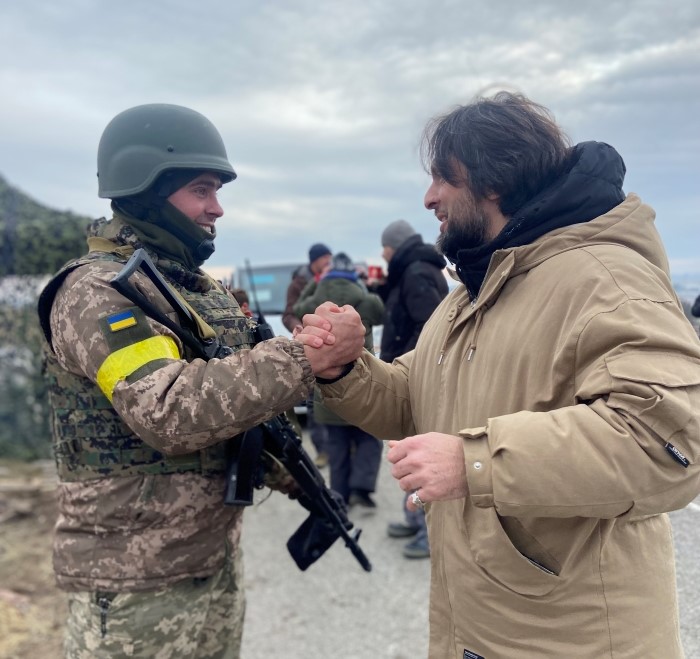
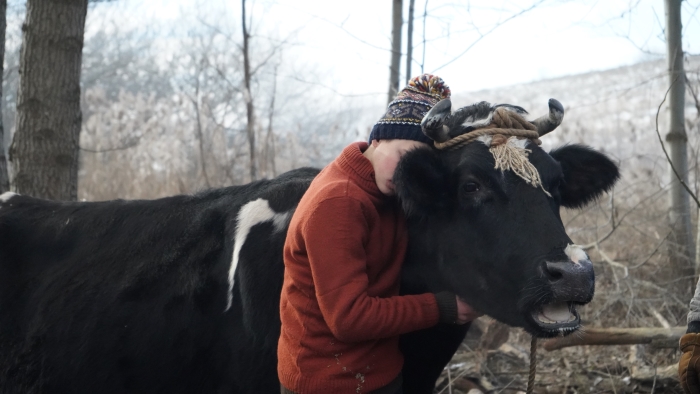
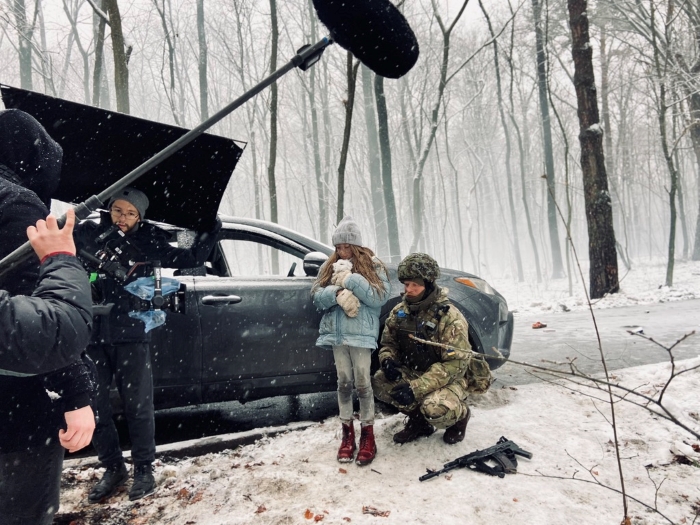
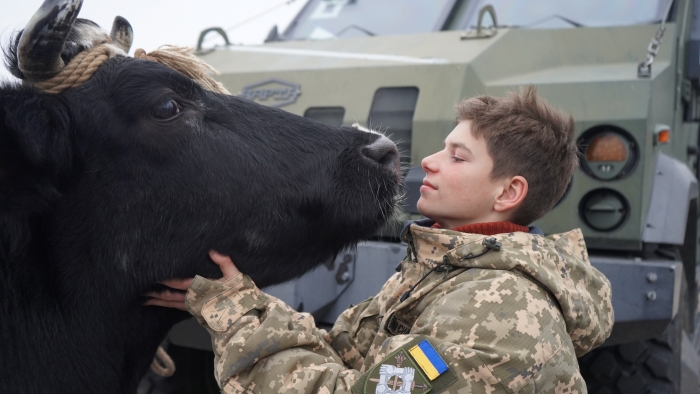
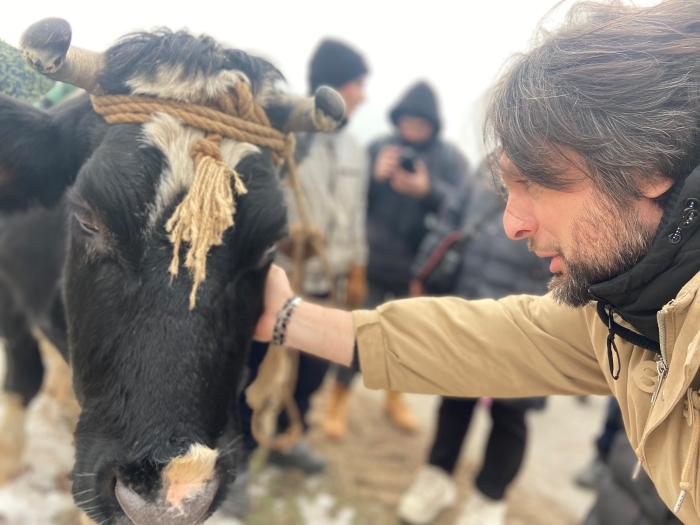
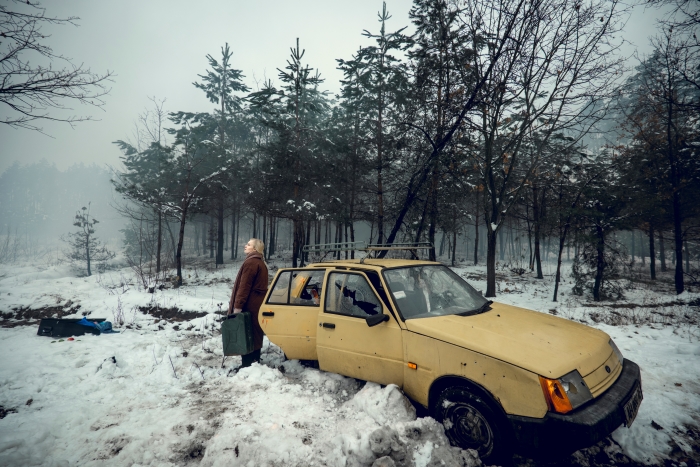
Oleg Kokhan is the author of the idea and producer of the project “Animals of War”, which consists of 7 short stories based on real events, where the main characters are animals affected by Russian armed aggression. Hollywood actor, producer, and director Sean Penn has appeared in one of the episodes.
More about “Animals of War”
Daria Maslienkova (journalist): When will the anthology film “Animals of War” premiere and what effect do you expect it to have? What are your predictions about the involvement of foreign viewers?
Oleg Kokhan: The festival premiere is scheduled for early 2025, and I really hope that the anthology will become a powerful tool of our cultural diplomacy, helping the world understand us. The idea to create it arose in the second or third month of the full-scale war, when Russian troops were pushed back from Kyiv, and the liberated Bucha and Irpin became symbols of their horrific crimes. All those who stayed here felt themselves in the epicenter of the war and finally realized that it was launched to destroy us as a nation. Everyone wanted to be useful, and daily evening duties [patrollings], which had already become a routine for most men, usually turned into brainstorming sessions about what to do next. Among us were military and IT professionals, media representatives, sociologists, and even a writer. A guy who worked in information security told us about research that showed a decline in the world’s interest in the events in Ukraine. Ordinary citizens of Europe and America were growing tired of watching and listening to the war, so they started switching channels as soon as talks about the war in Ukraine began. That’s why we started discussing how we could regain the focus that was so vital to us.
I emphasized the importance of cultural diplomacy, which should tell the world about us as a nation and people who are now at the forefront of protecting European values, at least.
It’s no secret that the audience would rather watch a movie about friendship or victorious love than a movie about the horrors of war, but any story that takes place during a war can be told in such a way that the audience sees not only explosions and death but also humanity, love, and devotion. The point is what to emphasize and what meanings to highlight because war is a challenge that brings out the best and the worst in every nation and every person.
I don’t even remember who came up with the idea of making short films about animals and posting them on YouTube, but it was supported by everyone because everyone loves animals and they cannot defend themselves, although in reality, who saves whom more — do we save them, or they save us? — is still a question. It just seemed that documentary stories were not enough, so we decided that they should be fictional to show a deeper level of reflection on the part of both the authors and the performers. That’s how the idea of a film almanac about animals that became both defenseless victims of this terrible war and symbols of humanity and indomitable Ukrainians was born. And no matter who I told about this idea, people started to share their personal animal stories in response. You see, everyone had their own story, which meant that we found a topic that hit with everyone.
We roughly estimated the budget for the movie, and it was expensive, so we decided to start with a few short stories and then figure it out. Just a few days later, we discussed the idea with our friends who helped with fuel for the military, and they also shared their fears that fatigue from the horrors of the war in Ukraine could lead to us being removed from the media and information platforms, and we would be forgotten, just like in 2014. That’s how we got our first financial partners and started collecting stories about animals and looking for artists who could join us in making the film.
We have to find ways to tell not only about the war, but also about us: our values, talents, life, and history, and do it with great talent and courage, and a desire to impress, to form an image of us as a whole nation and an integral part of the civilized world and capture it forever.
D.M.: Will this anthology film be aimed primarily at an international audience?
O.K.: Yes, definitely. First of all, because the support of the world is very important. They give us weapons with which we can resist the enemy. Decolonization comes before de-occupation — the rest is derivative! And the fact that films are being made in Ukraine, plays are being staged, and international forums and festivals are being held is only because the country is fighting. And we kind of have to explain the concept of Ukraine, so any Ukrainian presence is important. Moreover, we [Ukrainians] are living in a war and feel its consequences and threats every day, while the world does not. So the primary target audience is the Western world.
DM: Quite a few film industry figures, including those with a large audience, support us.
O.K.: Yes, but we have to support this interest with our actions, and not only in the military field. We need to make the world want to know more about those who have attracted their attention. We have to find additional measures to engage them: platforms, creative solutions, etc. They are evaluating not only our military but also our cultural potential, so each project has to be powerful: relevant, talented, and impressive. When we showed Sean Penn the trailer, told him the story, and familiarized him with the script, it was a very long conversation. He even watched “The Tribe” by Myroslav Slaboshpytskyi when he found out who was going to direct it. Before considering the project, his team researched the company’s history, because actors of this level care about their reputation and join only those projects that resonate with them creatively and ideologically.
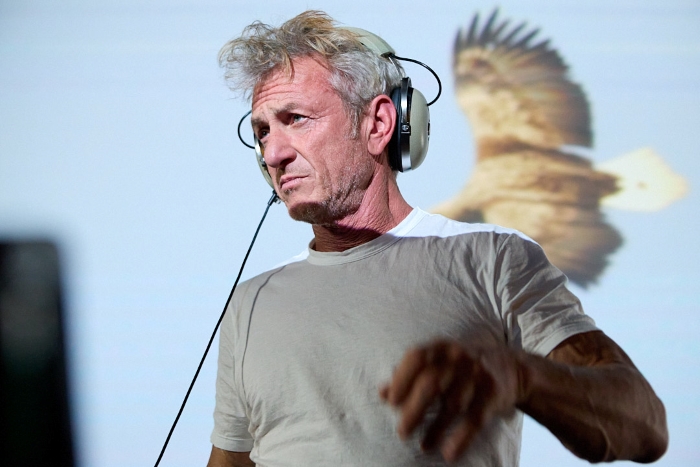
DM: How long did it take to involve Sean Penn, was it difficult?
The idea to involve a star of this magnitude arose from the very beginning, because it adds value and resonance to the future film, and thus expands the audience. But we had to find a suitable role that would be appropriate and organic, because the role of a Ukrainian soldier or even just a civilian Ukrainian would look artificial and speculative, questioning the veracity of the stories we want to tell. We considered other popular actors and even prepared letters to their agents. But Sean Penn was the most integrated into our events, he saw with his own eyes what was happening in Ukraine. He has been supporting our country since the first day of the full-scale invasion, and so he was the first person we approached with a proposal to take part in the movie. Literally, in a day and a half, we found his direct contact and very quickly received a reply with an initiative to meet him at the Cannes Film Festival, where he presented his film. When we, together with Myroslav Slaboshpytskyi and my colleague, producer Oleksii Makukhin, told him about our project at the meeting, Sean was so inspired that the two-hour meeting turned into a three-day non-stop conversation, where we not only discussed the details of our collaboration, but also politics, the global establishment, and environmental crises. It was incredible.
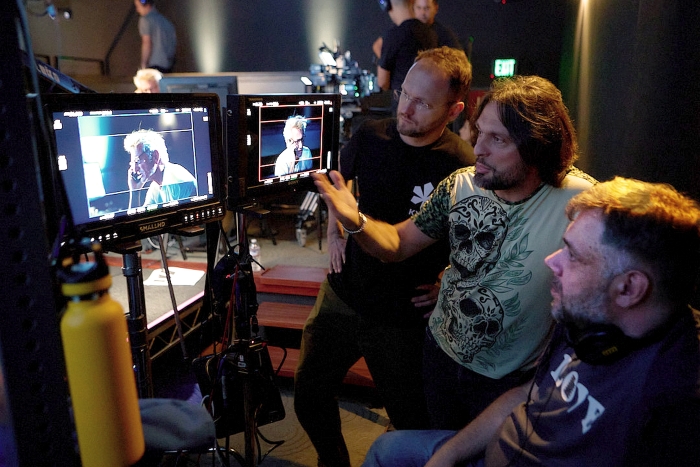
“My Joy”: An Anti-Russian Pamphlet or an Essay on Reality?
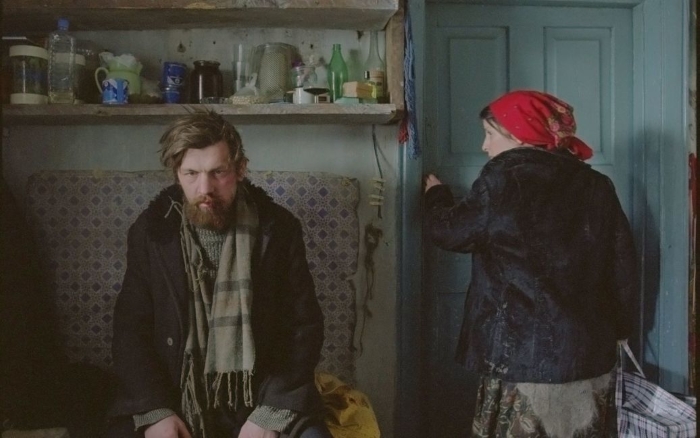
For the first time, a Ukrainian film was presented in the main competition of the Cannes Film Festival in 2010. Created in cooperation with Germany and the Netherlands, “My Joy” shows a Russian province with its inhabitants’ propensity for violence and the real state of everyday life. The film was directed by Sergei Loznitsa and produced by Oleg Kokhan.
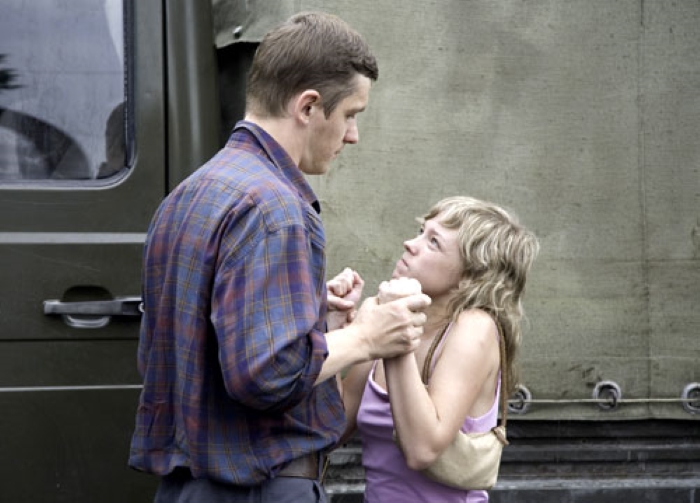
D.M.: Russian critics called “My Joy” an anti-Russian pamphlet, although it was actually a sketch of reality. What methods of covering the enemy can help change the image of him? And is this approach still relevant today, more than 10 years later?
O.K.: Unfortunately, this picture turned out to be prophetic. And it is not for nothing that our neighbors reacted to this movie in such a way. We were pushed head-to-head with Mikhalkov’s [Russian actor, director, screenwriter, and producer] propaganda film in the competition of the main world film festival for a reason: the world felt this conflict of worldview because cinema is a very sensitive marker of pain points. There was a heroic film about so-called “great victories” [of Russia] and a true story that told very frankly about the darkness, reigning on Russian territory now. Of course, this angered the entire Russian artistic and political elite and the press. Because the ending of “My Joy” shows very clearly where this path leads.
Ignoring them is not a strategy: we need to show them today, without hiding behind Chekhov and Pushkin, Dostoevsky and Tolstoy. Because ignorance and vileness will sprout through poems and novels.
In this sense, we fulfilled our mission — spilled the truth — even when Ukraine was ruled by the pro-Russian government of Yanukovych, and we had problems because despite the lack of state funding, we made this movie, and the world reacted to it. It was incredible courage against the backdrop of rapprochement with Russia, the time of the Kharkiv agreements, and Ukraine’s surrender. The result is a movie that exposes the truth, which tastes bitter.
D.M: In your opinion, what image of Ukrainians should Ukrainian directors and everyone involved in the creation of film products now broadcast?
O.K.: It is worth noting that we are now in a hot phase of war and anti-colonial resistance, which is usually out of the world’s attention because common borders and history have created a similar, if not common, mental image of us and our enemies for the world. The entire post-Soviet space has been moderated through the Russian prism for many years, and we should not think that any director or producer will change the situation and the image of Ukraine for the world. One thing is clear: it is very important now to take the initiative and emphasize Ukrainian specifics, to regain the right to speak on our own behalf! And this process should involve not only modern cinema or events but all spheres of culture and the centuries-old history of Ukraine.
This should be an initiative not only from theater or film directors and other artists but also from state policy and the awareness of the entire community. This should involve historians, journalists, futurists, and philosophers from all over the country. We need to construct an image of a Ukrainian that differs from a Russian, what value models he has, and why he became a European long ago. We need to honestly admit that apart from Chornobyl and now the war, the world knows little about us as a nation.
First, frankly speaking, we have made little effort to do so, while our enemies have been working hard to integrate their own narratives for decades, not forgetting to devalue even attempts to define the place of Ukrainian culture on the world map.
Now there are information demonstrations, but they are about the aggression being perpetrated on us. Instead, we need to move to the next stage of storytelling so that the Western world understands that we are about values. Now people are demonstrating against the war, but they should support us as an integral part of Europe. We have to talk about our roots, the present, and, more importantly, the future, and how do we see ourselves in this world. It would be naïve to assume that a movie or a hero will provide the answer.
We know more about French kings, musketeers, American cowboys, or English lords than we do about our Cossacks, hetmans, and princes.
Today, thanks to an incredible desire for self-identification, there is a large demand within Ukraine, but still a small one in the global context. The full-scale war that began in 2022 is the final stage of the escalation of our confrontation with the fierce enemies who have almost convinced the whole world that we are brothers.
The preparations for this have been going on for decades, and first of all, they were informational. Russia has been imposing imperial narratives about “younger brothers” on the world for so long that there are still those who do not understand why we cannot get along, because we are of the same blood. Even we ourselves finally and en masse saw the light only in 2022, when we finally realized the threat of irrevocable destruction.
Speaking not just to ordinary foreigners, but to intellectuals, I know for sure that they do not understand why we did not surrender, and what is the reason for the quarrel of the “one nation” that this is not a current war, but that it has been going on for almost a thousand years. And this is not the first, second, or tenth attempt to destroy Ukrainians as a nation. They know little about the Holodomors, the Executed Renaissance, the Sixtiers, and the desire to wipe us off the face of the earth. And the fact that, despite everything, Ukrainian culture and language have survived, and the nation is fighting so courageously for its right to the future, proves that the victory of our soldiers is not the result of today’s challenges, but a manifestation of the national character, centuries-old traditions and values of Ukrainians.
In addition to the state order, there must be a personal desire of each of us to broadcast these important meanings, to share them on information platforms, and simply in conversations with friends. In order to articulate our values to others, we have to define them for ourselves and stitch them into our DNA forever.
D.M.: What markers of Ukrainian identity would you personally propose to include in this strategy?
O.K.: Of course, these are the basic democratic European values of freedom, respect for human dignity, and human rights. But it is very important that we not only share them but defend every day at the cost of the lives of the best representatives of the Ukrainian nation.
Ukraine in the Movieland
D.M.: What do you see nowadays in terms of references to Ukrainians in world cinema? How has our image changed?
O.K.: I think we shouldn’t delude ourselves that it has changed somehow. There is a small window of attention to Ukrainians and the events that are happening. The world now knows that we are brave, but this is not enough to understand us. They know much more about Dostoevsky and Pushkin than they do about Skovoroda and Kotliarevsky. To change this balance of power, we need a massive cultural attack.
The funds allocated for cultural diplomacy, for example, by France or Germany, not to mention the United States, are not commensurate with Ukrainian state support for culture even by 2022, let alone now. Our enemy, Russia, triples its funding for cinema every year, while we cut the budget almost by 70% next year.
Without winning the minds and hearts of the Western world and creating the same image, we will lose this war and postpone the next one.
D.M.: How can Ukrainians, particularly diaspora ones, promote Ukrainian films and theater? Do we have the potential for a larger-scale cultural impact, such as that made by Oleksandr Dovzhenko in the 20th century?
O.K.: I believe that there is a potential, and it is not just hypothetical. For example, in theater and cinema, despite the fact that the state did not have a strategic program for the formation of the Ukrainian film market, thanks to the windows when funding was allocated in recent years, Ukrainian films appeared at almost every A-class [most prestigious] festival. From Karlovy Vary, Rotterdam to Berlin or Venice, we were represented. A whole generation of young filmmakers has formed, and we can easily name at least 5-10 directors who are already known to the world.
There is a renaissance of Ukrainian theater in Kyiv as well. I think that in Lviv, and other cities it is impossible to get tickets for current performances several months in advance.
Diasporas should not just be consumers of culture, but carriers who share and actively disseminate this information in any form. From simple preferences, recommendations, reposts, and show organizing to invitations to contribute to funding.
D.M: How can further public discussion of these films about Ukraine help? And, on the flip side, what are the risks of this discussion?
O.K.: The global market is very competitive. There are people who want to see us, who invite us through screenings, but we need to expand our territory of influence: to involve the press and opinion leaders, as well as to help to promote Ukrainian art. I don’t see any risks here, because it’s a discussion. Every public discourse about a film, performance, exhibition, or book is an information occasion. For example, we have already screened two short stories of “Animals of War” at the UN World Environment Conference in the format of private screenings, which caused resonance. We also showed the trailer and the short story at the National Security and Defense Council. The screening was followed by a discussion at a women’s conference in The Hague, as well as at a Security Forum.
DM: Should there be different products for presentation at the level of so-called decision-makers and the mass audience?
O.K.: It should be an uninterrupted flow of different content, from small forms to large exhibitions. We have a thousand-year history, which means something and someone to tell about.
D.M.: In your opinion, when will the international community decide to create a film about the Russian-Ukrainian war in one format or another?
O.K.: It’s hard to say, but our task is to create world-class content about today, yesterday, and tomorrow. We have already allowed our neighbors to tell the world about us, and we must not do it a second time. Because there will be no third chance. We can’t make movies as much as the U.S., France or Germany. But we have to be initiators and find models for implementing actual projects. We don’t need to formulate questions and generalize, we need to have a specific request.
We can say that the first achievement, “20 Days in Mariupol”, is an example of quality cooperation between Ukraine and the Western world.
Our film “Animals of War” continues this tradition. We are currently also working on the film “Angel with a Gramophone”, which takes place in Ukraine in 1932 at the height of the Holodomor. I know that my colleagues are also working on films that can influence the world.
Every day we hear news about the escalation of wars and conflicts, and environmental disasters. Israel, Syria, Georgia… The world is torn by fears and threats. Therefore, where politicians are powerless, art can win attention, because the terrible truth can also be shown in a way that not only hits the head but also touches the heart.
D.M.: What about your communication with your Western colleagues, do they have any ideas? I mean, what kind of discussion do you see among them?
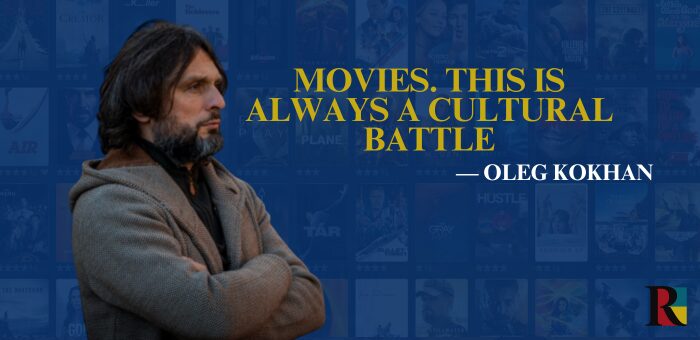
O.K.: This is always a cultural battle. Of course, everyone wants to make money on positive stories. Only some visionaries, very advanced, conscious people, support the topic of war. We just keep breaking through the walls of fatigue and detachment with our “Animals of War”. The Involvement of Sean Penn and Imagine Dragons, whose music became its soundtrack, is a very big step in this context. They play an incredible role as personalities, artists, and ambassadors of Ukraine.
We need to increase this space of influence, if we are talking about theater tours, and screenings of Ukrainian films, these should be big goals. Now we are facing a confrontation between the past and the future. Values, freedoms, staying in the world that will move on, or perishing in that totalitarian past, in darkness. I believe that this is only the beginning of changes. All civilized countries had no other way. Let us recall the path of France, Germany, and the USA. It was also through battles and confrontations.
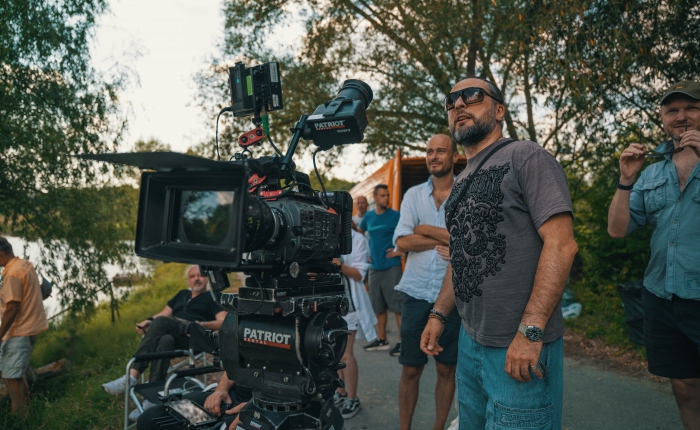
The territory of culture is the first priority. And the question of whether there is a place for it in this war can no longer arise. After all, this war is a struggle for culture: the language we speak, the life decisions we make, and the stories we broadcast on screens and theaters. And with every movie, book, or performance we create now, we tell the world what we are fighting for. We may be outgunned, but we are invincible in spirit, and spirit is nourished by faith, culture, and inspiring stories.
Daria Maslenkova