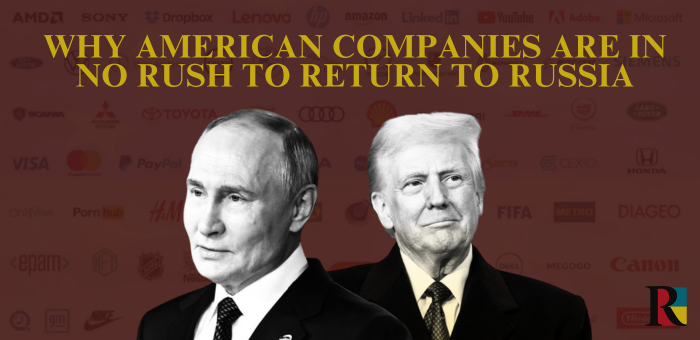


Jeffrey Sonnenfeld, Senior Associate Dean for Leadership Studies and Professor at the Yale School of Management, and his colleague Steven Tian for YALE INSIGHTS on why American companies are reluctant to return to Russia:
On inauguration day, President Trump welcomed Ukrainian President Volodymyr Zelenskyy’s pursuit of peace and pointed out Russian leader Vladimir Putin’s unwillingness to end his aggression against this peaceful country. We praised Trump for seeing through Putin’s diplomatic propaganda and economic maneuvers. However, from peace negotiations to economic cooperation, Trump seems once again to trust this devious partner. Now, as Putin temptingly offers American companies business opportunities in Russia as part of negotiations with the US on Ukraine, Trump appears eager to strike a deal.
Business leaders understand what Trump fails to see: Putin’s vague offer is far less attractive than it may seem at first glance.
American companies are not rushing back.
The Russian economy is collapsing before our eyes: infrastructure is deteriorating, and supply chain disruptions are becoming insurmountable. It is a dangerous, unreliable, and risky place to do business. Executives’ disdain for Putin’s Russia is based on their confidence that Putin is an unpredictable dictator who could nationalize their enterprises at any moment. Just this weekend, he openly admitted plans to intensify expropriation of private businesses, including seizing assets of many Western companies.

Even before the war, doing business in Russia was unprofitable for American firms, and only a few foreign companies made enough there to justify the risks. “Many have lost enormous sums in Russia. I think they will be extremely reluctant to return. Sometimes peace prevails there, but it is rare,” oil magnate and Trump supporter Harold Hamm recently told the Financial Times.
Indeed, Russia needs American companies far more than American companies need Russia. At their peak, most American firms derived only about 1% of their global revenues from Russia, and after most of them left, this figure has dropped to near zero. Exiting Russia did not harm American businesses: on the contrary, shareholders rewarded companies for this move, welcoming relief from operational, regulatory, and reputational risks. Stocks of such companies soared immediately after exiting Russia, setting new record highs in the following weeks and months.
In contrast, the Russian economy is in freefall. Food inflation has reached 25%, loan interest rates are an exorbitant 25%, and lending has nearly stopped, making life unbearable and unaffordable for ordinary Russians. All economic sectors have shrunk by 60-95%. Putin faces a massive budget deficit, and no one is buying his debt-not even China. Millions of skilled technology professionals have fled the country, and oligarchs have moved $300 billion in assets abroad. Foreign direct investment in Russia has plummeted from $100 billion a year to zero.
To sustain his war machine, Putin is burning through resources, destroying manufacturing sectors, and relying on unsustainable record deficits.
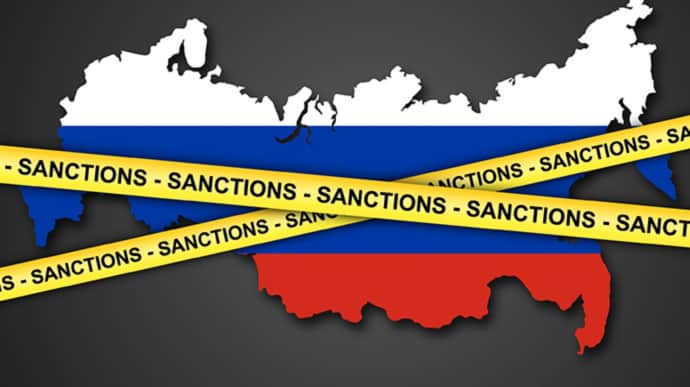
His bluff has been called: money is running out, and the value of Russia’s sovereign fund and rainy-day reserves has halved over the past two years. At this rate, Russia will run out of funds by the end of the year-if not sooner.
Russia has learned the hard way that consumers can more easily find a new reliable supplier than a supplier can find new markets. Global supply chains have found alternatives for every Russian export product. Russia has one of the highest break-even thresholds among oil-producing nations-$44 per barrel, almost twice that of Saudi Arabia and other Middle Eastern producers. This means that Russia is exporting oil nearly at cost, considering logistics expenses.
As for natural gas exports, Putin lacks pipelines to Asia, and much of the gas is simply wasted. Meanwhile, the EU is readily accepting affordable liquefied natural gas (LNG) from the US, Norway, Algeria, and 22 other economically stable sources, which is then converted into gas for all of Europe through deep-water ports with terminals and processing plants in Germany, Poland, Lithuania, Spain, and Portugal. Russia desperately needs American companies back because, without American technology and expertise, it cannot extract Arctic oil, meaning its production will decline in the coming years.
American executives understand: doing business with Vladimir Putin is not only morally dubious but also unprofitable. The US President should listen to them: seize the opportunity and allow the Russian economy to collapse.
Independent experts of The Ukrainian Review