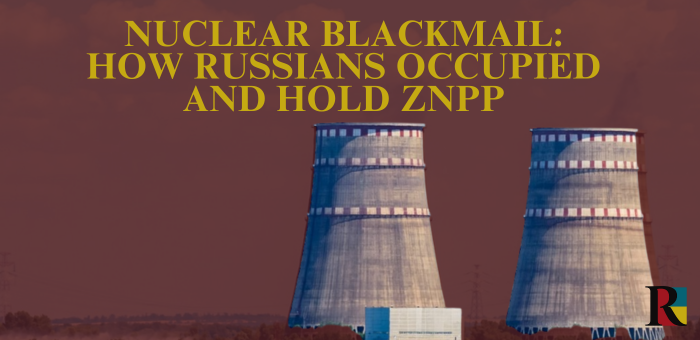


Zaporizhzhia Nuclear Power Plant is one of the largest nuclear power facilities not only in Ukraine but also in Europe. Before the full-scale invasion, the plant generated about 20% of Ukraine’s electricity.
However, with the outbreak of a full-scale war, ZNPP and its satellite city of Enerhodar came under Russian occupation. This not only made it impossible for the power plant to operate smoothly, but also posed a direct threat to global nuclear and radiation safety.
We talked to the head of Energoatom, Petro Kotin, and the spokesperson for the Zaporizhzhia Regional State Administration, Oleksandr Kovalenko, and we tell why Zaporizhzhia NPP is important for Russia and how its occupation created the preconditions for nuclear terrorism.
Zaporizhzhia NPP – from creation to occupation
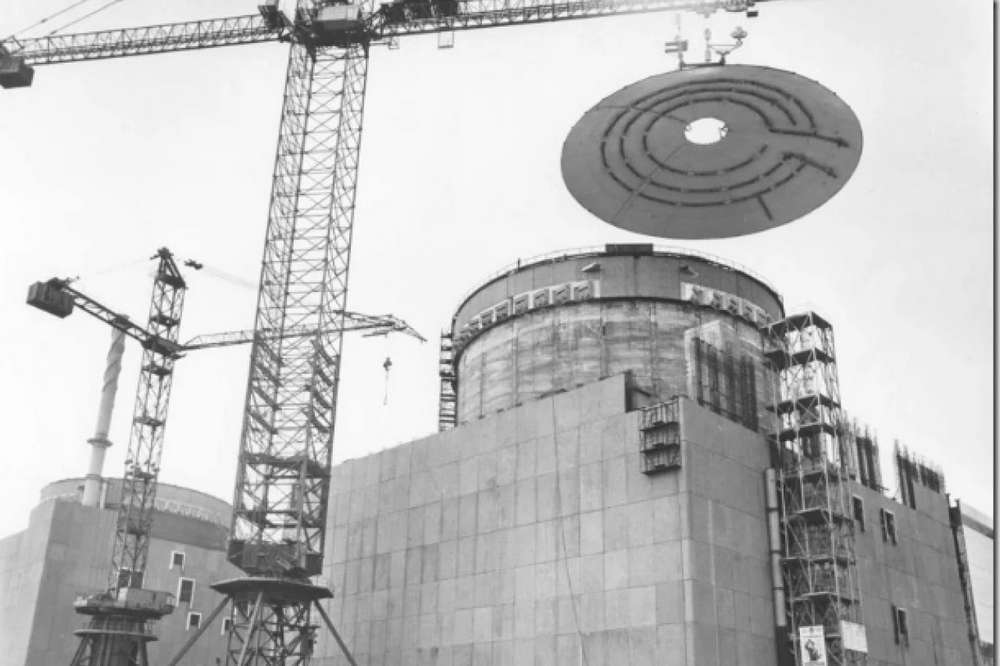
The construction of ZNPP started in 1981, and the first power unit was launched on December 10, 1984.
By 1995, five more power units had been built, making ZNPP the largest energy facility in Ukraine, generating approximately 37.7 billion kilowatt-hours of electricity annually.
In addition to the six VVER-1000 power units, the plant had other infrastructure:
A 750-kilovolt high-voltage distribution substation with power line networks, a radioactive waste treatment facility, and 2 nitrogen and oxygen stations. These are large-scale hydraulic structures: a cooling pond, canals, cooling towers, splash pools.
Zaporizhzhya NPP also had the largest number of employees among all nuclear power plants in Ukraine, with a staff of about 11,000. ZNPP had a Center for Special Training of Maintenance Personnel, which trained not only employees of Ukrainian NPPs but also specialists from other countries. The plant is equipped with three full-scale simulators to train operating personnel.
In addition, Energoatom planned to gradually abandon the use of Russian fuel at the power plant.
At the end of 2021, an important stage in the development of Zaporizhzhia NPP was completed on the way to the full transition of four thousandths of power units to nuclear fuel from an alternative supplier, the American company Westinghouse. Also, in January 2021, ZNPP reached its full design capacity of 6000 megawatts for the first time due to the completion of the repair of the fifth unit and the commissioning of a new power line, – Energoatom says.
How the Russians occupied ZNPP
On February 28, a column of military equipment was already approaching Enerhodar. At that time, two power units were operating at ZNPP, and neither food nor fuel was delivered there.
Residents of the city held rallies and did not allow the convoy to pass through the checkpoints. The Russians did not let people leave the city, and more and more equipment and personnel were gathering near the city every day. The citizens of Enerhodar did not allow the military to enter the city.
However, on March 3, the occupiers did start shooting at the protesters and broke through to Enerhodar. The next day, there were battles on the territory of the ZNPP. Ukrainian National Guardsmen were in the training center, trying to repel the enemy.
Eventually, the training center at the ZNPP burned down, and the Russians took the National Guardsmen prisoner. Some of the soldiers were returned to the city and later forced to work on public works.
On March 4, 2022, the territory of ZNPP and the satellite city of Enerhodar began to be fully controlled by the Russians.
A nuclear facility on the brink of disaster
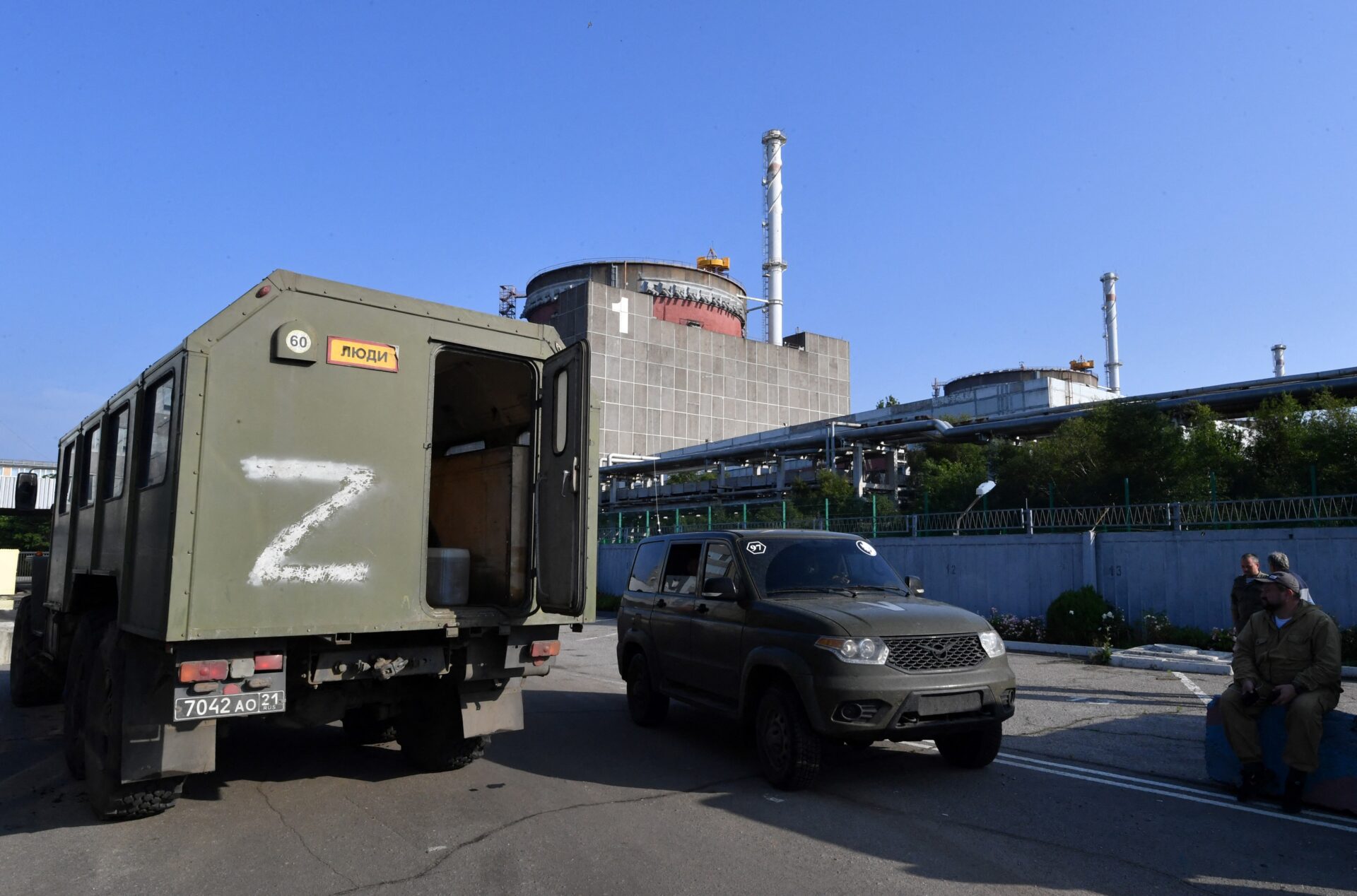
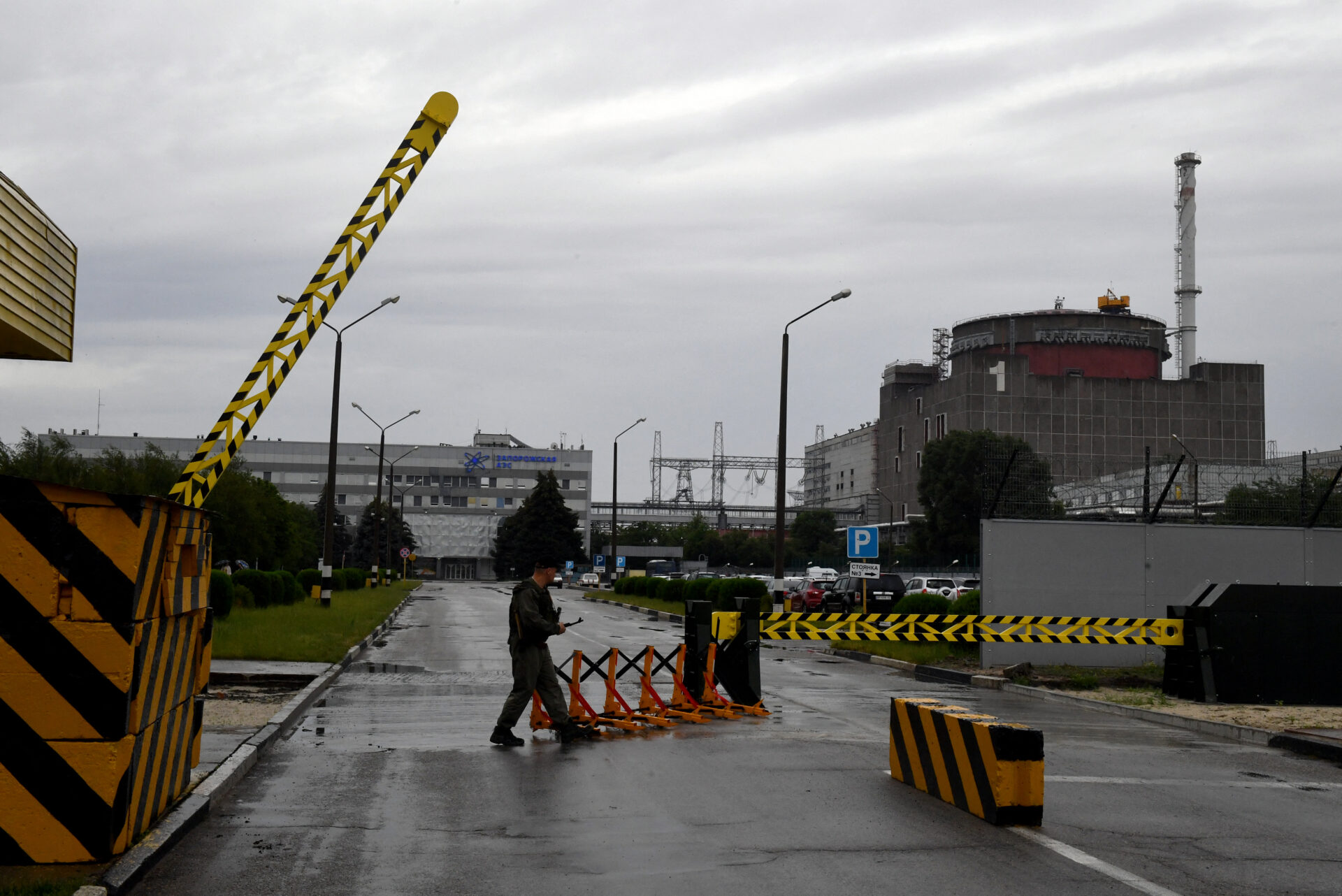
Since the seizure, the territory of ZNPP has been used as a garrison, where about 500 Russian soldiers, heavy equipment and ammunition are stationed.
The plant has been turned into a military base with at least five hundred armed soldiers, equipment and ammunition. The territory and perimeter around ZNPP are mined, – says Energoatom.
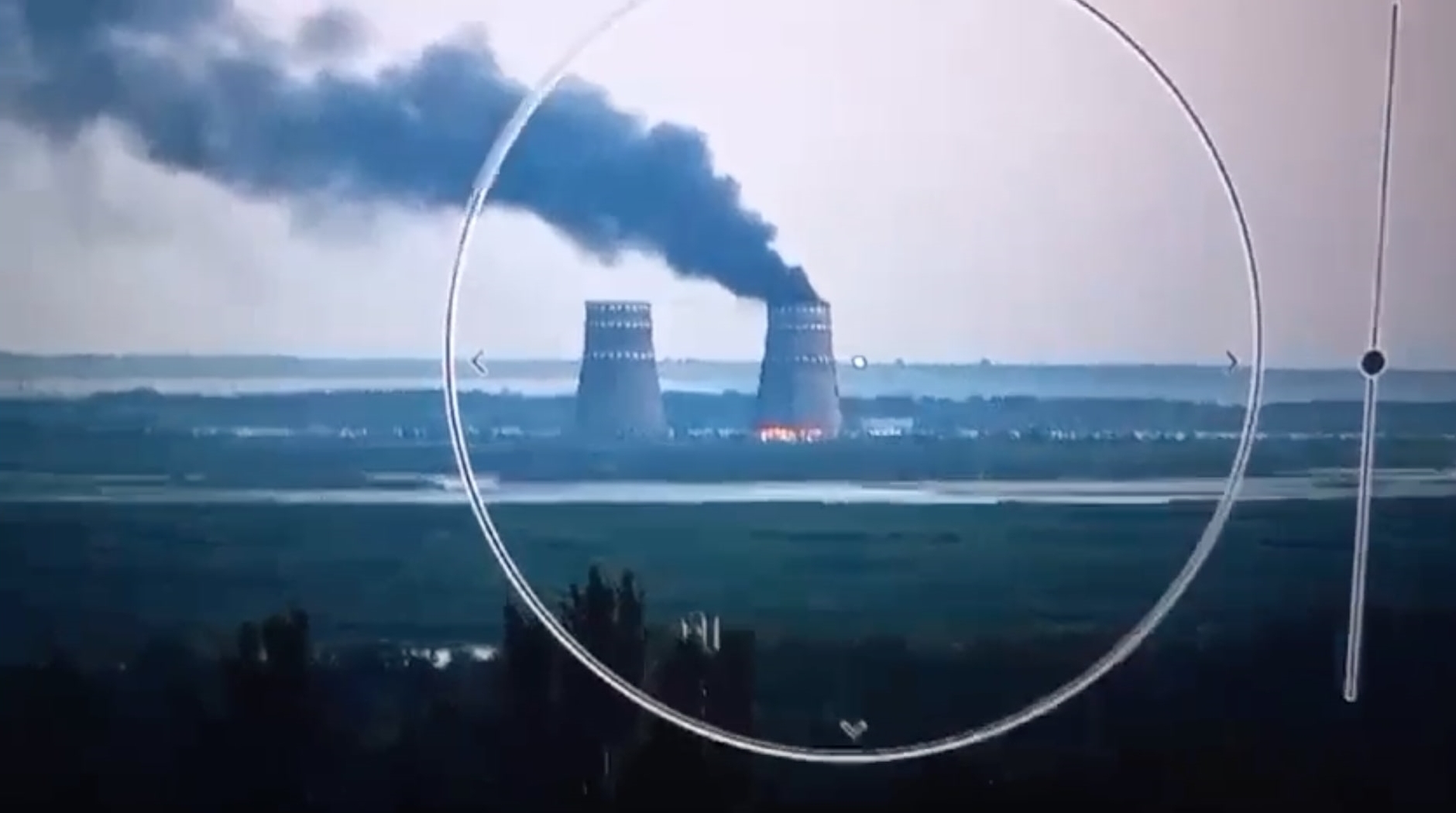
About 3,000 ZNPP employees and 20,000 residents of Enerhodar are being held hostage. The city is often shelled to provoke. The Russians are also shelling the plant itself, destroying power lines, setting fire to one of the cooling towers and blaming it on the Ukrainian Armed Forces.
The occupants have seized the plant and deployed their military units there, which puts it on the verge of disaster. “We constantly receive alarming reports about difficulties with its operation, – said Oleksandr Kovalenko, spokesman for the Zaporizhzhya Regional State Administration of Nuclear Power Plants.
The NPP employees who remained under occupation continued to do everything to ensure the plant’s vital functions and maintain the safe operation of the facility. However, due to the actions of the incompetent occupation administration, Zaporizhzhia NPP experienced 8 blackouts in three years of full-scale war.
Since the occupation, almost every month ZNPP has been disconnected from the main power lines due to Russian attacks. In November last year, this happened twice in just one week. Our power engineers are constantly repairing this equipment, working under high threat to their lives, as the shelling almost never stops. During the occupation, Zaporizhzhia NPP has already experienced complete blackouts 8 times, which poses a huge threat of a Fukushima-level nuclear disaster, – said German Galushchenko, Minister of Energy of Ukraine, in an interview with The Ukrainian Review.
On February 1, 2023, the licensed personnel of ZNPP were withdrawn from the plant. Due to Russia’s military actions, the power supply to meet the plant’s own needs from the Ukrainian side is periodically interrupted, which poses a threat to the cooling of nuclear reactors.
All work there is performed by incompetent and uncertified Russian personnel or hired by residents of nearby occupied villages, – Energoatom says.
The Russian corporation Rosatom claimed that ZNPP had been illegally appropriated, trying to organize electricity supplies from it to the occupied territories.
The near-catastrophic situation was caused by the Russians’ blowing up of the Kakhovka hydroelectric power plant. Zaporizhzhia NPP lost the main source of cooling water for its hydraulic system. The water level in the ZNPP cooling pond is gradually decreasing and at the beginning of October 2024 was 14.28 meters.
And one of the biggest problems now is that the six-year period of nuclear fuel in all ZNPP reactors authorized by the manufacturer is expiring.
Taken together, these problems pose a nuclear and radiation hazard to the entire continent, according to Energoatom.” According to the head of the company, Petro Kotin, the situation at the seized ZNPP is fraught with very negative consequences.
The actions of the Russian occupiers have already caused significant degradation of equipment at Zaporizhzhia NPP. As long as the plant is under occupation and Russia has turned it into a military facility, nuclear and radiation safety of ZNPP is under threat, – emphasizes Petro Kotin.
Since September 2022, the IAEA mission has been operating at the plant, but the Russian occupiers do not allow the agency’s experts to have full access to all areas of ZNPP.
Damage to the Ukrainian power system and economy
In June 2024, Energoatom estimated its losses as a result of the occupation of ZNPP. At that time, they amounted to 210 billion hryvnias. Every month, Energoatom loses about 6 billion hryvnias due to ZNPP downtime.
Since September 2022, the plant has been completely out of operation, but it consumes about 100 megawatts from the integrated power grid of Ukraine to run the nuclear reactor cooling pumps.
In addition to direct financial losses, the occupation has damaged the plant’s infrastructure. The preliminary estimate of the destroyed and damaged property as of November 2022 was more than UAH 28 billion.
In addition, the consequences of the occupation of ZNPP became particularly noticeable when the Ukrainian energy system began to experience regular attacks and destruction by Russia. This applies to both electricity supply in Zaporizhzhia region and total energy generation in Ukraine.
Problems with electricity supply are becoming particularly acute, forcing the authorities to actively seek funds not only from the local budget but also from international donors. This is needed to implement cogeneration units that generate alternative electricity. Such equipment will help to provide backup capacity, reducing dependence on the general power grid. This is especially important during the heating season, when it is necessary to guarantee a stable and uninterrupted power supply, – says Oleksandr Kovalenko.
Additionally, Ukrainian personnel at the plant are subject to kidnapping, murder, and inhumane treatment, which increases the risk of nuclear incidents and accidents. Despite the presence of the IAEA staff at the plant, negotiations on the demilitarization of the territory are not progressing.
Ultimately, it will be possible to assess the real damage to the Ukrainian nuclear industry, energy sector, and economy only after the de-occupation of Enerhodar and the demilitarization of the ZNPP.
IAEA activities at Zaporizhzhya NPP
The seizure of ZNPP by Russian troops took place in March 2022. However, the IAEA mission was involved in monitoring the situation at the plant only in September 2022.
The agency faced numerous challenges.
The Russian occupation forces restrict the access of the agency’s experts to certain facilities of the plant, in particular to the reactor halls of power units 1, 2 and 6, and periodically close parts of the turbine halls. These restrictions make it difficult to fully monitor and assess the state of nuclear safety.
In a report on their activities at the plant, IAEA representatives tried to assure that the situation, although difficult, was under control.
After the occupation of ZNPP, the automatic transmission of data from local radiation monitoring stations located within 30 kilometers of the plant was interrupted. As a result, Ukrainian officials could not continue to provide data to the agency’s International Radiation Monitoring Information System (IRMIS). In response, IAEA staff based at the site ensured that offline transmissions of radiation monitoring data to IRMIS from off-site stations wereavailable, – the report said.
In addition, the IAEA does not have effective mechanisms to force Russia to implement resolutions on the de-occupation of ZNPP. This limits the agency’s ability to influence the situation and ensure full nuclear safety at the plant.
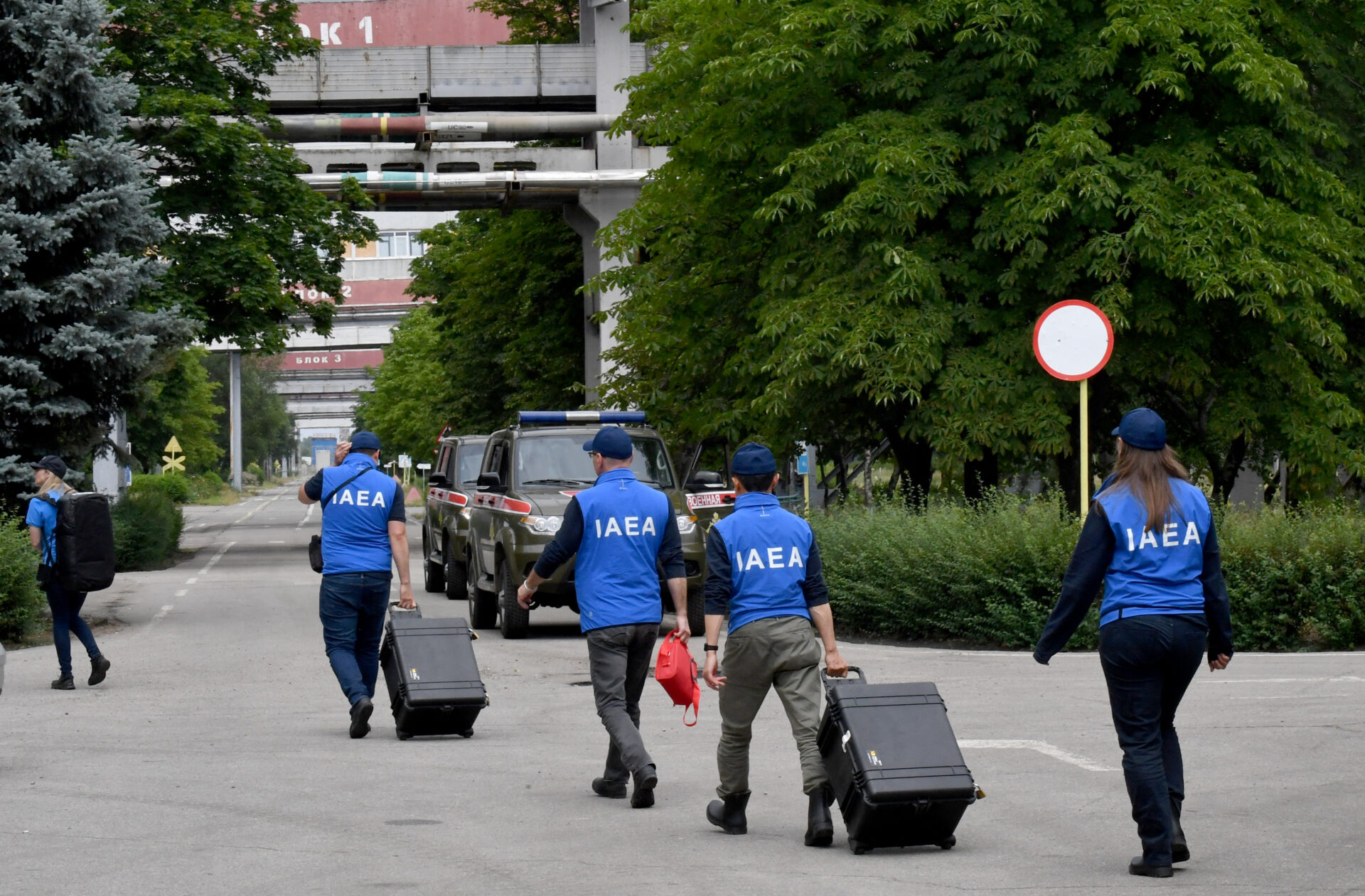
The inability of the IAEA to fully control the situation at ZNPP is confirmed by numerous crises that occurred during the Russian occupation.
All six reactors remain in cold shutdown, and the agency continues to maintain its position that no reactor should be restarted as long as the nuclear safety and security situation at Zaporizhzhia NPP remains at risk, – IAEA Director General Rafael Grossi said in November 2024.
In January 2025, IAEA experts present at ZNPP recorded two loud explosions near the plant, which coincided with reports of a drone attack on the training center.
Russia’s responsibility for nuclear blackmail
Energoatom emphasizes that the international community, together with Ukraine, should make even more efforts to stop Russia’s nuclear blackmail:
To force the aggressor country to comply with the provisions of the IAEA resolutions of September 28, 2023 and March 7, 2024, and the UN General Assembly of July 11, 2024, and to return the plant to Ukraine and its legitimate operator, Energoatom, – the company says.
Earlier, the State Nuclear Regulatory Inspectorate of Ukraine stated that Russia is responsible for all events at ZNPP.
Russia must be held accountable for the occupation of Zaporizhzhia NPP in accordance with international law. In particular, for violating the Geneva Conventions and humanitarian law, as the plant is used for military purposes, which endangers the lives of civilians.
In addition, the IAEA has repeatedly called on Russia to withdraw its troops, as the occupation of ZNPP violates nuclear safety rules, in particular the Convention on Nuclear Safety. Such actions could lead to an environmental disaster, for which Russia should also be held responsible. At this stage, Ukraine has the right to demand compensation for the damage caused through international courts, as well as to call on the international community to strengthen sanctions.
Dariia Podvyshenna