

Russia is pushing forward with all its brutality. People are still waiting near the front line. Death could come at any moment. For those who still don’t want to leave, helper Eugen brings them drinking water. Day after day, he risks his life anew.
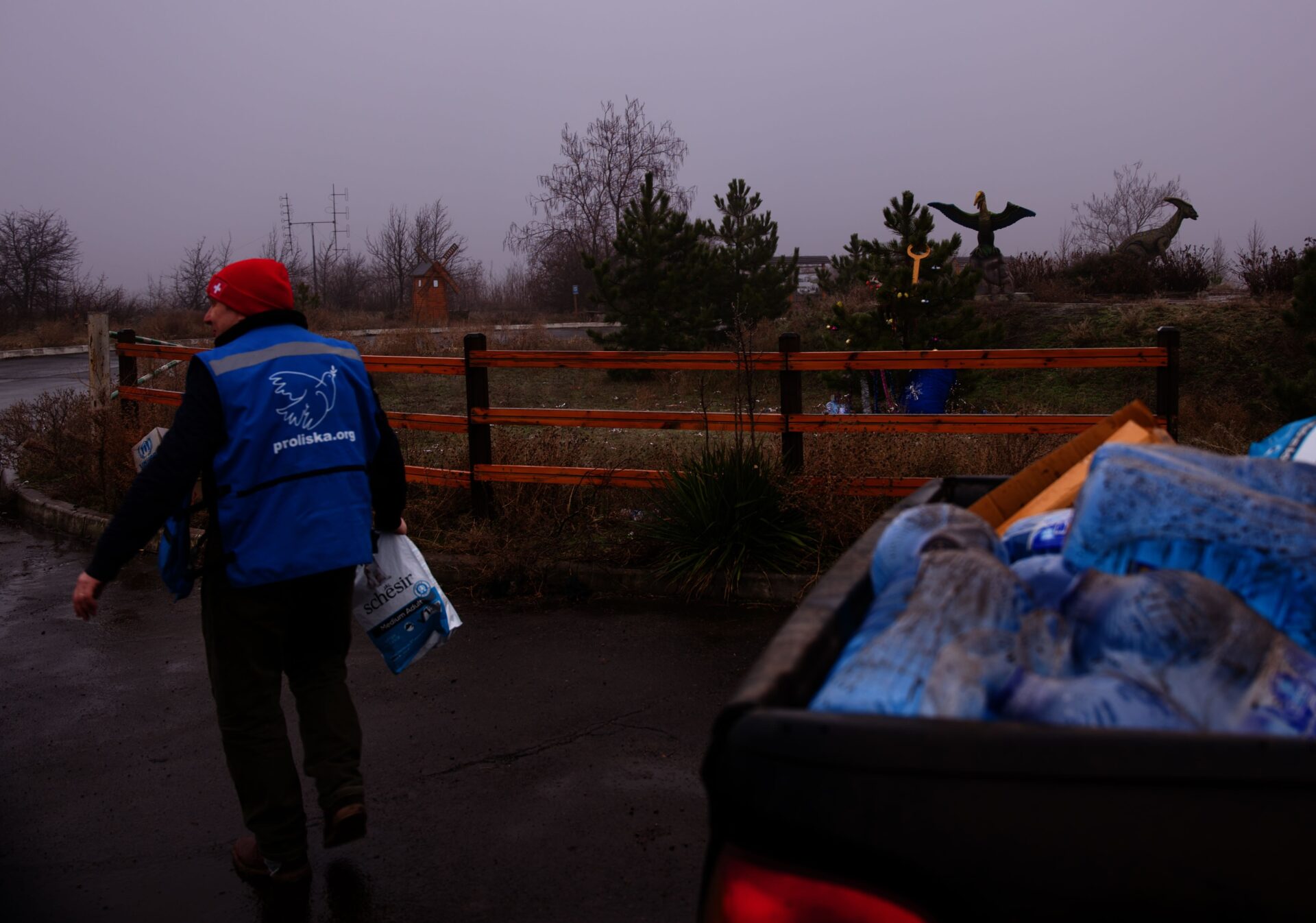
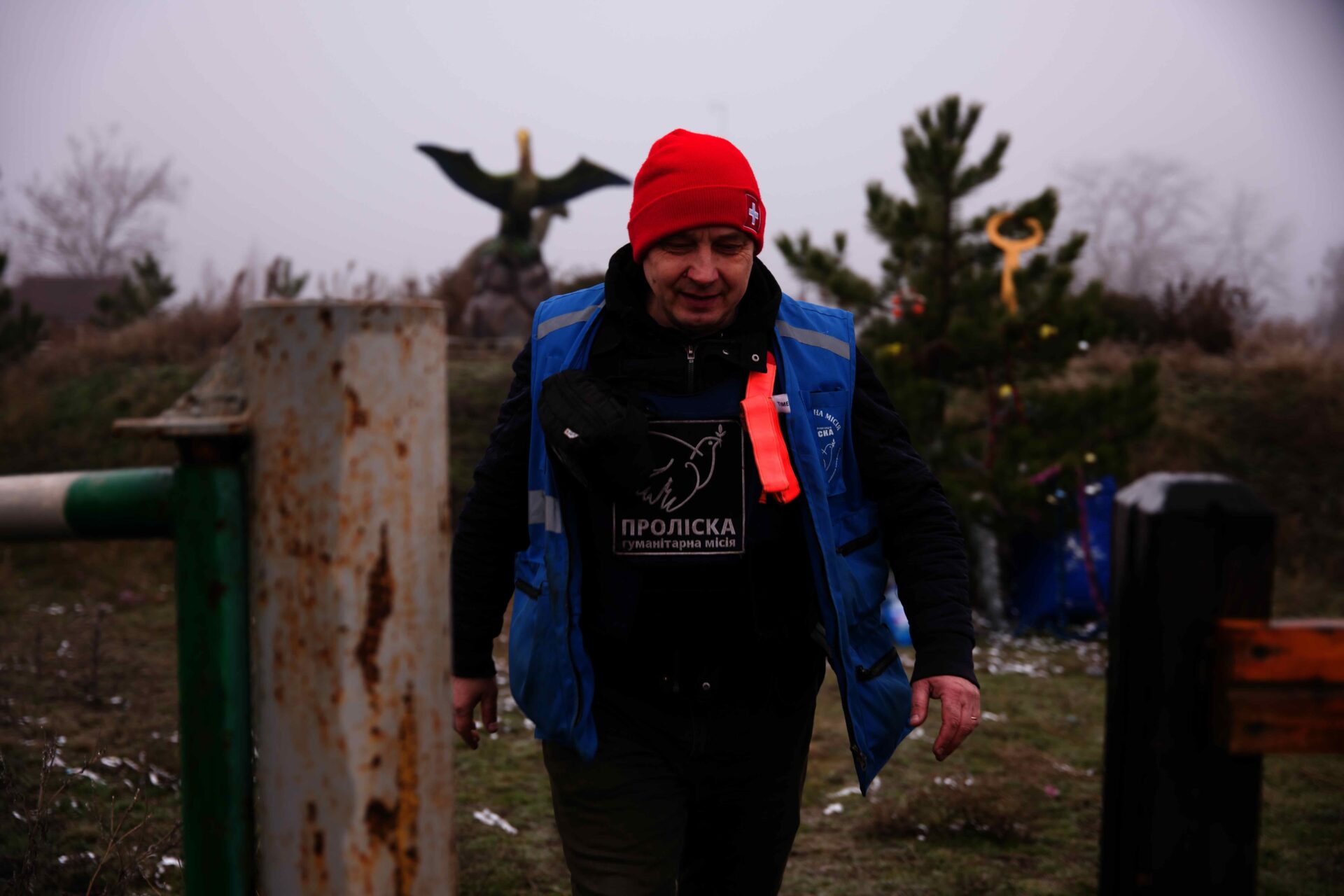
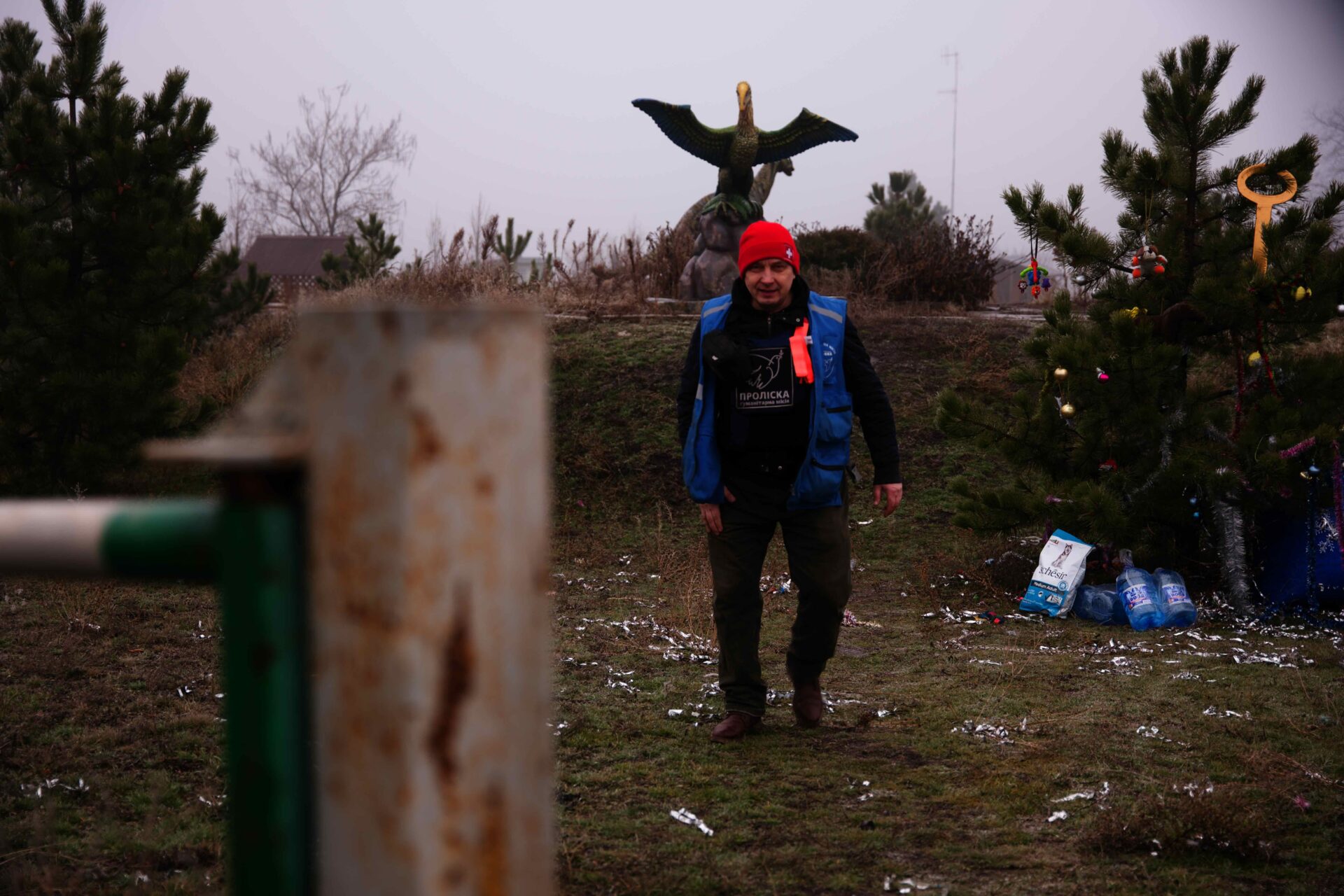
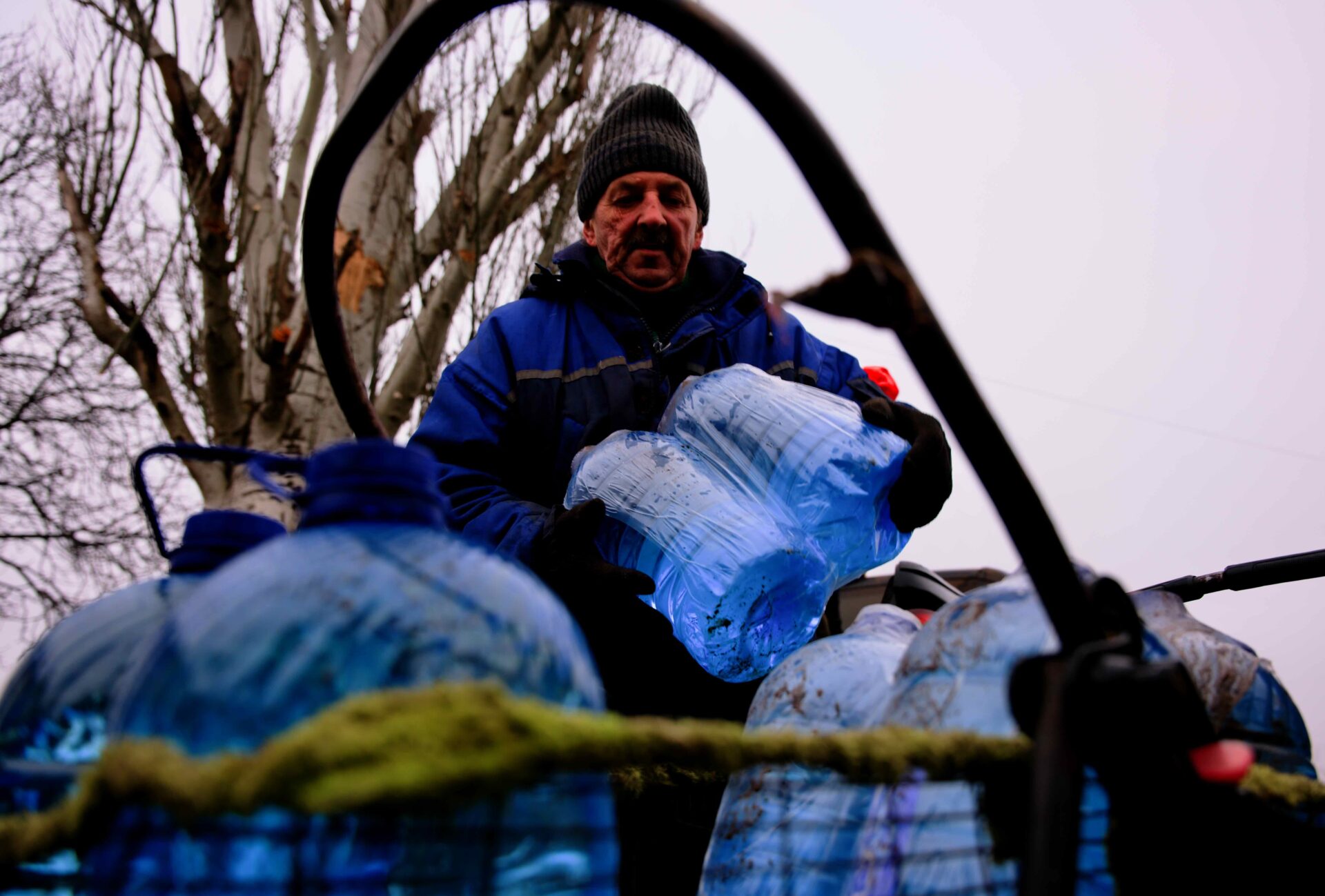
Area near Torezk. The first stop is right next to the dinosaurs. A pteranodon stretches its wings into the cold gray sky. Eugen jumps out of his pickup truck, heaves some mineral water bottles from the loading area and stows them in a tree with a bag of animal feed. He stands a few meters from the mighty concrete creatures. There is no time to lose. Eugen squeezes back behind the wheel with his heavy protective vest. In the rearview mirror, the dinosaurs of the former family park disappear into the gray. Today, the 55-year-old brings drinking water close to the front:
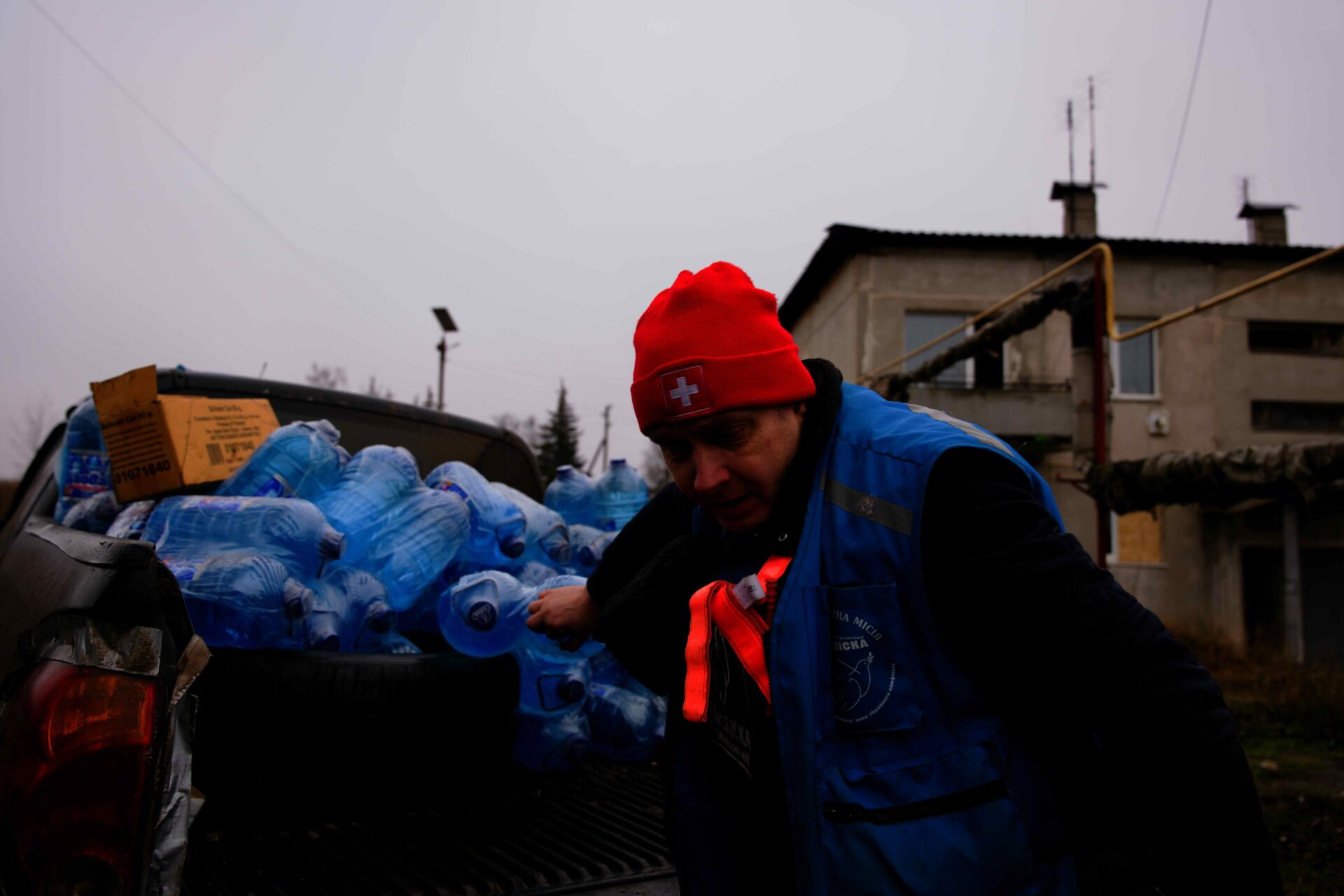
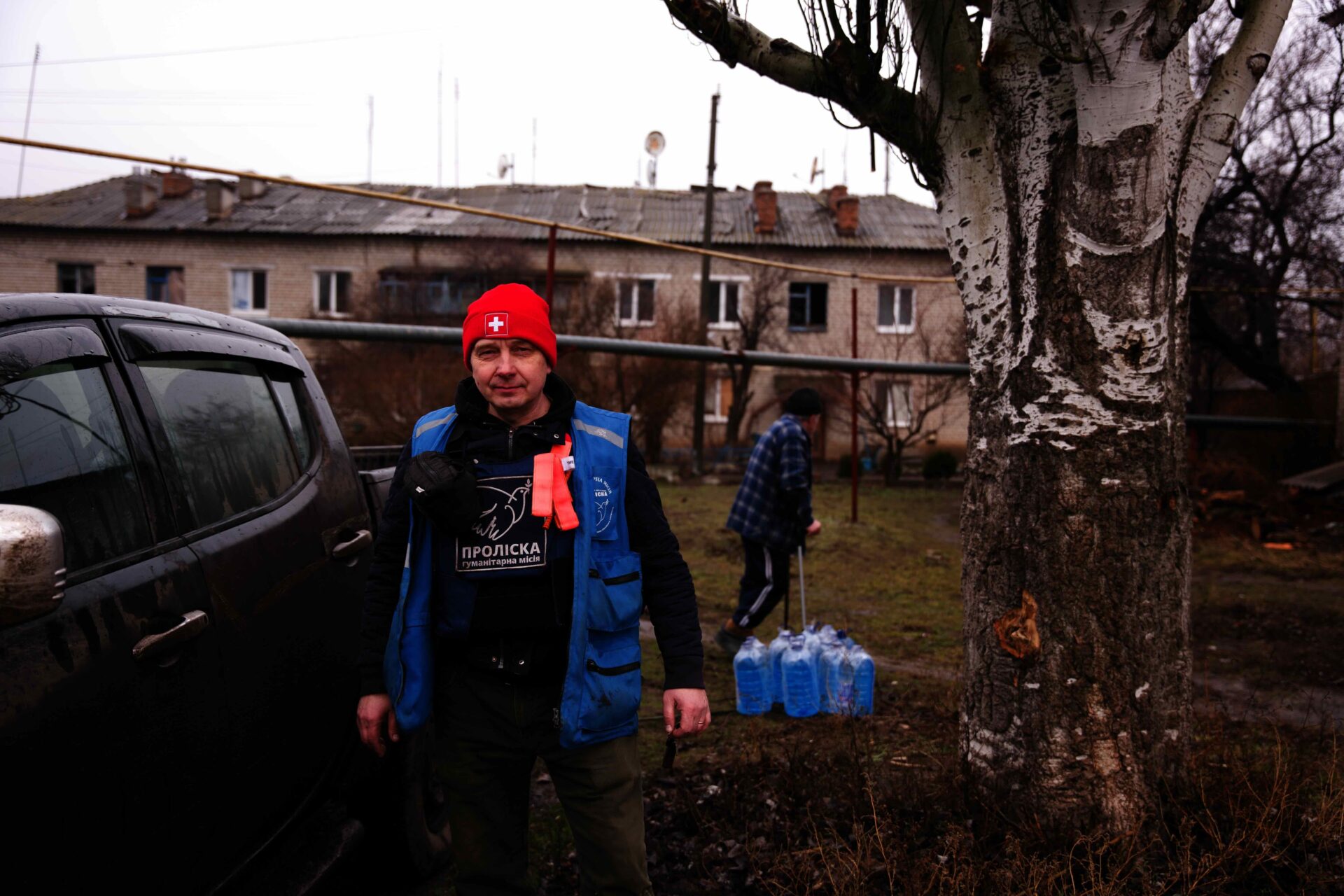
People are still waiting there. You can’t force anyone to leave. It makes the most sense if I can evacuate people, – explains the aid worker. A bright red knitted hat shines on his head. Kind, bright eyes peer out from underneath.
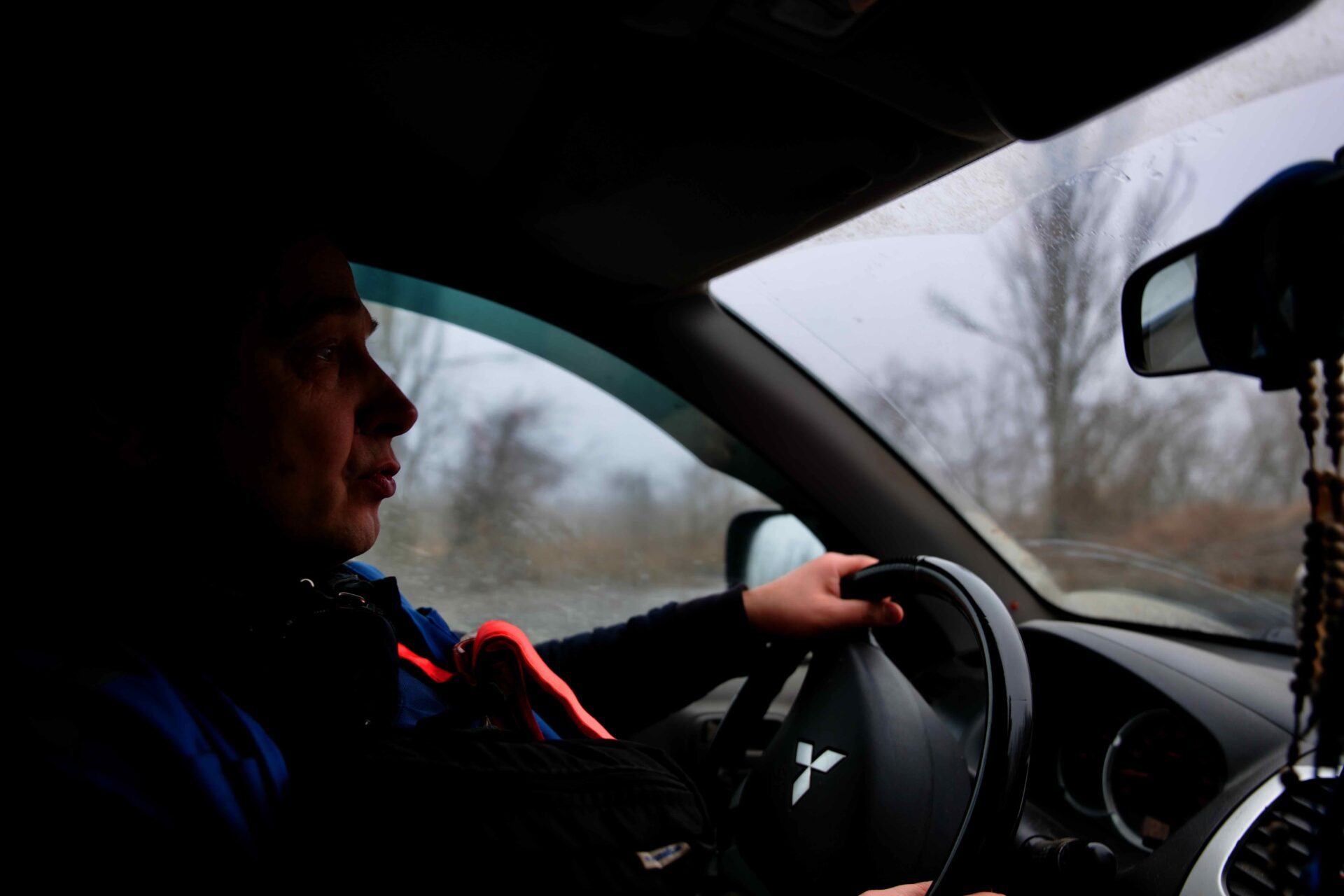
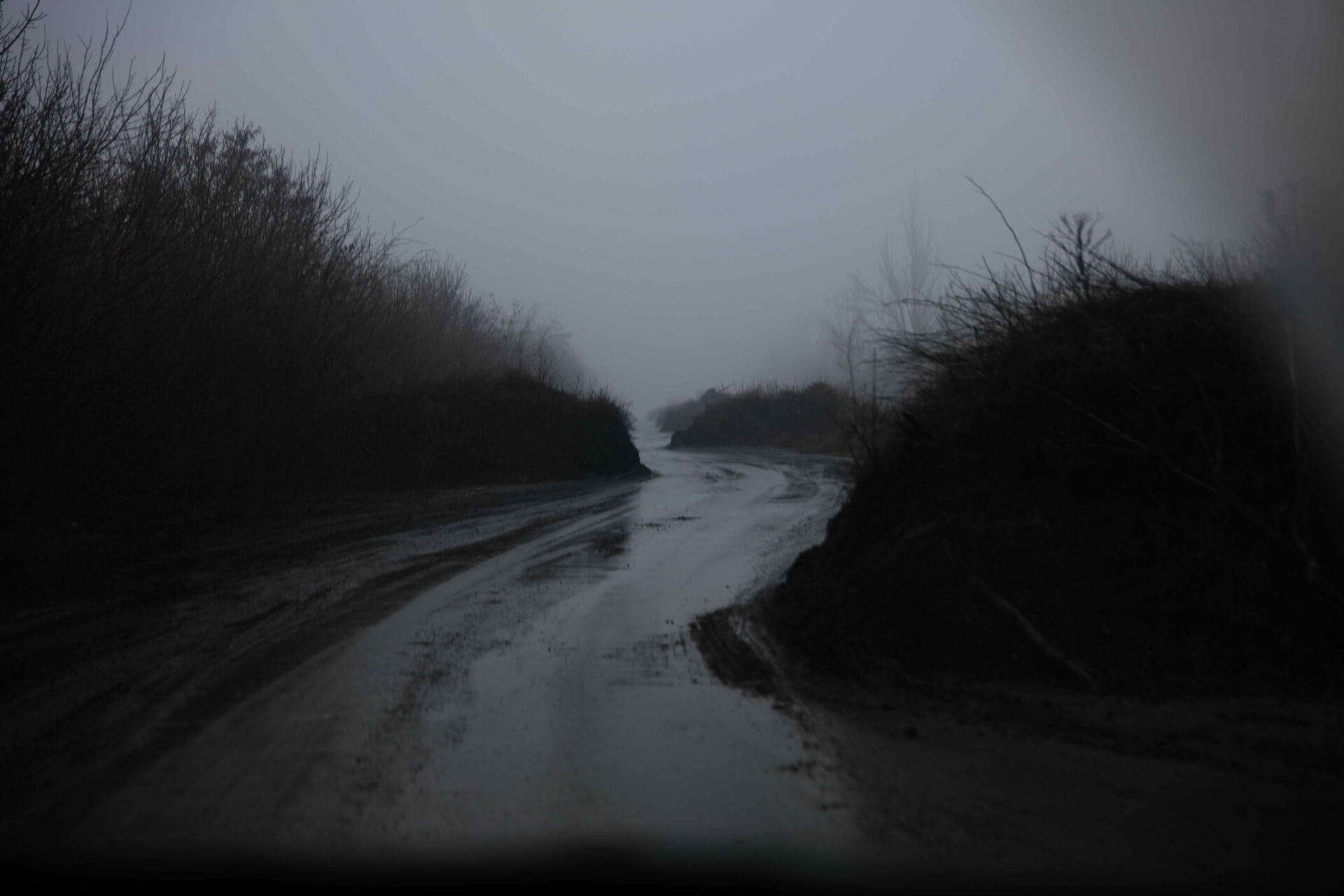
Soon afterward, he has to drive in slight serpentine lines. To the left and right, huge heaps of earth lie on the asphalt as barriers. The Ukrainian army has heaped them up. Eugen steers skillfully between them. The tires spin on the asphalt over slippery and damp soil. Visibility is poor. Even the trees and bushes to the left and right of the road are swallowed up by the fog.
That’s a good thing. There are hardly any drones on the road in heavy fog. Their pilots then lack visibility, – explains the 55-year-old.
His old Mitsubishi pickup truck tells of the drone war. There has already been a drone attack on the car. Splinters have left their mark on the bodywork. Parts of the wheel arch are missing from the right rear wheel, a rear light is held in place by silver adhesive strips. In other areas, the sheet metal is badly deformed. At first glance, you can see that the car has been through a lot.
The front line is only a few kilometers away. Eugen steers his car through dangerous drone country. With better visibility, death can come at any time. Kamikaze and reconnaissance drones buzz high in the air. Then there is the danger of artillery fire and Grad rockets. The 55-year-old is all too aware of all this.
I trust in God. And in the fact that the Russians accept that I’m driving a civilian car, – explains Eugen.
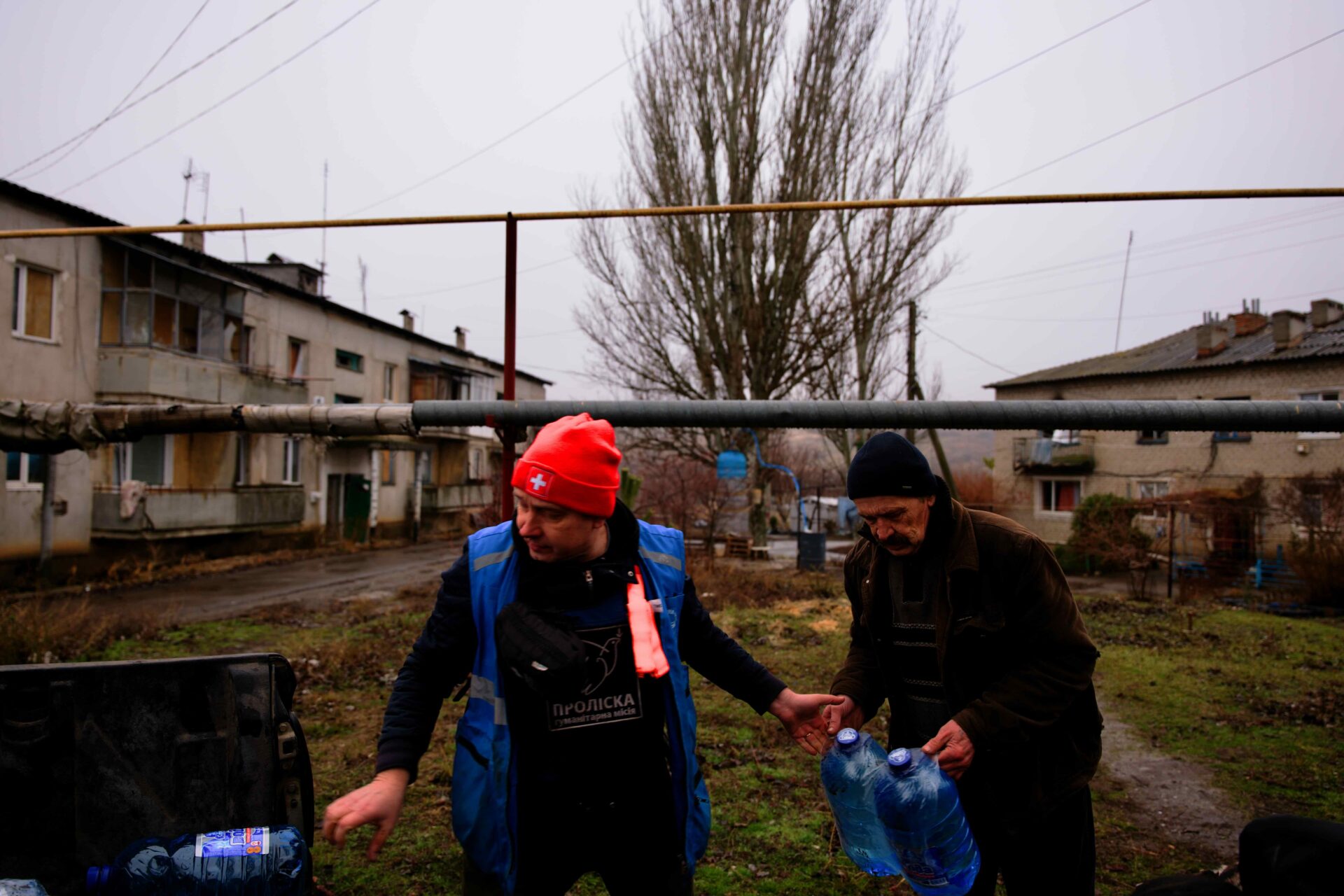
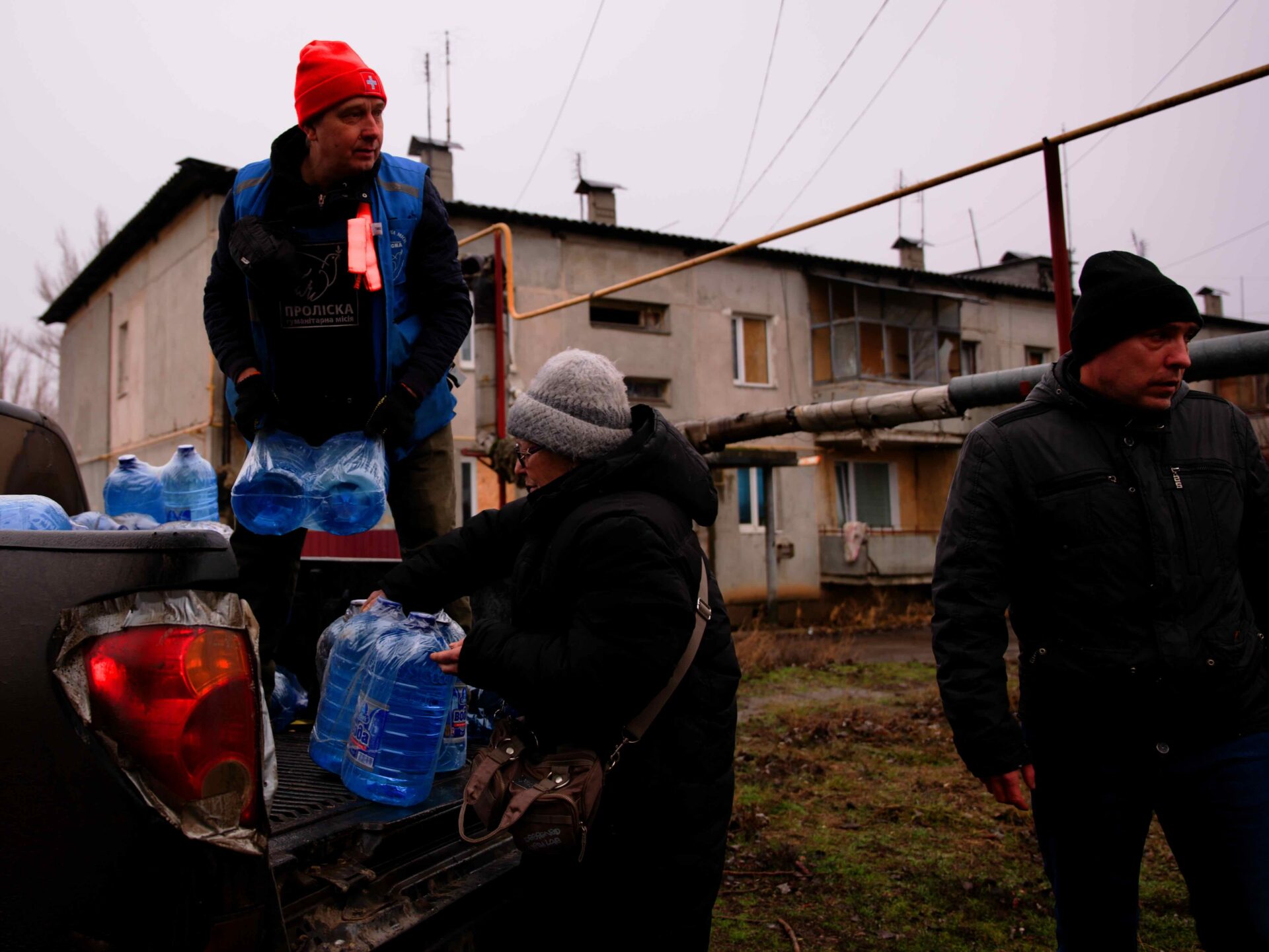
This is what the stickers from the aid organization “Proliska”, for which he is working, are supposed to indicate.
The Ukrainian organization has been working in the Donbas since the beginning of the war in 2014 and is supported by the United Nations Refugee Agency and donors. Its helpers travel to places along the frontline where only a few otherwise dare to go.
Eugen’s journeys often lead directly to the battle zone, near Torezk for example. Or to Chasiv Yar. After almost two years of continuous Russian shelling, Chasiv Yar has been largely wiped out, a field of ruins. Russian troops have already taken parts of the ruins. What is left of the small town is strategically important on a hill. For Eugen, Chassiv Yar is one thing above all: his hometown.
It hurts to see all the destruction. What madness. Nevertheless, there are still a few people living in the area, especially older people, – he says.
He had also set up a small orphanage in Chasiv Yar before the large-scale invasion by Russian troops three years ago. He also ran a farm for several years.
All that’s left of all that is rubble. Sometimes I find it hard to comprehend it all, – he says.
Eugen is a member of a Protestant free church. In the early 2000s, he helped to bring people to safety from fighting in East Africa.
Back then, I could never have imagined that I would one day have to do that in Ukraine, – he shakes his head.
Back in 2014, when Russia brought the war to the Donbas, he evacuated people from the combat zones. He was captured in the process.
They were Russian troops in 2014, not separatists. At first, they treated me correctly. Then they thought I was an American spy because I was a member of a Protestant church from the USA, – he says. He managed to escape. – They killed four of my fellow Christians.
Then he drives off the road, the car rumbles briefly over a stony path.
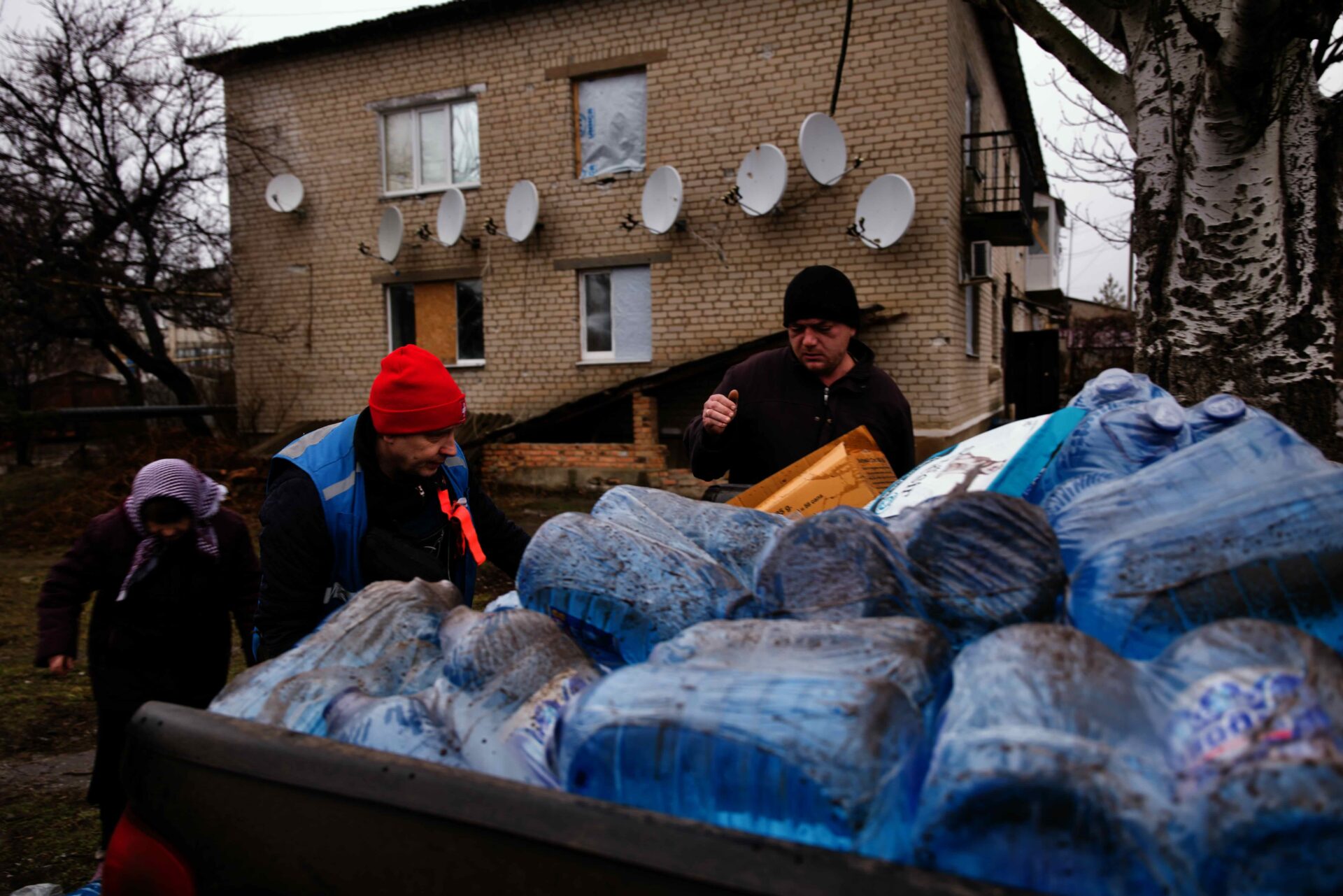
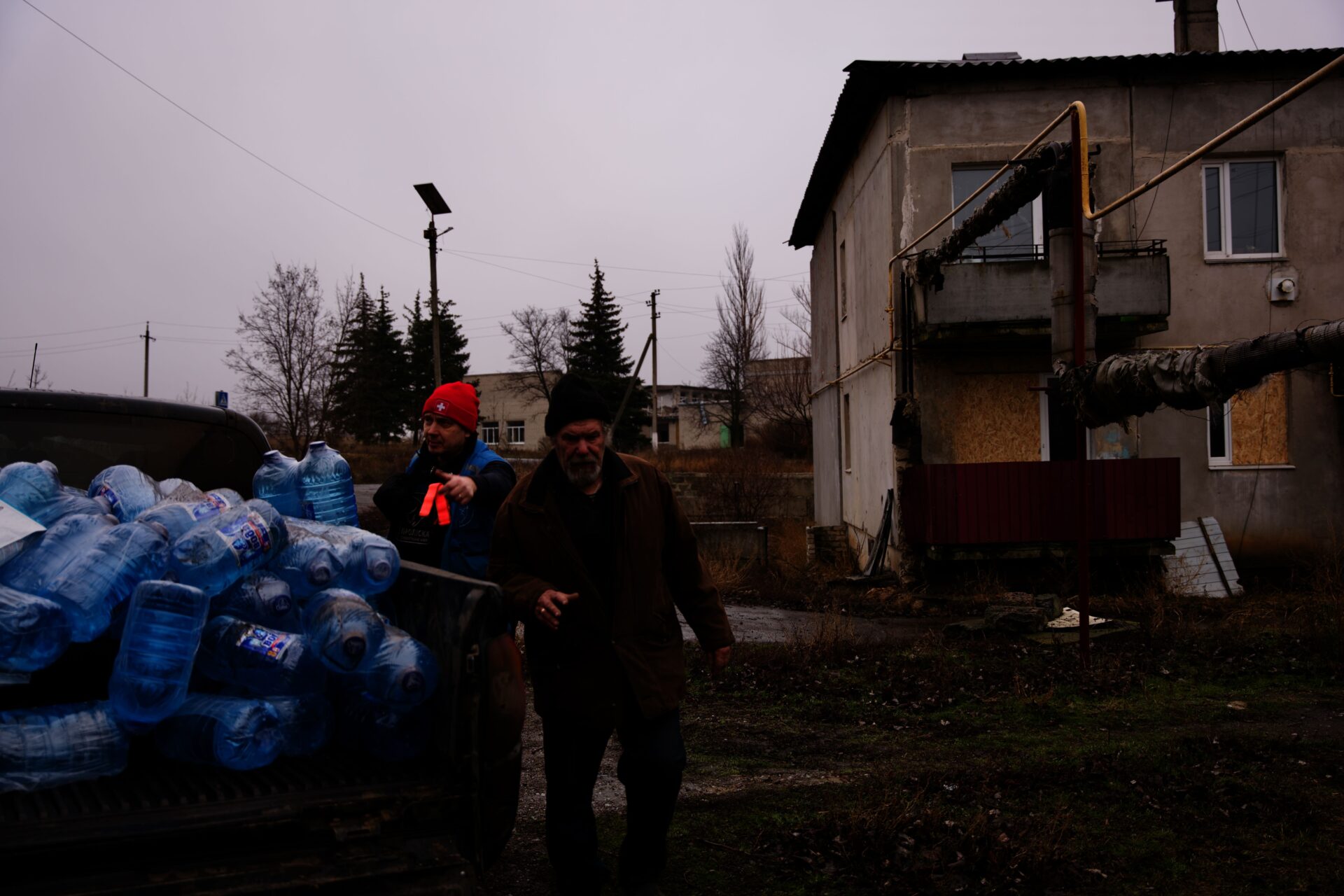
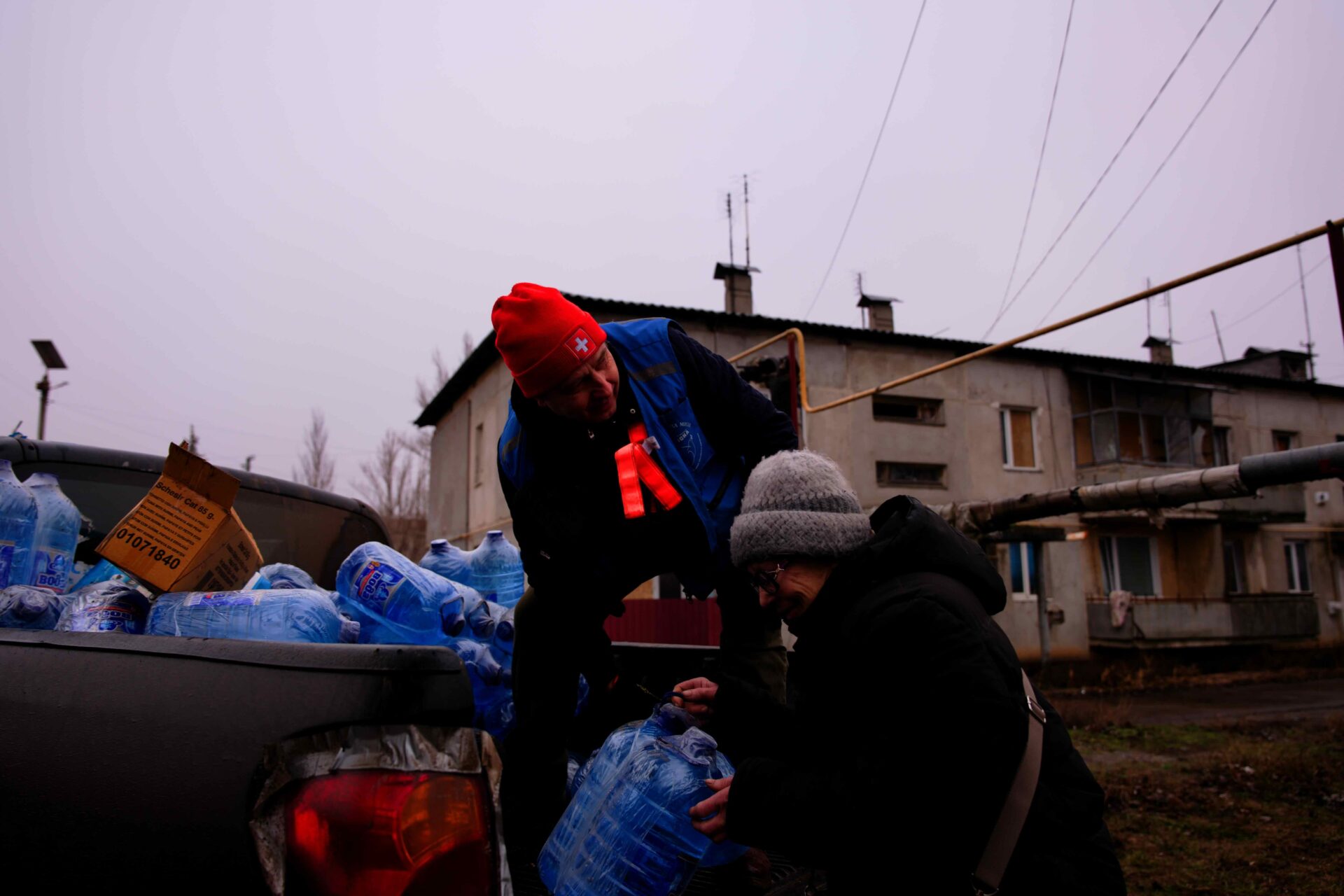
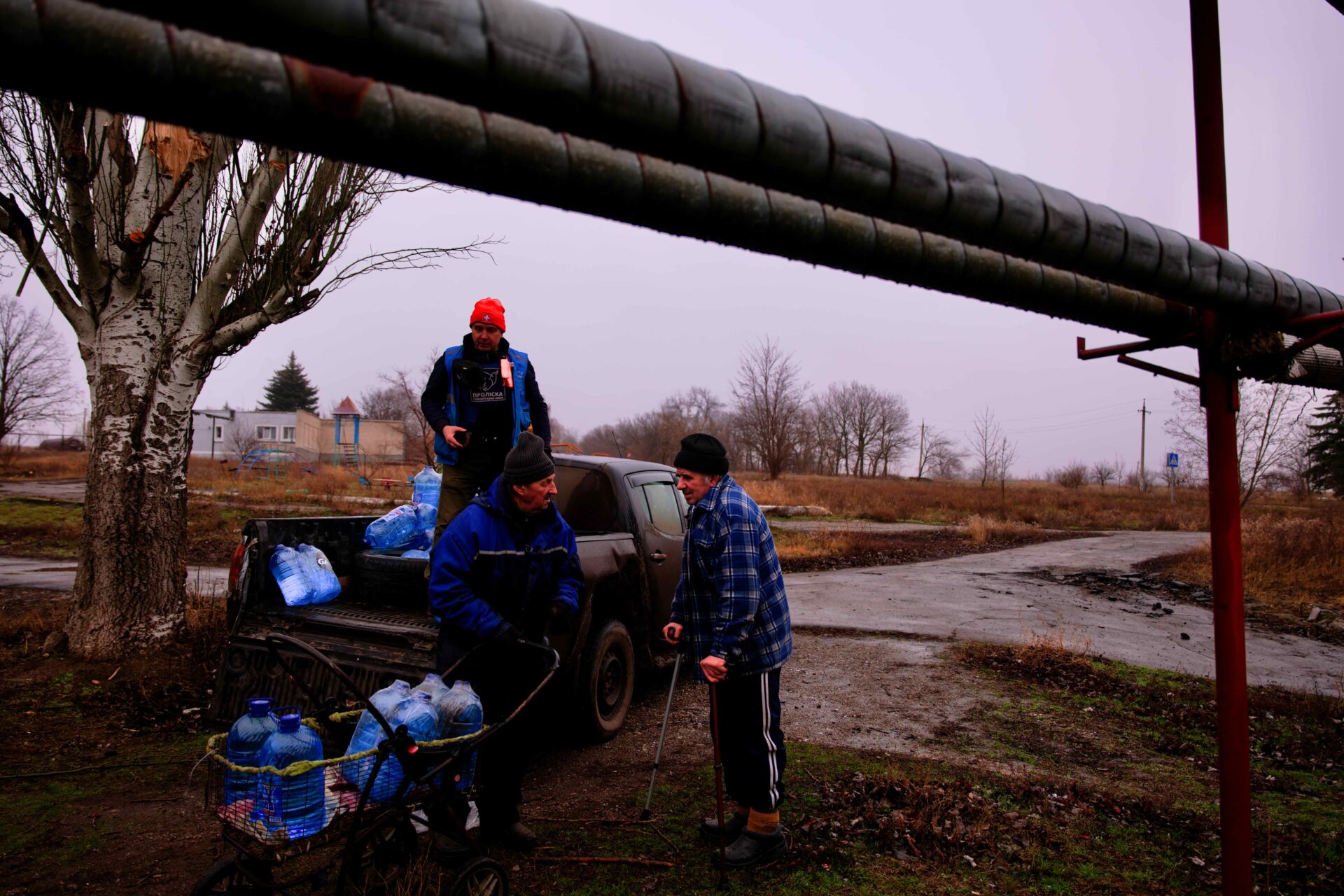
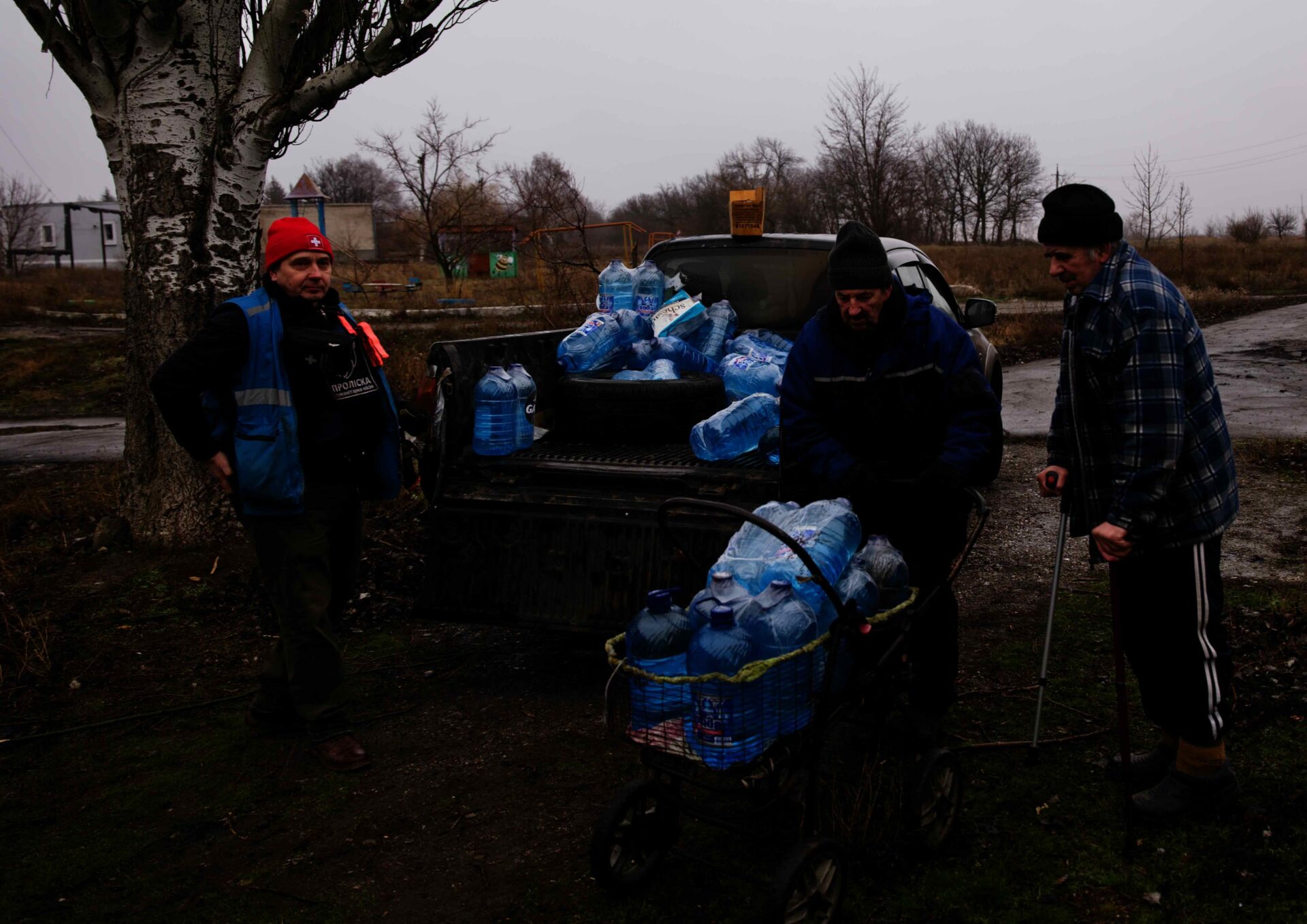
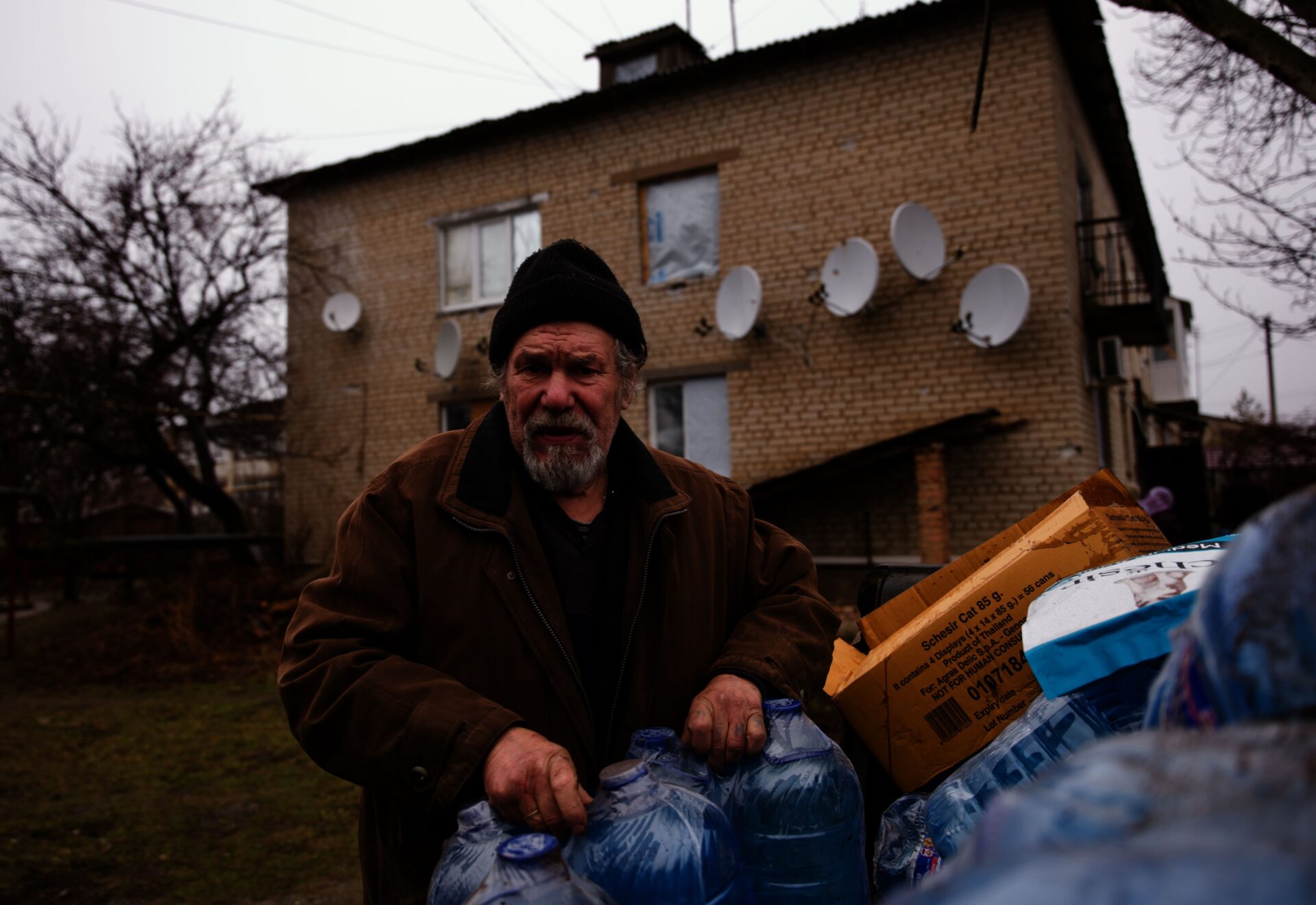
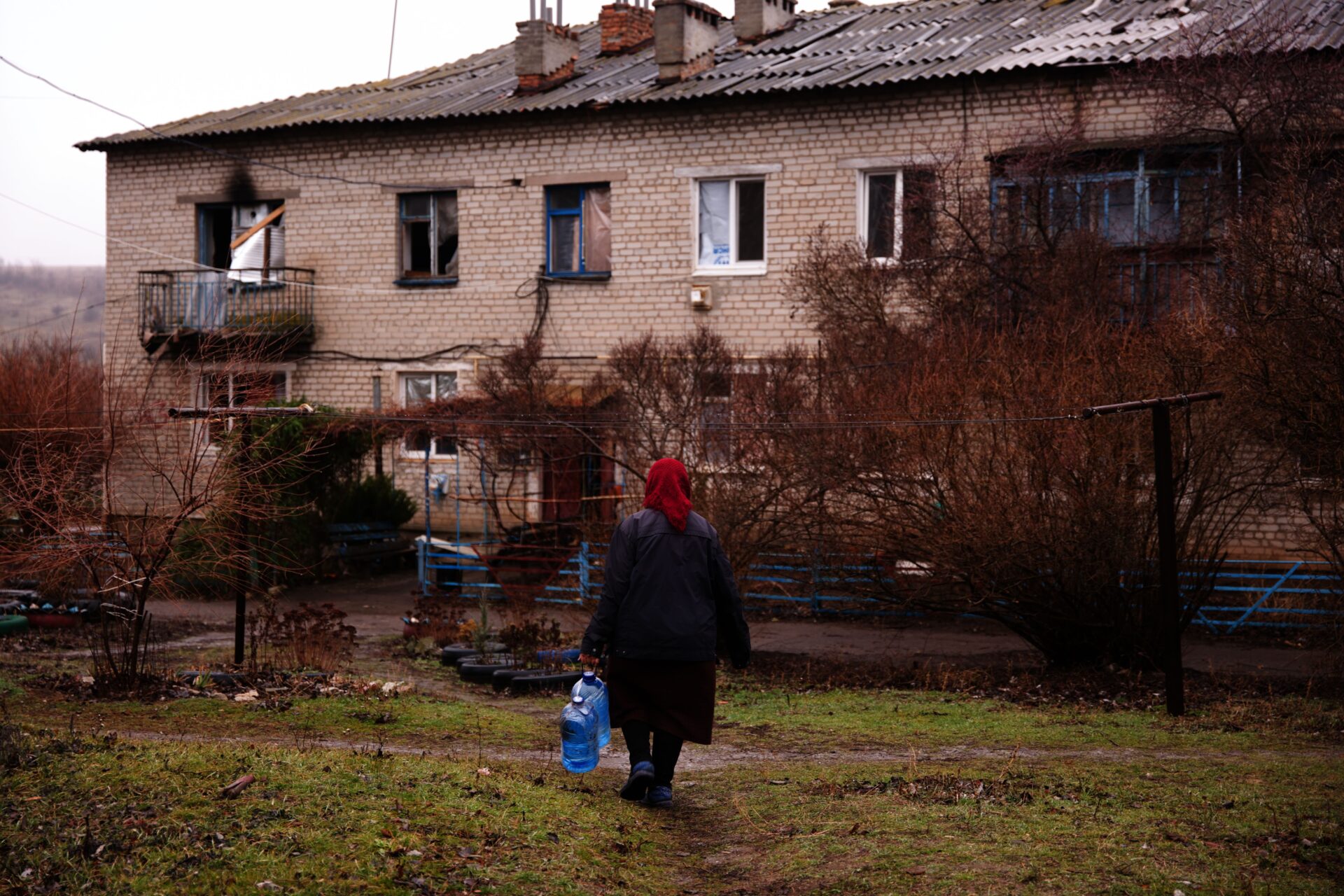
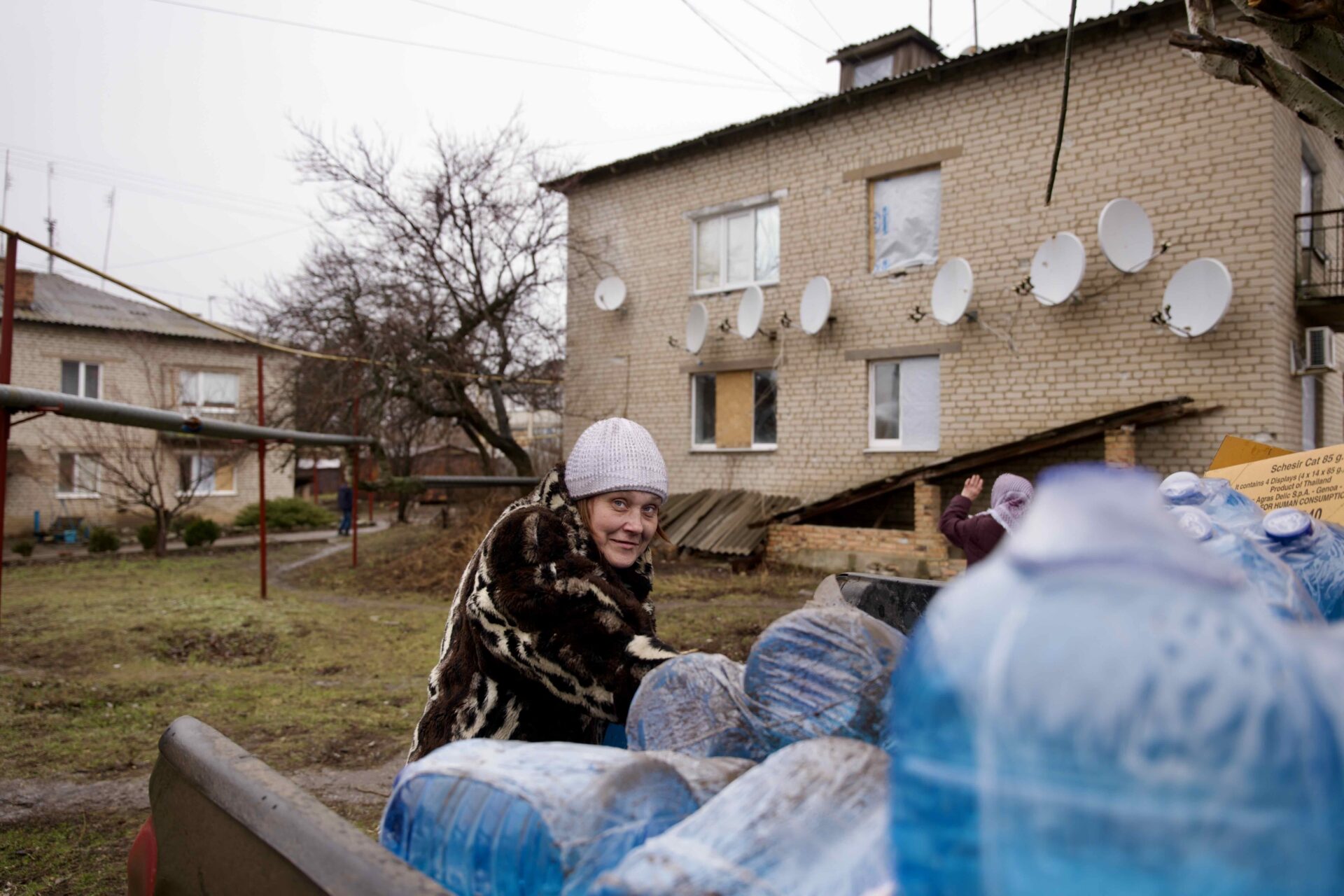
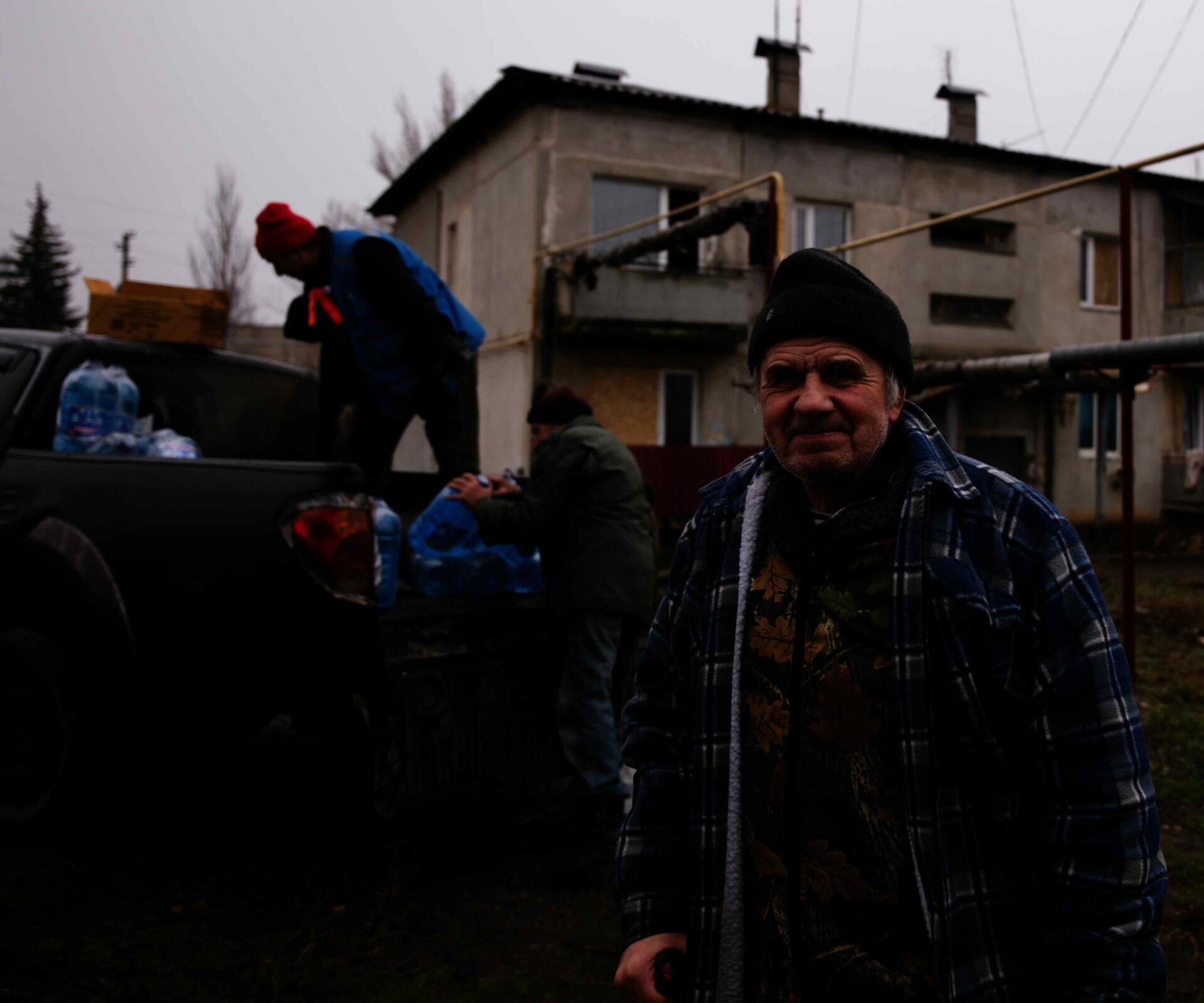
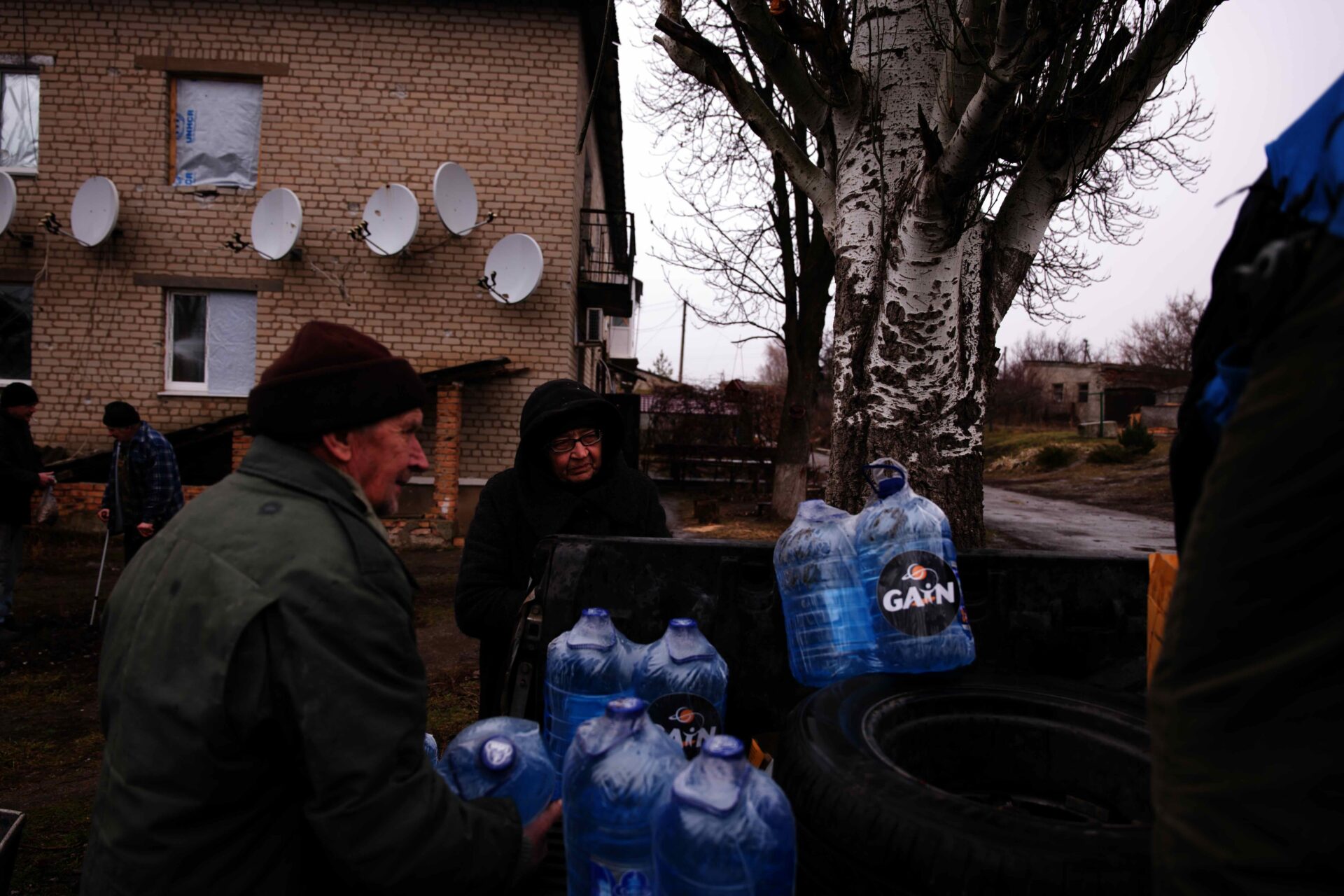
We have reached our destination for the day. A small hamlet less than three kilometers from the combat zone. Plastic mineral water bottles and a few sacks of pet food for dogs and cats are piled up on the back of his pickup truck. The small settlement belongs to a collective farm that has long since ceased production due to the war. Four three-story blocks of white bricks make up the settlement. A handful of people have remained. Even after the nearby impact, the blast wave of which shattered most of the window panes. The panels of the corrugated iron roof lifted and slipped. Plywood panels or transparent plastic sheets are now usually nailed into the window cavities.
Eugen stops his Mitsubishi and honks the horn three times. He doesn’t have to wait long before the residents arrive. The 55-year-old looks into sad and impoverished faces. Valentina puts on a smile for Eugen.
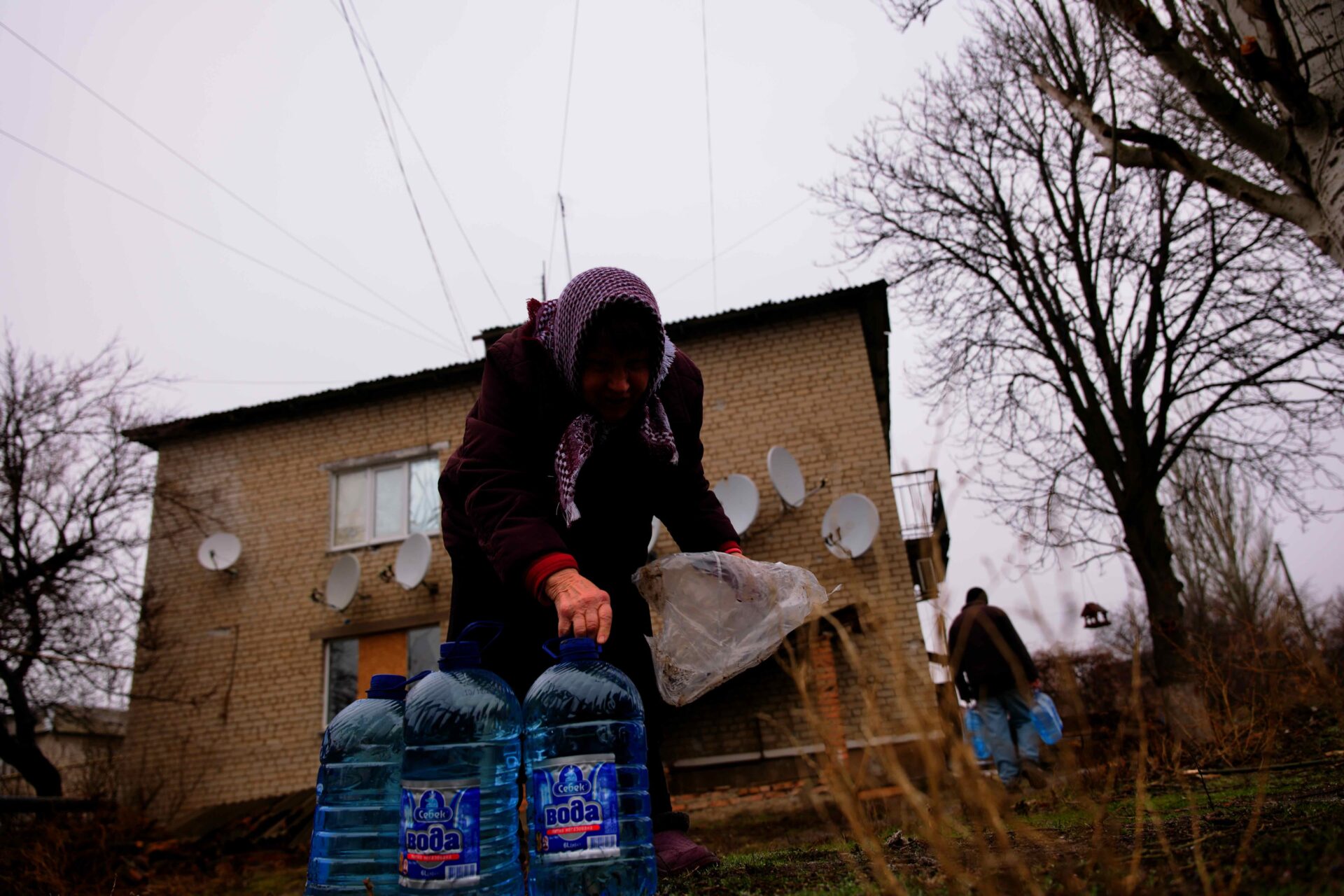
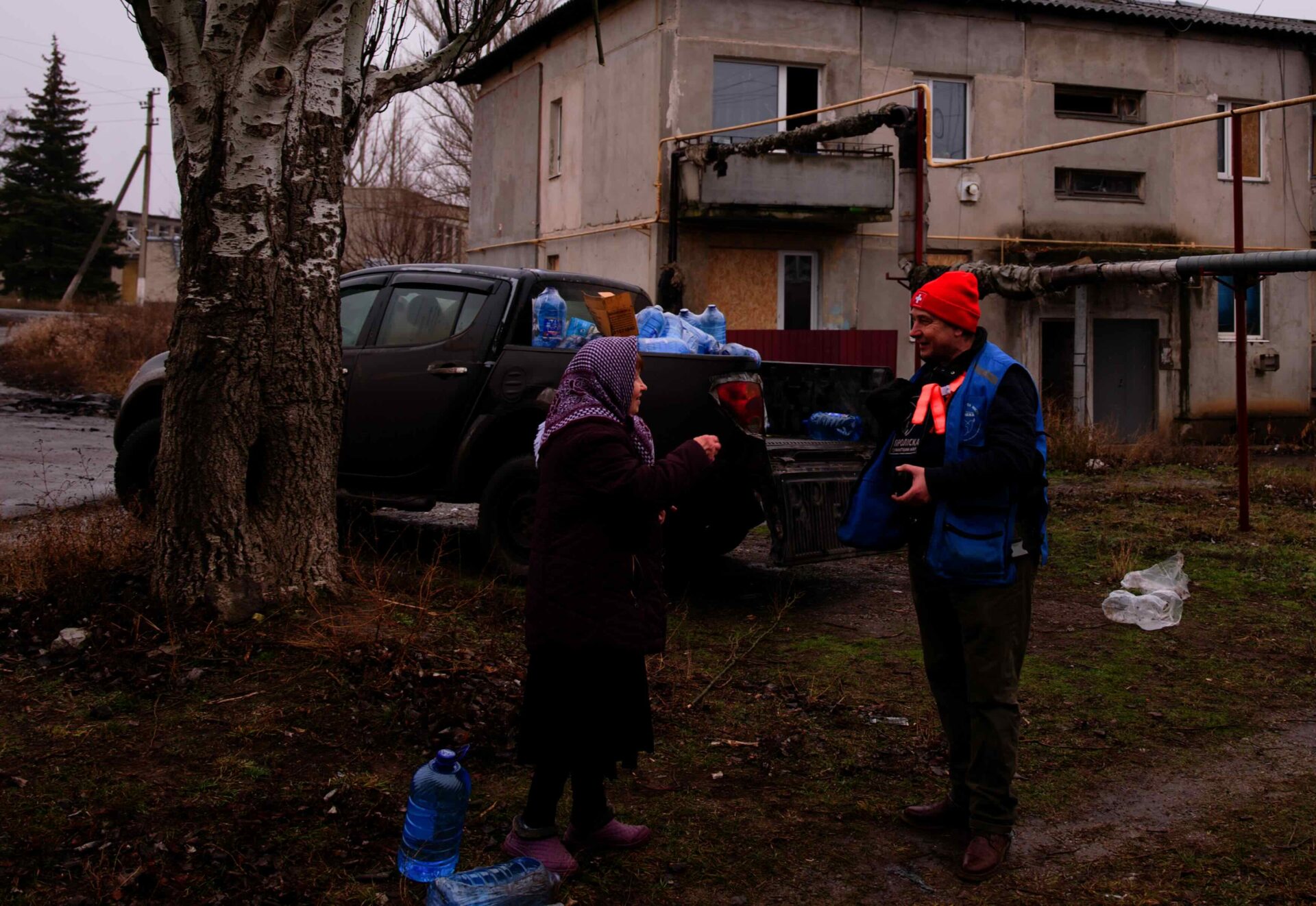
I’m grateful that he comes every week and brings us water. Running water, electricity – that’s been a thing of the past for ages. We heat with wood. We regularly receive food parcels. Once a week, a driver comes to us with a store on wheels, – says the 77-year-old, outlining the weekly survival plan.
Meanwhile, half a dozen people have come to the Mitsubishi. An elderly man loads the bottles onto the frame of a baby carriage for himself and his neighbor, who walks on crutches. A senior citizen with thick glasses and sunken cheeks laboriously drags the multi-liter bottles by their handles to the apartment. It is an image of unspeakable poverty that touches the heart.
Valentina adjusts her headscarf before she tackles the bottles. Doesn’t it make sense to evacuate?
I’ve already done that. We were with my grandson in Dnipro. My daughter, me, him and his wife and children. Six people in a small apartment. It didn’t work. I don’t want to be a burden on my grandson. And I can’t afford to rent an apartment with my small pension, – she explains.
So she returned again. Suppresses her fear when she hears the nearby artillery.
It’s only because of the fog that you can hardly hear anything today, – says the 77-year-old. But even now, the thunder of the guns rumbles from time to time. – Oh, I’ve lived here since 1973. Hopefully, nothing will happen, – she says as she says goodbye and walks towards her apartment block.
Valentina’s story is no exception.
Many of those who are here don’t know where to go. Their house, their apartment, that is at least something familiar. Especially in the villages, they know each of the stones they once used to build the house themselves, – says Eugen.
But there is no security there anymore. Like other organizations, “Proliska” offers an evacuation hotline. Russian troops are stepping up their attacks and gaining ground. In December 2024 alone, Russian troops conquered 510 square kilometers with immense losses, according to Ukrainian figures. Pokrovsk threatens to fall in a few weeks. Towns and villages are being wiped out under constant fire. Volunteers and state bodies are evacuating those still holding out near the front line throughout the Donbas. The helpers are risking their lives in the process.
Some time ago, a woman contacted me via the hotline. She had fled to Germany. She asked me to persuade her grandmother to come and see her, – reports the 55-year-old. So Eugen drove to the elderly woman. – She didn’t want to leave, – he says. But the granddaughter didn’t give in. She sent a short video via Telegram. – In it, she asked her grandmother to come to her in Germany. Everything was fine here. She’s already waiting for her.
The 55-year-old pauses briefly as he tells the story. When he went to play the video to the senior citizen, he found her lifeless body outside the house. She had been killed by a grenade explosion.
That could happen to any of these people here at any moment. They can’t stay here, – he says quietly.
Then he starts his Mitsubishi and heads back past barriers and concrete dinosaurs. On the next journey, there may be no more fog to protect him.
Till Mayer (text and photos)
Journalist Till Mayer has been documenting the war in eastern Ukraine since 2017. Since the beginning of the full-scale invasion in February 2022, he has been regularly reporting on the consequences of Russian aggression against Ukraine for our editorial team. He has won several awards for his photography and reporting. His collection of reports “Europe’s Front: The War in Ukraine” was recently published by ibidem.