

Hungary has become the closest European country to the new U.S. administration, with Slovakia following suit. Therefore, the Hungarian government has been expecting special treatment regarding the sanctions imposed on the Russian energy sector. Budapest has tried to justify its continued purchase of Russian oil by citing its geographic position and specific economic needs. Nevertheless, the U.S. continues to pressure Hungary to stop buying Russian energy sources.
Hungary now finds itself caught between continuing cooperation with Russia or listening to its main ally — the United States. Arguments in favor of maintaining ties with Moscow have not worked, yet Washington still views Hungary as a friendly nation on the official level.
The Mutual Respect
U.S. Ambassador to NATO Matthew Whitaker rejected Hungary’s claims that its landlocked status leaves the country with no alternative but to rely on Russian oil.
Our friends in Hungary have a lot of planning to do, and we, of course, as good allies, will help them with that so they can wean themselves off Russian oil and gas, Whitaker said in an interview with Fox News.
As of 2025, it is estimated that nearly 70 percent of Hungary’s gas imports come from Russian sources.
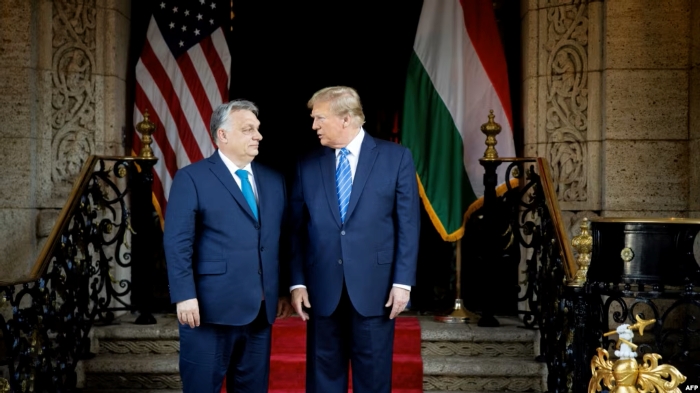
Viktor Orbán has been openly friendly with Donald Trump for many years. Orbán was one of the few EU leaders who supported Trump during his presidential campaign and considered him an ally who embodied the “conservative model” of governance. During Trump’s presidency, the U.S. administration restored Hungary’s full status in the Visa Waiver Program, which had been suspended under the previous government.
In return, Trump repeatedly called Orbán a “strong leader” and reportedly sought his advice on issues related to the Russian-Ukrainian war.
Cancelled Budapest Summit
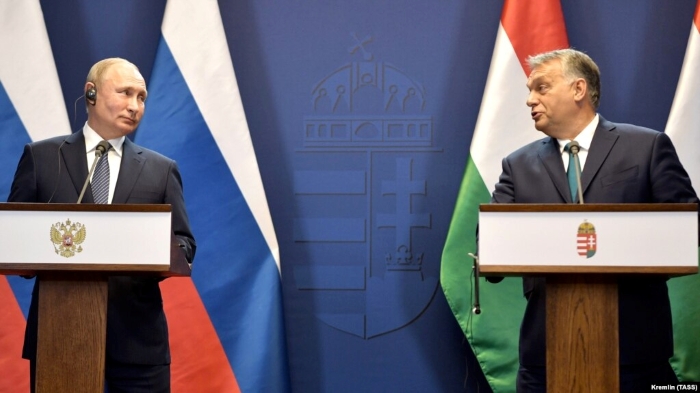
As is now known, the Russian side began making excessive demands regarding the planned meeting, prompting Donald Trump to announce that he was canceling the summit with Vladimir Putin “for now.” For Hungary, this was a missed opportunity to use the meeting’s organization for domestic propaganda in the run-up to the elections. It was also a lost chance to maintain its oil deals with Russia without further financial losses.
Conclusion
Hungary remains under pressure from both the European Union and now the United States over its continued imports of Russian oil. So far, Budapest has resisted demands to reduce the volume of Russian energy, despite persistent Western pressure. Orbán, in turn, perceives the U.S. president not only as a strategic partner but also as a symbol of the political course he seeks to advance at home: “Hungary first.”
The United States expects that countries importing Russian energy — particularly Hungary and Slovakia — will gradually abandon such supplies. However, the Hungarian authorities insist that energy supply is a physical and infrastructural issue, not merely a political one, arguing that a rapid transition away from Russian resources could cause serious economic challenges. As Orbán himself has said, if Hungary is cut off from Russian oil and gas, its economic growth will fall by four percent in the short term.
Ultimately, the U.S.–Hungary relationship has several dimensions: the personal rapport between Trump and Orbán that once created a favorable political climate. Hungary’s geopolitical role as a potential intermediary in international relations and, most significantly, the challenge of energy dependence.